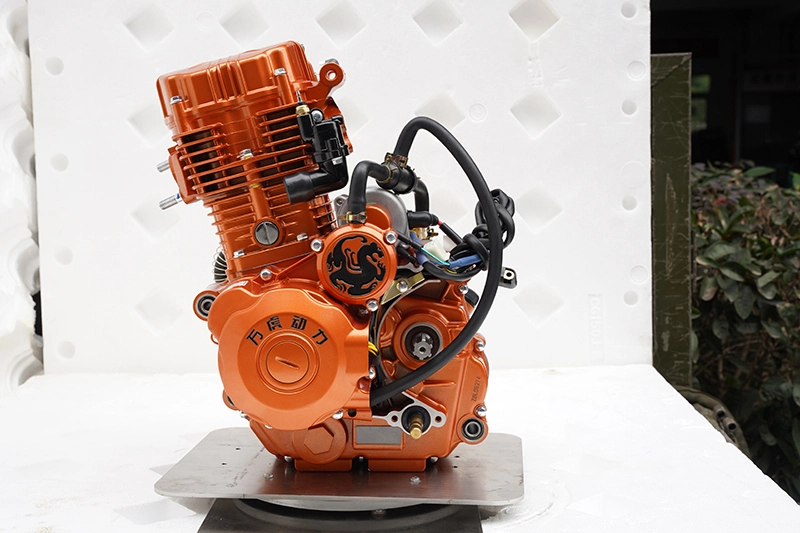
A full floating rear axle supports the wheel hub through the housing and hub bearings, while the half-shaft's main job is to transmit torque. This differs from a typical semi-floating arrangement, where the shaft also carries wheel loads. The distinction describes a load path; it does not establish the vehicle's payload or service life.
For a cargo three-wheeler purchase, identify the actual assembly before comparing the labels. The useful evidence is a sectional drawing, bearing and material specifications, the load basis and a service procedure.
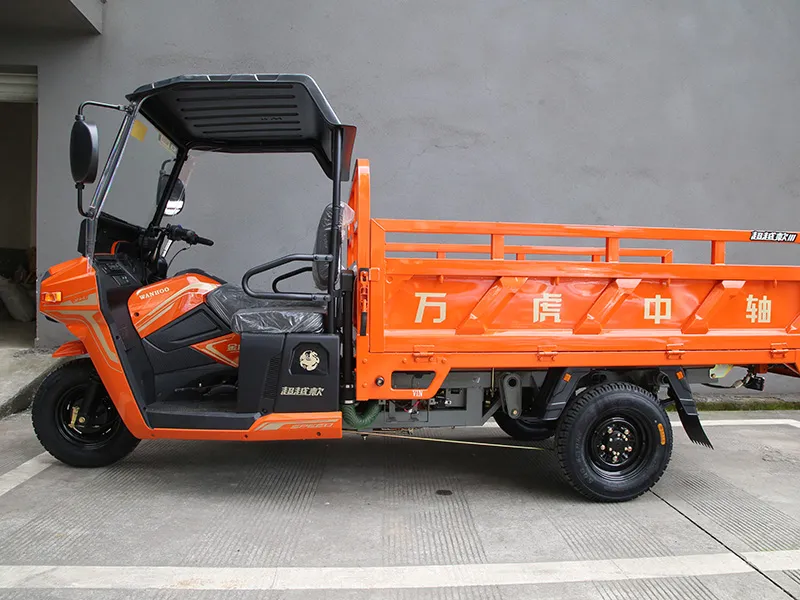
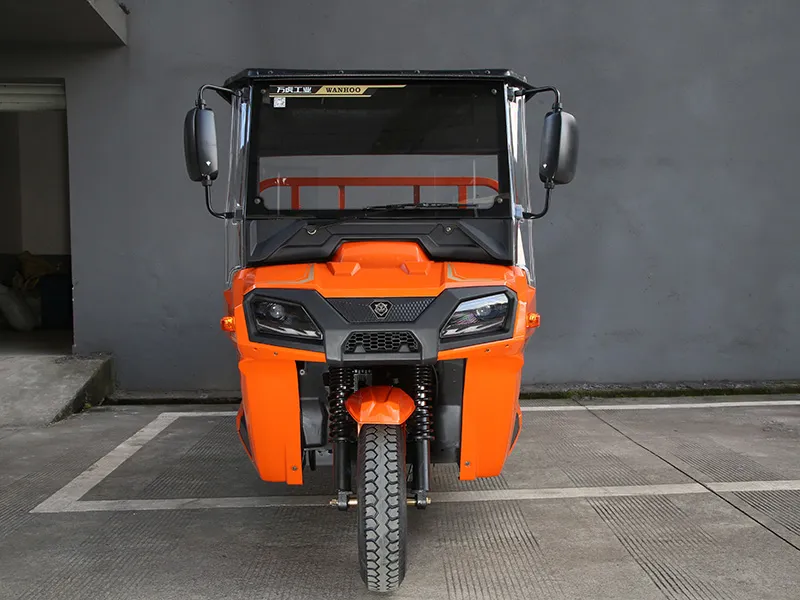
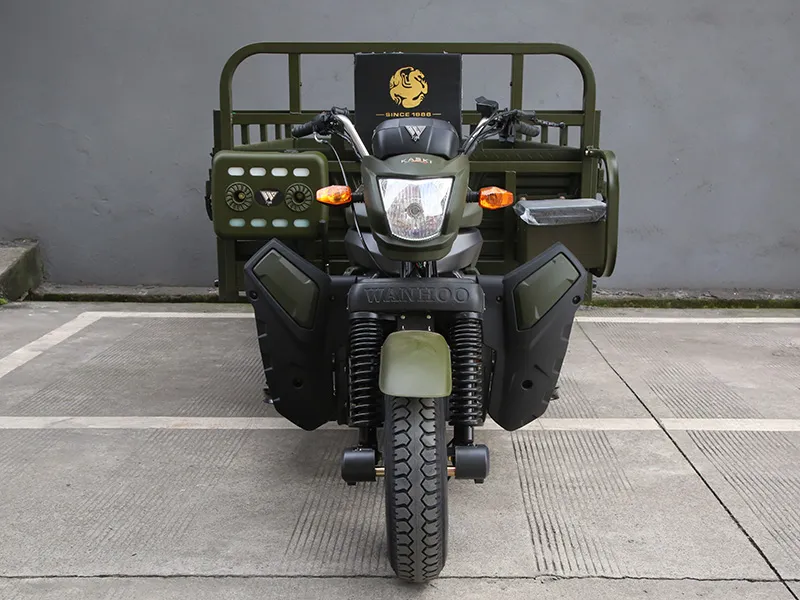
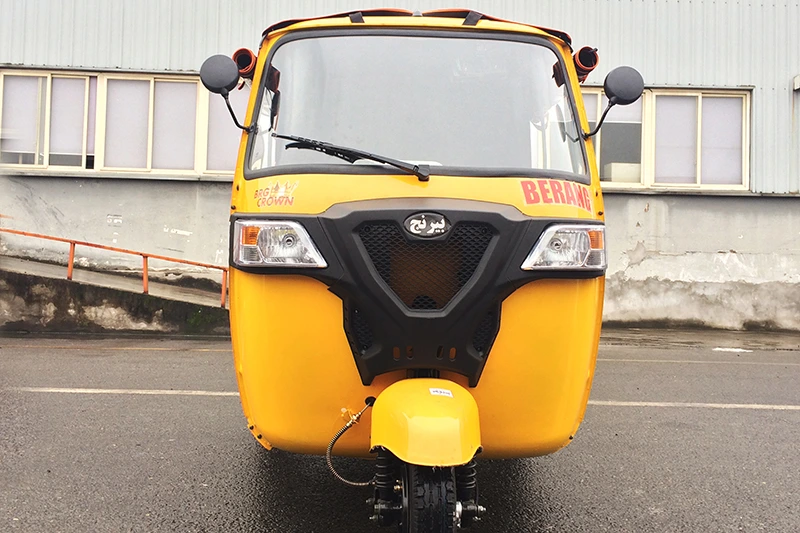
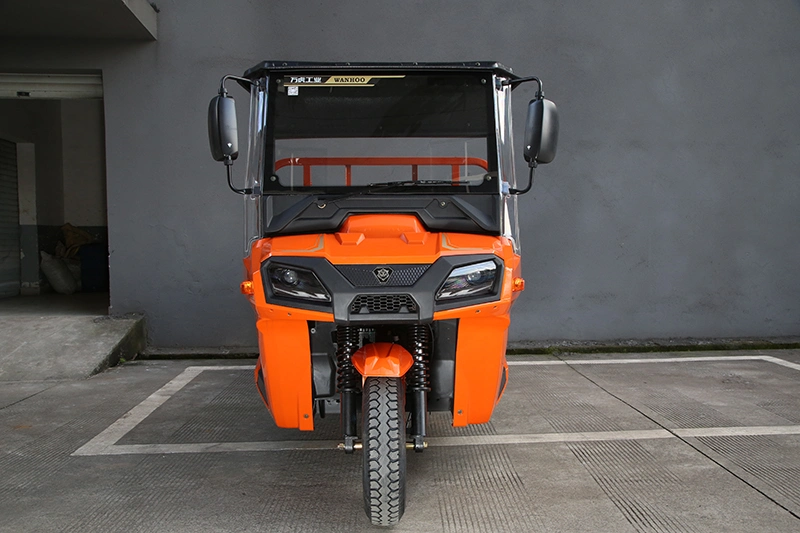
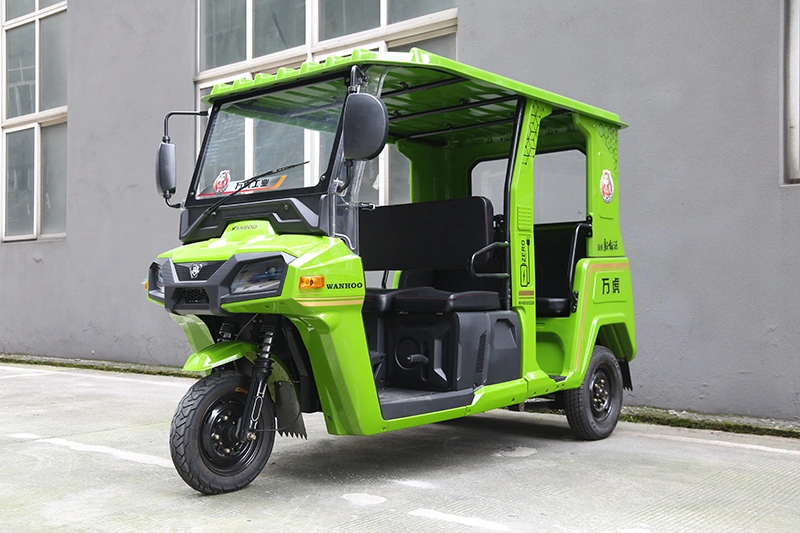
The axle internals are obscured in this exterior photograph. It cannot establish a full-floating arrangement.
How a Full Floating Rear Axle Carries Load
Dana's explanation of semi-floating and full-floating axles distinguishes the shaft's combined load and torque role in a semi-floating assembly from the independently supported hub of a full-floating assembly. The source concerns Dana axles; it supports the general principle, not a specification for a Wanhoo vehicle.
In a typical full-floating design, bearings support the hub on a spindle or housing end. The half-shaft passes through the assembly to transmit torque. Bearing placement, retention and flange details still vary.
| Function | Typical semi-floating arrangement | Typical full-floating arrangement |
|---|---|---|
| Transmits drive torque | Half-shaft | Half-shaft |
| Carries wheel loads | Shaft participates in supporting the wheel | Hub bearings transfer loads to the housing |
| Locates the wheel | Depends on the shaft and its retention design | Hub has support independent of the half-shaft |
| Service requirements | Exact manual required | Exact manual required |
Use this as a simplified comparison. A model drawing is needed to establish how a particular axle handles each load and retains its parts.
What a Shaft Failure Can Mean
Because the hub has independent support in a typical full-floating design, a half-shaft break alone normally does not remove that support. A hub, bearing or retention failure can still compromise the wheel.
In some semi-floating designs, a shaft or retainer failure can affect wheel location. The outcome depends on the failure point and retention arrangement. Neither label provides a guarantee about what will happen in a particular incident.
A damaged axle requires qualified assessment. Do not treat continued hub support as permission to keep driving after a failure.
Why the Label Does Not Set Payload
The whole vehicle, tyres, axle components and applicable load basis determine the operating limit. Installing or advertising a full-floating assembly does not authorise a higher load.
Material, tube dimensions, bearings, joints and manufacturing details matter alongside the architecture. Dana's product specifications list construction details separately from the axle type, illustrating why the label is only one part of a specification.
Ask which test load, road duty and acceptance criteria apply to the quoted axle. Compare those conditions with the proposed use, including load placement and surface conditions. A test on another vehicle does not establish the same capacity for this one.
Check Service Access and Local Parts
Some full-floating designs permit shaft removal without disturbing the hub. That possibility should be confirmed in the current repair manual, including required tools and any adjustment procedure.
Compare bearing and seal designations, parts availability, lubrication requirements and workshop access. Full-floating construction is not automatically the lowest-cost or easiest-to-service option for every application. The exact assembly and support terms decide those questions.
Request a sectional drawing that identifies the hub bearings, spindle, shaft and retention components. Pair it with an illustrated parts list so a workshop can order the correct revision.
What External Inspection Can Establish
An outer shaft flange can be a clue in some designs, but covers and hub arrangements differ. Confirm the architecture from a drawing or manual rather than dismantling a vehicle to identify it.
A ground-level inspection can record visible leaks or damage. Lifting and under-vehicle work require a qualified person using the specified support procedure. CCOHS guidance warns against relying on a jack alone.
Reading Historical Wanhoo Axle Descriptions
Historical Chinese product pages for WH-金虎 / WH200ZH-12C and WH-新悍虎 / WH200ZH-5C use full-floating wording for those listed configurations.
Those descriptions do not establish the current export assembly sold under KINGTIGER or HANHOO. Request the current model-to-axle mapping, sectional drawing and specification revision before assigning that label to a quotation.
Conclusion
A full floating rear axle changes how the hub is supported. To make it a useful purchase criterion, connect that architecture to the exact assembly, documented load limits, service procedure and parts supply. Keep the vehicle's permitted load as the operating limit.
Frequently Asked Questions
Is a full-floating axle always stronger?
The label alone cannot establish strength or durability. Compare the complete design, component specifications and relevant test conditions.
Can a full-floating axle carry more cargo automatically?
No. The vehicle's documented load limit and applicable approval basis still control operation.
Can I identify it from the wheel hub alone?
Some features offer clues, but appearance is provisional. Confirm with the sectional drawing, parts list or service manual.
Does a historical Wanhoo page confirm the current export axle?
No. It describes the configuration shown in that source. A current export order needs its own vehicle and axle mapping.