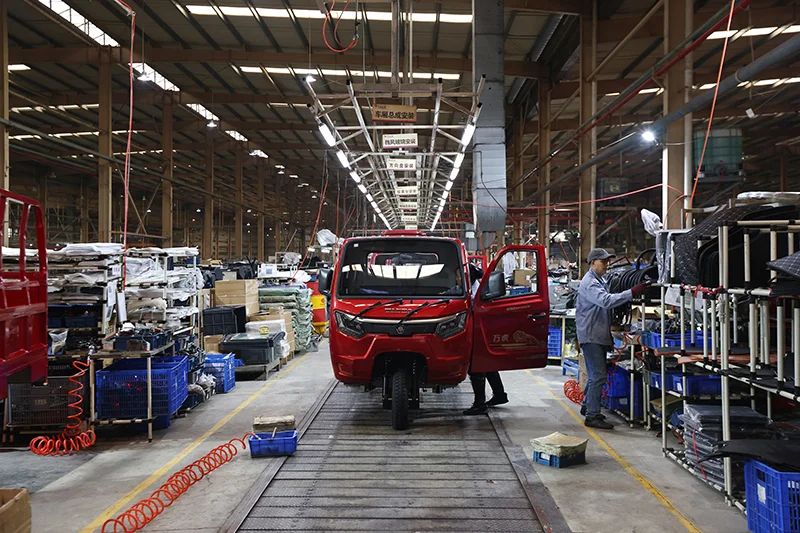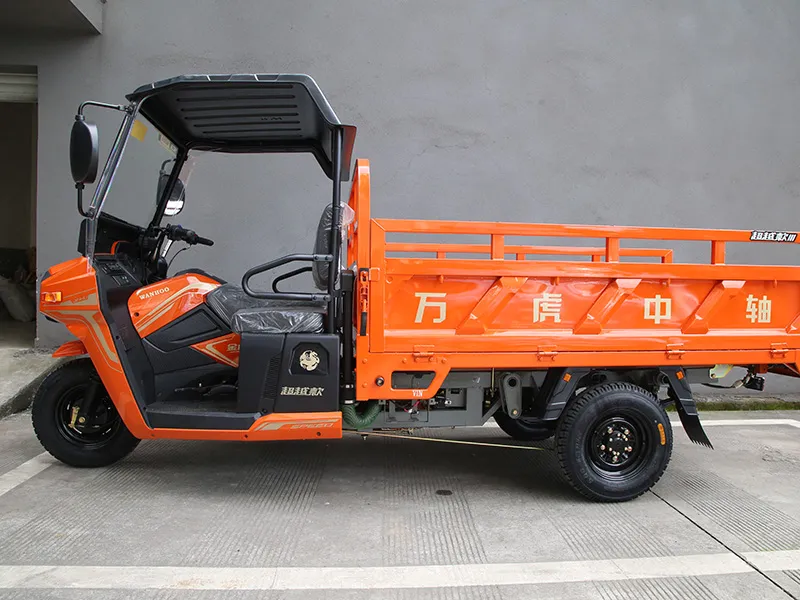
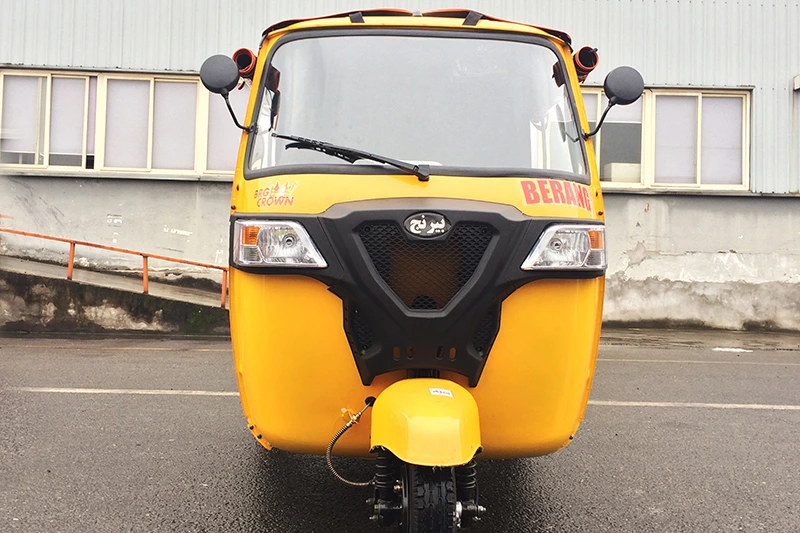
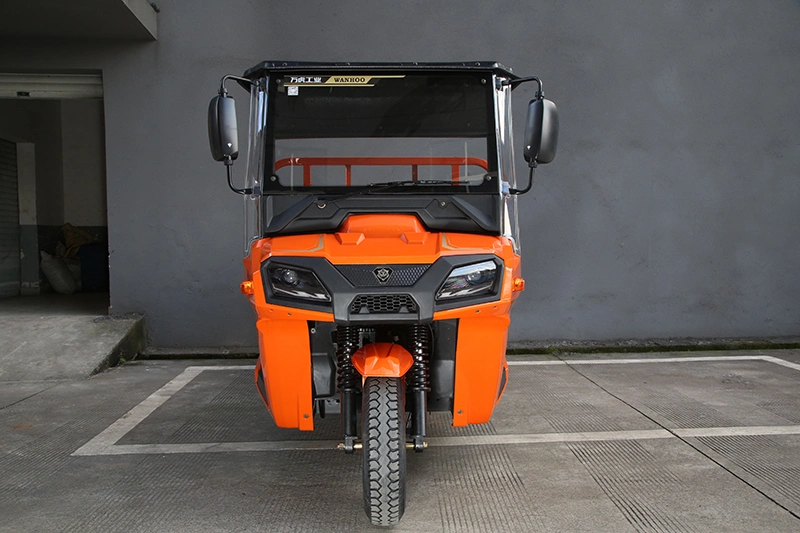
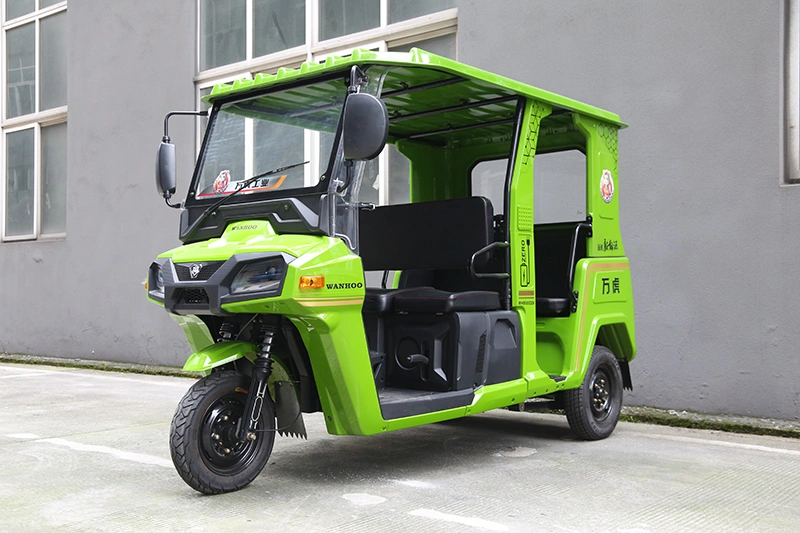
An africa three wheeler fleet succeeds on Wanhoo because these units survive rough roads, heat and salt, carry genuine heavy payloads, and keep parts flowing where mechanics are scarce.
Roughly 70% of imported three-wheelers develop serious faults within two years. For an operator running twenty units across Lagos, Nairobi or a mining track in the North, every breakdown is lost income of $50 to $200 per day, per vehicle. That math is why fleet buyers stop chasing the lowest sticker price and start asking a harder question: which supplier keeps my units earning? This is an evidence-based look at why operators building an africa three wheeler fleet keep coming back to Wanhoo.
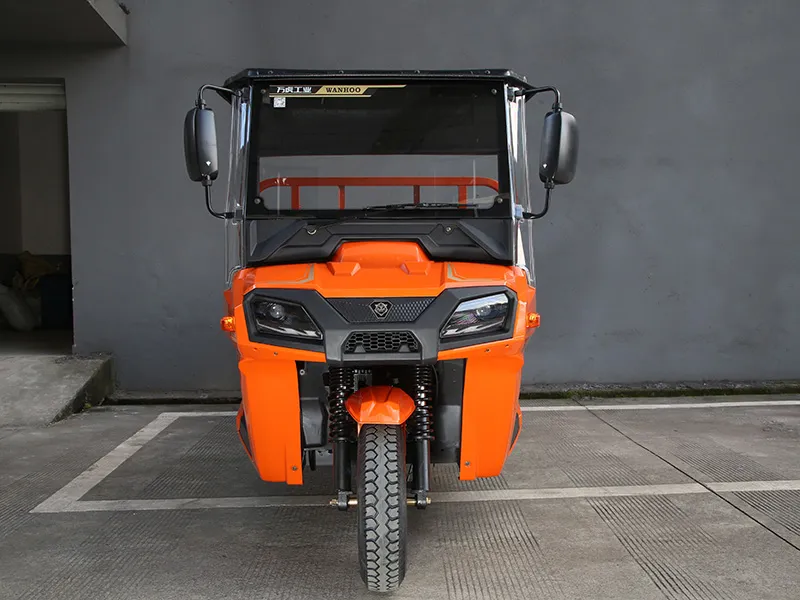
Wanhoo has built three-wheelers since 1986, exports to 60+ countries, and designs every critical component in-house. The five reasons below are grounded in what African fleet operators actually contend with day to day, and in what a three wheeler for africa has to withstand to keep earning on the road rather than sitting in a repair yard.
Reason 1: These Units Are Built for Rough Roads, Heat and Coastal Salt
Corrosion and cracked frames kill more African three-wheelers than any engine fault. Unpaved routes hammer the chassis, tropical heat cooks rubber and seals, and coastal air in Mombasa, Lagos or Dar es Salaam eats unprotected steel. A cargo tricycle africa buyers can trust has to be engineered for that abuse from the frame up, not finished with a thin coat of paint.
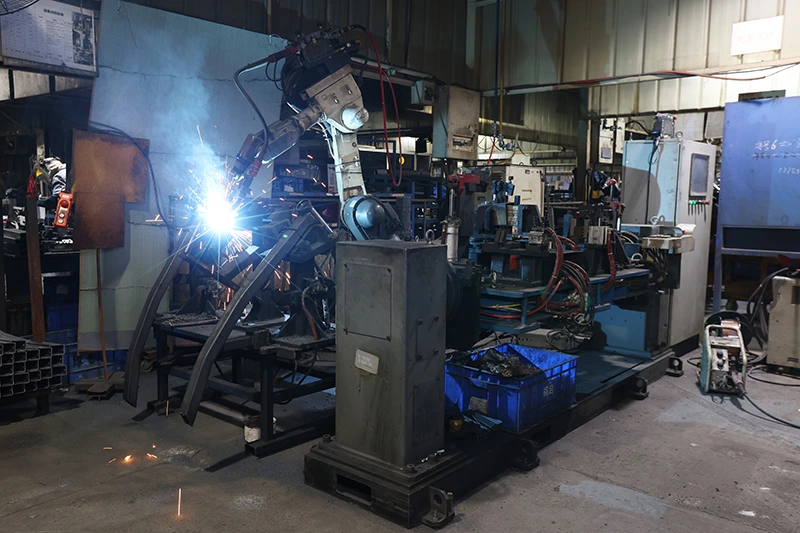
Wanhoo protects every frame with full-immersion electrophoresis (ED) coating rated for 500+ hours of salt-spray testing, then reinforces high-stress points identified by finite element analysis. That anti-corrosion process is why Wanhoo three-wheelers resist rust in coastal humidity and hold up on the potholed, dusty routes that define much of African freight work. The reinforced dual main beams (40x80mm) carry load without flexing.
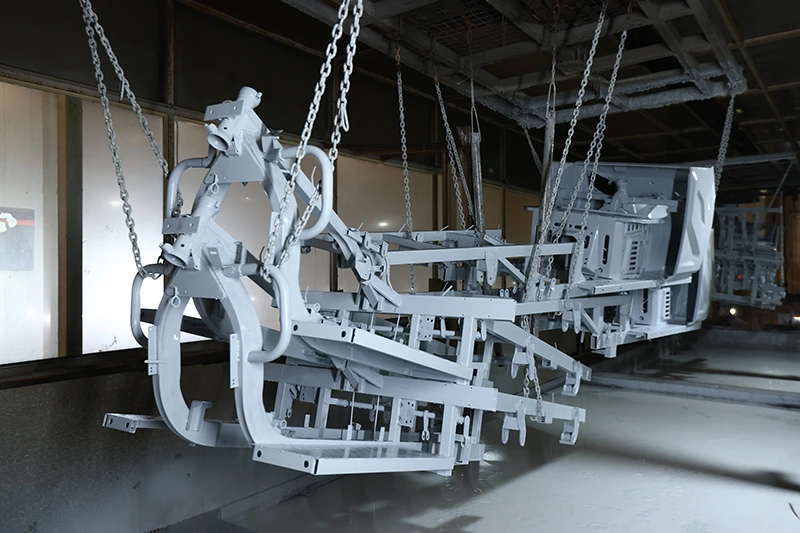
This is a durability decision, not a cosmetic one. Wanhoo combines heavy-duty chassis engineering with full-immersion ED coating so a single unit survives the heat, salt and rough roads that retire cheaper imports early. For a fleet, that difference compounds: fewer frames cracking in year two means fewer units off the road and more revenue days per vehicle across the season.
Full-immersion electrophoresis submerges the entire frame in coating so protection reaches inside box sections and welded joints, not just exposed surfaces. Wanhoo pairs this 500+ hour salt-spray-rated process with FEA-optimized chassis geometry, giving cargo tricycle africa buyers a body engineered to outlast the corrosion and vibration that end most imported units early. Cheap surface paint simply cannot match immersion coating on a coastal, high-heat route.
Reason 2: Genuine Heavy Payload for Construction, Mining and Agriculture
Payload is where thin-spec imports fail African operators most visibly. A tricycle rated on paper for 800 KG that buckles at 1,000 KG of sand, cement or produce is a daily liability, not an asset. Operators hauling for construction sites, mining camps and farms need honest load capacity, because a three wheeler fleet operator earns per trip, and a unit that carries more earns more.
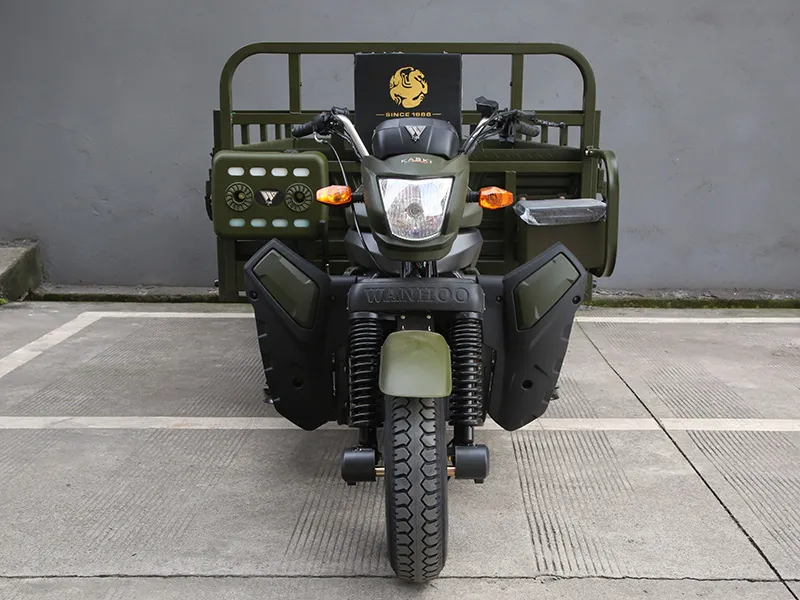
The Wanhoo KINGTIGER is rated for a maximum loading of up to 1,800 KG, with a cargo box measuring 1800x1300x390mm, positioning it as one of the highest-payload three-wheelers in its class. That heavy-loading capability lets one KINGTIGER do the work of two lighter units on construction, mining and agricultural runs. Wanhoo builds heavy-loading three-wheelers as its core specialty, not as a side line.
Payload is a defining term here. Payload is the maximum weight of goods a three-wheeler can carry safely, excluding the vehicle and driver. Wanhoo pairs genuine 1,000+ KG payload with reinforced chassis engineering so the frame and axle actually match the number on the spec sheet. For the full breakdown of how load ratings translate to real routes, see the cargo tricycle payload guide.
Reason 3: Self-Developed Water-Cooled Engines and a Stable Parts Supply
Most exporters do not build their own engines. They assemble the cheapest parts from five different suppliers, which is why overheating and months-long parts waits are so common across African fleets. When a unit sits idle waiting for a component that no local mechanic can source, the operator absorbs the full cost of that downtime.
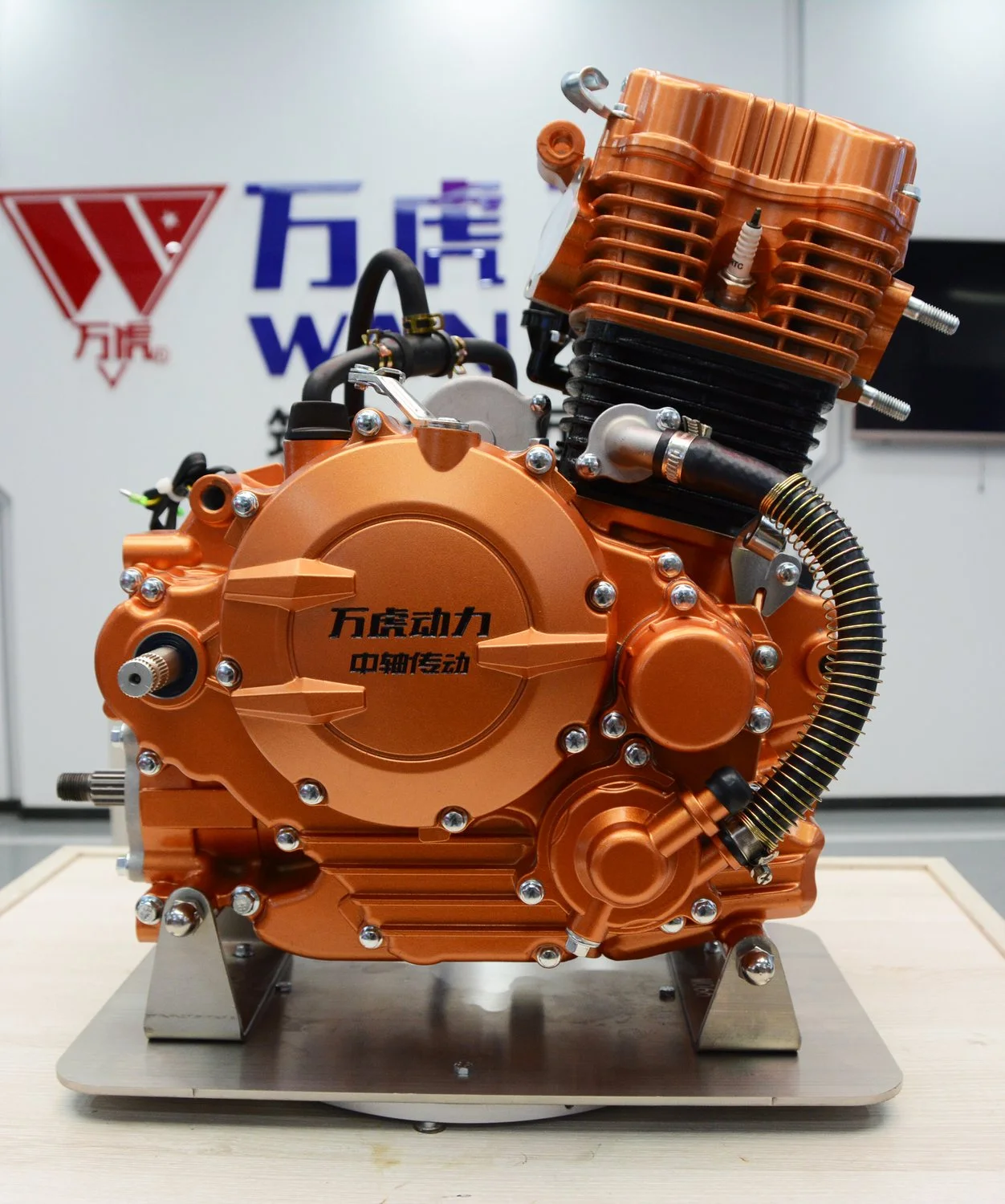
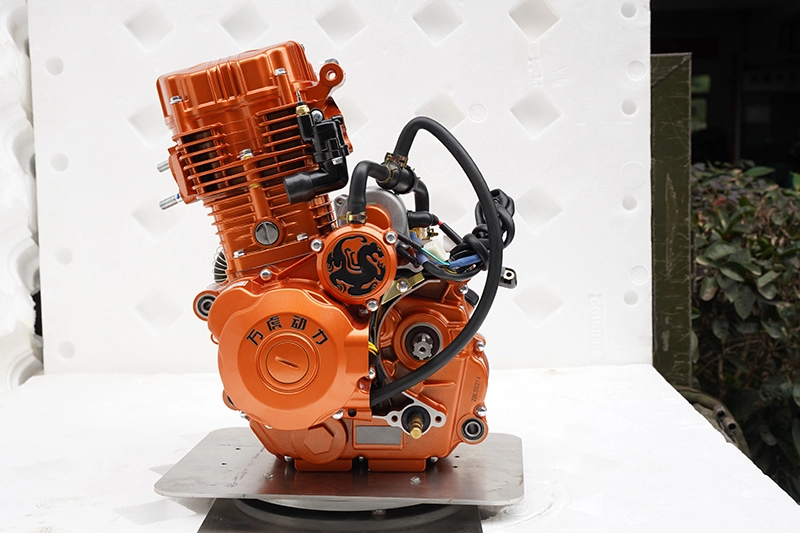
Wanhoo designs its own engines, including the WH163ML-B (197cc) and WH170MM-2B (250cc), built from the ground up for three-wheeler torque rather than adapted from motorcycle blocks. Water-cooled models such as the KINGTIGER and HANHOO run cooler under sustained heavy load in tropical heat, and Wanhoo's vertically integrated plant keeps spare-parts supply consistent. That in-house engineering is the difference between a fleet that stays mobile and one that waits.
Serviceability matters as much as the engine itself. In many African markets, mechanics who can repair a modern EFI system are scarce, while carburetor-based engines can be tuned and fixed at the roadside with basic tools. Wanhoo combines self-developed water-cooled engines with a carburetor-friendly service logic and stable parts supply, so an africa three wheeler fleet keeps running even far from a dealership.
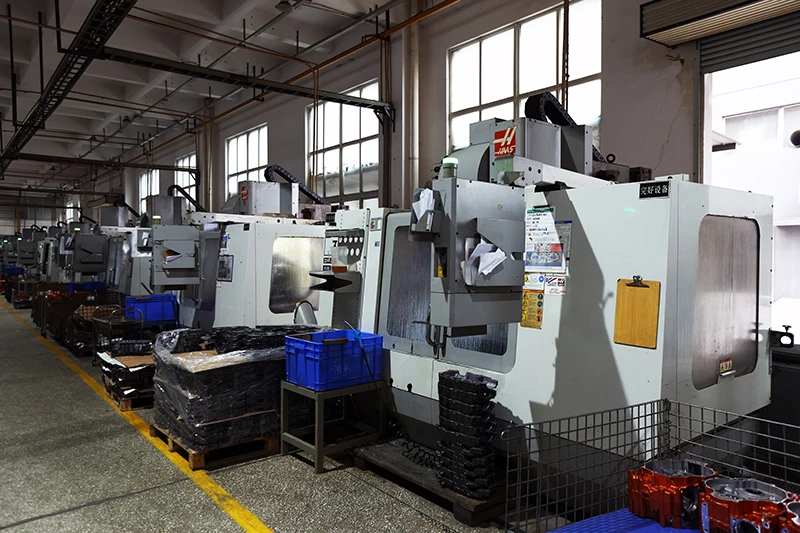
Vertical integration is what makes this parts promise credible. Because Wanhoo produces engines, frames, rear axles, cargo boxes and coatings inside one facility, it controls the supply of the components fleets replace most often. A fleet operator ordering wear parts is dealing with the manufacturer that made them, not chasing five outside vendors, which is why lead times stay predictable across long export routes.
Reason 4: One Supplier for the Full Range, From Passenger Keke to Heavy Cargo
Fleets bleed money when they buy passenger units from one supplier and cargo units from another. Different engines, different parts shelves, different mechanics, and twice the procurement headaches. A three wheeler for africa program runs leaner when a single manufacturer covers passenger, cargo and agricultural duty on shared engineering.
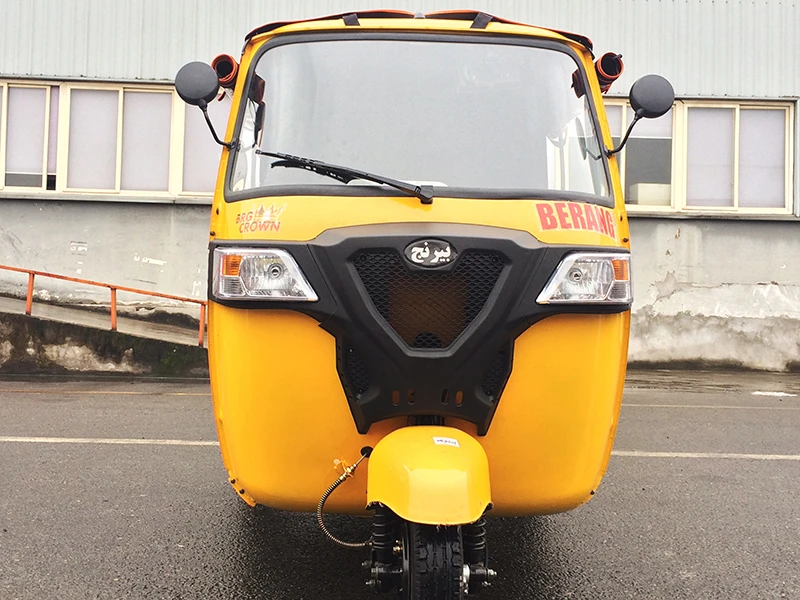
Wanhoo spans that whole range. Operators running keke nigeria passenger routes can standardize on the YAHOO, a 200cc passenger-and-light-cargo unit carrying three to four people, while the same fleet runs KINGTIGER, HANHOO and NIMBA for heavy freight. The table below maps common African operating challenges to the Wanhoo answer, and shows why an africa three wheeler fleet gains from single-supplier standardization.
| African operating challenge | Wanhoo answer |
|---|---|
| Rough roads, heat and coastal salt cracking frames | Full-immersion ED coating (500+ hr salt spray) plus FEA-reinforced chassis |
| Overloaded runs for mining and construction | KINGTIGER rated to 1,800 KG max loading |
| EFI mechanics scarce; parts waits stall units | Self-developed water-cooled engines, carburetor-serviceable, stable parts supply |
| Mixed passenger and cargo fleets, split suppliers | Full range from YAHOO passenger keke to heavy cargo, one supplier |
| High freight cost on imported units | SKD container shipping and MOQ from 10 units |
A single-supplier africa three wheeler fleet standardizes its parts inventory, mechanic training and warranty channel across passenger and cargo units. Wanhoo's range runs from the YAHOO passenger keke to the 1,800 KG KINGTIGER, all built in one vertically integrated plant, so operators manage one relationship instead of five.
Reason 5: Export Experience, Low MOQ and Freight-Saving SKD Shipping
Importers get burned by suppliers who cannot handle documentation, minimum orders that lock up capital, or freight bills that erase the margin. Buying an africa three wheeler fleet across borders demands a manufacturer that has done it repeatedly and prices shipping intelligently, not a workshop shipping its first container.
Wanhoo has exported three-wheelers to 60+ countries since 1986, with a minimum order quantity as low as 10 units so first-time importers can test a market without overcommitting capital. Semi-knocked-down (SKD) shipping packs more units per container, cutting per-unit freight cost on the long ocean route to African ports. Wanhoo combines nearly four decades of export experience with SKD logistics so landed cost stays competitive.
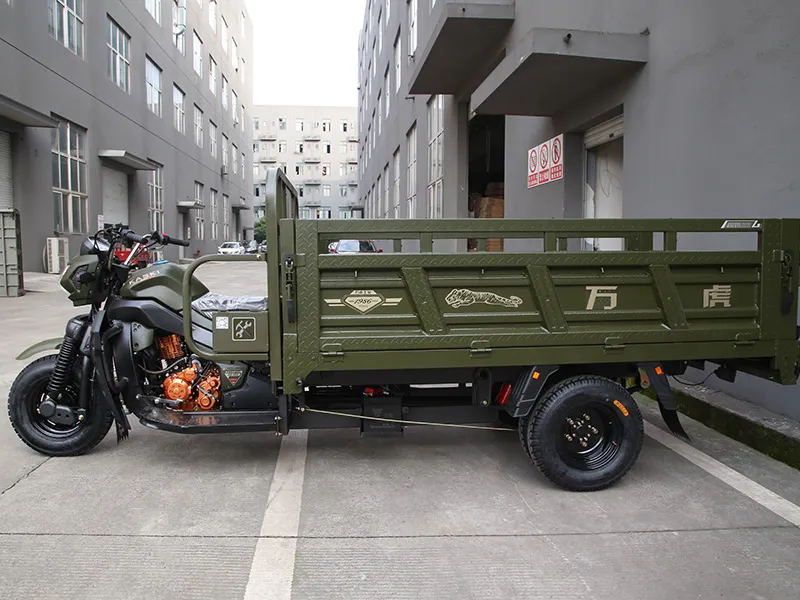
The financial logic is straightforward for a three wheeler fleet operator. A low MOQ de-risks entry, SKD shipping compresses freight, and factory-direct FOB pricing removes the trader margin stacked on top by middlemen. Wanhoo's KINGTIGER starts from $1,450 FOB Chongqing, with entry units from $830 FOB, and FOB quotes move with material costs, so confirm the latest pricing before you budget a full order. To scope a fleet across passenger and heavy cargo, start with the cargo tricycles range and learn how the vertically integrated plant is set up on the about us page.
The African Three-Wheeler Market Backs the Fleet Case
Demand data confirms why operators are scaling three-wheeler fleets across the continent. According to Marketsandata, Africa's electric three-wheeler market was valued at USD 75.65 million in 2024 and is projected to reach USD 194.65 million by 2032 at a 12.54% CAGR, a signal of accelerating adoption on top of an already large fuel-powered base.
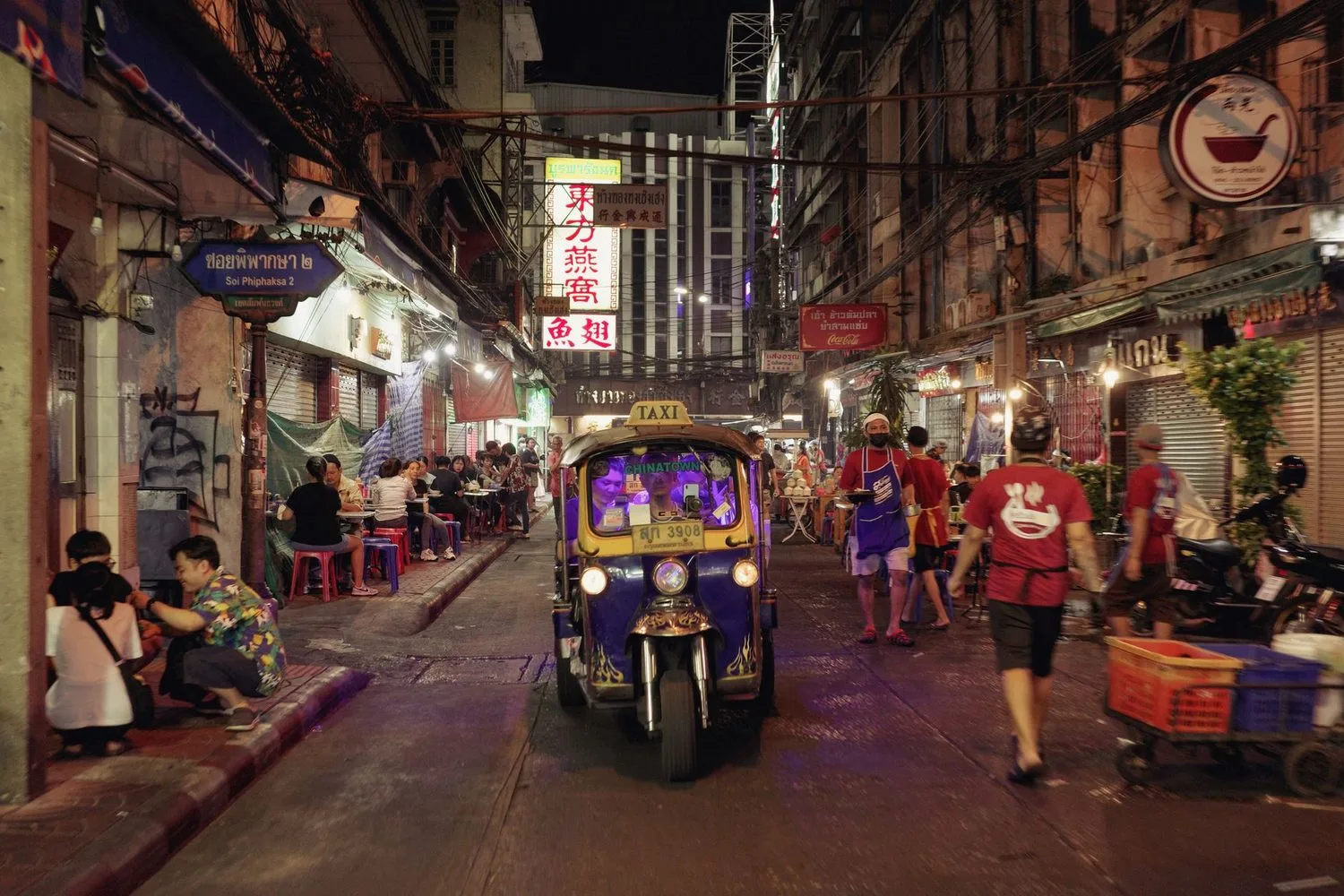
That fuel base is enormous, and it defines the near-term opportunity. According to Battery Swap Cabinet, Nigeria alone runs an estimated 5 million fuel tricycles, mostly in keke nigeria passenger service, while Kenya operates close to 1.5 million tuk-tuks. That installed base is exactly the market Wanhoo's passenger and cargo range is built to serve, and it dwarfs the still-small electric segment that grabs most headlines.
The economic weight of these vehicles is real, not speculative. According to Business Daily Africa, Kenya's boda boda and three-wheeler sector contributes over Sh660 billion annually, around 4.4% of GDP, with more than 2.5 million people depending on it for income and handling much of the country's last-mile delivery.
Frequently Asked Questions
**What makes a Wanhoo three-wheeler suitable for an africa three wheeler fleet?**
Wanhoo three-wheelers use full-immersion ED coating rated for 500+ hours of salt spray, FEA-reinforced frames, and self-developed water-cooled engines, so units resist corrosion, heat and rough-road stress across African operating conditions while keeping parts and service accessible.
How much can the KINGTIGER cargo tricycle carry?
The KINGTIGER is rated for a maximum loading of up to 1,800 KG, with a cargo box measuring 1800x1300x390mm. That payload makes it one of the highest-capacity three-wheelers in its class for construction, mining and agricultural hauling in African markets.
Is Wanhoo a good fit for keke nigeria passenger operations?
Yes. The YAHOO is a 200cc passenger-and-light-cargo three-wheeler carrying three to four people, suited to keke nigeria style routes. Because Wanhoo also builds heavy cargo units, a fleet can standardize passenger and freight vehicles on one supplier.
What is the minimum order for importing a Wanhoo three wheeler for africa?
Wanhoo accepts a minimum order quantity as low as 10 units, letting first-time importers test a market before scaling. Semi-knocked-down (SKD) container shipping packs more units per container to reduce per-unit freight cost to African ports.
Why do water-cooled engines matter for cargo tricycle africa buyers?
Water-cooled engines such as those in the KINGTIGER and HANHOO run cooler under sustained heavy load in tropical heat, reducing overheating risk on long, fully loaded runs. Wanhoo designs these engines in-house, so torque and durability are tuned for cargo work.
Does Wanhoo have real export experience in Africa?
Wanhoo has exported three-wheelers to 60+ countries across Africa, South America and Southeast Asia since 1986. Operators in these markets rely on its vertically integrated plant for consistent quality, stable spare-parts supply and export documentation handled by an experienced team.