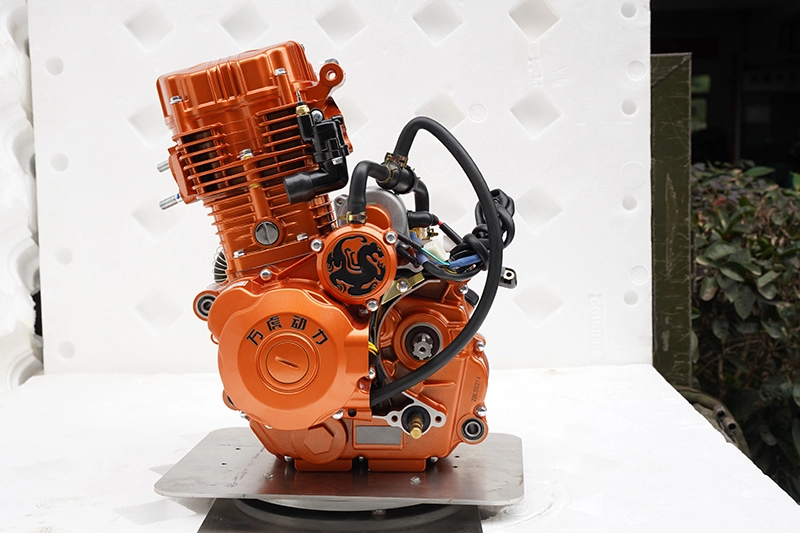
A three-wheeler payload rating can be a regulatory declaration or an unverified commercial claim. They answer different questions and should not be compared without the underlying documents and test conditions.
Put two specification sheets for Chinese cargo three-wheelers side by side and the arithmetic looks absurd. One declares 600 kg. The other advertises 1,800 kg. Same wheel count, comparable frame, similar engine displacement, similar cargo bed dimensions. A buyer reading those two sheets concludes that one machine is three times the vehicle the other is, and places the order accordingly. That conclusion is usually wrong, because the two documents are not reporting the same measurement. A three-wheeler payload rating is not one number. It is at least two numbers, produced by two separate systems, and manufacturer literature almost never says which system it is quoting from.
The two numbers behind every Chinese cargo three-wheeler
The first number is regulatory. Every road vehicle model sold in China must enter the Ministry of Industry and Information Technology (MIIT) vehicle announcement process, and its published technical data includes 额定载质量, rated load capacity. The examples in this article range from 200 to 600 kg. It is a declared value used in domestic type approval and registration, not a standalone endurance test.
The second number is commercial. The same class of vehicle is advertised with load claims of 1,000 to 3,000 kg. Such a number may describe an intended use case, a configuration, a one-off demonstration or simply a marketing claim. Without a documented test method, it does not establish what the vehicle can carry safely and repeatedly.
A cargo three-wheeler may be described by two very different payload numbers. One is the rated load capacity published in a regulatory filing. The other is a commercial claim in sales material. Unless the source and test conditions are stated, the two numbers are not comparable.
The gap between them is frequently threefold or more. The regulatory figure and the commercial claim come from different processes, and the trouble starts when a buyer treats them as answers to the same question.
What the Chinese catalogue actually records
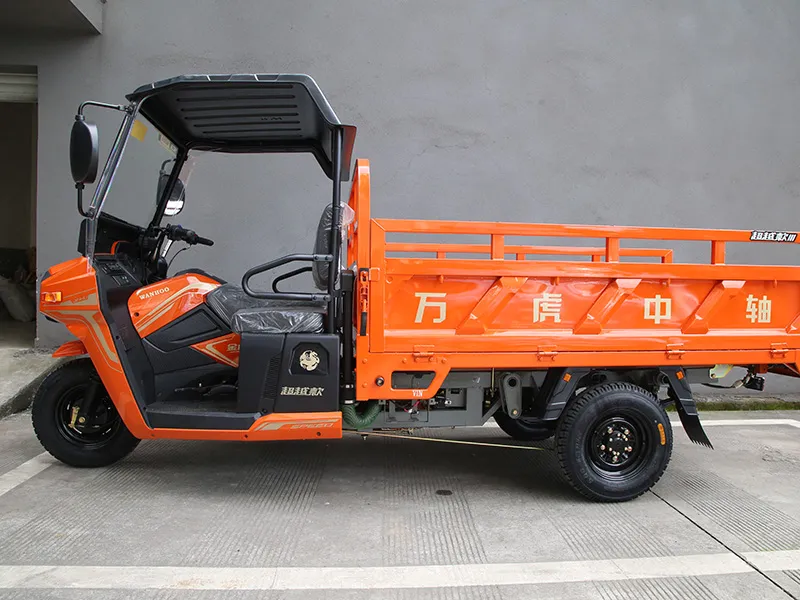
Vehicle access in China runs through a licensing system covering both production enterprises and individual products, published as the Road Motor Vehicle Production Enterprises and Products announcement in numbered batches. The MIIT formally published batch 409 on 13 August 2026. As of 22 August 2026, batch 410 remained a proposed publication under public consultation, not a final announcement. For vehicle categories covered by the system, the approved model entry is part of domestic registration and sale eligibility.
Each entry carries a technical block: rated load capacity, kerb weight, gross vehicle mass, overall dimensions, wheelbase, track, maximum design speed, engine displacement and power. Those values are declarations made by the manufacturer to a regulator and published by that regulator. They are checkable, comparable between manufacturers, and they are the closest thing this product category has to an audited number.
The Chinese vehicle announcement records the configuration submitted for domestic approval; it is not a field durability test. A declared rated load is useful because it is document-based and model-specific, but it does not by itself prove how a vehicle will perform on a buyer’s roads.
Six official and consultation entries, side by side
The table below sets out three Wanhoo catalogue entries and three Zongshen entries. The Zongshen ZS2200DZH-3J and ZS150ZH-19W appear in the batch 409 process that was subsequently published; the ZS3000DZH-5A row comes from the batch 410 public-consultation material and is therefore labelled as proposed rather than approved. These examples illustrate how the category is documented, not a quality judgment about either company.
| Manufacturer | Model | Rated load capacity | Kerb weight | Gross vehicle mass |
|---|---|---|---|---|
| Chongqing Wanhu Mechanical and Electrical Co., Ltd. (batch 408) | WH150ZH-21C | 600 kg | 570 kg | 1,170 kg |
| Chongqing Wanhu Mechanical and Electrical Co., Ltd. (batch 256) | WH250ZH-3B, 249 cm³, 10.8 kW | 200 kg | 398 kg | 598 kg |
| Chongqing Wanhu Mechanical and Electrical Co., Ltd. (batch 266) | WH200ZH-7B, 203 cm³, 9.8 kW | 200 kg | 399 kg | 599 kg |
| Jiangsu Zongshen Vehicle Industry Co., Ltd. (batch 409 announcement) | ZS2200DZH-3J, electric | 500 kg | 575 kg | 1,285 kg |
| Jiangsu Zongshen Vehicle Industry Co., Ltd. (batch 410 public-consultation proposal) | ZS3000DZH-5A, electric, rear tipping body | 500 kg | 599 kg | 1,309 kg |
| Jiangsu Zongshen Vehicle Industry Co., Ltd. (batch 409 announcement) | ZS150ZH-19W, petrol, 149 ml, 8.8 kW | 500 kg | 599 kg | 1,099 kg |
The supporting dimensions show that these are cargo machines with similar footprints, while still requiring model-by-model comparison. The Wanhoo WH150ZH-21C is filed at 3,500 x 1,358 x 1,870 mm, with a wide-bed option at 3,500 x 1,425 x 1,870 mm, a maximum design speed of 55 km/h, rear track offered at 1,150 or 1,200 mm and wheelbase at 2,420 or 2,540 mm. The Zongshen petrol model is filed at 3,500 x 1,430 x 1,900 mm with a maximum design speed of 60 km/h.
The comparison that is actually defensible
Declared ratings vary within a single manufacturer. The sampled Wanhoo entries show 600 kg on one model and 200 kg on two others, while the sampled Zongshen entries show 500 kg. A brand-level payload claim is therefore insufficient; compare the exact model, filing status and figure.
Picking the highest of your own filings and setting it against a competitor’s lowest is the same manipulation as quoting a brochure figure against a declared one, only harder to spot. This article will not do it. What the filings above actually show is that a rated load capacity belongs to a model and a batch, never to a brand, and that the honest comparison is between two specific filings for two specific vehicles you are actually considering.
A 20 percent difference between two declared figures is a documented regulatory difference, not automatic proof of a 20 percent engineering advantage. A threefold difference between a brochure and a filing is not a valid comparison at all. Compare filing with filing, and require test evidence for commercial claims.
That 20 percent comparison rests on published values rather than copywriting, but it should be read as nothing more than a difference between declarations. It does not establish that one manufacturer’s vehicles carry more than another’s in daily use, because daily use is not what a catalogue entry measures. Two machines with identical declared ratings can behave very differently on a rutted laterite road at 40 degrees Celsius with a rear axle that has not been serviced since delivery.
That gives a buyer a document-based comparison that is less dependent on whoever writes the brochure.
Wanhoo’s own brochures do this too
Wanhoo’s own commercial literature quotes payload figures above Wanhoo’s own MIIT filing. The filing declares 600 kg. Wanhoo markets models at up to 1,800 kg and at 1,000 kg. That gap is real, it is in Wanhoo’s material, and a reader holding a Wanhoo brochure should question it.
This is an industry-wide practice rather than one company’s, and Wanhoo’s literature does it as well. A reader holding a Wanhoo catalogue, a Wanhoo quotation or a Wanhoo product page should apply exactly the same question to those documents that this article applies to everybody else’s: which of the two numbers is this, and which document does it come from?
That question is the whole test of whether a page like this is worth reading. An article that exposed the pattern across the industry while quietly exempting its own publisher would be an advertisement wearing a lab coat.
The mechanics in the next section explain how the gap arises across the category. They are an explanation, not a defence, and they do not make a 1,800 kg brochure claim equivalent to a 600 kg declared value.
Where the gap comes from
The regulatory figure is part of a model’s approved domestic specification. It contributes to gross mass and registration data, but it should not be reverse-engineered into a promise about durability, taxation or road access in another country.
The commercial figure exists to position the product for a use case. It may reflect a factory load test, an engineering load case or field practice, but the number alone does not tell a buyer which. Treat it as a claim to verify rather than as a structural rating.
A Chinese domestic filing does not replace destination-market homologation for an export vehicle. The importer must confirm which payload and gross-mass values will appear on the destination documents. A brochure claim is not evidence of registration eligibility or safe continuous loading.
A 600 kg declared rating is still not a promise of 600 kg every day for five years. Continuous safe use depends on the exact configuration, speed, road surface, gradient, maintenance and the manufacturer’s documented duty cycle. Ask for those conditions instead of inventing a safety margin from the headline number.
What the gap costs an importer
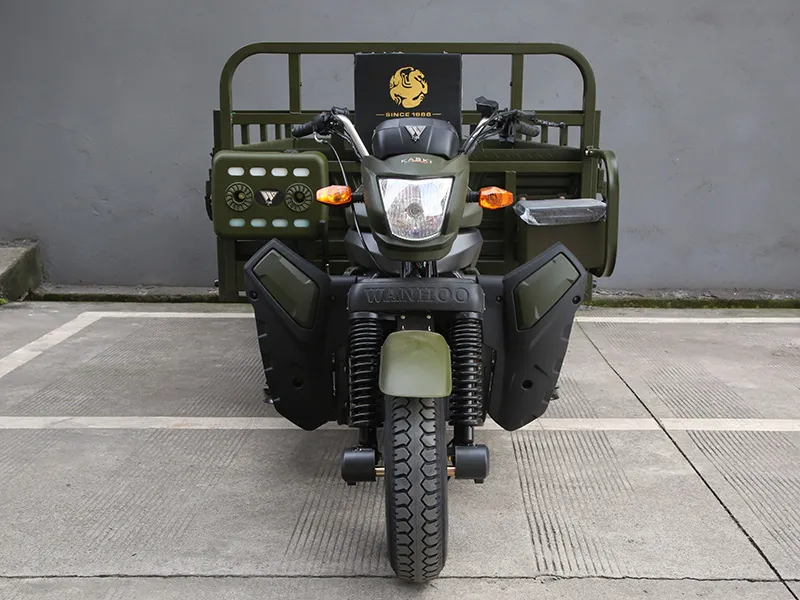
This is not specification-sheet trivia. Depending on the destination rules and sales contract, a mismatch can create registration and compliance exposure for the importer.
If a destination market registers vehicles by declared load capacity, a three-wheeler marketed at 1,800 kg may be homologated, taxed, insured or restricted against a lower declared figure, or may not fit the intended vehicle category. The result depends on local law, homologation rules and the insurer’s policy terms.
Vehicle categories in destination markets are usually drawn around declared values: a light commercial threshold here, a gross mass band there, an axle load limit somewhere else. If the paperwork that arrives with the container declares 600 kg while the sales campaign that has already run promised 1,800 kg, the importer is the party standing between those two documents when a customer asks which one is true.
Insurance questions may surface only after an incident, when the distinction is most costly to resolve.
Depending on local law and policy wording, insurance or liability after an accident may be affected by whether a vehicle was loaded within its declared rating. Importers should align sales claims with registration documents and obtain advice from the destination authority, insurer and qualified local counsel.
Scale matters here. According to the World Health Organization, more than half of all road traffic deaths are among vulnerable road users, including pedestrians, cyclists and motorcyclists. That figure covers all road traffic rather than three-wheelers specifically, but it describes the traffic environment these vehicles work in, and it is the environment in which a loading dispute becomes a liability dispute.
The customer base compounds it. According to the International Labour Organization, over 60 per cent of the world’s workforce and 80 per cent of enterprises operate in the informal economy. Informal operators rarely have a compliance department, they buy on the number the salesperson quoted, and they will load to whatever the vehicle appears to tolerate. A distributor selling into that market cannot assume the customer will read the registration document.
Three questions that settle it in one email
These three questions can be pasted into a message to any supplier, including this one. They are designed to produce documents rather than reassurance.
| What to ask | What the answer tells you | Document to request |
|---|---|---|
| Is this figure a declared rating for registration, or a structural maximum? | Whether the number came from a regulator or from engineering and marketing | The catalogue or type-approval entry showing the declared rated load capacity |
| Under what conditions was it determined: road surface, speed, duty cycle, continuous or intermittent? | Whether the figure survives real routes, or only a smooth-surface one-off | The test condition sheet or engineering load case behind the figure |
| Which figure will appear on homologation and registration paperwork in my market? | Whether the vehicle can be registered in the category you intend to sell into | A filing or type-approval certificate from a market comparable to yours |
The first question is the one most suppliers have never been asked. A supplier who can answer it immediately, and name the document, is telling you their commercial and regulatory numbers are tracked separately and deliberately. A supplier who cannot answer it is quoting a figure nobody in the building can source.
The second question matters because payload without a duty cycle is meaningless. A frame that carries 1,000 kg once, on tarmac, at 20 km/h, for a photograph is not the same asset as a frame that carries 1,000 kg daily on broken surfaces for three years. Ask specifically whether the figure is continuous or intermittent, and ask what road surface was assumed. According to the World Bank, more than one billion people live more than 2 km away from an all-weather road, which is a fair description of where most of these vehicles spend their working lives. A payload figure derived on a paved test route describes a road most of your customers do not have.
The third question is the one that protects the balance sheet. Ask which number will appear on the homologation and registration paperwork in your own market, and request a filing or type-approval document from a comparable market where one is available. If no comparable document can be produced, treat that as an evidence gap to close before the container is loaded.
Three numbers, one vehicle
Wanhoo was founded in Chongqing in 1986. The company runs a 60,000 square metre plant with more than 1,000 employees, holds an annual capacity of 100,000 vehicles and 300,000 engines, builds its own engines and frames, and exports to more than 50 countries. None of that changes how its brochures should be read. It changes only how quickly the underlying documents can be produced when a buyer asks for them.
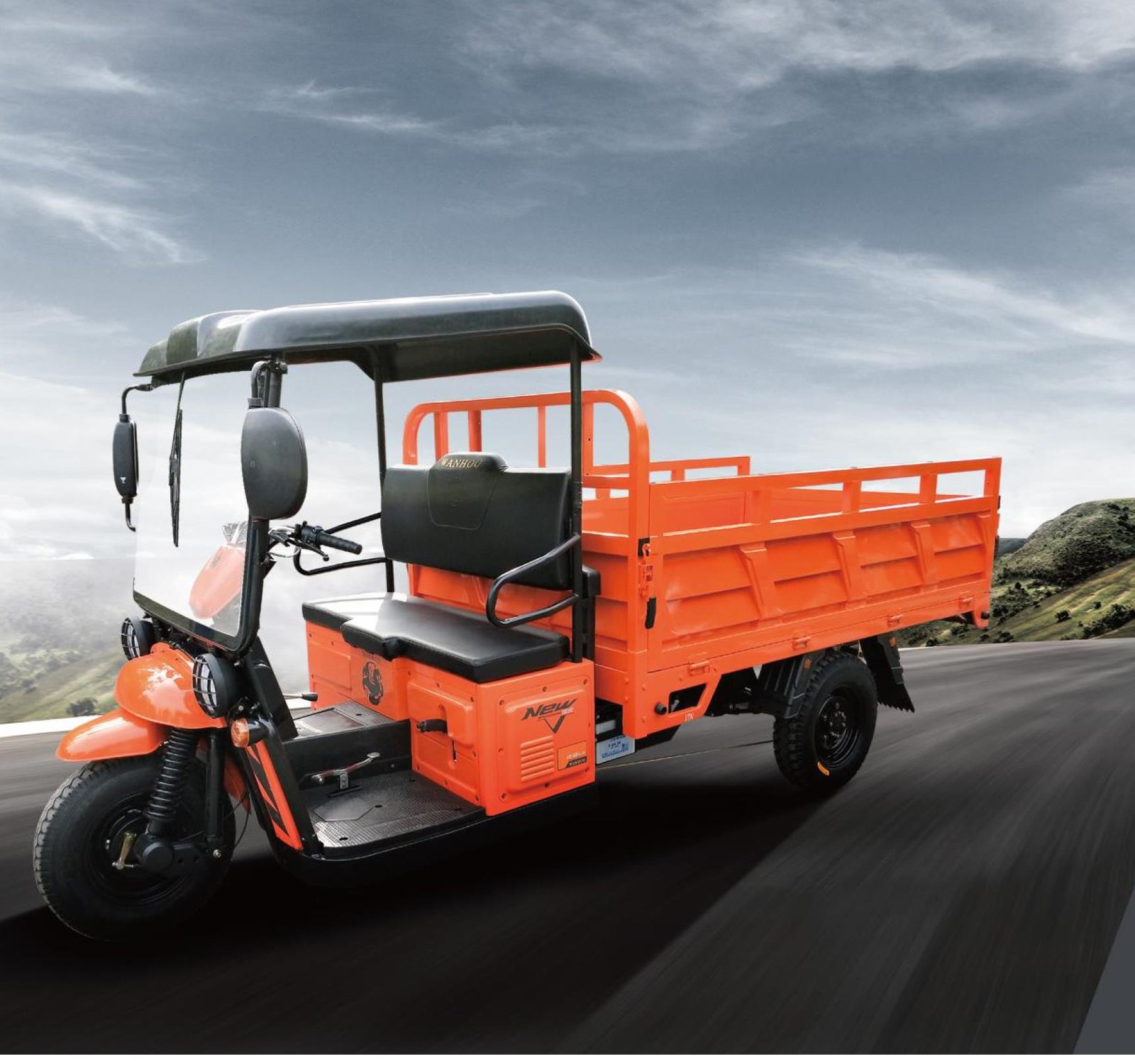
Three numbers may describe one vehicle: a commercial claim, a model-specific regulatory declaration and the load permitted for a defined duty cycle. Safe operation should be established through the manufacturer’s engineering limits, destination-market approval and controlled commissioning on the buyer’s routes—not by a one-off overload demonstration.
A buyer who keeps those three separate can compare the declared value, verify the commercial claim and plan within the approved duty cycle. A buyer who lets them collapse into a single headline number may discover the difference only during registration, commissioning or a claim review.
Frequently Asked Questions
**What is the difference between a declared rated load capacity and a marketed payload figure?**
A declared rated load capacity is a model-specific value published through a regulatory process. A marketed payload figure is a commercial claim whose meaning depends on the test method and duty cycle. The filings sampled here range from 200 to 600 kg, while commercial materials can quote much higher numbers; those values should not be compared without their source documents.
Why can an MIIT rated load be much lower than a brochure claim?
Because the numbers come from different processes. The MIIT value belongs to a submitted domestic configuration, while the brochure number is a commercial claim that may use different assumptions. Neither document proves safe continuous loading on your roads; request the destination homologation value and the manufacturer’s written test conditions.
Does a higher declared rating mean a stronger vehicle?
Not on its own. A declared rating is a useful document-based figure for comparing exact models, but it measures a regulatory declaration rather than field durability. Two vehicles with identical declared ratings can behave very differently on unpaved roads, at high ambient temperatures or under poor maintenance.
Does Wanhoo’s own literature quote figures above its MIIT filing?
Yes. The Wanhoo filing referenced in this article declares 600 kg of rated load capacity, while Wanhoo commercial literature markets models at up to 1,800 kg and at 1,000 kg. This is an industry-wide practice rather than one company’s, and a reader holding a Wanhoo brochure should ask the same question of it that they would ask of any other supplier.
Which payload figure will appear on my registration documents?
That depends entirely on how your destination market homologates and registers vehicles. Many markets register by declared load capacity, in which case the number on the paperwork can be far below the number in the sales material. Ask the supplier directly which figure will appear, and ask to see a filing or type-approval certificate from a market comparable to yours.
How do I verify a payload figure before placing an order?
Ask three things in writing: whether the figure is a declared rating or a structural maximum, under what road surface, speed and duty cycle it was determined, and which value will appear on registration paperwork in your market. Request the underlying document in each case. A figure that cannot be traced to a filing or a test condition sheet is a marketing number.