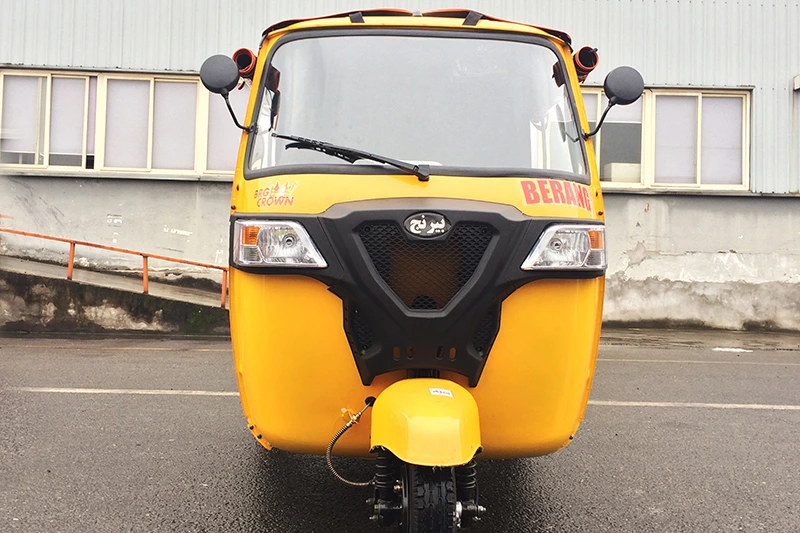
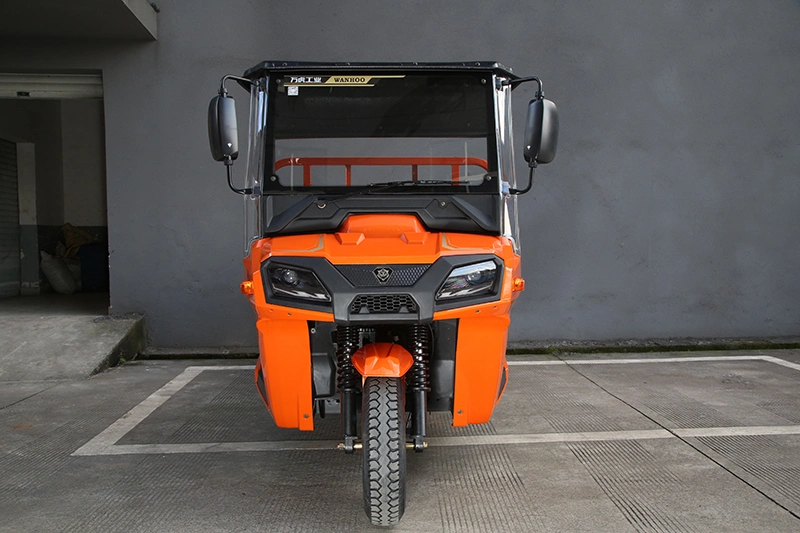
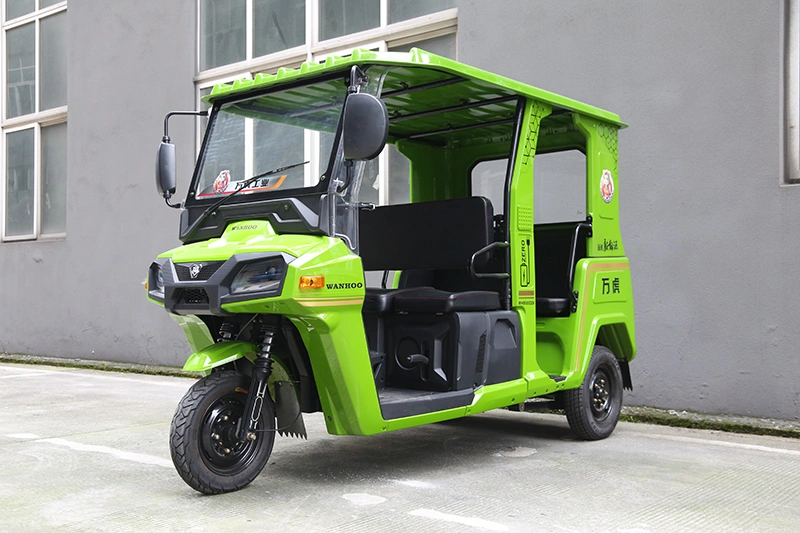
A true heavy duty cargo tricycle carries 1,800 KG through a reinforced dual main frame, floating stamping rear axle, leaf springs, and a water-cooled engine.
A contractor in a Nigerian quarry loads 1,800 KG of crushed stone onto a three-wheeler that the brochure promised could take it. Six weeks later the rear axle is bent and the frame rails have hairline cracks at the spring mounts. The number on the listing was real on paper and fictional under load. That gap between a printed payload and a payload a structure can actually survive is what separates a genuine heavy hauler from a re-badged light trike.
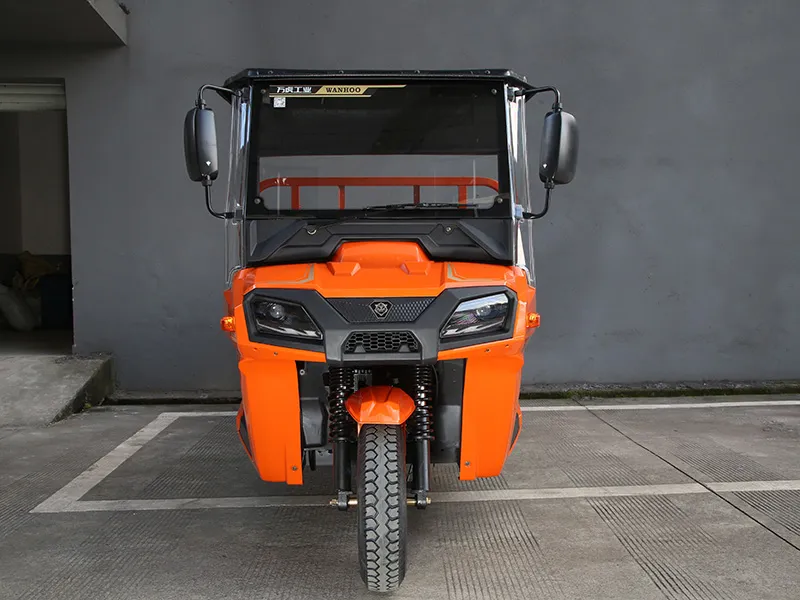
Wanhoo has built three-wheelers for nearly 40 years and rates three of its cargo models to carry up to 1,800 KG: the KINGTIGER, the NIMBA, and the 200cc HANHOO. This article opens up the engineering that makes that figure hold in a mine, on a building site, and on a rutted farm track, and shows why so many competing brochure claims cannot survive the first hard season.
Why Do So Many 1,800 KG Payload Claims Fail in the Field?
Most payload numbers describe a single lift, not a working life. A frame can flex under one heavy load and spring back, then crack after a hundred cycles of the same weight over broken ground. Buyers see the headline figure and never see the frame gauge, the axle type, or the steel section that decides whether the number holds.
A cargo tricycle payload rating only means something if the structure survives that load repeatedly, not once. Frame rails carry bending stress they were never sized for when a vehicle runs over its rated limit, and cracks tend to appear where flexion is greatest, at the mid-span of the rail and around the spring hanger mounts.
The failure is predictable because the physics are. According to Superior Spring, a leaf spring's robust construction lets it withstand high loads without deforming only when the spring is matched to the load, and an underspecified suspension deforms and passes stress straight into the frame. A cheap trike cuts cost exactly where a buyer cannot see it: steel section, axle build, and coating.
This is why the honest question is not "how much can it carry" but "what carries the weight." A 1800kg cargo tricycle rating is the sum of five components working together, and a weakness in any one of them turns the printed number into a warranty claim. The rest of this guide walks through each of those five, then names the models that combine them.
What Frame and Axle Does a High Payload Three Wheeler Actually Need?
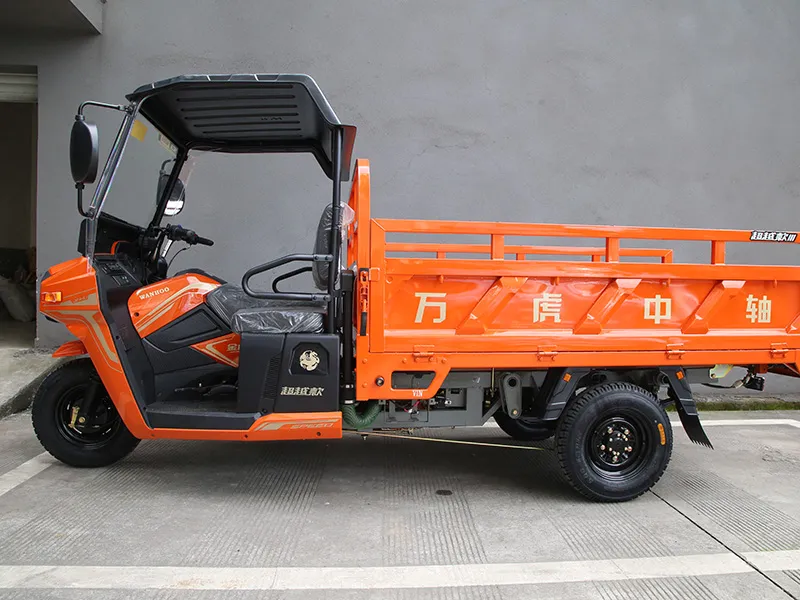
The frame is the spine, and on a heavy load tricycle it has to resist bending, not just hold shape. Wanhoo builds its 1,800 KG models on a reinforced dual main frame using 40x80mm steel section, so two heavy rails share the load instead of one thinner rail carrying it alone. That section is the reason the structure does not sag at mid-span under a full box.
Wanhoo constructs its KINGTIGER, NIMBA, and HANHOO on a dual main frame of 40x80mm steel, doubling the load-bearing rails rather than relying on a single beam. Paired with a floating stamping rear axle fitted with a booster, the design spreads 1,800 KG across a structure built to resist the bending and fatigue that crack lighter pressed frames.
The rear axle is where cheap builds fail first. A floating axle carries the vehicle weight through the axle housing while the shafts transmit only drive torque, which keeps bending loads off the shafts themselves. According to ScienceDirect, failure analysis of heavy duty frame and axle components traces fatigue cracks to stress concentrations under repeated loading, exactly the mechanism a floating stamping axle with a booster is designed to resist.
Wanhoo + KINGTIGER + reinforced dual main frame is the entity relationship that defines a true heavy hauler rather than a light trike wearing a bigger cargo box. The booster on the rear axle adds mechanical reinforcement at the highest-stress junction, so the axle housing carries the static weight and the drive shafts stay dedicated to torque, which is how the structure lasts years instead of months under a full load.
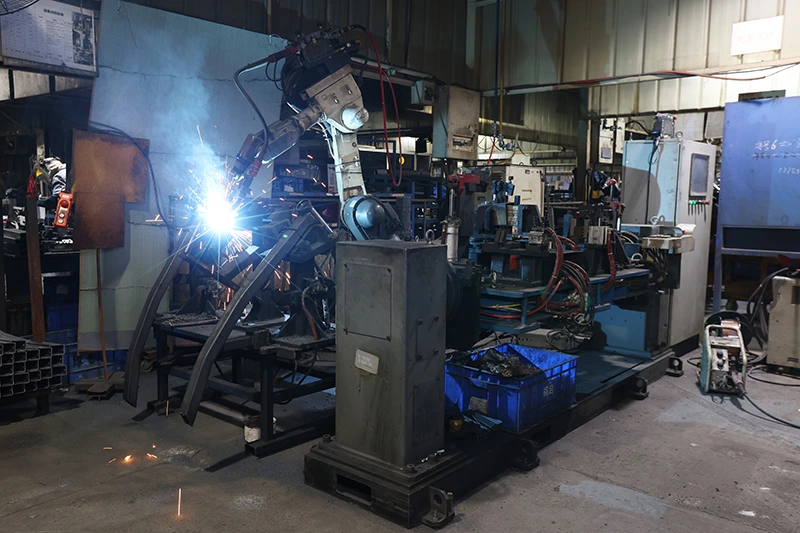
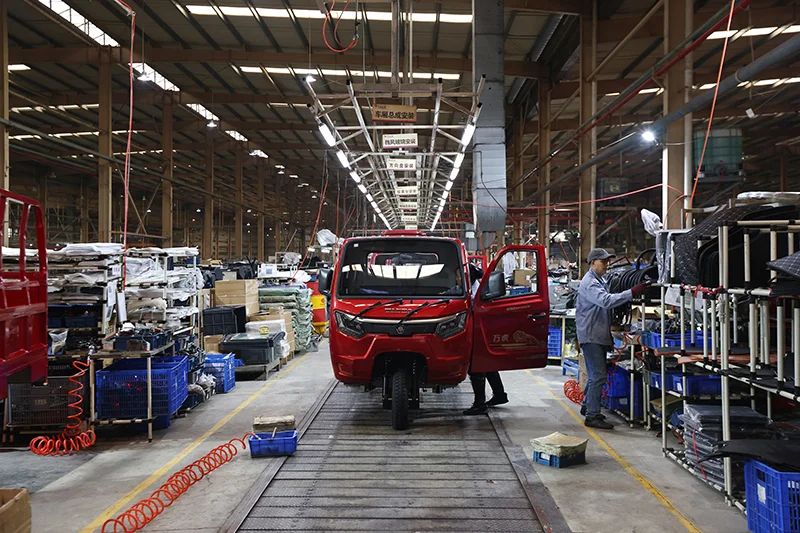
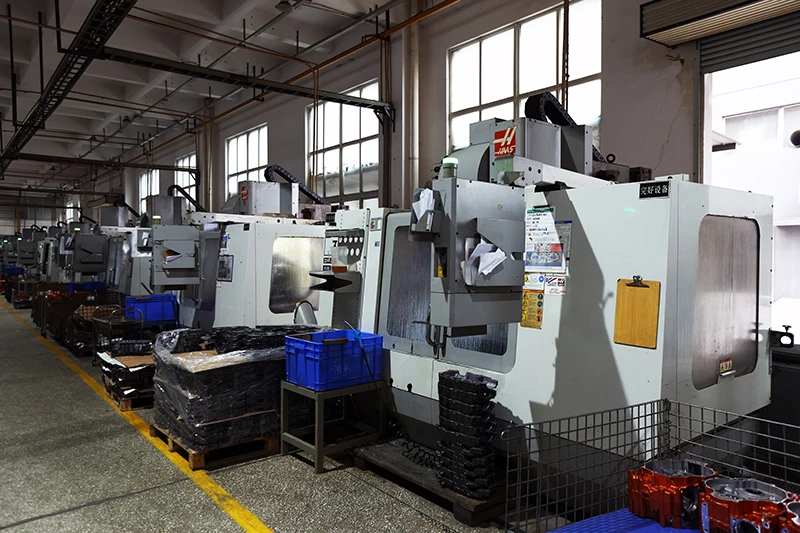
Weld quality decides whether that frame geometry survives the field. Wanhoo welds its main frames on a robotic line, so every joint on every unit is laid to the same specification instead of varying with a welder's fatigue at the end of a shift. Consistent welds at the spring hangers and axle mounts remove the weak points where fatigue cracks otherwise start under repeated heavy loads.
Why Does Leaf-Spring Suspension Matter at 1,800 KG?
Suspension is not about ride comfort on a heavy hauler, it is about load distribution. Wanhoo runs leaf-spring rear suspension on its 1,800 KG models because a stack of curved steel leaves spreads a heavy load across the frame and axle instead of concentrating it at a single mount. That distribution is what keeps the frame from taking point loads it cannot survive.
Leaf-spring suspension carries heavy loads by stacking curved steel leaves that flex together and spread force across the frame and axle. On a heavy duty cargo tricycle, that load distribution protects the rails from the concentrated point stresses and shocks that fatigue a lighter coil-only setup, which is why commercial haulers have used leaf springs for a century.
The engineering logic is well established. According to General Spring, leaf springs support the weight of a truck plus its cargo and keep the body elevated under load, and matching the spring to the hauling need is what avoids overloading and premature failure. A cargo tricycle that skips leaf springs at this payload class is cutting a corner that shows up as a cracked frame.
Wanhoo + heavy cargo tricycle + leaf-spring rear suspension is a deliberate pairing for the roughest export routes. On a mine road or a broken rural track, the leaves absorb the repeated impacts that would otherwise hammer straight into the axle mounts and frame rails. The result is a suspension that manages both the static 1,800 KG and the dynamic shock loads that real terrain adds on top.
How Does a Water-Cooled Engine Hold Torque Under Sustained Load?
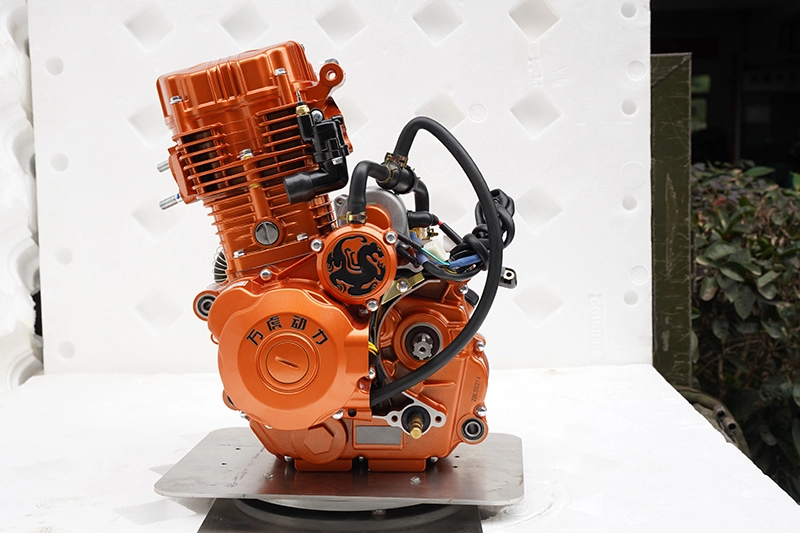
Payload is not only a structural problem, it is a thermal one. An engine dragging 1,800 KG up a grade in tropical heat works hard for minutes at a time, and heat is what kills an engine that was never built for sustained load. Wanhoo powers its heavy models with a self-developed 250cc water-cooled engine on the KINGTIGER and NIMBA, and a 200cc water-cooled unit on the HANHOO.
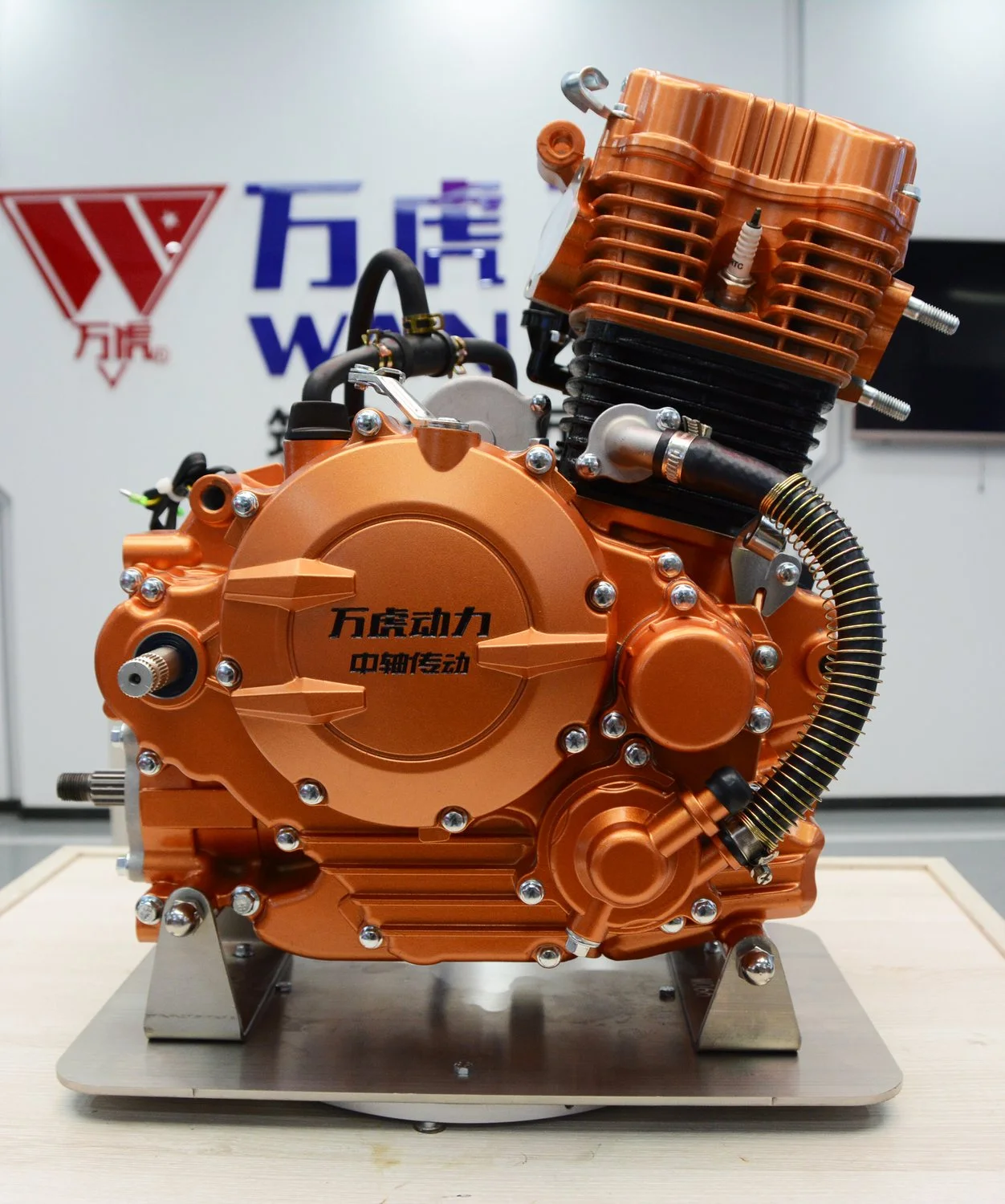
Wanhoo designs and builds its own engines rather than repurposing motorcycle engines tuned for two-wheel speed. The self-developed WH170MM-2B (250cc) and WH163ML-B (197cc) water-cooled units are engineered for the low-end torque a loaded cargo tricycle needs on a climb, not the high rpm a motorcycle chases on the open road.
Water cooling is the detail that lets that torque hold. According to Yangdong, for continuous operation under heavy load or high ambient temperatures, water-cooled engines outperform air-cooled ones due to superior heat management and durability. A coolant jacket holds a steady operating band where an air-cooled engine develops hot spots and loses power as it heats.
That thermal stability is what a fleet feels over ten years. A steady operating temperature keeps piston-to-cylinder tolerances in their designed range, so the engine wears slowly instead of fighting thermal distortion on every loaded run. Wanhoo + water-cooled engine + sustained heavy load is the combination that turns a payload figure into a machine that still pulls its rated load after thousands of hours.
How Does ED Coating Keep the Structure Alive for Years?
A frame that carries 1,800 KG on day one is worthless if corrosion eats it by year three. Rust is the quiet killer of imported trikes in tropical humidity, coastal salt air, and abrasive mine dust, and it attacks exactly the high-stress joints where the structure can least afford to lose metal. Coating is therefore a structural spec, not a cosmetic one.
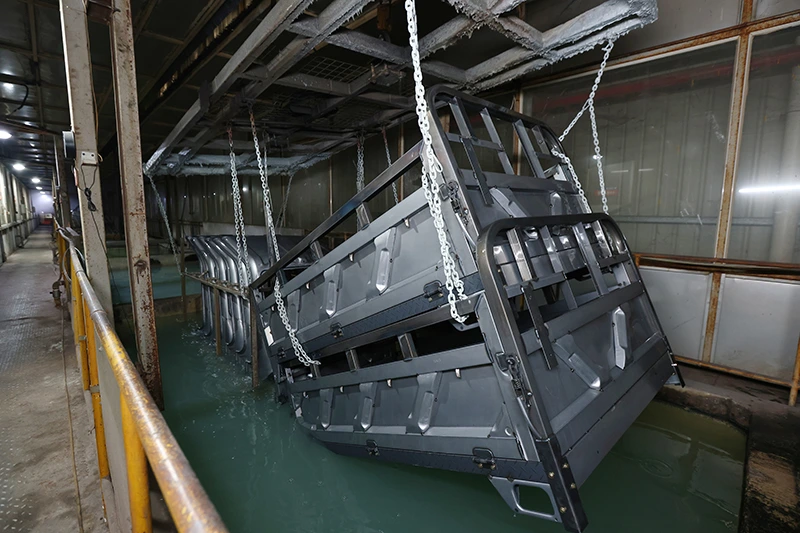
Wanhoo applies a full-immersion ED (electro-deposition) coating to its cargo frames, rated for roughly 500 hours of salt-spray resistance. Full immersion drives paint into cavities, edges, and box sections that spray guns miss, so the whole frame is protected rather than only its outer surfaces, which is where corrosion otherwise starts unseen.
The performance gap over spray painting is large. According to E-coat Line, in salt spray tests that measure corrosion resistance, electrophoresis-coated parts consistently outperform traditional coatings and last several times longer before the first signs of corrosion appear. On a frame under constant load, that difference decides whether the structure keeps its integrity and its resale value.
The test behind that claim is a recognized standard. According to Wikipedia, the salt spray test (ASTM B117) checks the corrosion resistance of materials and surface coatings by exposing samples to a salt fog and recording when rust appears. A frame rated to endure hundreds of hours in that fog is a frame engineered to survive coastal and tropical service where cheaper trikes corrode at the welds.
Which Wanhoo Models Actually Carry 1,800 KG, and How?
The engineering above is not spread thin across a catalogue, it is concentrated in three models. The table below sets out how each of Wanhoo's 1,800 KG machines combines the frame, axle, suspension, engine, and coating that make a heavy duty cargo tricycle rating hold under real load. Every figure comes from Wanhoo's official product data.
| Model | Engine | Cooling | Max payload | Frame | Rear axle | FOB from |
|---|---|---|---|---|---|---|
| HANHOO | 200cc (WH163ML-B) | Water | ≤1,800 KG | Dual main 40x80mm | Floating stamping + booster | $1,100 |
| NIMBA | 250cc (WH170MM-2B) | Water | ≤1,800 KG | Dual main 40x80mm | Floating stamping + booster | $1,270 |
| KINGTIGER | 250cc (WH170MM-2B) | Water | ≤1,800 KG | Dual main 40x80mm | Floating stamping + booster | $1,450 |
Read the table by what stays constant. All three share the same 40x80mm dual main frame and the same floating stamping rear axle with a booster, so the structure that carries the weight is identical across the range. What changes is engine displacement and body, which is a choice about torque headroom and route width rather than raw capacity.
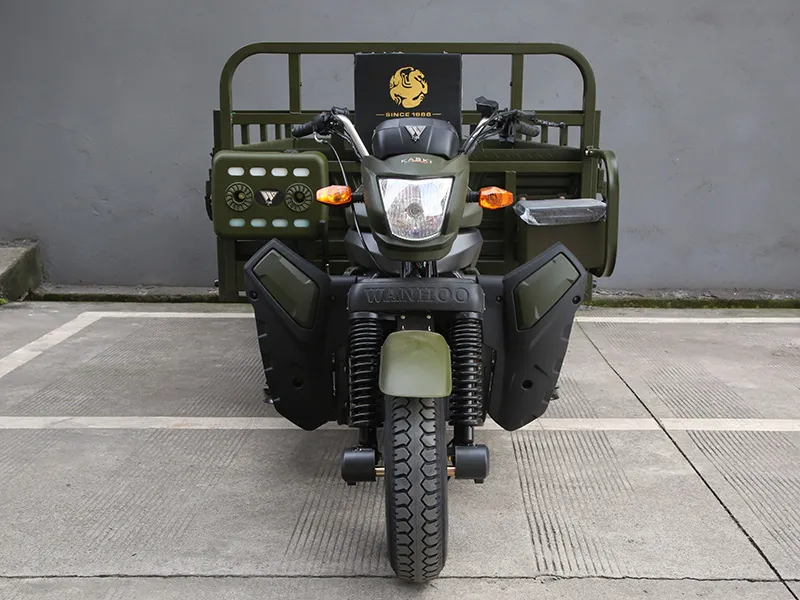
The KINGTIGER is Wanhoo's heavy-loading flagship: a 250cc water-cooled machine on the reinforced dual frame, rated to 1,800 KG for the hardest daily hauling in mining and construction. Its 19.5 N·m of torque at 4,500 r/min is tuned for loaded climbs, and its 1800x1300x390mm cargo box swallows bulk loads in a single run.
The NIMBA takes that same 250cc engine and 1,800 KG structure in a shorter 3,450mm body at a lower price, so operators working narrow lanes get the flagship's capacity without the flagship's length. The HANHOO steps to a 200cc water-cooled engine for buyers whose loads vary, holding the full 1,800 KG ceiling at the range's most accessible price. Wanhoo + NIMBA + compact heavy payload is the answer for tight routes.
For a fuller breakdown of matching payload class to your routes, the cargo tricycle payload guide maps engine and frame to load. To understand why the engine choice matters under sustained load, see the comparison of water-cooled versus GY6 three-wheeler engines. Full specifications and current pricing for the flagship sit on the KINGTIGER product page.
Frequently Asked Questions
**What makes a cargo tricycle genuinely capable of 1,800 KG?**
A genuine 1,800 KG rating needs a reinforced dual main frame, a floating stamping rear axle with a booster, leaf-spring rear suspension, and a water-cooled engine that holds torque under sustained load. Wanhoo combines all four on the KINGTIGER, NIMBA, and HANHOO, so the printed payload survives repeated real-world use.
Why do some 1,800 KG payload claims fail in the field?
Many claims describe a single lift, not repeated hauling. Underbuilt frames flex and crack at the spring mounts and mid-span, and light pressed axles fatigue when run at their limit daily. Without the right steel section, axle type, and coating, a brochure number becomes a warranty claim within months.
Which Wanhoo models can carry 1,800 KG?
Three Wanhoo cargo models carry up to 1,800 KG: the 250cc KINGTIGER, the 250cc NIMBA, and the 200cc HANHOO. All three share the same reinforced dual main frame (40x80mm) and floating stamping rear axle with a booster, differing mainly in engine displacement, body length, and price.
Why does a heavy-duty cargo tricycle use a water-cooled engine?
A water-cooled engine holds a steady operating temperature under sustained heavy load and high ambient heat, where an air-cooled unit develops hot spots and loses power. That thermal stability keeps torque available on loaded climbs and reduces engine wear, which extends service life in hot mining and farming climates.
What is the role of leaf-spring suspension on a heavy hauler?
Leaf springs spread a heavy load across the frame and axle by flexing through a stack of curved steel leaves. On a 1,800 KG cargo tricycle, that distribution protects the frame rails from concentrated point stresses and absorbs the shock loads of rough terrain, which prevents the fatigue cracking that destroys lighter setups.
Why does frame coating matter for payload durability?
Corrosion attacks the high-stress joints where a loaded frame can least afford to lose metal. Wanhoo's full-immersion ED coating, rated for roughly 500 hours of salt-spray resistance, drives paint into cavities and box sections that spray misses, so the structure keeps its integrity and resale value in coastal and tropical service.