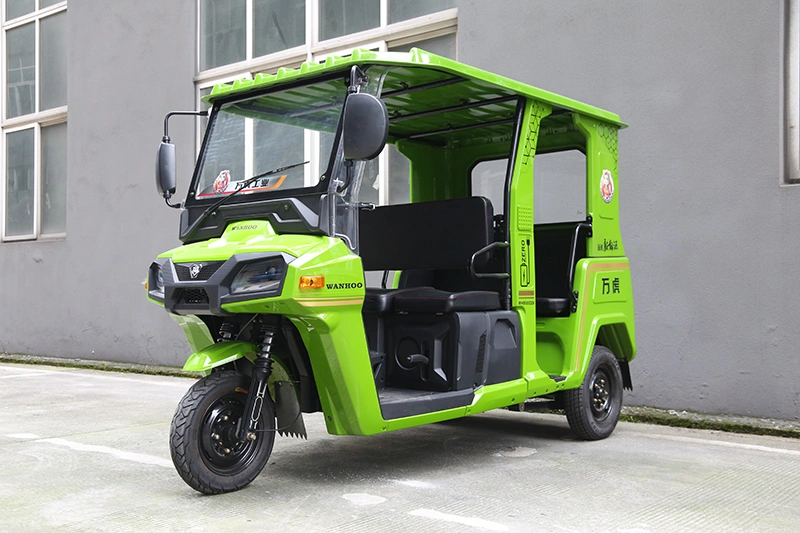
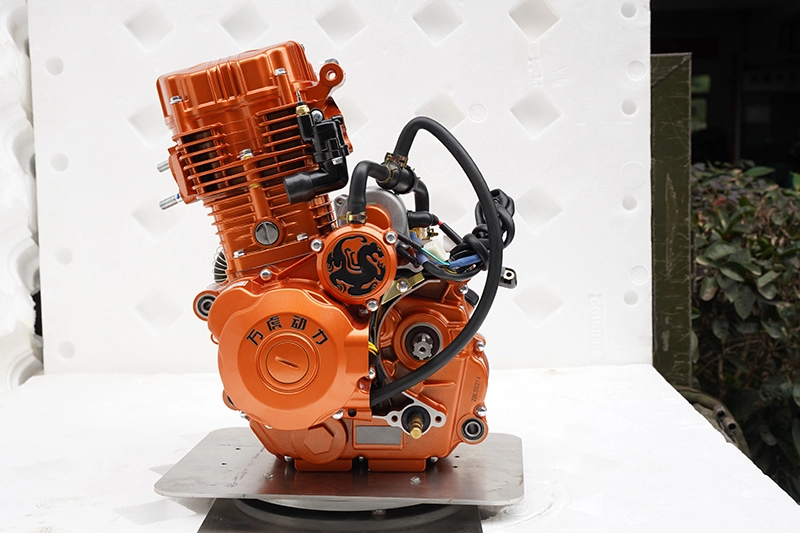
A mid-shaft three-wheeler places the engine output near the vehicle centreline so the final drive and rear half-shafts can be arranged symmetrically. That can simplify packaging and side-to-side geometry, but it does not by itself guarantee equal wheel torque, longer component life or better rollover resistance. Buyers should verify the layout with drawings, axle dimensions and the exact engine specification.
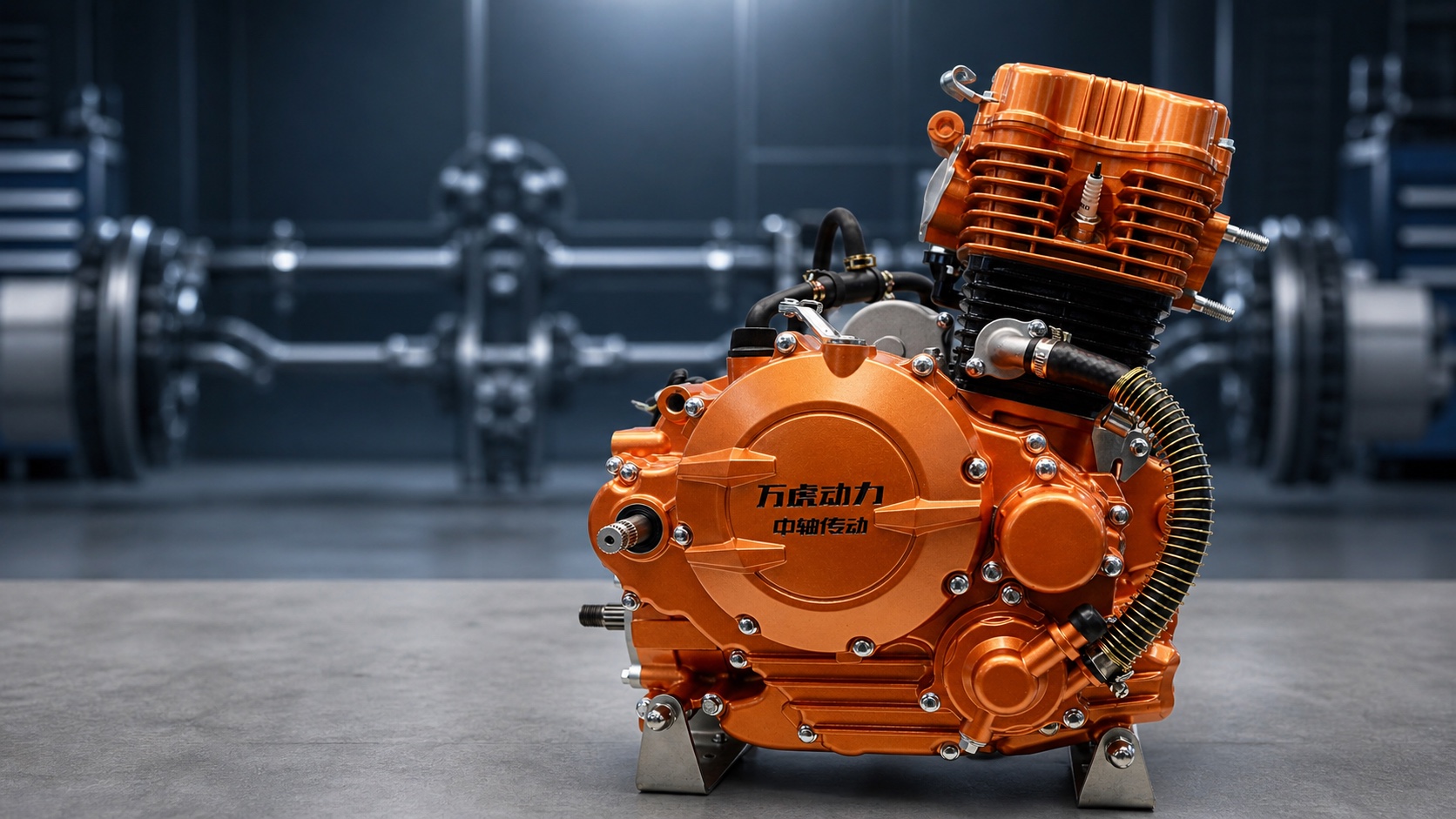
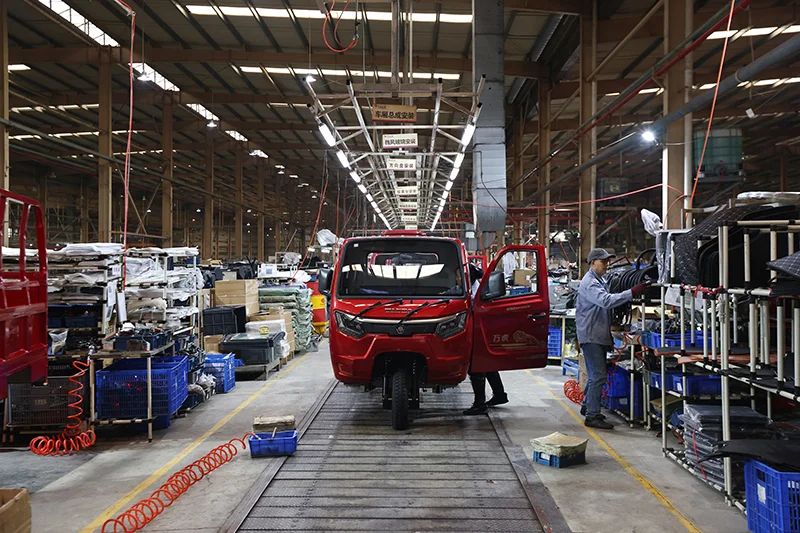
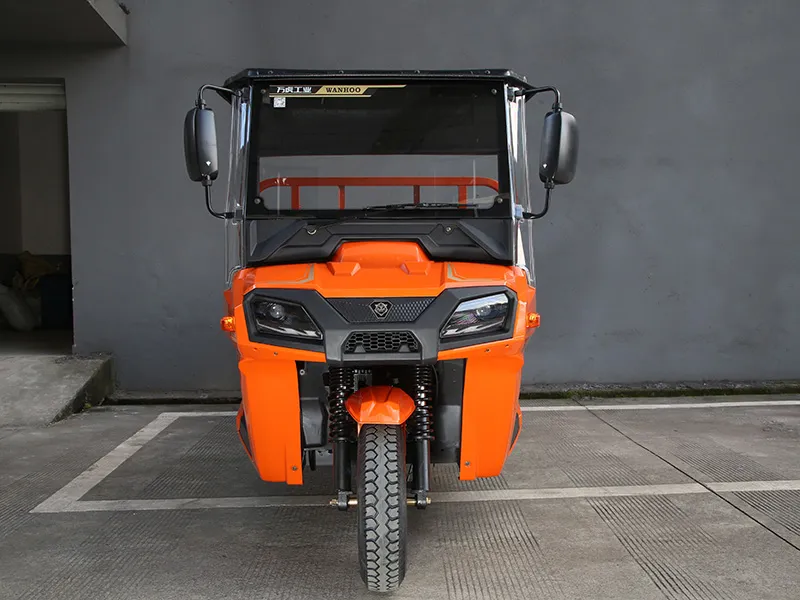
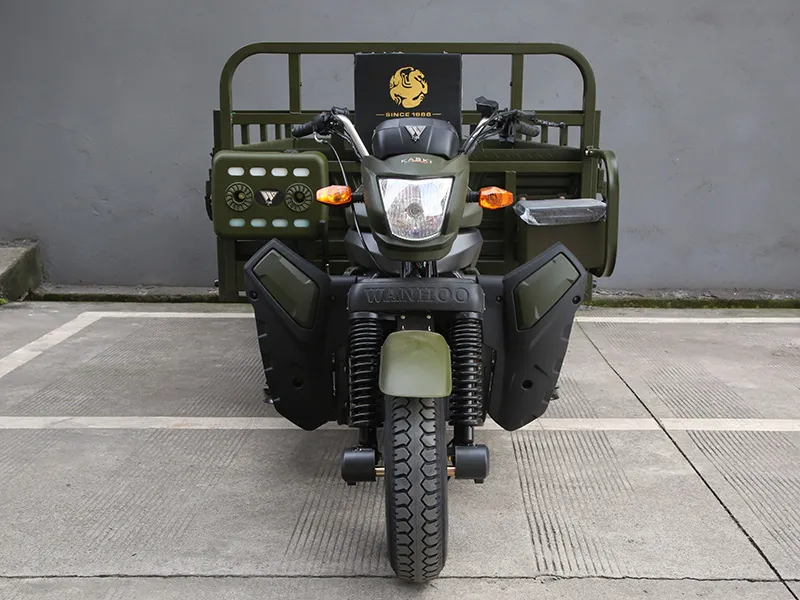
Two cargo three-wheelers sit side by side in an importer's yard. They share a wheelbase class, cargo-bed dimensions and similar displacement on the specification sheet. A buyer can walk around both and still not know where the engine output sits relative to the vehicle centreline. A mid-shaft three-wheeler and an offset-output machine can look similar from the outside while routing power to the rear axle differently.
That difference is not a marketing category. It is a chassis and engine architecture decision taken years before the vehicle reached the yard, and it cannot be retrofitted afterwards.
The Difference a Walk-Around Will Not Reveal
Cargo three-wheelers earn their keep where the road stops being a road. According to the World Bank, there are still "more than one billion people living more than 2km away from an all-weather road", a figure covering global transport access across all vehicle classes rather than three-wheelers specifically. Those are the routes three-wheelers serve.
Many buyers are small operators rather than engineering departments. The International Labour Organization reports that more than 60% of the world's employed population works in the informal economy, although that figure covers all sectors and is not a three-wheeler market statistic. For a small operator, the practical question is therefore not which layout sounds newer, but which configuration is documented, serviceable and supported in the destination market.
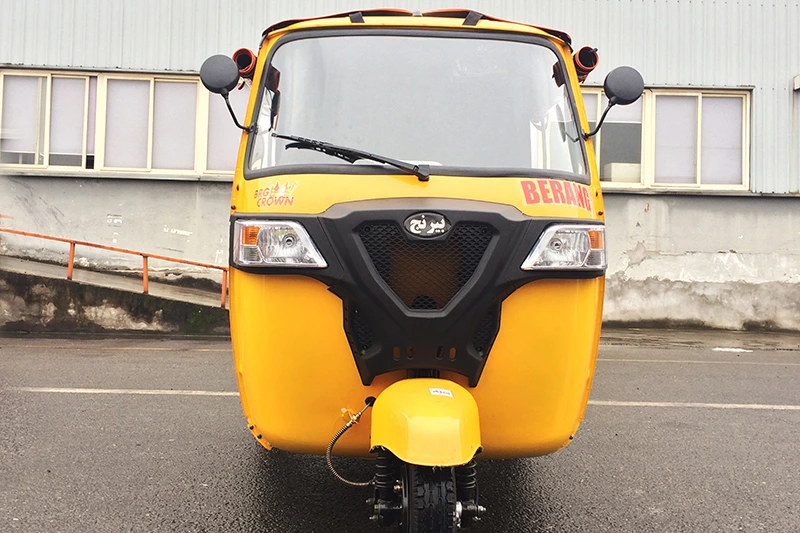
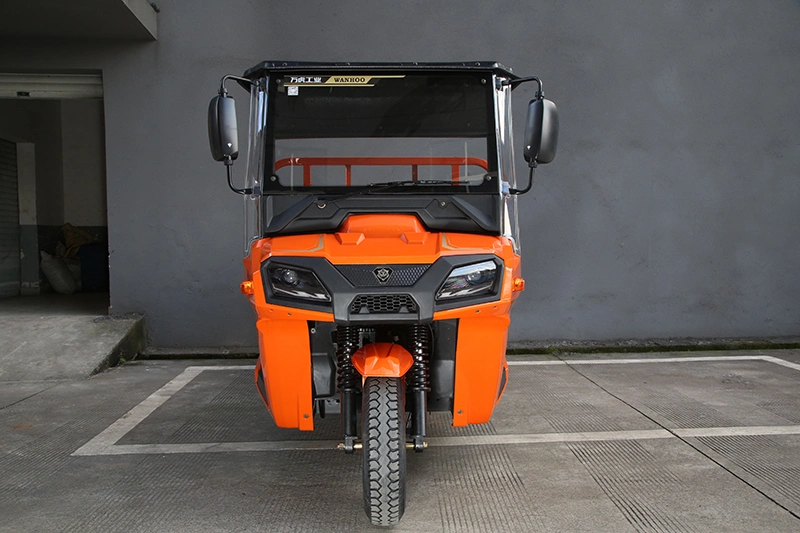
A buyer cannot reliably identify drivetrain layout from an exterior catalogue photograph. What can be verified is the output-shaft position relative to the chassis centreline, the rear-axle arrangement, the half-shaft dimensions and the transmission ratio count, all recorded against the exact model being ordered.
Lateral-Shaft Drive: What an Offset Output Shaft Actually Does
In an offset-output layout, the engine output shaft sits away from the vehicle centreline and the driveline must connect that point to the final drive. The precise arrangement varies by manufacturer, so an offset engine does not automatically prove unequal half-shafts or poor durability.
An offset engine changes drivetrain packaging and may change static side-to-side mass distribution. It does not, on its own, establish how much torque reaches each tyre or how quickly either side will wear; those outcomes also depend on the differential, axle design, traction, loading, alignment and maintenance.
The observable consequences are geometric: output position, shaft routing and component placement. Claims about smoother riding, lower wear or longer life require comparable test data for the complete vehicles. A layout diagram is evidence of architecture, not proof of a percentage improvement in service life.
Mid-Shaft Drive and the Automotive Idea Behind It
Many longitudinal-drivetrain vehicles place the propeller shaft and final drive near the vehicle centreline. A Chinese brand profile of Wanhoo describes the company's HUBA mid-shaft series as an in-house six-speed engine line. That third-party profile is useful historical context, but current export availability still needs to be confirmed against a quotation and homologation documents.
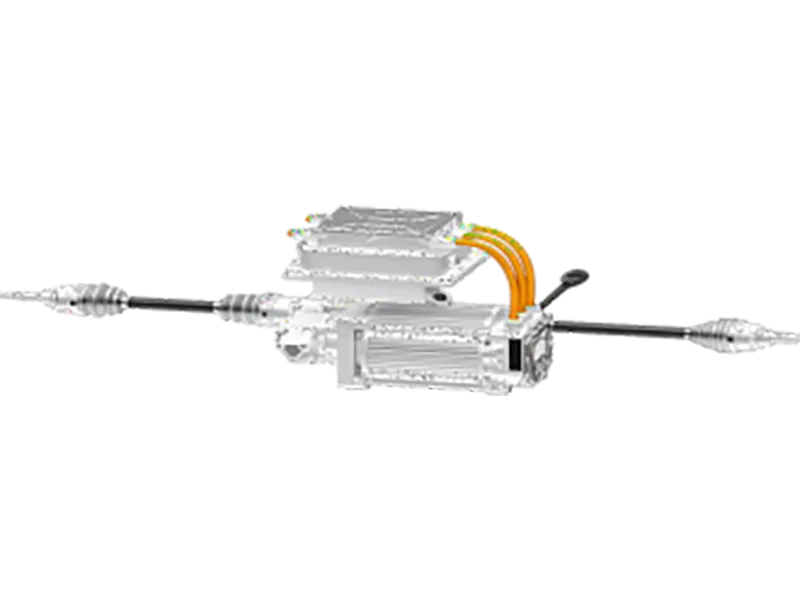
In the Wanhoo layout described here, the engine output and rear final drive are positioned near the vehicle centreline, allowing equal-length rear half-shafts. This creates matched geometry on the two sides; actual tyre torque still depends on the differential, available traction and operating conditions.
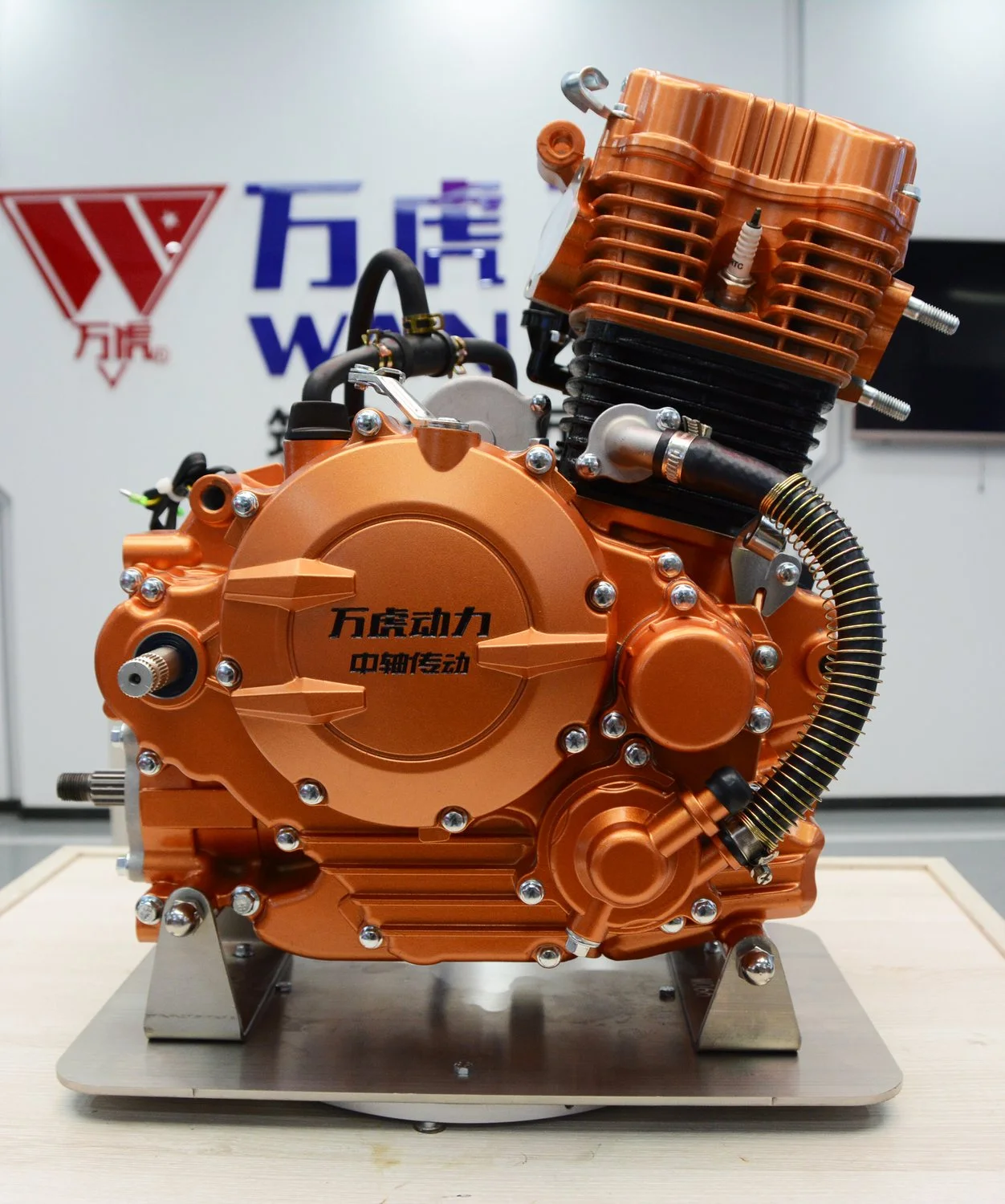
Mid-shaft drive has two components, and both have to be present for the effect to exist:
- A mid-mounted engine, with power output on the centreline.
- A mid-mounted rear axle, symmetric left to right.
Both points need to be checked on the complete vehicle. A centred final drive does not prove that the engine output is centred, and a centred engine does not prove that the axle uses equal half-shafts.
The mechanical difference between a lateral-shaft machine and a mid-shaft three wheeler comes down to where the output shaft sits and what follows from that single position.
| Aspect | Lateral-shaft (offset) layout | Mid-shaft layout |
|---|---|---|
| Output shaft position | Off the centreline, displaced toward the left | On the vehicle's longitudinal centreline |
| Rear drive path | Asymmetric, left and right paths differ | Symmetric axle, matched left and right paths |
| Wheel torque | Cannot be inferred from output position alone | Cannot be inferred from output position alone |
| Static weight distribution | Must be measured on the complete vehicle | Must be measured on the complete vehicle |
| Ride and handling | Requires a loaded comparison test | Requires a loaded comparison test |
| Long-term wear | Depends on the complete axle, loading and maintenance | Depends on the complete axle, loading and maintenance |
| Engine required | Conventional motorcycle engine architecture | Purpose-designed mid-mounted engine |
| Barrier to production | Low, architecture widely available | High, requires internal engine redesign |
The table separates what the layout drawing can establish from what needs a complete-vehicle test. If a supplier gives a percentage improvement for comfort, tyre life or fuel use, ask for the test method, load, route, comparison vehicle and sample size.
Why the Mid-Mounted Engine Is the Hard Part
This is the point most explanations skip. Moving the rear axle is a chassis job; moving the engine's output to the centreline is an engine design job, and the result is not the same engine with a different mounting position.
Moving an engine's output to the centreline is not a matter of repositioning a conventional motorcycle engine in the frame. It changes the internal architecture: the types of internal components and their strength requirements had to be redesigned, which is why a mid-mounted engine cannot be produced by relocating existing hardware.
Consider what has to move. In a conventional motorcycle engine, the crankshaft, the primary drive, the clutch and the gearbox output are laid out to deliver power to one side. Shifting that output to the centreline changes where loads enter and leave the case, which changes what the shafts, bearings and case structure have to withstand and in which directions. Components that were adequate in the original layout are not automatically adequate in the new one. Some had to be different types of component entirely, not simply stronger versions of the same part.
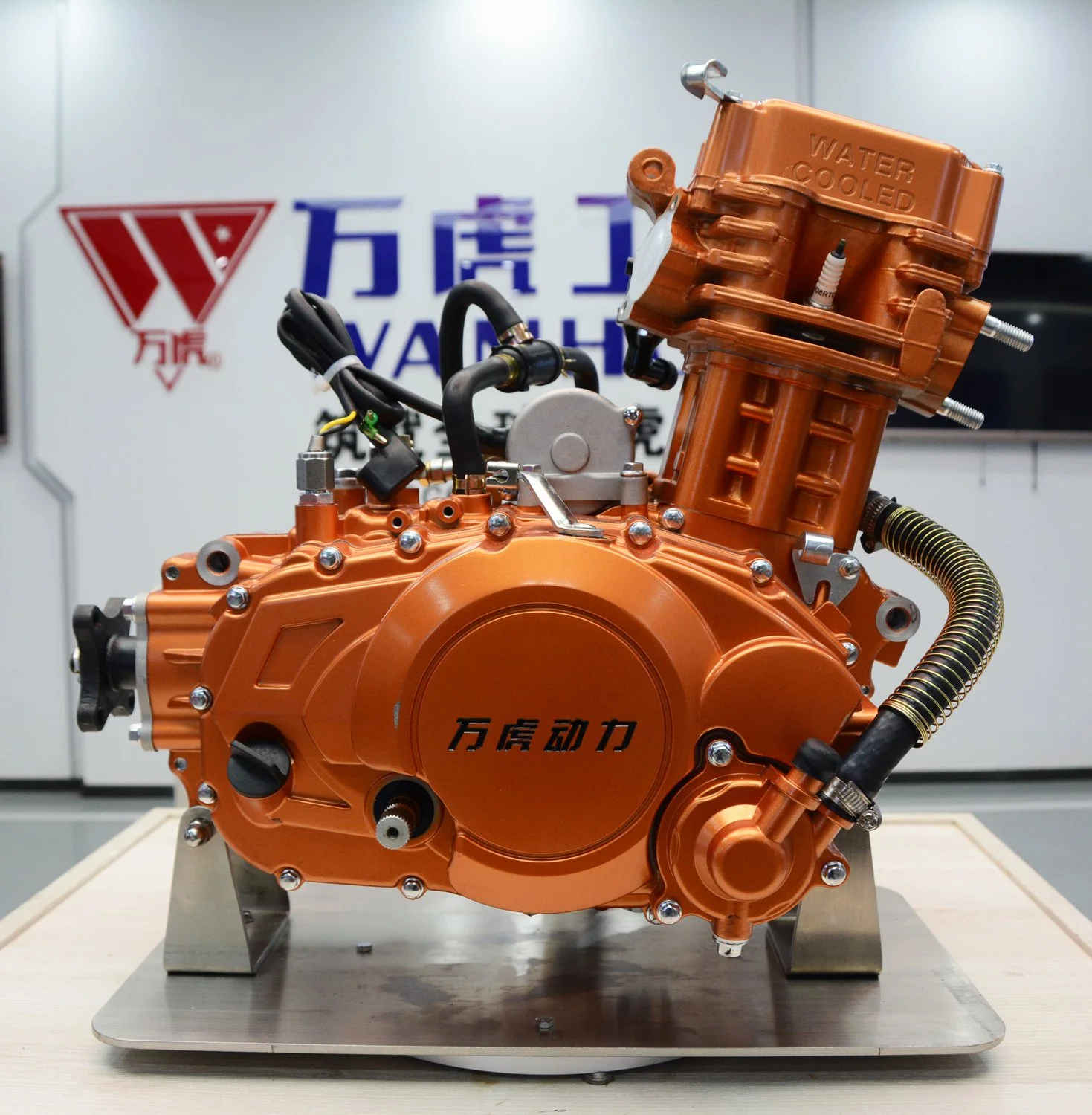
That is why the layout did not spread across the segment overnight. A manufacturer that buys in engines cannot specify a mid-mounted unit nobody builds, and one that builds engines with only conventional architecture on the shelf faces a redesign programme, not a bracket change. The barrier is not the concept. The barrier is owning the engine.
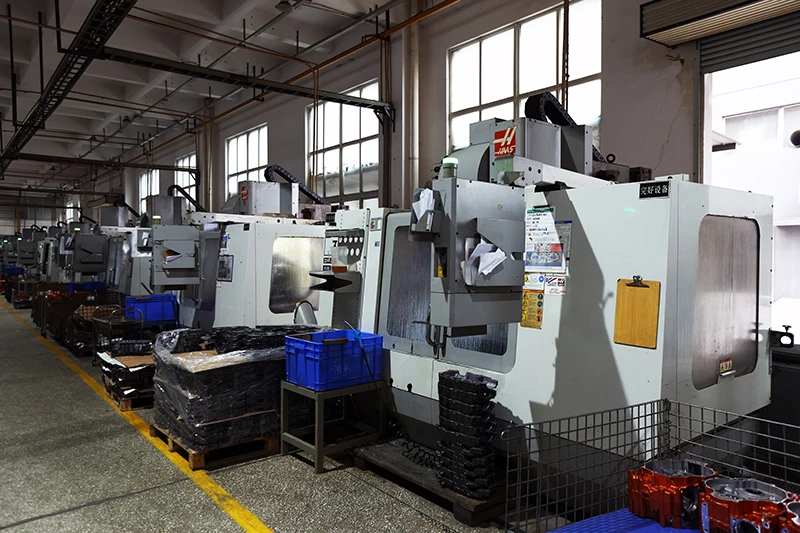
Wanhoo states that it develops and produces engines in-house. For a buyer, the useful evidence is not the vertical-integration claim by itself but the exact engine model, production record, parts list and warranty responsibility. The same distinction is covered in the guide to self-developed versus bought-in three-wheeler engines.
The HUBA Engine: Six Speeds in Three Displacements
The mid-mounted engine family described in Wanhoo's Chinese-market material is the HUBA, also translated from the Chinese name as Huba.
A third-party Chinese brand profile describes the HUBA as a Wanhoo-built mid-shaft six-speed engine series and separately lists Wanhoo engine classes from 150 to 300. It does not provide a reliable current model-by-model export list, so confirm the engine code, measured displacement and ratio count for every order.
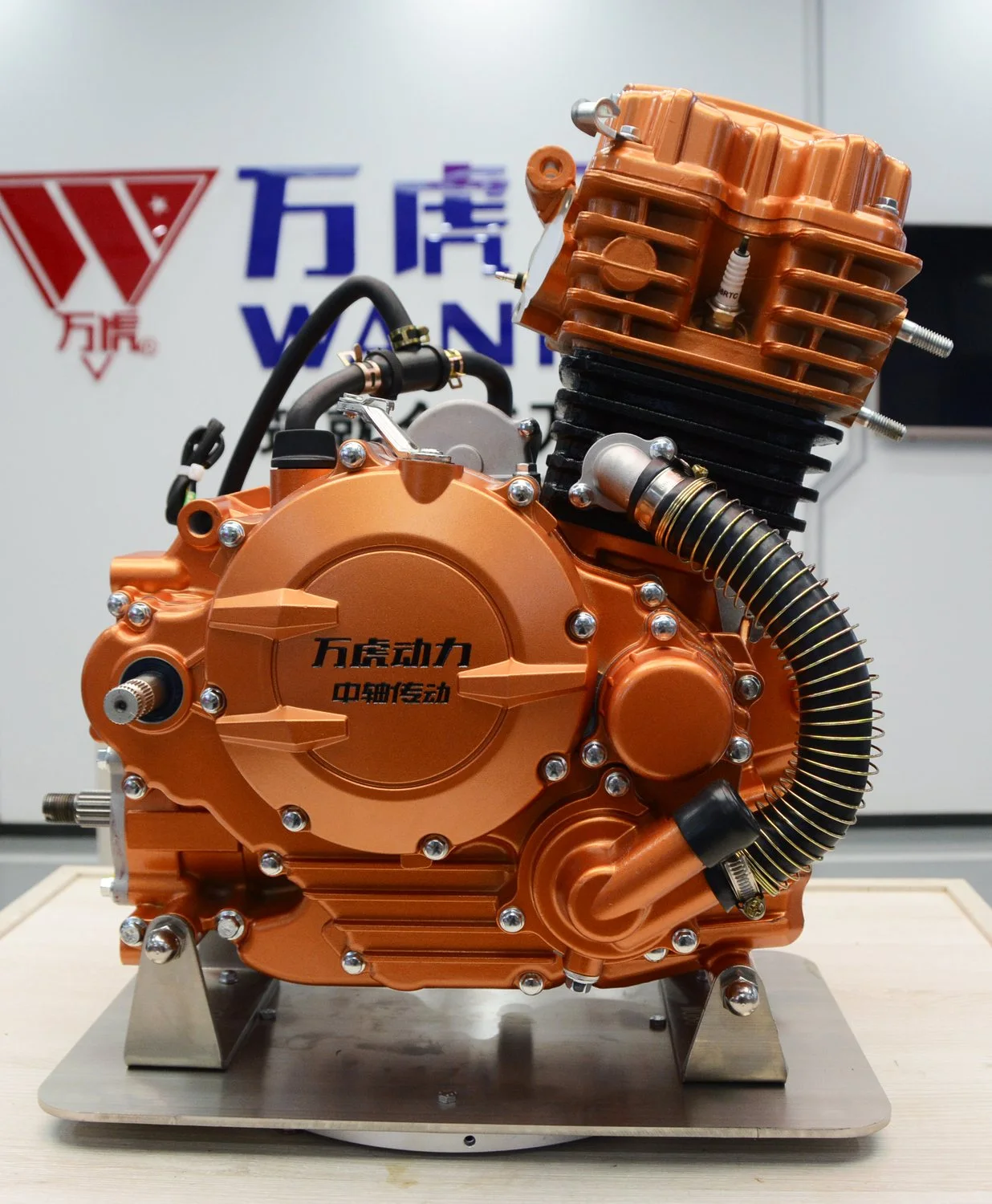
Two details in that paragraph are worth expanding.
An additional ratio can give the operator another choice for matching engine speed to load and gradient, but ratio count alone does not reveal the spacing or total reduction. Ask for the full gear-ratio table and final-drive ratio, then compare them with tyre size, rated load and the intended gradient. The three-wheeler engine displacement guide explains why displacement is also only one part of that match.
A displacement class in marketing copy is not a substitute for the measured value on the current certificate and homologation file. Importers should request those documents for the exact engine code rather than infer displacement from a sales label. For another model-level example, see the 250cc water-cooled tricycle engine guide.
Patent Records a Buyer Can Check
A patent record is more useful than an unauditable "industry first" claim, but it proves only what is written in that record. It does not prove that every current production model uses the patented feature or that one complete vehicle outperforms another.
The following records were individually opened during this review. Publication numbers are linked so a buyer can inspect the bibliographic data and claims rather than rely on a portfolio total.
| Publication | Record type | What the record covers |
|---|---|---|
| CN108894886B | Granted invention patent; application CN201810924865.5A | Three-wheeler engine cylinder-head lubrication and cooling |
| CN209305771U | Granted utility model; application CN201821448872.4U | A longitudinal-crank engine and transmission arrangement for a three-wheeled motorcycle |
| CN222277285U | Granted utility model; application CN202421221957.4U | A dry clutch intended for a centre-output three-wheeler layout |
The first record is an invention patent; the other two are utility models. Their titles and claims concern specific engine, transmission, cooling or clutch structures. They should not be presented as a patent on every form of "mid-shaft technology," and legal status should be rechecked in the official Chinese register before a legal or freedom-to-operate decision.
Which Models Use It, and What to Ask in Writing
The Chinese-market brand profile describes the HUBA series but does not establish what is available for export today. If a specific model matters, request its current mid-shaft availability by full model and engine code, because domestic and export designations may not map one to one. Use the broader manufacturer-vetting checklist before accepting any model-level claim.
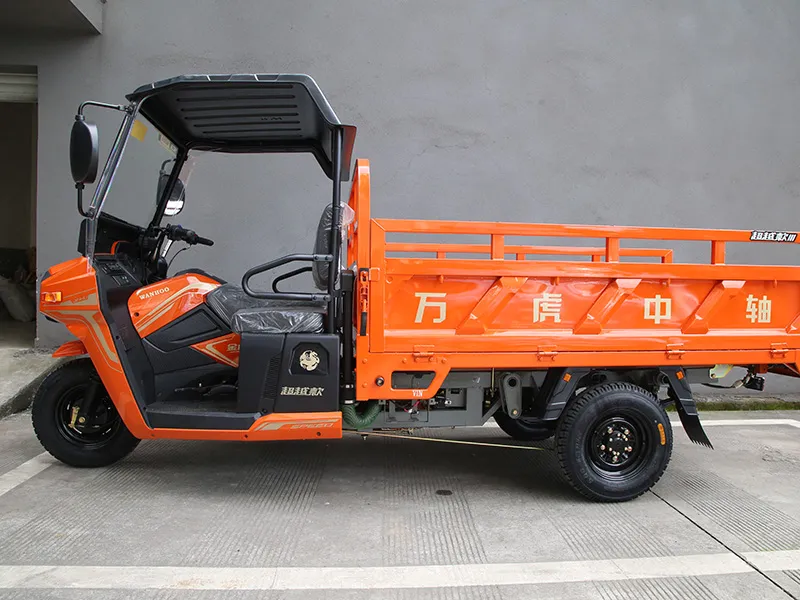
Now the honest part about verification. From outside a finished vehicle a buyer can see almost nothing relevant: the engine sits behind bodywork and under the bed, and catalogue photographs will not resolve the question. Even a factory walk-through is unlikely to settle it unless you get under a vehicle on a lift.
What is checkable is documentation. Three requests will establish the layout without argument:
- A drawing or photograph showing the engine output shaft position relative to the chassis centreline.
- The left and right rear half-shaft lengths, stated as figures, which are equal in a symmetric axle and unequal in an offset one.
- The engine model, actual displacement, full gear-ratio table and final-drive ratio in the specification annexe.
Put those items in the technical annexe to the purchase order rather than relying on a chat message. That makes the ordered configuration unambiguous and gives the buyer something objective to inspect before shipment.
What Mid-Shaft Drive Does Not Solve
A page that only lists advantages is a brochure. Here is the boundary of the claim.
Mid-shaft drive is a drivetrain layout, not a universal fix. It does not compensate for loading beyond rated capacity, it does not repair a route surface, it does not remove the need for scheduled maintenance, and it does not make an unsuitable cargo body correct for the application.
A mid-shaft machine loaded to twice its rated capacity fails in the same places, and for the same reasons, as any overloaded vehicle. Run without oil changes, it wears out its engine. Fitted with a tall body carrying dense freight high above the bed floor, it handles badly, and the drivetrain will not save it.
Rollover deserves a specific correction, because it is the claim most often attached to drivetrain layout in this segment and it is not correct.
Drivetrain layout alone does not determine rollover behaviour. Centre-of-gravity height, track width, speed, steering input, tyre grip, road surface and load distribution all matter. Output-shaft position is therefore a packaging specification, not a rollover-prevention claim.
According to the US Federal Highway Administration, writing about heavy trucks rather than three-wheelers, "In general the lower the center of gravity and the more uniformly distributed the payload then the more stable the vehicle." The numbers do not transfer across vehicle classes, but the governing variables do: load height, load distribution, track width and cornering speed. Even side-to-side weight distribution from a symmetric drivetrain is one contributing input among several. Claiming it prevents rollovers would be wrong, and dangerous for anyone who loads a vehicle badly on the strength of it.
Frequently Asked Questions
**What is a mid-shaft three wheeler?**
It is a three-wheeler whose engine output sits near the vehicle centreline and connects to a centred final drive, allowing equal-length rear half-shafts. That describes the geometry; it does not guarantee equal tyre torque under every traction and differential condition.
Why is a mid-mounted engine harder to build than a conventional one?
Because it is not necessarily a conventional engine in a new mounting position. Moving the output can change the crank, clutch, gearbox and case arrangement, so the buyer should verify the engine drawing and model rather than assume a bracket change creates a centre-output design.
Does mid-shaft drive prevent rollovers?
No. Rollover risk depends on centre-of-gravity height, track width, speed, steering input, tyre grip, road surface and load distribution. A centred drivetrain is a packaging feature, not a rollover countermeasure.
What displacements does the HUBA engine come in?
The public brand profile describes the HUBA as a six-speed mid-shaft series but does not provide a reliable current model-by-model export list. Confirm the engine code, measured displacement and approval documents for the exact vehicle instead of relying on a sales-class label.
Which Wanhoo models are available with mid-shaft drive?
Historical Chinese-market material reported several Wanhoo models with the HUBA engine, but that does not confirm current export availability. Buyers should request the complete vehicle model, engine code and mid-shaft configuration in the quotation and technical annexe.
How can a buyer verify that a three-wheeler really uses mid-shaft drive?
Not from an exterior catalogue image. Request a drawing showing output position relative to the chassis centreline, the rear-axle arrangement and half-shaft dimensions, plus the engine model, actual displacement, gear ratios and final-drive ratio. Record them in the technical annexe and inspect the delivered configuration against it.
Where This Leaves a Buyer
The useful conclusion is not that one layout is good and the other bad. It is that the layout is a decision, it is invisible on the vehicle, and it is therefore something you have to ask about rather than something you will notice.
If your routes are smooth, your loads light and your vehicles turned over quickly, drivetrain symmetry is a minor factor. If your operators run near rated capacity on poor surfaces and keep vehicles for years, the side-to-side wear question is worth the three documentation requests it takes to answer.
The linked patent records can be checked independently, while the gaps in public model data show why a sales-class displacement must not be copied into customs or homologation paperwork without verification. To confirm a configuration for a particular market, ask by complete vehicle and engine code, request the drawing and ratios, and compare the delivered unit with the signed technical annexe.