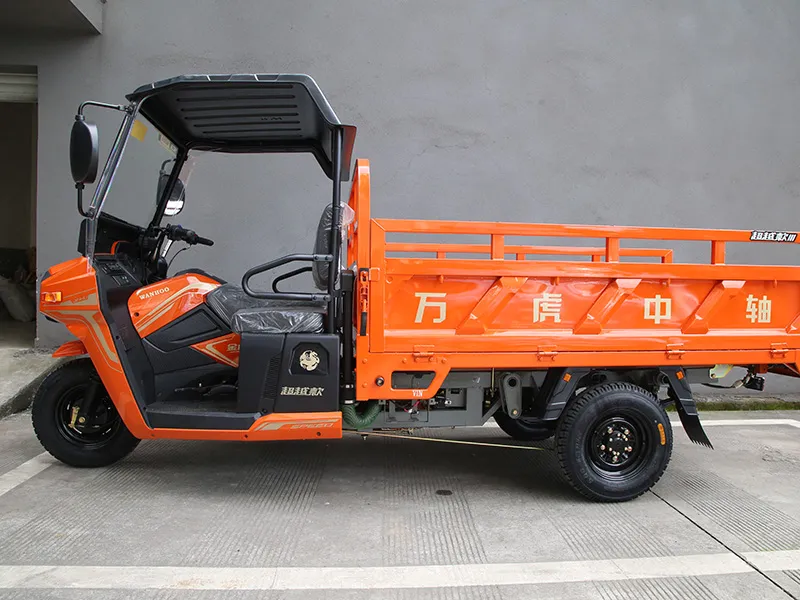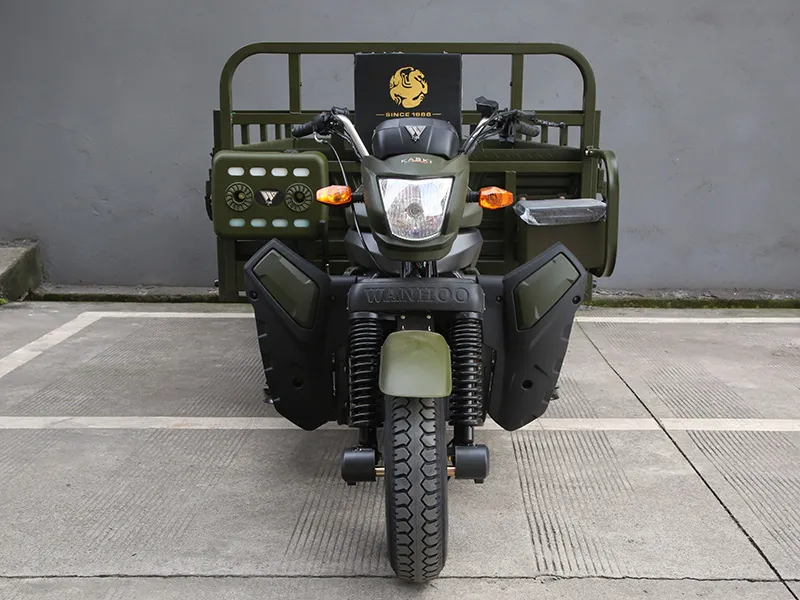
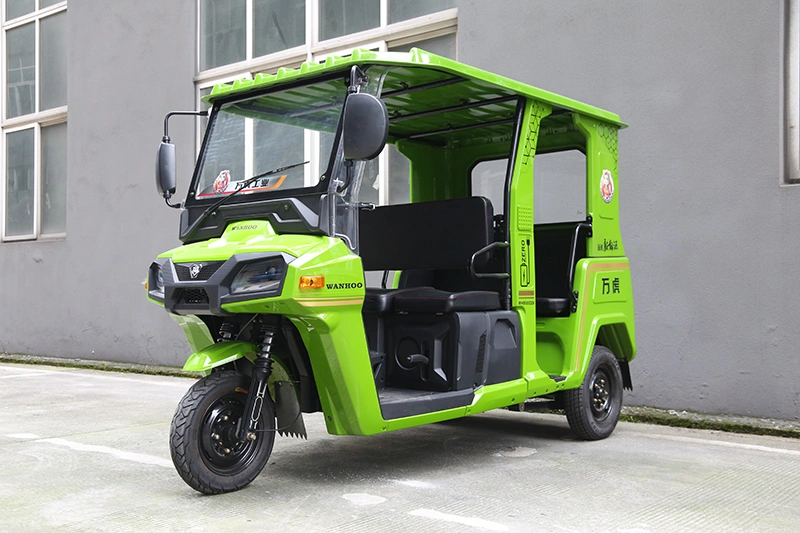
As reported by Chongqing Daily in June 2026, Wanhoo’s Africa support footprint included a Dar es Salaam distribution centre, eight service centres, and a stated 24-hour repair-response target. Buyers should verify the current locations and scope.
Ask an importer in Abidjan or Dar es Salaam what worries them about a new supplier and price is rarely the first answer. Price is a number you settle in an afternoon. The worry is month five, when forty units are out earning and one of them drops a cylinder head on a Tuesday. How many days does that vehicle sit? Whatever the honest answer is, it is the real measure of a three-wheeler service network, and it decides whether a trial container becomes a standing order or becomes the cautionary story other importers repeat at trade fairs.
This page sets out what public reporting says Wanhoo had in place in Africa and, just as usefully, what a buyer still has to check for their own market. Wanhoo is a Chongqing manufacturer founded in 1986. The service-centre and distribution-centre claims were reported by Jiangjin Media Center in June 2025 and repeated by Chongqing Daily in June 2026, using company-supplied figures. Where a number is tied to a period, the period is stated.
For a three-wheeler importer, the commercial risk sits after delivery rather than at the port. Unit cost is fixed at the contract stage, but parts availability, warranty response time and local technical capacity keep costing money for years. Service capacity, not landed price, usually determines whether a distributor places a second order.
Why the after-sales question is the whole business
The end users of cargo and passenger three-wheelers are overwhelmingly owner-operators and small transport businesses. They do not run a spare vehicle. The machine is the business, and a day of downtime is a day of no income against a repayment schedule that does not pause.
According to the International Labour Organization, “Over 60 per cent of the world’s workforce and 80 per cent of enterprises operate in the informal economy.” That is the customer base a distributor is actually selling into, and its tolerance for a two-week parts wait is close to zero. A rider who loses a fortnight of earnings tells every other rider on the rank, and reputation in these markets moves faster than any marketing budget.
The demand side is equally structural. According to the World Bank, there are “more than one billion people living more than 2km away from an all-weather road”. That gap is precisely what three-wheelers fill, moving goods and passengers on surfaces that a truck cannot economically serve. It also describes the terrain a service network has to reach. A support model that works in a capital city and nowhere else does not match the geography of the demand.
What Wanhoo has on the ground in Africa
The company’s principal African export markets are Côte d’Ivoire and Tanzania. Around those two markets it has built a support structure with three visible components: a regional distribution centre, a set of service centres, and a stated response commitment.
Chongqing Daily reported in June 2026 that Wanhoo had eight service centres in Africa, a stated 24-hour repair-response target, and a regional distribution centre in Tanzania. The report did not list the eight host cities, so buyers should request current addresses and confirm model and territory coverage.
That is not a hedge for its own sake. Eight centres across fifty-four countries is a real asset in some territories and irrelevant in others, and the only way to know which applies to you is to ask for the addresses.
Why a regional distribution centre changes the arithmetic
Of the three, the distribution centre does the most work.
A regional distribution centre changes parts lead time by an order of magnitude. Ocean freight from China to East Africa typically runs in weeks, plus customs clearance. Stock already held in Dar es Salaam moves by road or short-haul air in days. That gap is what determines vehicle downtime, not the price of the part itself.
Think about what a failure actually costs. A clutch assembly is worth a modest sum, and the clutch is not the expense. The expense is twenty-five days of a vehicle earning nothing while the part crosses an ocean, clears a port and finds its way inland. Multiply that across a fleet and the arithmetic of the whole import business changes, without the invoice price moving at all.
Regional stock also removes a layer of border friction from every individual repair. According to the World Trade Organization, “the full implementation of the TFA could reduce trade costs by an average of 14.3%”, a useful reminder that customs and documentation are a genuine cost line rather than an administrative footnote. Every consignment starting inside the region is one fewer international clearance per repair.
The honest qualifier: a distribution centre matters only in proportion to what is actually stocked in it. A warehouse holding fast-moving consumables is a different proposition from one holding engine internals and body panels, which is a question for your own due diligence.
Markets, growth, and what was true in mid-2025
Alongside Côte d’Ivoire and Tanzania, Wanhoo sells domestically in Chongqing, Sichuan, Guizhou and Yunnan, provinces whose mountain and rural road conditions are a reasonable analogue for much African duty. The company has stated plans to expand into Kenya and Ethiopia.
On growth, one figure is available and it needs its label attached. Exports to Côte d’Ivoire and Tanzania grew 60% year on year in the first five months of 2025, as reported by Jiangjin Media Center in June 2025. Two caveats belong with it: the window is five months rather than a full year, and it was reported well before you are reading this, so it describes a trajectory at a point in time rather than a current run rate.
Plans are also not the same as presence. Kenya and Ethiopia were stated intentions as of mid-2025. If you are buying for either market, the relevant question is what exists there now, not what was planned then.
The 30-day delivery cycle and your working capital
The instinct is to read a 30-day delivery cycle as a speed claim. It is more useful read as a planning claim.
Wanhoo states a 30-day delivery cycle on African orders. For a distributor, a predictable lead time matters as much as a short one: it sets how much stock must sit in the yard as buffer, how long capital stays tied up, and how confidently a reorder point can be set.
A distributor working with an unpredictable supplier has one defence, which is inventory. You hold more units than you need because you cannot trust the replenishment date, and every one of those units is cash sitting in a yard instead of working. Stabilise the lead time and that buffer shrinks. For a thin-margin, volume-driven business, released working capital can matter more than a discount on the invoice.
The question to put to the supplier is where the clock starts. Thirty days from signed contract, from deposit received, or from allocation of a production slot are three different commitments, and only one is measured from something you control.
What sits behind the vehicle: engines and frames built in-house
Reliability claims are easy to make and hard to verify, so the more useful thing to look at is structural: who actually builds the parts that fail.
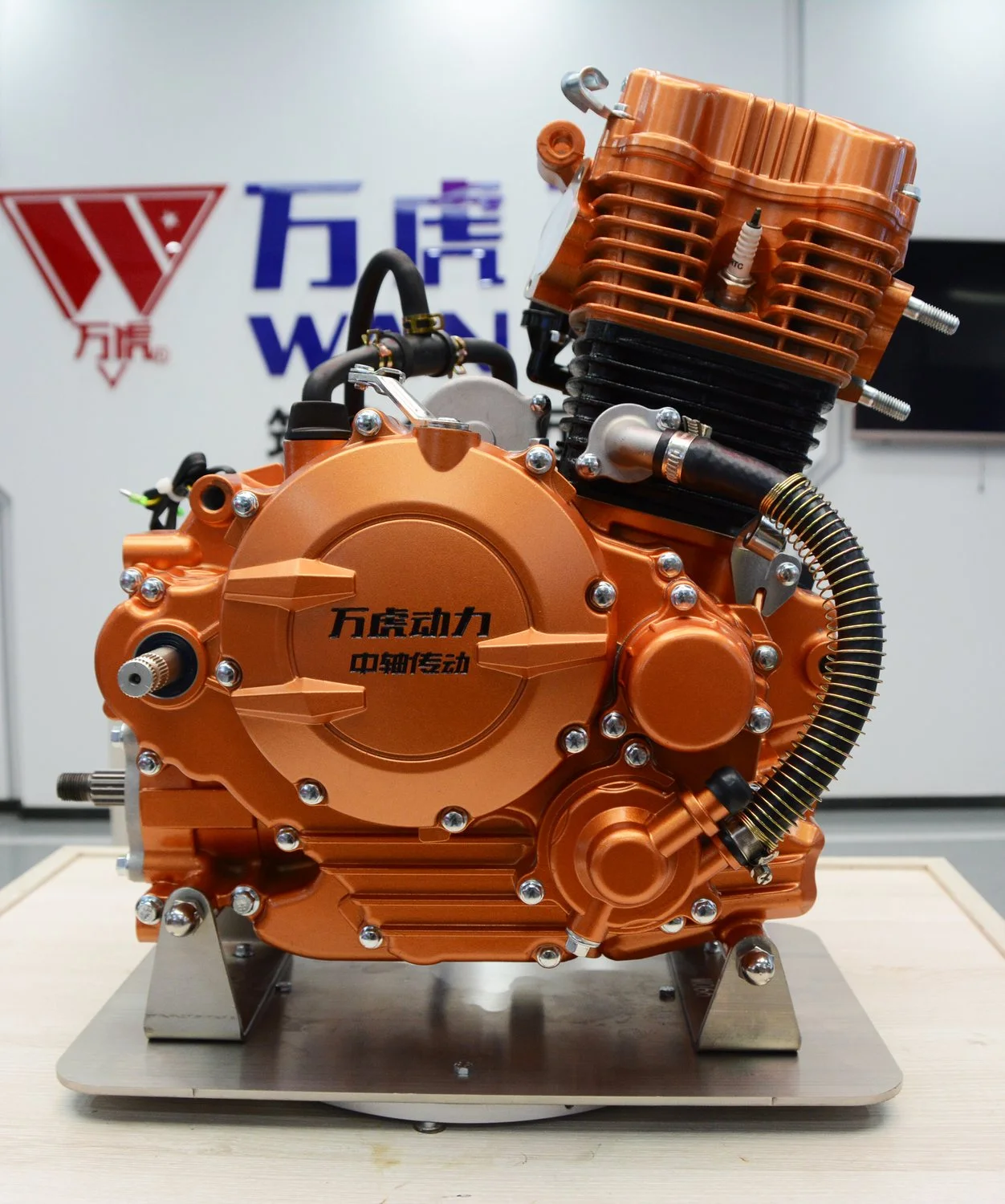
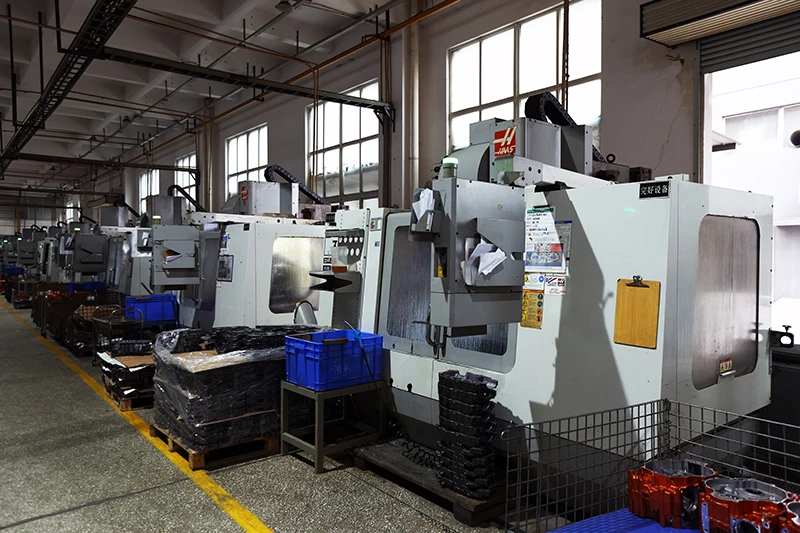
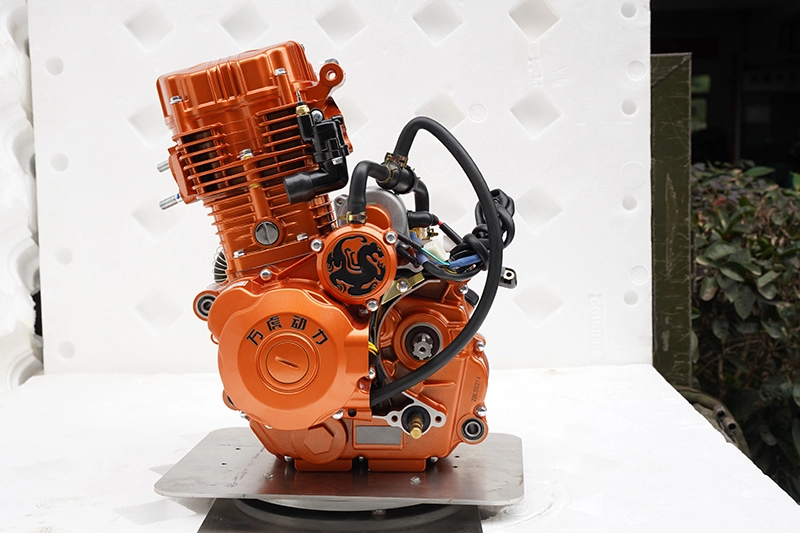
Wanhoo builds its own engines and frames rather than assembling bought-in components, with annual capacity stated at 100,000 vehicles and 300,000 engines across a 60,000 square metre plant. Vertical integration matters to a service network because the manufacturer controls the parts catalogue, the specification history and the supply of replacement components.
The service consequence is direct. When an assembler sources engines from a third party, a parts request travels down a chain, and a superseded component or a discontinued supplier becomes the importer’s problem two years after purchase. A manufacturer that machines and assembles its own engines holds its own drawings and tooling, so it can identify which specification went into which chassis number and keep supplying it. Frames follow the same logic.
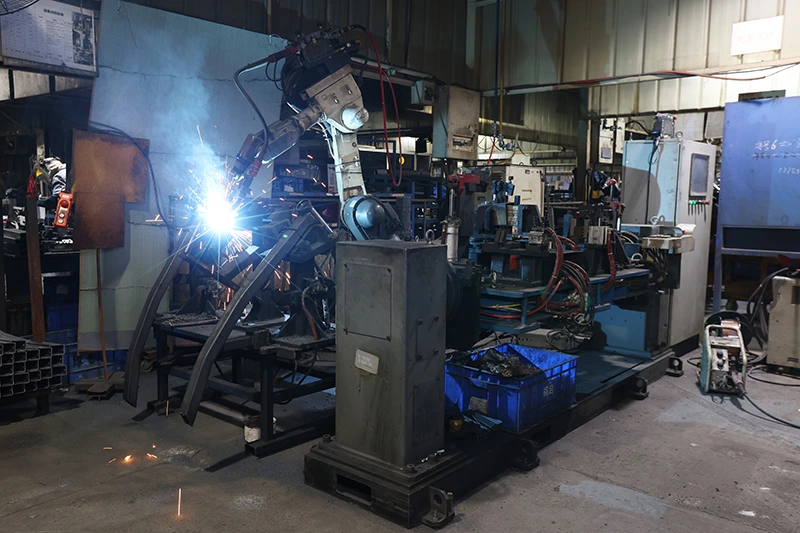
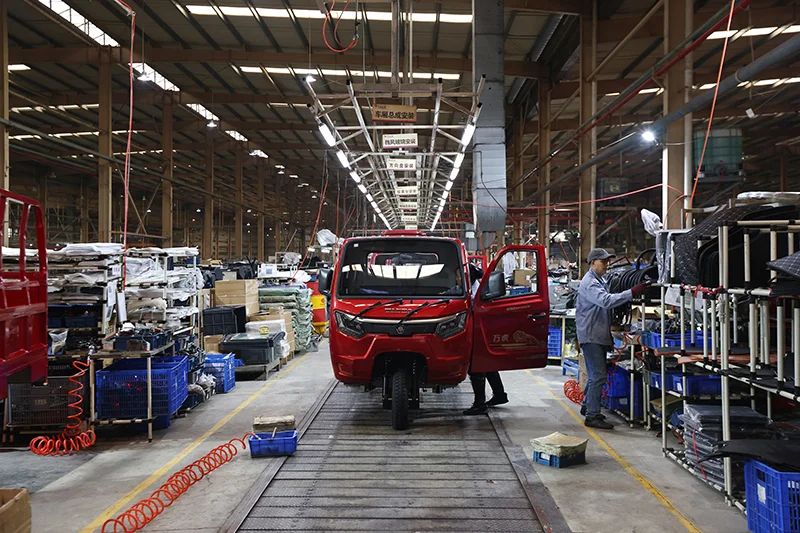
Scale is part of the same picture. A plant employing more than 1,000 people, exporting to over 50 countries and running an engine line at 300,000 units a year has the volume to justify keeping older specifications in production, which is what a distributor needs from year three onward.
The patent record
Wanhoo holds filed Chinese patents in the areas most relevant to heavy-load three-wheeler duty. The titles below describe subject matter, not legal scope, and none is a performance guarantee. They are listed because they show where engineering effort has gone.
| Published record | Type | What the record covers |
|---|---|---|
| CN108894886B | Granted invention patent; application CN201810924865.5A | Three-wheeler engine cylinder-head lubrication and cooling |
| CN209305771U | Granted utility model; application CN201821448872.4U | A longitudinal-crank engine and transmission arrangement for a three-wheeled motorcycle |
| CN222277285U | Granted utility model; application CN202421221957.4U | A dry clutch intended for a centre-output three-wheeler layout |
These records show documented engineering work in engine cooling, transmission layout and clutch design. They do not prove field reliability or cover every form of mid-shaft technology. Buyers can inspect the published records, then ask Wanhoo how the relevant design is used in the exact production model under consideration.
Published patent records assigned to Chongqing Wanhu Mechanical and Electrical Co., Ltd. cover engine cooling, a longitudinal-crank engine and transmission arrangement, and a dry clutch for a centre-output layout. Patent subject matter is evidence of engineering activity, not a performance guarantee.
Product range, including the hybrid
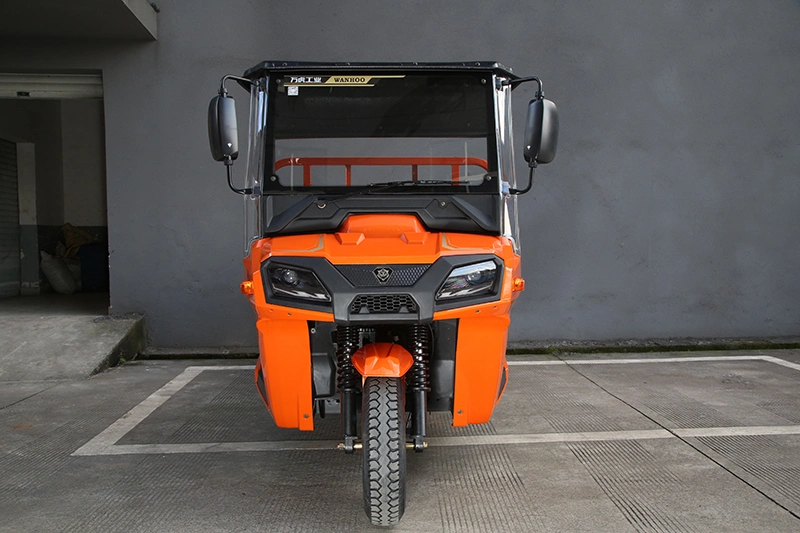
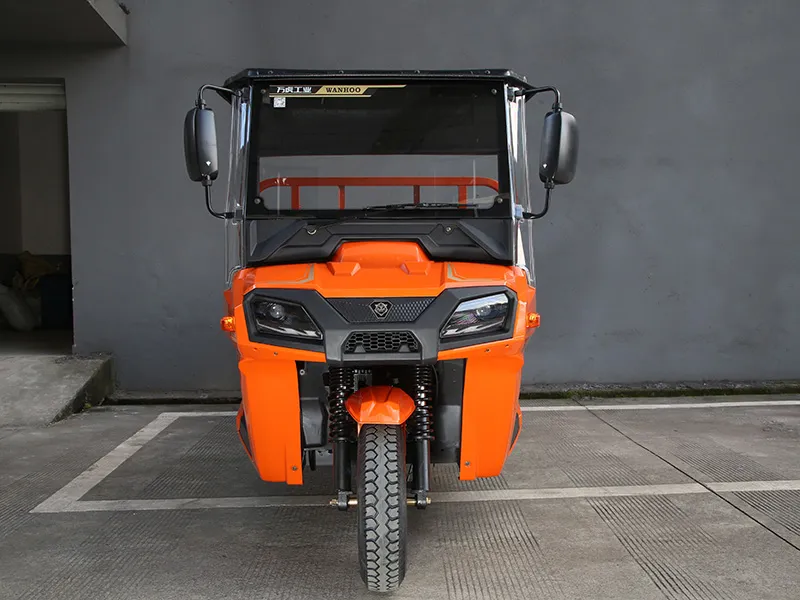
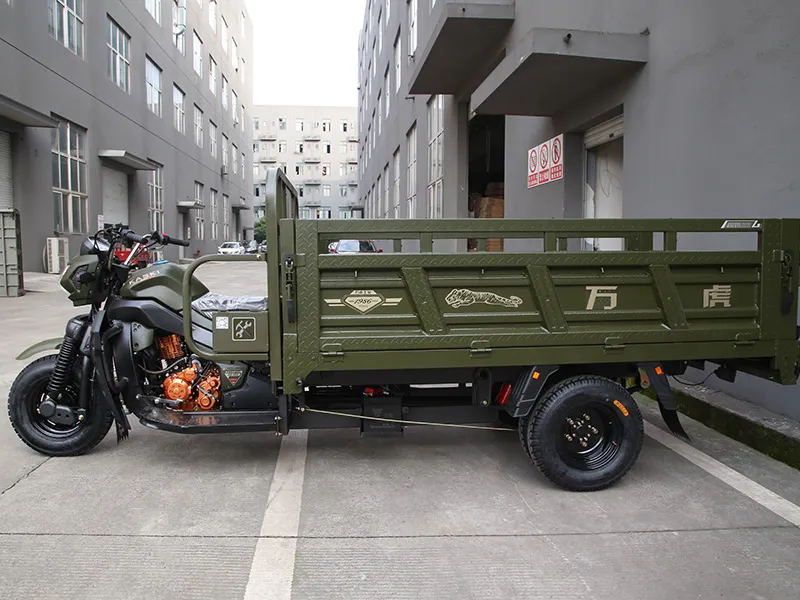
Wanhoo’s product range covers three-wheeled motorcycles, motorcycle engines and harvesters, and the company introduced an oil-electric hybrid three-wheeler in the second quarter of 2025. Buyers considering the hybrid should note that it is a recent addition, so field service history in African conditions is still comparatively short.
The harvester line is relevant to importers serving agricultural districts, since one supplier relationship can then cover two equipment categories. The hybrid deserves a more cautious read. A model introduced in Q2 2025 has had limited seasons in service, and a hybrid drivetrain adds components a conventional three-wheeler technician has no reason to have worked on. Before committing volume, ask whether the eight service centres are equipped and trained for it, because a network built around combustion engines does not automatically extend to hybrid systems.
Financing and extended warranty
Wanhoo offers a zero down payment plus instalments financing arrangement and an extended warranty plan. Terms of both vary by market, order size and counterparty, and neither is a published standard product. Any importer relying on them should have the specific terms written into the sales contract before shipment.
Financing is genuinely useful where importer credit is expensive or hard to obtain, and an extended warranty shifts some year-two risk back toward the manufacturer. Neither is a promise until it is a clause. A warranty without a written claim procedure and a stated decision window is a marketing line rather than a commercial instrument. Put both in the contract.
What you should still verify for your own market
Everything above is what Wanhoo has stated or what can be independently checked. None of it substitutes for verification against your own territory, and a supplier worth working with will answer all of the following in writing.
| What is reported to be in place | What you should verify for your own market |
|---|---|
| Eight Wanhoo Quick Service Centres in Africa | Which cities and countries they are in, whether any is within workable road distance of your territory, and whether they cover the models you intend to import |
| Regional distribution centre in Dar es Salaam, Tanzania | The current parts stock list held there, which items are stocked versus made to order, and the realistic transit time from that warehouse to your city |
| 24-hour response commitment | What response means contractually: acknowledgement, technician dispatch, or part shipped, plus what remedy applies if the commitment is missed |
| Extended warranty plan | The written claim procedure, who assesses the fault, the decision window in days, and which components and failure modes are excluded |
| Zero down payment plus instalments financing | Whether it is offered in your country, the currency, the interest or fee structure, what security is required, and who carries the exchange-rate risk |
| 30-day delivery cycle | Whether the 30 days runs from contract, from deposit, or from production slot allocation, and whether it is ex-works or includes port handling |
| Oil-electric hybrid introduced Q2 2025 | Field service history in your climate, battery and charging support, and whether service centre technicians are trained on hybrid systems |
| Stated plans for Kenya and Ethiopia | What exists in those markets now, since a plan reported in June 2025 is not evidence of present coverage |
| Export growth of 60% year on year, first five months of 2025 | A more recent figure, since that number describes a five-month window reported in June 2025 and not a current run rate |
Two further checks apply regardless of supplier. Ask for the contact details of the service centre nearest your territory and call it yourself, without the sales office arranging it. Then ask what parts pricing is for warranty versus non-warranty repairs, because that ratio sets the economics of your workshop for the life of every unit you sell.
How to read all of this
Wanhoo has more physical presence in Africa than many exporters at its size: a regional parts hub, eight service points, a stated response window, and a manufacturing base that builds the engine and the frame rather than bolting together someone else’s. That is a real foundation for a three-wheeler service network.
It is not a complete answer to your question, because your question is about your city, your roads, your customers and your repayment terms. The figures here carry their dates and sources so you can weigh them properly, and the verification table exists because the gaps are as informative as the facts. If you want the service centre locations, the parts stock position or the warranty terms in writing, ask for them directly. Those are the documents worth reading before any quotation.
Frequently Asked Questions
**Where is Wanhoo’s parts distribution centre in Africa?**
Public reporting in June 2026 described a Wanhoo regional distribution centre in Tanzania. Its practical value depends on what is currently stocked and where it can dispatch, so buyers should request the current address, stock list and route-specific delivery times rather than assume every part can move in days.
How many service centres does Wanhoo have in Africa, and where?
Chongqing Daily reported eight Wanhoo service centres in Africa and a stated 24-hour repair-response target in June 2026. The specific cities were not listed, so any importer should ask for current locations, covered models and a written definition of response before signing. Continental-level wording does not prove coverage in a particular market.
What does the 24-hour response commitment actually cover?
It is a stated commitment to respond within 24 hours. What response means in practice needs to be defined in your contract, because acknowledgement of a fault report, dispatch of a technician, and shipment of a replacement part are three very different obligations. Ask for the definition in writing, along with what remedy applies if the window is missed.
How long does delivery take on an African order?
Wanhoo states a 30-day delivery cycle for African orders. The more important detail is where the clock starts, since 30 days from contract signature, from deposit receipt, and from production slot allocation are different commitments. Confirm the starting point and whether the cycle is ex-works or includes port handling, then plan your reorder point around the confirmed figure.
Does Wanhoo build its own engines, or assemble bought-in ones?
Wanhoo builds its own engines and frames, with stated annual capacity of 100,000 vehicles and 300,000 engines across a 60,000 square metre plant in Chongqing. For an importer this matters mainly for parts continuity: a manufacturer that holds its own drawings and tooling can keep supplying the exact specification fitted to a vehicle years after that vehicle was sold.
Is financing available for importers, and what are the terms?
Wanhoo offers a zero down payment plus instalments arrangement and an extended warranty plan. Neither is a standard published product, and terms vary by market, order size and counterparty. Treat any indication given verbally as provisional, and have the currency, fee structure, security requirements and exchange-rate responsibility written into the sales contract before shipment.