Choose a goods carrier three wheeler by matching real load weight and volume, loading method, route, trip frequency and local limits to a verified vehicle configuration.
Consider an illustrative mismatch: a vehicle rated to carry 1,000 kg has its bed filled with empty plastic crates, yet the measured load is only 300 kg. The invented round figures simply show a volume-limited job; they do not establish a cost saving or loss for a real fleet.
The opposite mismatch is a dense load reaching the rating while the bed still looks partly empty. If the suspension, steering or braking behaviour changes, stop using the vehicle and have it inspected rather than adding more because space remains.
Payload is one purchase input, but not the only one. Four questions create a practical first-pass fit check.

First question: what are the goods?
Every cargo three-wheeler has two ceilings, and freight only ever hits one of them first.
Payload and usable bed volume are two core limits for a cargo three-wheeler. Dense freight may reach the weight limit with space remaining, while bulky freight may fill the approved body below the payload limit; axle limits, load restraint and local dimensions can bind earlier.
Dense and heavy goods can make payload or axle limits bind before volume. Cement, tiles, steel bar, sand, bricks and bagged grain pack substantial mass into a small footprint. For this work, verified mass, distribution, braking, restraint and route limits matter even when bed space remains.
Bulky and light goods can invert the problem. Foam, mattresses, cartons, packaging waste, fodder, empty crates and returned pallets may reach the approved body envelope before payload. A buyer therefore needs verified bed dimensions as well as the rating; neither number alone proves operating cost.
Fragile goods add a dimension neither number captures. Glass, ceramics, eggs and finished consumer goods survive or do not survive based on ride quality, restraint points and whether the body is open or enclosed. Liquids behave differently again, because partly filled drums shift under braking and cornering, turning a static weight into a moving one. In both cases a vehicle that carries the weight comfortably is still wrong if the load arrives broken or unstable.
The table below sets out how each load type constrains a goods carrier three wheeler, and what to specify once you know which of the two limits binds first.
| Load type | Typical examples | What runs out first | What to specify |
|---|---|---|---|
| Dense and heavy | Cement, tiles, steel bar, sand, grain | Rated payload | Higher rated load, heavier suspension, cooling for sustained pulling |
| Bulky and light | Foam, cartons, fodder, empty crates | Bed volume or legal envelope | Verified internal dimensions and an approved containing body |
| Fragile | Glass, ceramics, eggs, finished goods | Ride quality | Suspension tuning, tie down points, a covered or boxed body |
| Liquid in drums | Water or permitted packaged liquids | Stability and restraint | Compatible containers, rated restraints and local transport compliance |
| Mixed traffic | Retail resupply, builders deliveries | Whichever binds that day | Two vehicle sizes, or one sized for volume with weight headroom in hand |
A buyer whose week contains both cement runs and packaging runs is buying for two jobs, not one. Compare separate vehicles with a single configuration that remains within payload, axle, body and route limits on both jobs. Hazardous goods require specialist containers, marking and local compliance beyond this general article.
The bed dimension problem, handled honestly
Here is the awkward part of this argument. It depends on bed volume, and bed volume is the figure suppliers publish least consistently: some quote external body dimensions, some internal, some length only, some nothing at all.
A payload rating alone cannot answer a bulky-load question. Ask each supplier for internal cargo-bed length, width and height in writing, confirm the measurement points and body configuration, then compare the usable envelope with a measured routine consignment.
Ask for the three internal figures in writing and confirm they are internal rather than external. Multiplying length, width and height gives a rectangular bounding volume, not guaranteed usable space: wheel housings, side shape, gates and restraint clearance can reduce what fits. The cargo-box configuration guide shows why body details matter.
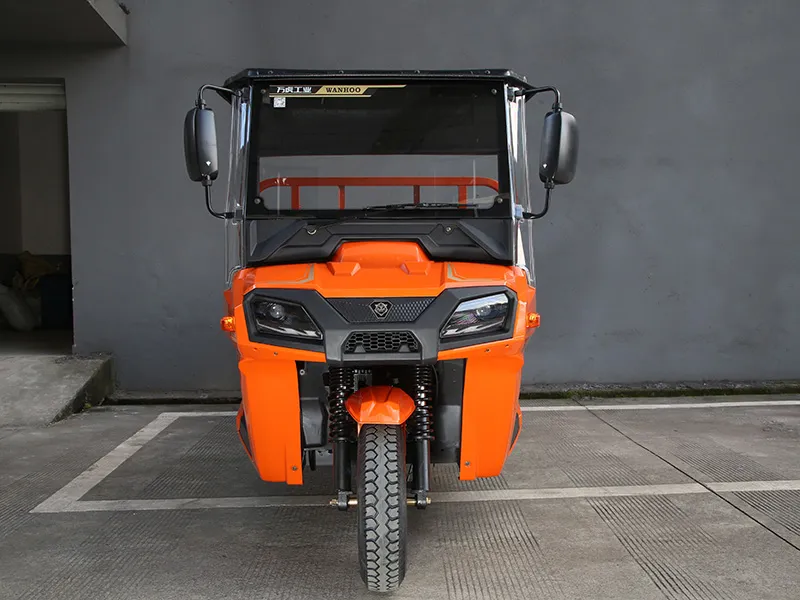
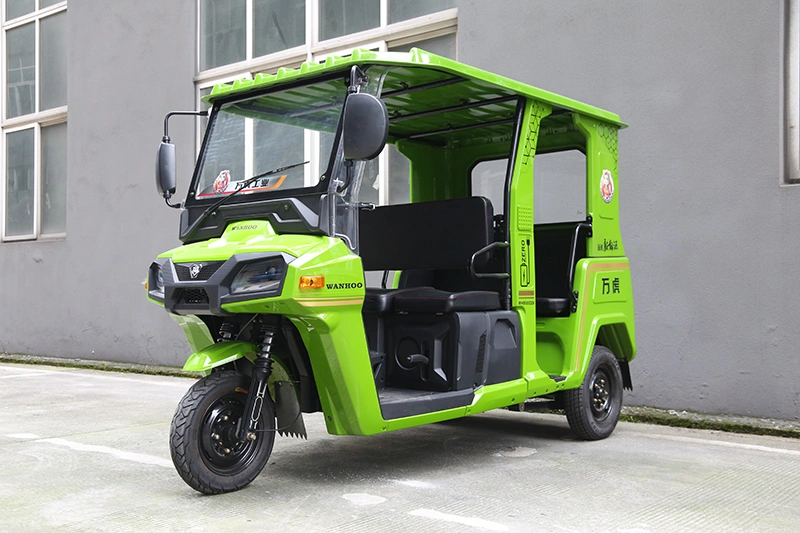
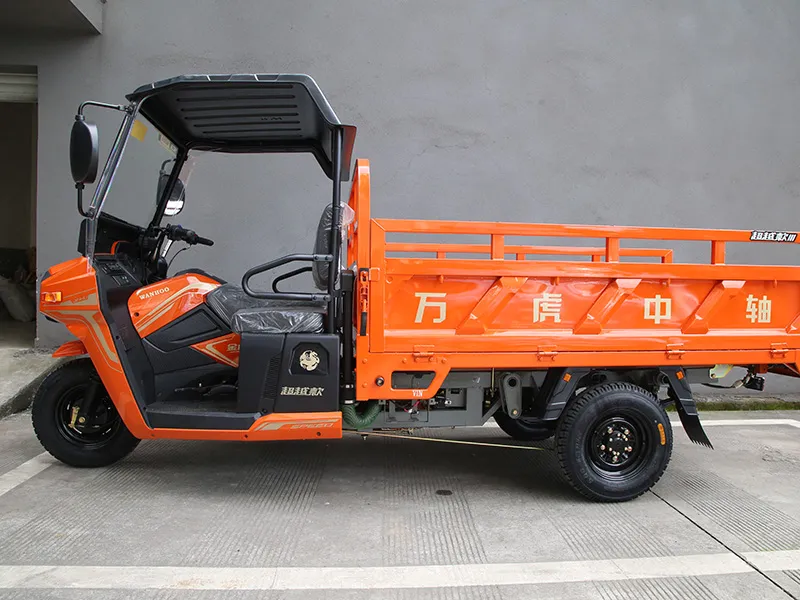
The current WINTIGER product page lists a 2,200 × 1,350 × 400 mm cargo box. Confirm the current quotation and whether those are internal usable dimensions before planning a load; nominal dimensions alone do not show gates, clearances or restraint space.
Second question: how does it get on and off?
This is the part of the specification most often decided by accident.
How a load is handled decides more of the specification than most buyers expect. Hand loading at both ends rewards a low bed and drop sides that open from three directions. Dock loading rewards a bed height matched to the dock. A driver working alone benefits far more from tipping than a crew.
Hand loading at both ends, the reality for most small operators, makes bed height a daily labour cost. Every extra centimetre of lift is repeated for every sack, every trip, for years. Drop sides that open from three directions cut the reach distance and let two people work opposite sides at once. Fixed sides are stronger and cheaper, and right for loose material or drums. Dock loading inverts all of that: bed height should sit close to dock height, and a low bed becomes an obstacle.
Tipping is where the money question gets sharpest. A tipping body earns its cost fastest when one driver unloads loose material alone, because it replaces an hour of shovelling with a minute of lifting. It earns far less when a crew unloads sacks by hand, because the crew touches every item anyway. Tipping gear also adds mass, and every kilogram of mechanism is a kilogram of rated payload not available for freight.
Third question: where does it go?
Distance, surface, gradients and legal access all shape the answer, and none of them appear on a payload rating.
Short urban distribution on sealed streets is undemanding mechanically but demanding dimensionally. Lane widths, market alleys and restricted zones set a hard ceiling on size, and the largest vehicle that fits the route beats the largest vehicle available. Rural work is the opposite: longer distances, worse surfaces, and sustained load on gradients where cooling and torque delivery matter.
According to the World Bank's transport overview, there are "more than one billion people living more than 2km away from an all-weather road". That figure describes rural access for all road transport rather than three-wheelers specifically, but it explains why tyre specification and ground clearance are not accessories in many of these markets. Wanhoo's WINTIGER agricultural model carries 5.00-12 all-terrain tyres and a 250cc water-cooled engine precisely because farm tracks are not sealed roads.
Legal access is the constraint most often discovered after purchase. Vehicle class, licensing category and permitted zones differ by country, state and sometimes municipality, so a vehicle that is legal at the border may not be legal in the district it was bought to serve. Confirm the rules for your route before you confirm the order.
Fourth question: how often does it run?
This is the question that most often overturns the buyer's first instinct.
Vehicle size and trip frequency need to be modelled together. A smaller carrier may depart more often, while a larger one may reduce trip count when enough compliant freight is available; only real consignment, route, turnaround and utilization data establish daily throughput.
Two smaller trips can beat one delayed large trip, but not automatically: the answer depends on distance, labour, loading time, fuel, demand and permitted load. Record actual departures and turnaround before assigning a cost to vehicle size.
According to the International Labour Organization, "Over 60 per cent of the world's workforce and 80 per cent of enterprises operate in the informal economy." That statistic covers all enterprises rather than transport operators alone, but it points at something real here: many buyers of these vehicles are small businesses with irregular consignment sizes, who cannot afford to hold freight back until a big bed is full.
Count your trips over a normal fortnight and record what each one weighed and how much bed it filled. That record answers the sizing question better than any specification sheet.
When extra capacity costs—and when it does not
The instinct to buy larger "for safety" is understandable and usually wrong.
Unused capacity can add purchase or operating cost, but a larger rating does not by itself prove higher total cost. Compare complete vehicle mass, fuel use on matched routes, tyre and brake specifications, utilization, maintenance, financing and expected growth.
The purchase premium is visible; operating differences need measurement. Engine size or payload class alone does not determine fuel, tyre or brake cost. Build the comparison from matched routes and verified parts prices, including empty return distance where it actually occurs.
Visible spare space can encourage another item to be added even when the weight limit is already reached. Use a documented loading rule and weighing method; the bed's appearance is never evidence of remaining payload.
Illustrative example. Every figure below is an invented round number, shown only to demonstrate the method. Substitute your own.
| Illustrative figure | Before | After |
|---|---|---|
| Rated payload of the vehicle purchased | 1,000 kg | 600 kg |
| Weight of a typical full bed of the goods carried | 300 kg | 300 kg |
| Round trips completed in a working day | 3 | 4 |
| Bed volume relative to the previous vehicle | baseline | larger |
The invented table is a calculation prompt, not a result: it does not prove that paid work increased or that the lower-rated vehicle costs less. Replace every cell with measured weights, verified bed dimensions, actual trip counts and route costs before drawing a conclusion.
Where the sizing question lands in practice
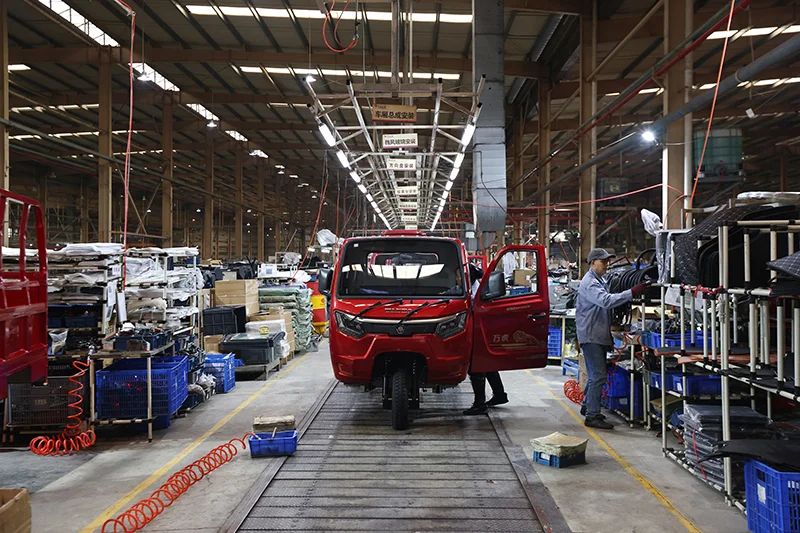
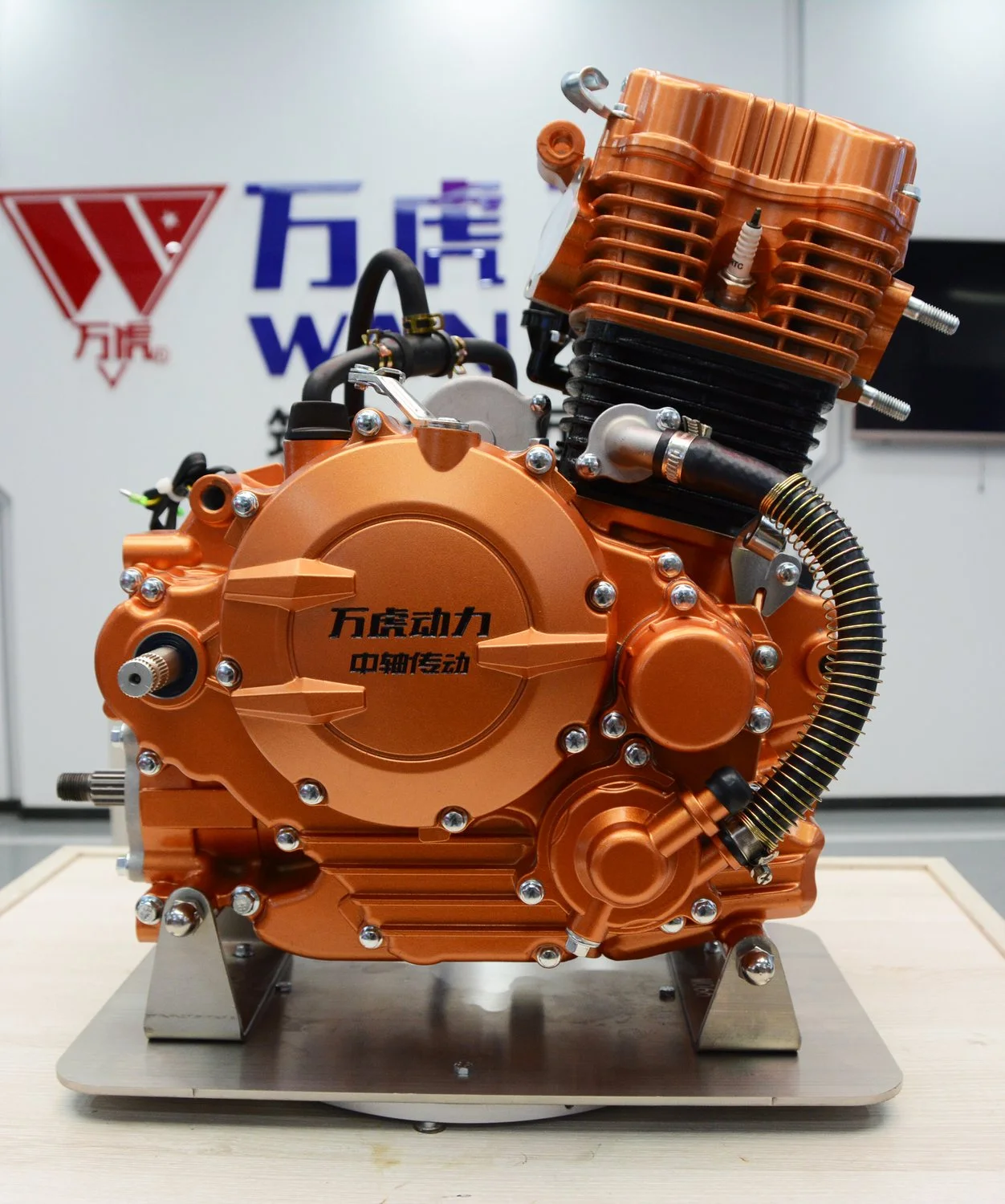
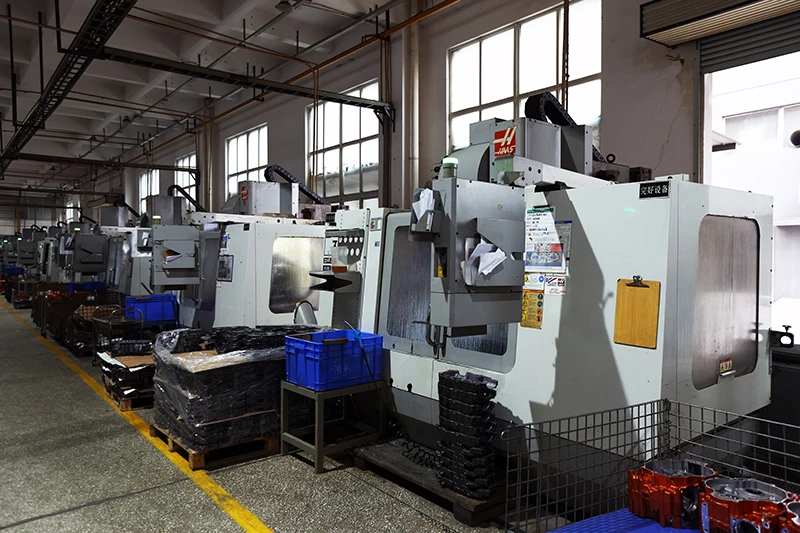
Wanhoo, founded in Chongqing in 1986, builds three-wheelers and their engines, with more than 1,000 employees, a 60,000 square metre plant, annual capacity of 100,000 vehicles and 300,000 engines, and exports to more than 50 countries. These company facts do not replace configuration- and route-level verification.
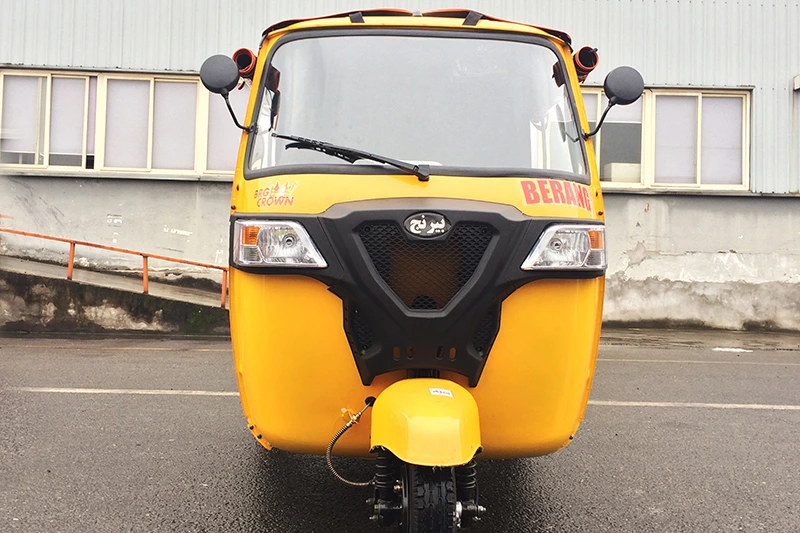
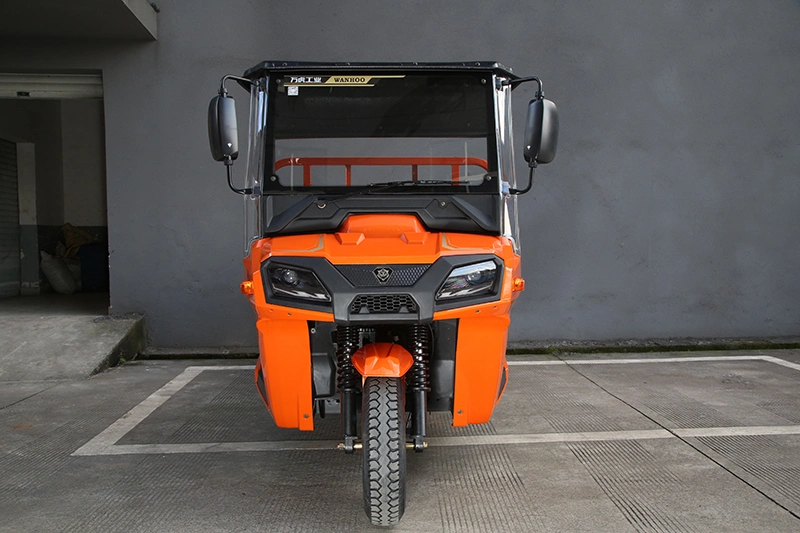
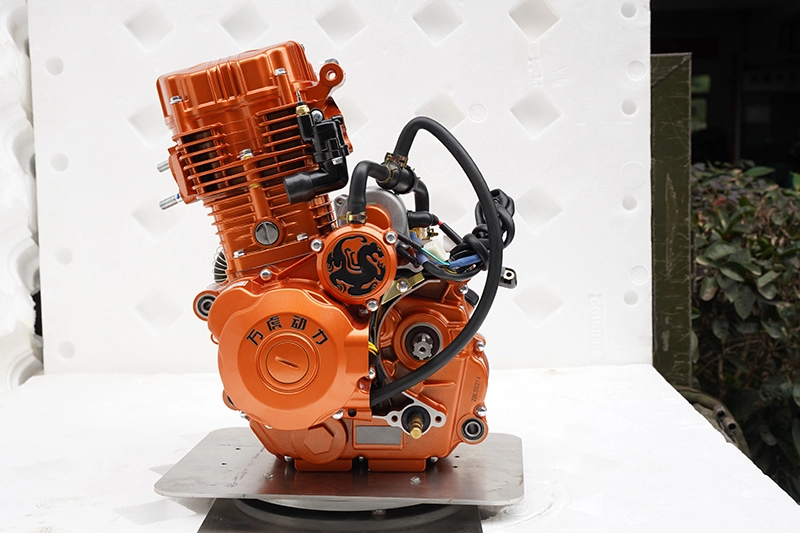
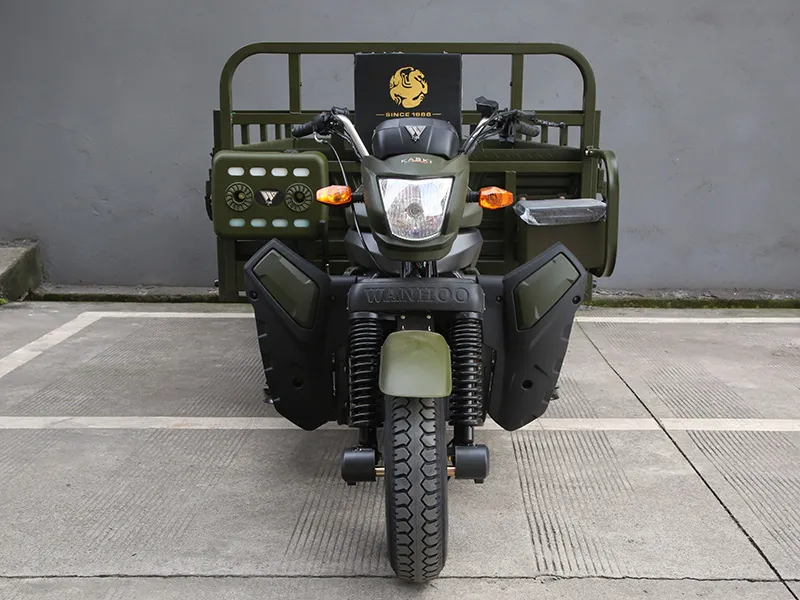
Read the model steps as different configurations, not as a good-better-best ladder. The Q1 page lists a 150cc engine, maximum loading capacity up to 600 kg and fuel-economy upper limit of 3.4 L/100 km. The K3 page lists 150cc water cooling, up to 1,000 kg and an upper limit of 3.9 L/100 km. The KINGTIGER page lists a 250cc water-cooled engine and up to 1,800 kg. WINTIGER lists 250cc water cooling, 580 kg net weight, 5.00-12 tyres, a 2,200 × 1,350 × 400 mm box, up to 1,000 kg and an upper limit of 4.3 L/100 km. Confirm the current quoted configuration; the public pages do not establish a matched fuel test.
Those are weight and drivetrain figures. They do not tell you whether your crates fit, which is why the bed dimensions request above applies here exactly as it applies to any other supplier.
What a payload rating actually is
It is worth being precise about the number the whole purchase revolves around.
Payload is the load the configured vehicle is permitted to carry, subject to the manufacturer's rating, axle limits and local law. It is a ceiling, not a target; available legal payload can fall when a body, tipping gear, canopy, occupants or accessories add unladen mass.
According to GOV.UK guidance on vehicle weights, maximum authorised mass covers the vehicle or trailer plus its maximum permitted load. That is not the same as payload: as a practical check, available payload is constrained by the permitted total and axle masses minus the vehicle's actual ready-to-work mass. UK terminology does not transfer automatically, so verify the plate, manual and destination-market rules.
A rating applies to a defined vehicle configuration. Add a tipping mechanism, canopy, side extensions, occupants or a heavier body and the remaining legal cargo allowance may fall. Obtain written approval and updated mass documentation where required.
Do not exceed the manufacturer's rating, axle limits or local legal limits. If routine work does not fit, split the load or select an approved higher-capacity configuration; visible bed space and the ability to move are not evidence that the load is permitted.
Start with the goods. Work outward to loading, route and frequency. Let the payload rating confirm the choice rather than make it.
Frequently Asked Questions
**What does goods carrier mean when applied to a three-wheeler?**
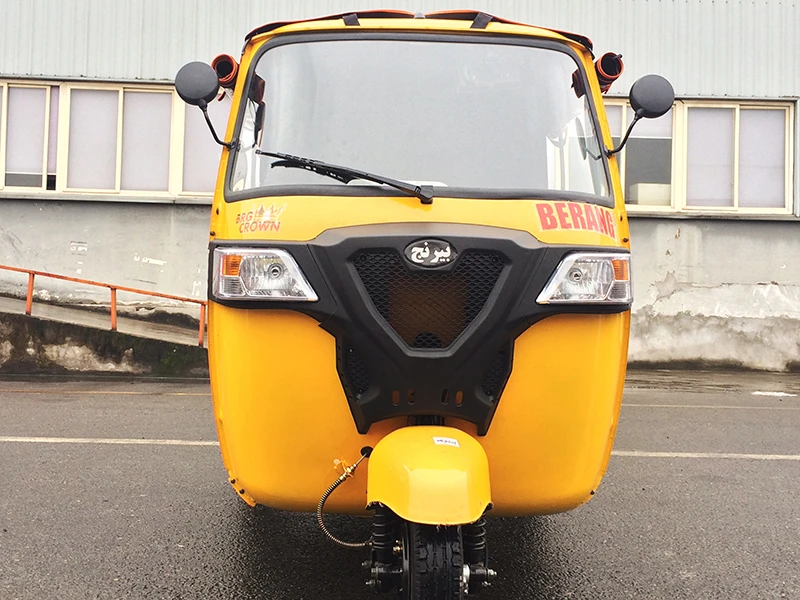
Goods carrier is a term used in many markets for a three-wheeler built to move freight rather than passengers. It describes purpose, but not a universal payload, body size, engine or legal class; those vary by model and destination.
Should I choose a goods carrier three wheeler by payload rating alone?
No. Payload tells you what the vehicle may safely carry, but it does not tell you whether your goods will physically fit. Dense freight exhausts the payload rating first, while bulky freight exhausts the bed volume first. Check both limits against the loads you actually move.
How do I compare bed capacity between two suppliers?
Ask each supplier for internal bed length, width and height, measurement points and body configuration in writing. Multiplying the three gives a rectangular bounding volume, not guaranteed usable capacity; gates, wheel housings and restraint clearance may reduce what fits.
Is a tipping body worth the extra cost?
It depends on the approved body, material, unloading method, labour time, cycle count and local rules. Tipping gear adds unladen mass and can reduce remaining cargo allowance. Compare measured unloading time and total cost; never tip on unstable or side-sloping ground.
Is it safer to buy a larger vehicle than I need?
Not automatically. Extra unused capacity may add purchase or operating cost, but a larger rating can also cover routine peaks or growth. Compare matched-route fuel use, complete vehicle mass, utilization, parts, financing and real load data rather than payload class alone.
What happens if I regularly exceed the rated load?
Do not exceed the manufacturer's rating, axle limits or local legal limits. Overload raises demand on tyres, suspension, bearings, frame and brakes and may invalidate road or insurance compliance. Split the load or use an approved higher-capacity configuration.