Two cargo tricycles can both claim a one-tonne rating and behave nothing alike. One hauls 1,000 KG up a loading ramp every day for five years. The other flexes at the rear axle by the third month. The number printed on a brochure is rarely the number the frame can survive. A cargo tricycle carries between 600 and 1,800 KG in practice, and the safe figure for your business depends on three things: engine displacement, frame construction, and whether the engine is air-cooled or water-cooled. This guide breaks down what each payload class actually means, so you buy the vehicle your routes need instead of the number a listing promises.
How Much Can a Cargo Tricycle Actually Carry?
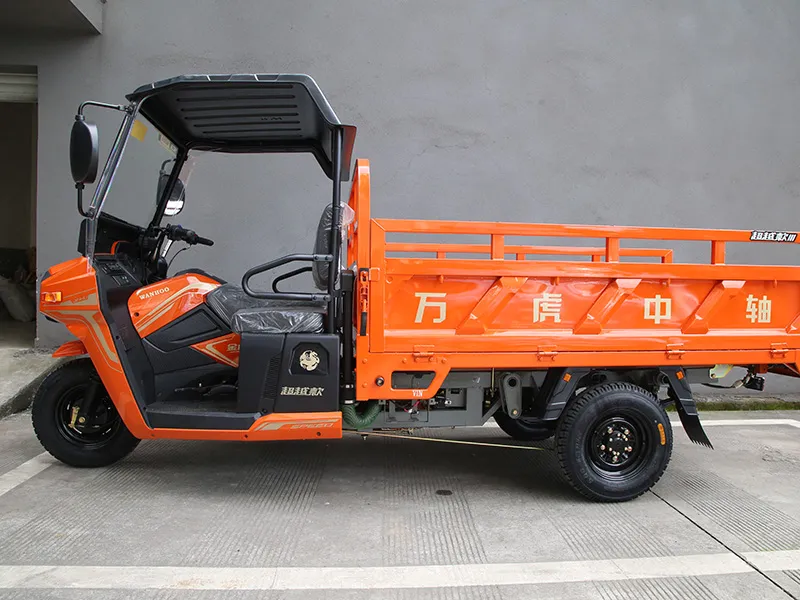
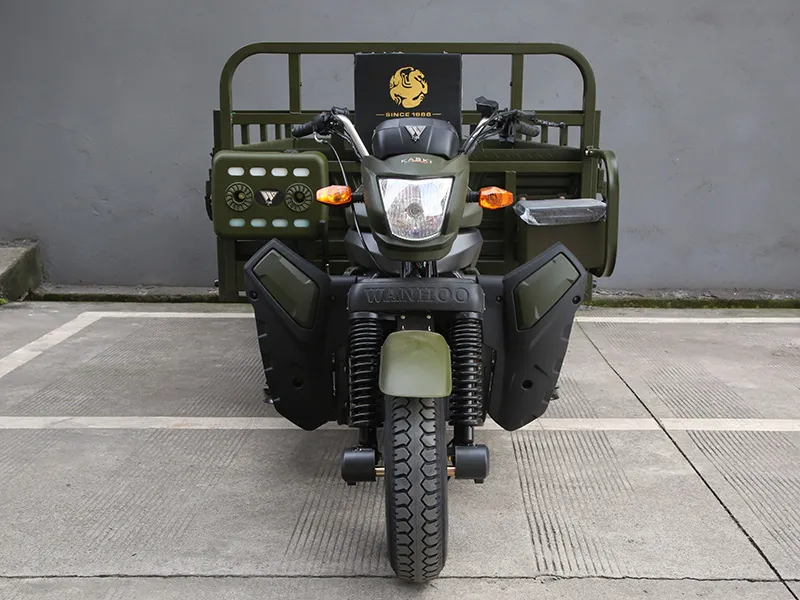
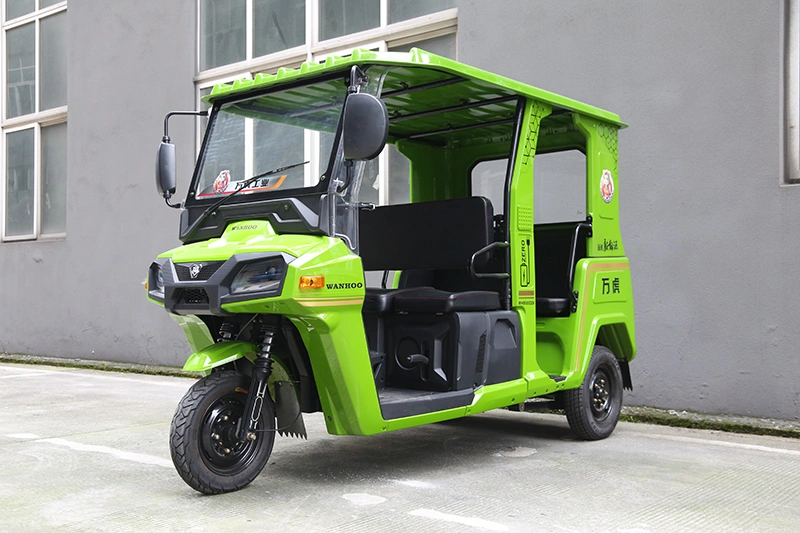
A cargo tricycle is a three-wheeled goods vehicle built around a reinforced rear frame and a cargo box, powered by a motorcycle-class engine driving the rear axle. Real-world payloads across the category run from about 600 KG on light 150cc models to 1,800 KG on heavy 250cc models with double-reinforced frames.
Cargo tricycle payload is the maximum load a three-wheeler can carry safely and repeatedly without frame fatigue or axle failure, not the peak weight it can move once. A vehicle run at its rated limit every day wears out fast, so experienced fleet buyers spec a model with 20 to 30 percent of headroom above their heaviest routine load.
Demand for these vehicles is climbing, which is why the payload question matters to more buyers every year. According to Dataintelo, the global cargo tricycle market was valued at 8.7 billion dollars in 2025 and is projected to reach 18.4 billion dollars by 2034, a compound annual growth rate of 8.7 percent. The pull comes from e-commerce, last-mile delivery, and tightening emission rules in cities.
That growth concentrates in the markets Wanhoo serves. According to Allied Market Research, Asia-Pacific and Africa account for the large majority of three-wheeler demand, driven by affordable goods transport across dense urban and rural routes. In those conditions, a cargo tricycle is often the difference between a viable delivery margin and an unviable one.
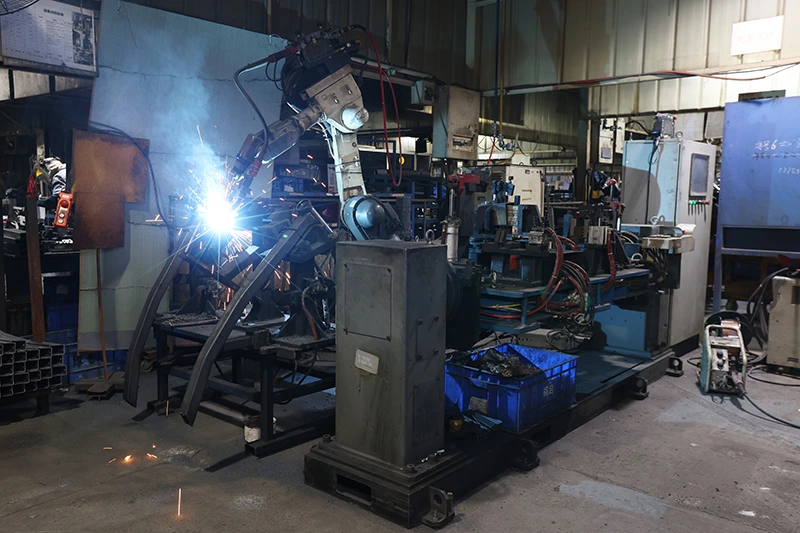
The trap is treating payload as a single headline figure. A "1000 KG" listing tells you nothing about the frame gauge, the rear axle type, or how the engine holds torque on a gradient at full load. Two vehicles with identical brochure numbers can differ by years of service life. The rest of this guide replaces the headline number with the specifications that decide it.
What Payload Do You Actually Need?
Start from your heaviest routine load, not the maximum you will ever carry once. A vendor moving sacks of grain needs a different vehicle from a contractor hauling wet sand or ore. The Wanhoo cargo range spans five models precisely so a buyer can match payload to route instead of overpaying for capacity or underbuying and destroying a frame.
A cargo tricycle payload ladder maps engine size and frame strength to load class: 150cc air-cooled models carry up to 600 KG, 150cc water-cooled up to 1,000 KG, and 200cc to 250cc water-cooled models with dual main frames up to 1,800 KG. Matching the class to your heaviest routine load, with headroom, is the single most important buying decision.
The table below sets Wanhoo's five cargo models against the specifications that decide real payload. Every figure comes from the official model specification sheets, not marketing rounding.
Cargo Tricycle Payload by Model (Wanhoo Range)
| Model | Engine | Cooling | Max payload | Cargo box (mm) | FOB from | Best for |
|---|---|---|---|---|---|---|
| Q1 | 150cc | Air | ≤600 KG | 1700×1250×300 | $830 | Light urban delivery, entry business |
| K3 | 150cc | Water | ≤1,000 KG | 2000×1350×400 | $900 | Economy mid-size, large-volume light goods |
| HANHOO | 200cc | Water | ≤1,800 KG | 1800×1300×390 | $1,100 | All-round city and rural hauling |
| NIMBA | 250cc | Water | ≤1,800 KG | 1800×1300×390 | $1,270 | Heavy loads on tight or narrow routes |
| KINGTIGER | 250cc | Water | ≤1,800 KG | 1800×1300×390 | $1,450 | Heaviest daily hauling, mining and construction |
Read the table by column, not by row. Q1 and K3 share a 150cc displacement but differ by cooling and payload class, so the 100 dollar price gap buys a real capability jump. HANHOO, NIMBA, and KINGTIGER share the 1,800 KG ceiling but differ in body length and price, so the choice comes down to route width and budget rather than raw capacity.
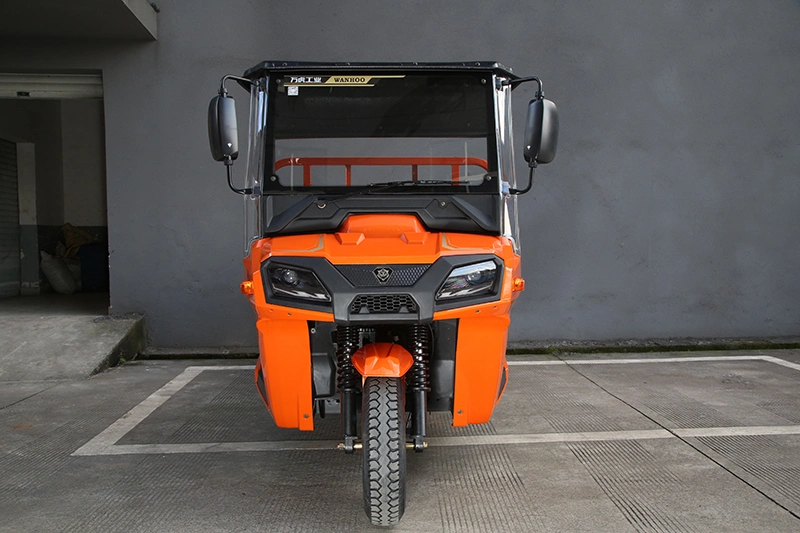
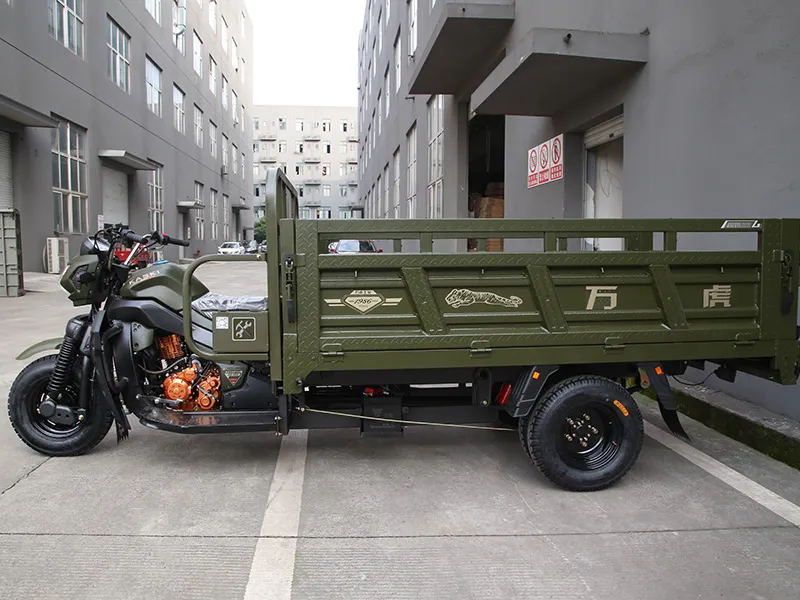
Wanhoo manufactures the KINGTIGER with a self-developed 250cc water-cooled engine and a double-reinforced dual main frame rated up to 1,800 KG, the highest payload in its lineup. The same engine platform powers the NIMBA in a shorter 3,450mm body for operators working narrow lanes, at a lower price than the flagship.
Prices move with configuration and market, so treat the FOB figures as starting points and request a current quote for your specification. What does not move is the relationship the table shows: payload tracks cooling and frame, and both track engine class.
Why Cooling Decides Whether Your Payload Survives
Engine cooling is the specification buyers ignore most and pay for most. A cargo tricycle earns its living under sustained load, often in tropical heat, often crawling in traffic where there is little airflow. That is the exact condition an air-cooled engine handles worst.
According to Bison Machinery, air-cooled engines struggle to cool effectively under heavy load or high ambient temperatures and can overheat, while water-cooled engines hold a constant temperature regardless of whether the vehicle is moving. Constant temperature means tighter, more stable tolerances between piston and cylinder, which translates into less wear over a working life.
A water-cooled engine circulates coolant through a jacket around the cylinder to hold a steady operating temperature under continuous load. An air-cooled engine relies on airflow over fins, which works while the vehicle moves but loses effectiveness in slow traffic, heavy loads, and hot climates, where temperature swings accelerate wear.
This is why the Wanhoo range splits at exactly the point payload gets serious. The entry Q1 uses a 150cc air-cooled engine because its 600 KG class and short routes suit it, and air cooling keeps the vehicle simple and cheap to run at 3.4 litres per 100km. Every model above 600 KG steps up to water cooling, because sustained heavy load without stable temperature is how frames outlive engines.
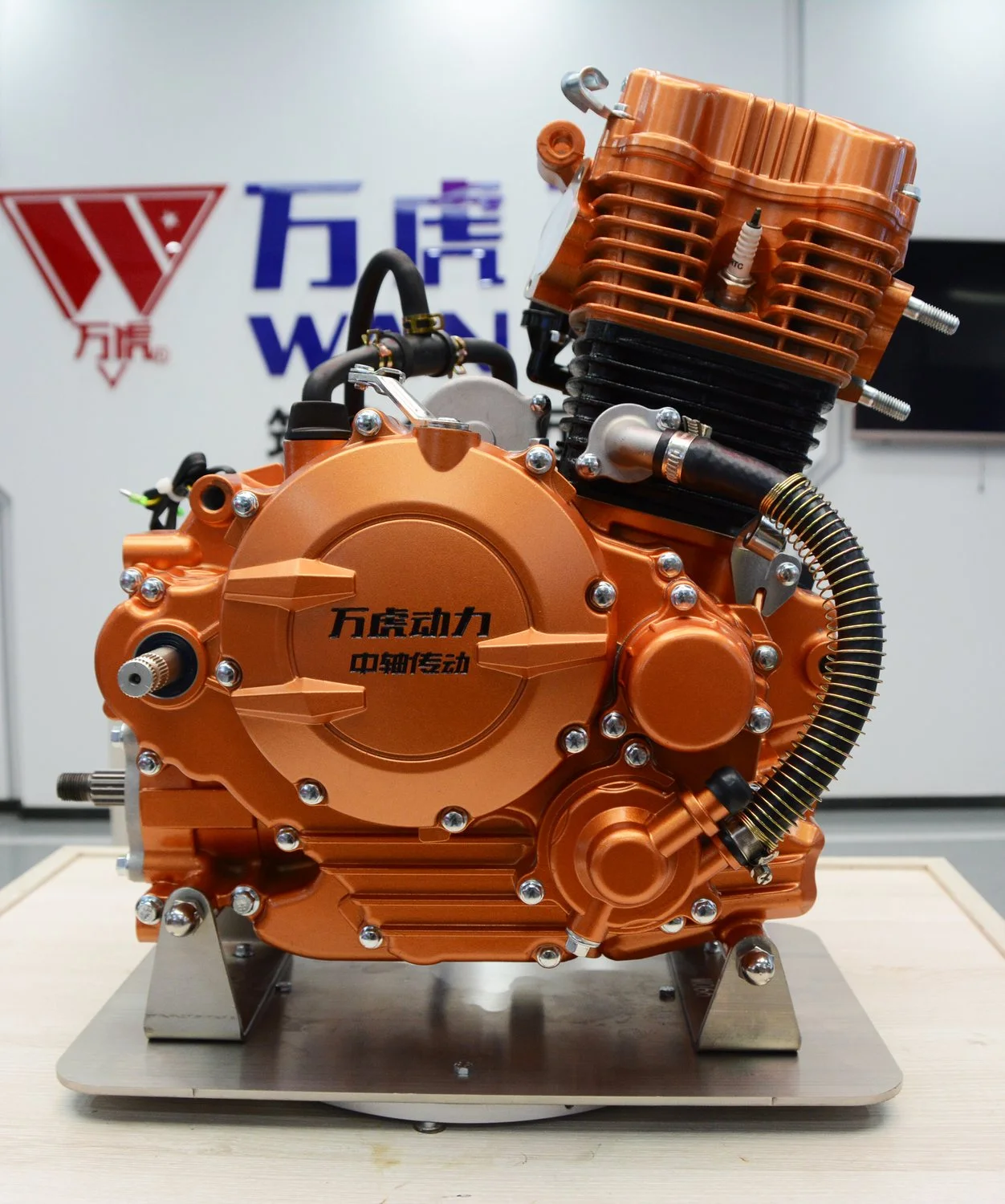
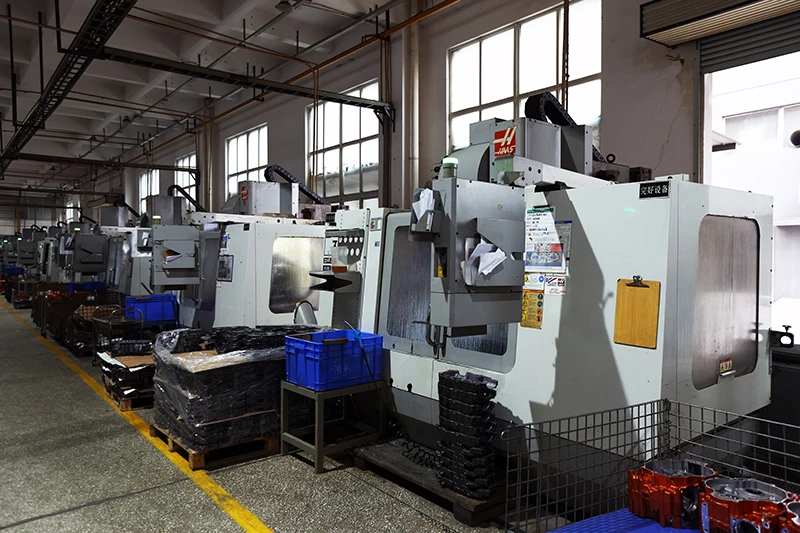
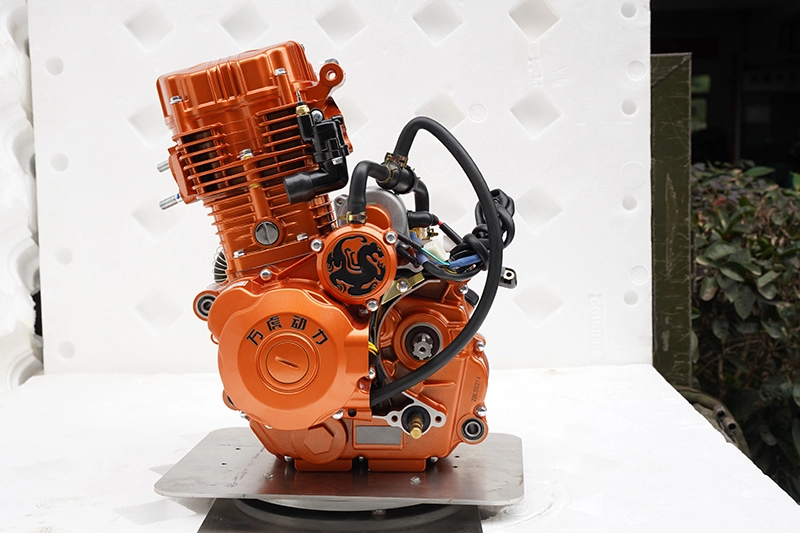
Wanhoo builds these engines rather than buying them in. The self-developed WH163ML-B (197cc) and WH170MM-2B (250cc) water-cooled units are designed for three-wheeler load torque, not adapted from a two-wheeler spun at high RPM. That design choice is the reason a Wanhoo water-cooled model holds torque on a loaded gradient where a repurposed motorcycle engine fades. The engine technology behind the range is the part of the specification a brochure payload number hides.
Petrol or Electric for Cargo Work?
Fuel type changes your running cost more than your payload. Wanhoo's cargo range is petrol, tuned for fuel economy and roadside serviceability, with electric available in the passenger and heavy-passenger lines for operators moving toward zero-emission fleets. The right choice depends on your energy prices, your daily distance, and local emission rules.
A petrol cargo tricycle suits operators who need flexibility, low upfront cost, and easy field repair, especially where charging infrastructure is thin. An electric three-wheeler wins on running cost for high-mileage urban fleets and in low-emission zones, but carries a higher purchase price and depends on reliable charging. Cost per working day, not sticker price, is the number that decides.
Buyers searching for a diesel cargo tricycle are usually chasing torque and fuel cost. On a three-wheeler at these payloads, a well-matched water-cooled petrol engine delivers the working torque the job needs while keeping the vehicle lighter, cheaper to buy, and far simpler to service than a diesel unit. Wanhoo's 250cc water-cooled models cover the heavy-torque use cases most diesel searches are really trying to solve.
Serviceability is a deliberate design decision, not an accident. Wanhoo specs carburettors on standard models rather than electronic fuel injection, because mechanics trained on EFI are scarce across many of its export markets and a carburettor can be fixed at the roadside. Combined with in-house spare parts supply from vertical manufacturing, that keeps a cargo tricycle earning instead of waiting for a part.
Matching a Cargo Tricycle to Your Business
The payload class and the vehicle follow from the job. A courier moving parcels has different needs from a builder moving blocks, and buying the wrong end of the range costs money either way. Here is how the five models map to the work most buyers actually do.
Light urban delivery and first-business buyers fit the Q1. Its 600 KG class, 360 KG kerb weight, and lowest-in-range fuel burn make it the fastest vehicle to pay back for a market vendor or courier starting out. According to the payload ladder, this is the only class where air cooling is the right call, and the Q1's price from 830 dollars is the range's entry point.
Wanhoo produces the Q1 with a 150cc air-cooled engine and a fuel economy under 3.4 litres per 100km, the most economical model in its cargo range. It is built for owner-operators in emerging markets who need a low purchase price and simple maintenance rather than maximum payload.
Everyday mixed cargo and growing fleets fit the K3 or HANHOO. The K3 pairs a water-cooled 150cc engine with the range's largest cargo box (2000mm long) for high-volume light goods at 1,000 KG. The HANHOO steps to a 200cc water-cooled engine and the full 1,800 KG ceiling for operators whose loads vary week to week.
Heavy daily hauling for mining, construction, and bulk agriculture fits the KINGTIGER or NIMBA. Both carry up to 1,800 KG on the same self-developed 250cc water-cooled engine and double reinforced frame. Choose the KINGTIGER for maximum durability on the hardest routes, or the NIMBA for the same payload in a shorter body at a lower price. These models anchor the cargo tricycle range and suit urban logistics and site work alike.
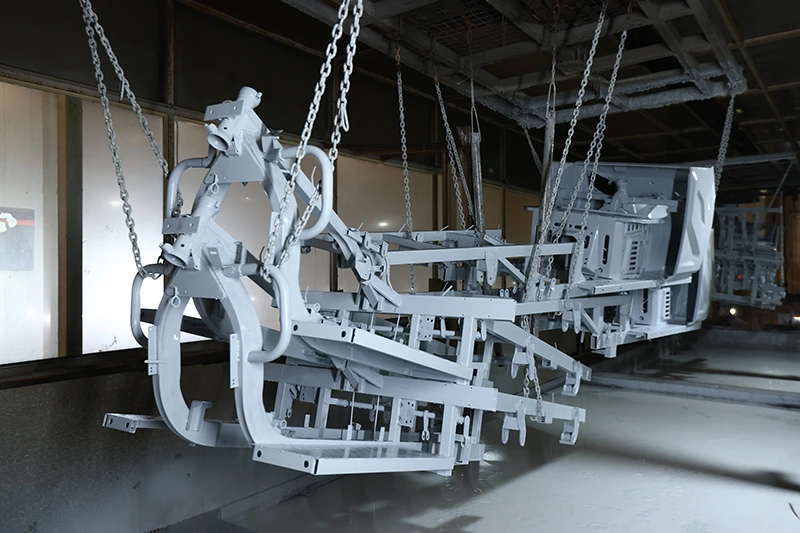
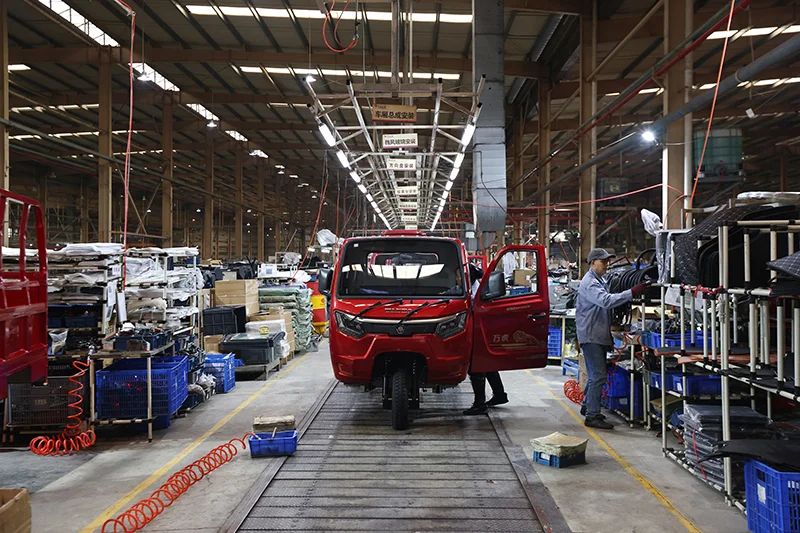
One frame detail underpins every model above the entry class. Wanhoo builds each cargo frame in-house with double-reinforced dual main rails and full-immersion electrophoresis coating rated for 500 hours of salt-spray resistance, so the structure that carries the payload survives tropical heat, coastal salt, and rough roads. Payload is a frame property as much as an engine property, and the frame is where cheap vehicles cut corners a brochure never shows.
Frequently Asked Questions
**How much weight can a cargo tricycle carry?**
A cargo tricycle carries between 600 and 1,800 KG depending on its engine size, frame construction, and cooling type. Light 150cc air-cooled models handle up to 600 KG, while 250cc water-cooled models with reinforced dual frames carry up to 1,800 KG safely and repeatedly.
What is the difference between an air-cooled and a water-cooled cargo tricycle?
A water-cooled cargo tricycle holds a constant engine temperature under heavy load and hot conditions, reducing wear and sustaining torque on gradients. An air-cooled model runs cooler only while moving, so it suits lighter loads and shorter routes where sustained high-temperature operation is not a factor.
What size engine do I need for a 1,000 KG load?
For a routine 1,000 KG load, a 150cc water-cooled engine such as the one in the Wanhoo K3 is the practical minimum, and a 200cc water-cooled model like the HANHOO adds headroom for gradients and mixed loads. Air-cooled engines are not recommended above the 600 KG class.
Is a petrol or electric cargo tricycle cheaper to run?
An electric three-wheeler is cheaper per kilometre for high-mileage urban routes and in low-emission zones, while a petrol cargo tricycle has a lower purchase price and is easier to repair where charging is limited. Compare cost per working day across your real routes before deciding.
How many cargo tricycles fit in a shipping container?
Wanhoo cargo models ship in SKD form at 24 to 45 units per 40HQ container depending on model, with the compact Q1 loading up to 45 units and the flagship KINGTIGER at 24. SKD shipping lowers freight cost per unit for importers and distributors.
Can the cargo box be customised?
Yes. Wanhoo customises cargo box dimensions, type, and select configurations, and supports OEM orders with a trial minimum as low as 10 units. Buyers specify box size and options to match local goods and regulations.