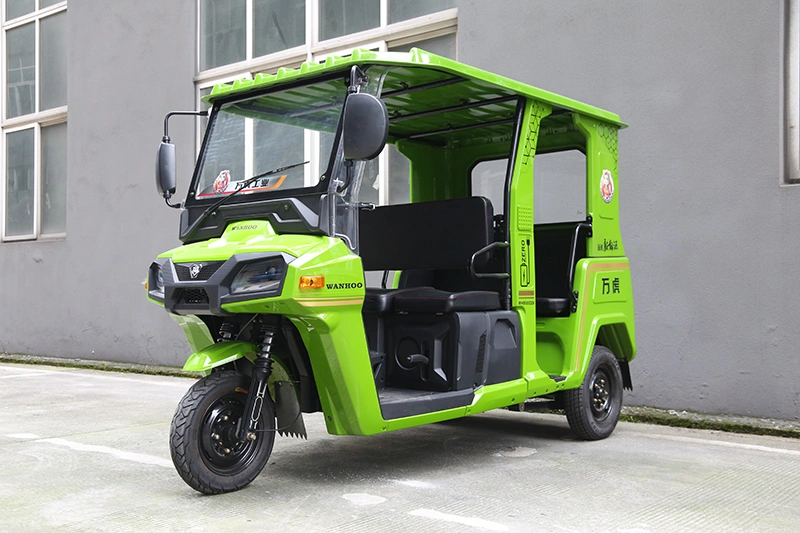
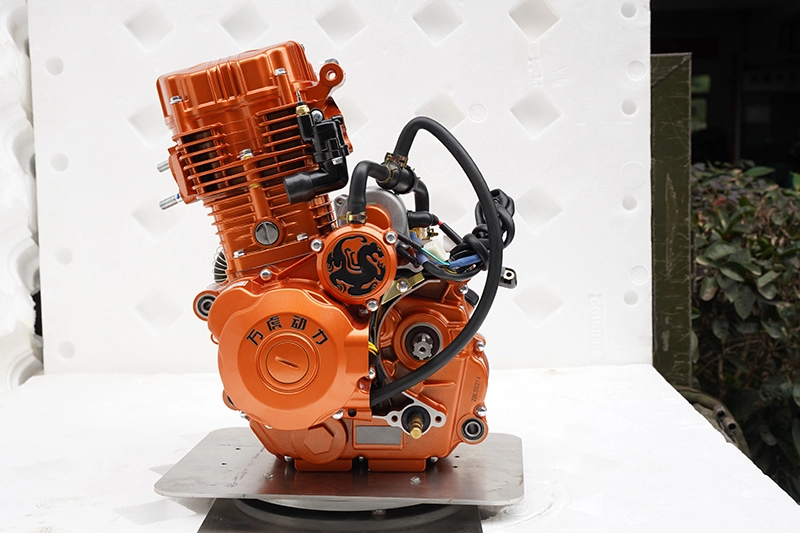
Search for a "cargo motorcycle" to haul goods and most results point to a three-wheeled machine, not a two-wheeled bike. That gap in terminology costs importers real money when the wrong vehicle shows up at the port.
A cargo motorcycle built for real goods work is almost always a three-wheeled motorized cargo tricycle: a single front wheel for steering and two rear wheels carrying a cargo box or flatbed. The right one is chosen by payload rating, engine size and cooling type, frame strength, cargo box dimensions, and running cost per trip, not by price alone.
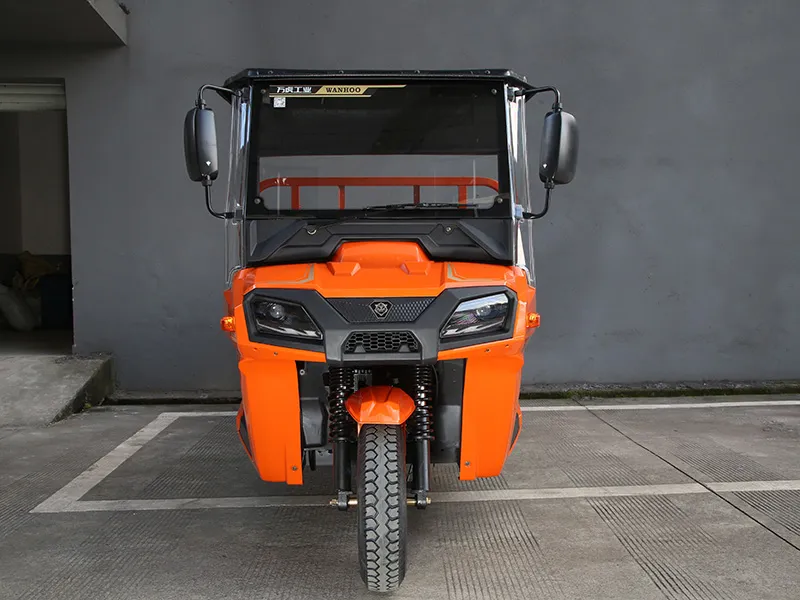
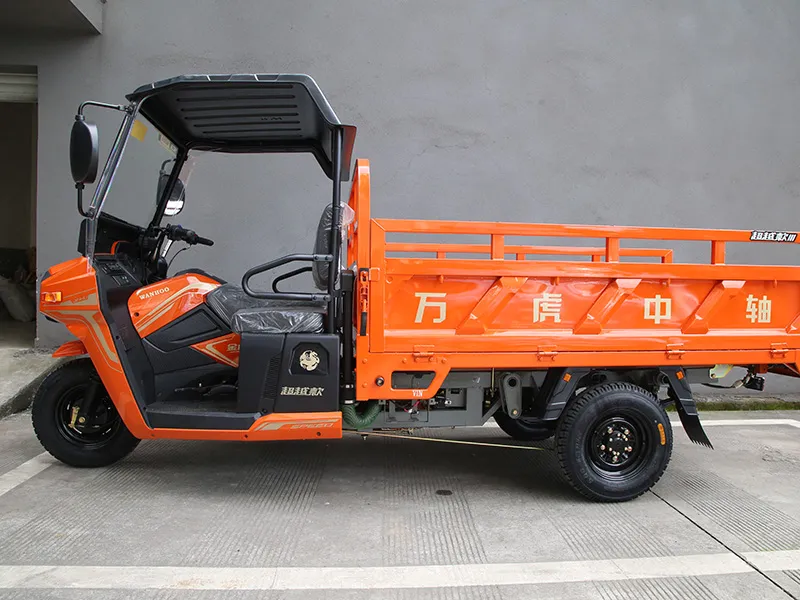
A cargo motorcycle, in commercial freight terms, is a motorized cargo tricycle: a three-wheeled vehicle with a small internal-combustion engine driving two rear wheels under a load bed. It sits between a two-wheeled motorcycle and a light truck. For fleet owners moving building materials, produce, water, or parcels, that three-wheel layout is what makes the load stable and the daily economics work.
Why Do People Call a Cargo Tricycle a "Cargo Motorcycle"?
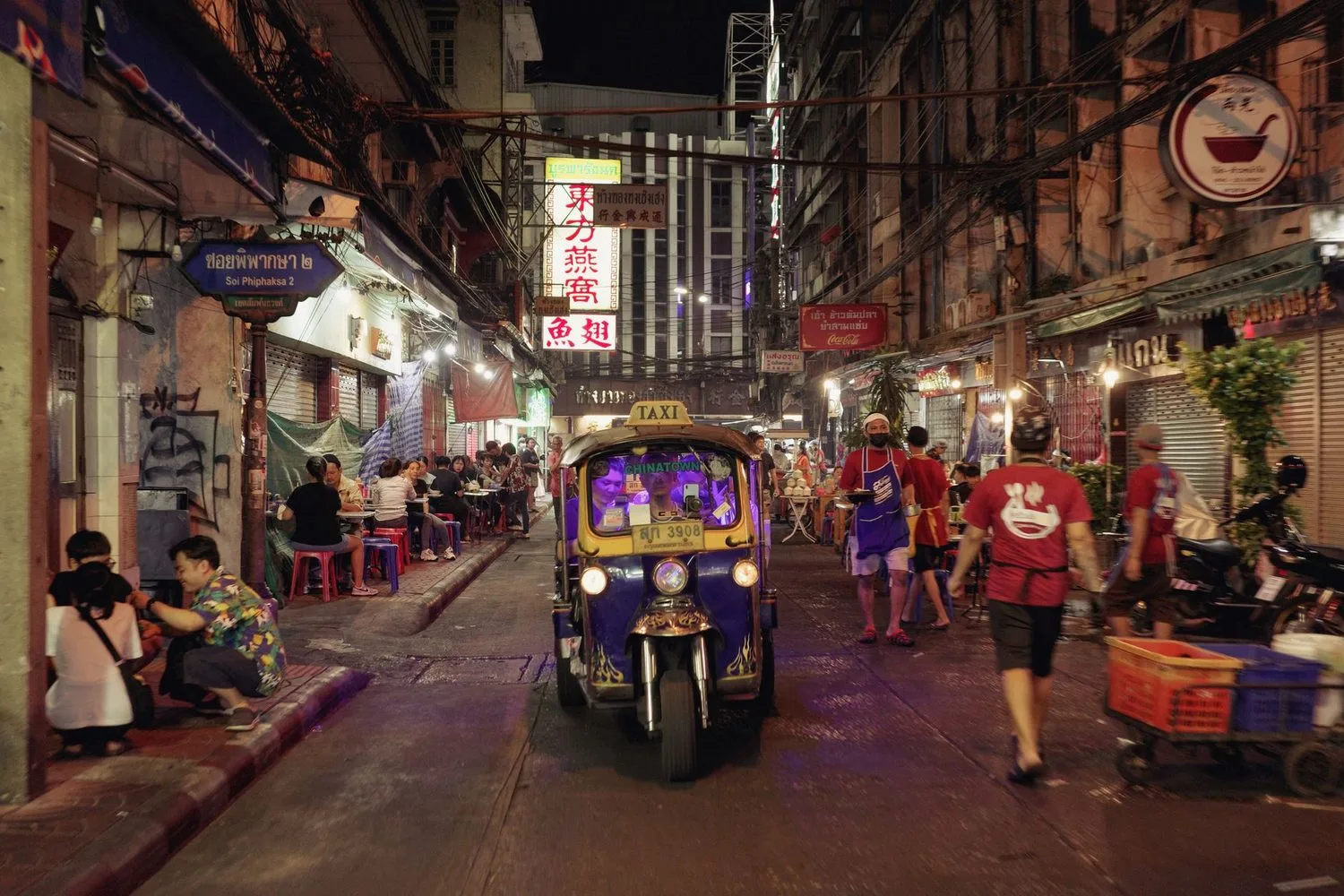
The confusion is a language habit. In many markets a motorized three-wheeler is grouped with motorcycles because it shares the engine, the handlebar steering, and the licensing category. Buyers type "cargo motorcycle" into a search bar when what they actually need is a load-carrying trike with two driven rear wheels.
A cargo motorcycle for goods work is functionally a three-wheeled motorized cargo tricycle: one steering wheel at the front, two load-bearing wheels at the rear, and a fixed cargo box or flatbed over the rear axle. The two-rear-wheel layout is what carries heavy payloads without tipping, which a two-wheeled motorcycle cannot do.
Getting the term right matters at purchase time. A two-wheeled bike with a small trailer tops out around 150KG and gets unstable on rough ground. A purpose-built cargo three wheeler carries 600KG to 1800KG and stays planted. If a supplier quotes a "cargo motorcycle" without a rear axle rating and cargo box size, they are quoting the wrong machine for freight.
According to Straits Research, last-mile delivery applications are seeing a substantially quicker compound annual growth rate in the goods transport category, with vehicles like these serving as a cost-effective alternative to larger trucks in markets with narrow urban streets. That demand is what fills the search results with three-wheeled machines.
What Payload Does a Motorized Cargo Tricycle Actually Need to Carry?
Payload is the first number to lock down, because everything else on the vehicle is sized around it. Underspecify it and the frame flexes, the engine overheats, and the axle cracks. Overspecify it and you pay for capacity that burns extra fuel on every trip.
Payload rating on a motorized cargo tricycle is the maximum weight of goods the cargo box can carry, separate from the vehicle's own weight and the driver. A trike rated ≤600KG suits light parcels and market runs, while ≤1800KG suits building materials, sand, water drums, and mining supply routes.
Match the rating to your heaviest routine load, not your average. A vehicle that spends most of its life at 90 percent of rated payload wears out fast. Wanhoo builds its cargo range so the frame and axle are engineered above the stated rating, which is why the reinforced double-beam chassis uses 40x80mm main rails designed with finite element analysis for high-stress points.
According to Growth Market Reports, the global cargo three-wheeler market reached USD 6.12 billion in 2024 and is projected to grow at a CAGR of 7.8 percent through 2033, driven mainly by parcel delivery, courier services, and intra-city freight. Payload class is the main line item buyers weigh in that spending.
How Do Engine Size and Cooling Affect a Cargo Three Wheeler?
Engine displacement and cooling type decide whether your cargo trike keeps moving when it is fully loaded and climbing. This is where cheap imports fail first. A small air-cooled engine hauling maximum payload up a grade overheats, loses power, and strands the driver mid-route.
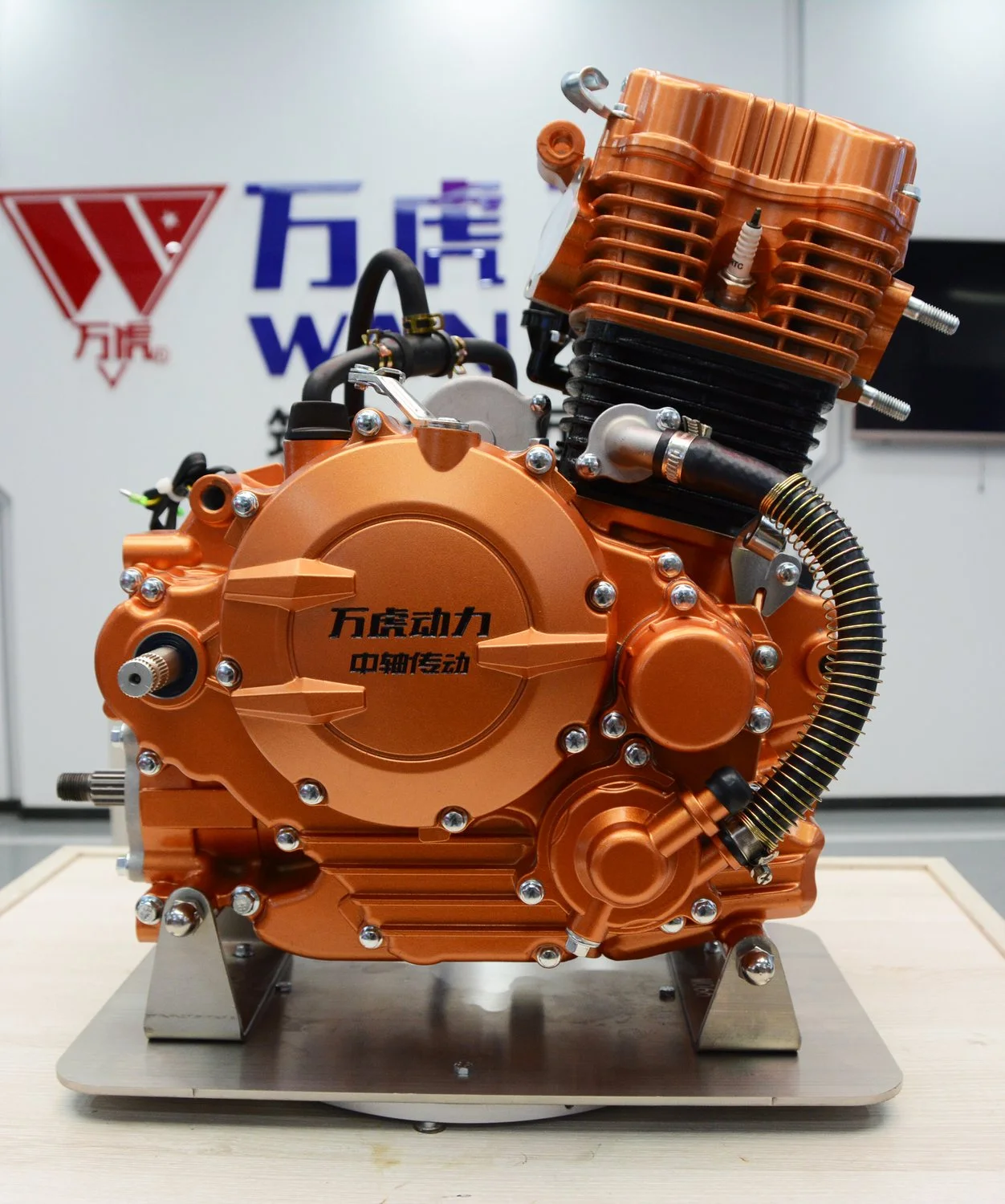
Displacement for cargo tricycles typically runs from 150cc to 250cc. A 150cc engine handles light and medium loads on flat routes. A 250cc engine is built for sustained heavy hauling and gradeability. Cooling type matters just as much: air-cooled engines run cooler in short bursts, while water-cooled engines hold temperature under continuous heavy load.
Water-cooled engines outperform air-cooled models in sustained heavy-load cargo tricycle operation because a coolant circuit carries heat away from the cylinder during long climbs and full-payload runs. Air-cooled engines suit lighter loads and shorter trips where the engine has time to shed heat between stops.
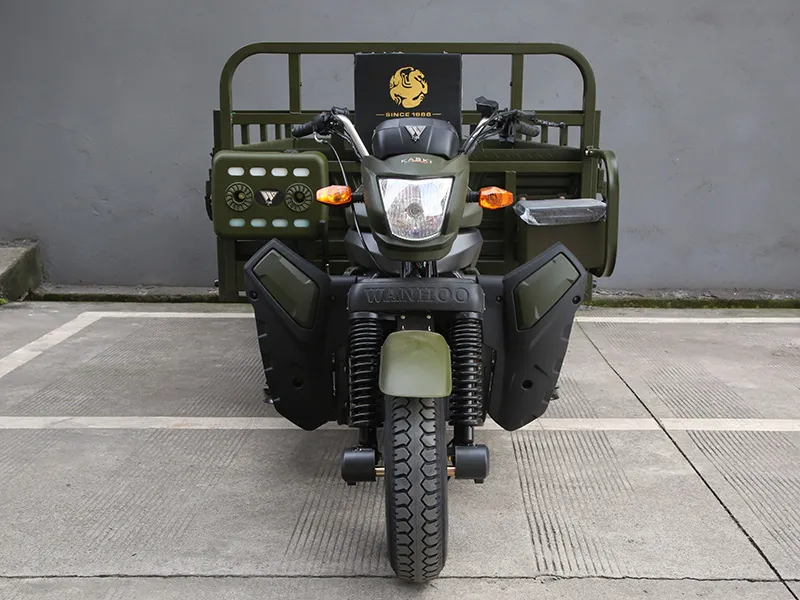
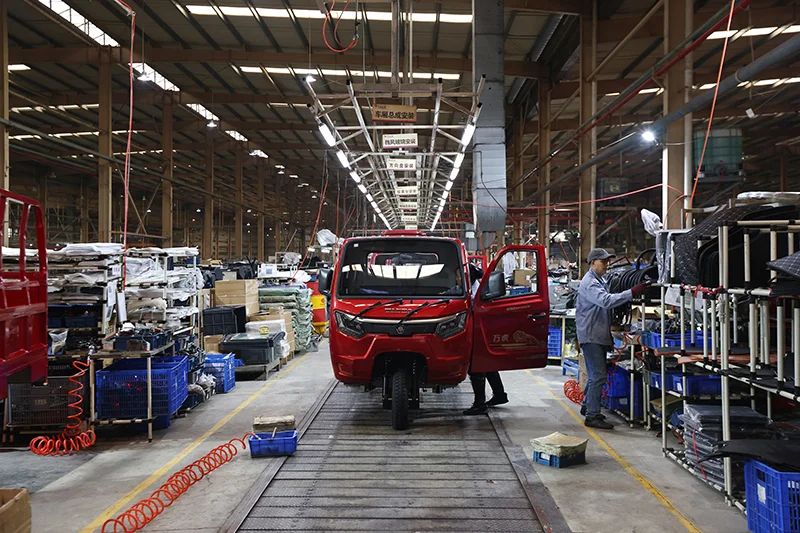
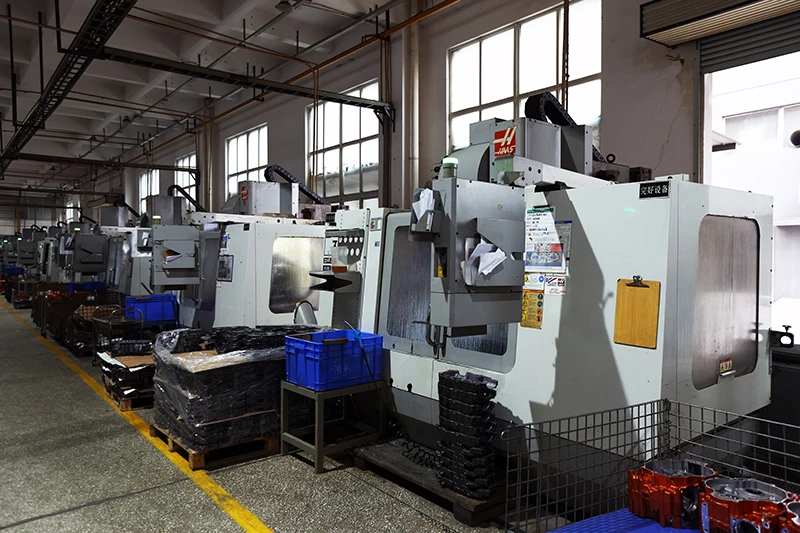
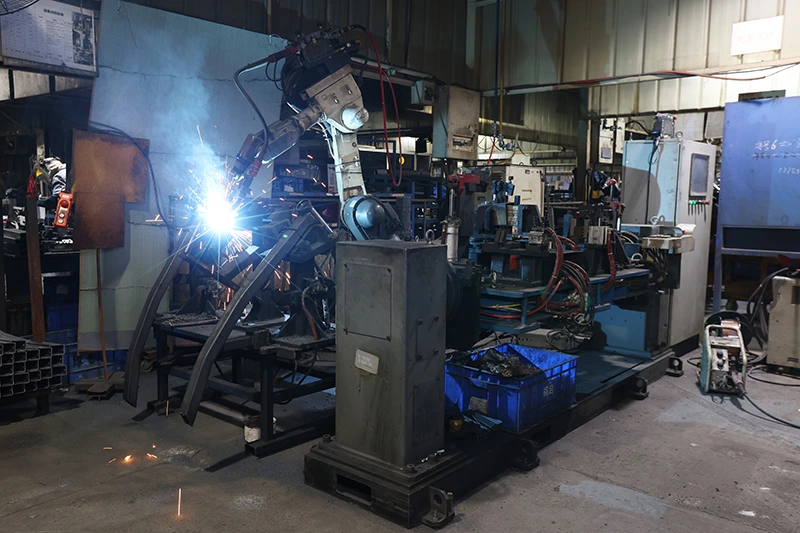
Wanhoo develops its own engines rather than adapting motorcycle blocks. The WH170MM-2B 250cc and WH163ML-B 197cc units are designed from scratch for three-wheeler torque, machined on 21 imported CNC centers for part accuracy. For a buyer, self-developed engines mean parts stay in stock and interchangeable, so a breakdown does not turn into a months-long wait for a proprietary component.
What Frame, Axle, and Cargo Box Should You Check Before Buying?
A cargo trike lives or dies on its structure. The frame carries the load, the rear axle transfers it to the wheels, and the cargo box holds it in place. Weakness in any one turns a productive asset into a repair bill and lost trip revenue.
Check the frame for a double main beam and reinforcement at the joints where the box meets the chassis. Check the rear axle type, since a floating stamped axle spreads shock better than a light welded one on broken roads. Then confirm the cargo box dimensions in millimeters match what you actually load, because a box that is too short forces overloading past the tailgate.
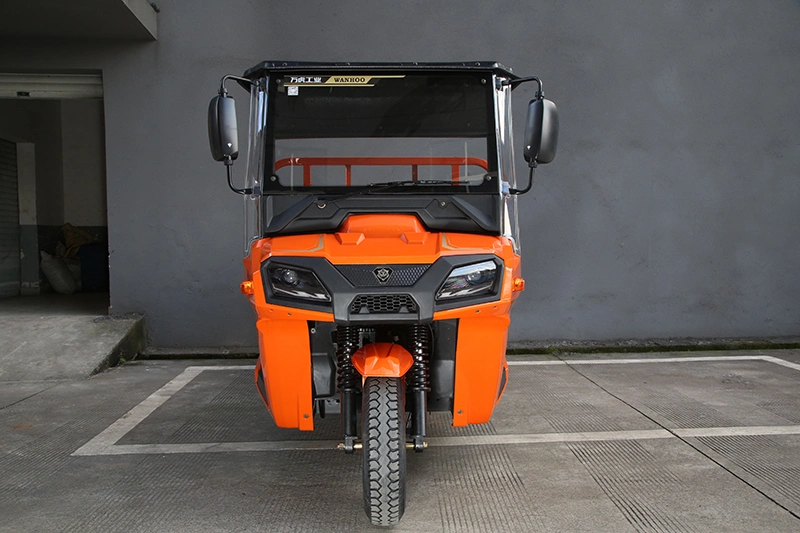
A durable cargo three wheeler pairs a reinforced double-beam frame with a floating stamped rear axle and a cargo box sized to the load. Wanhoo's KINGTIGER carries a 1800x1300x390mm box on a chassis rated up to 1800KG, so heavy building materials sit inside the bed rather than hanging over the edge.
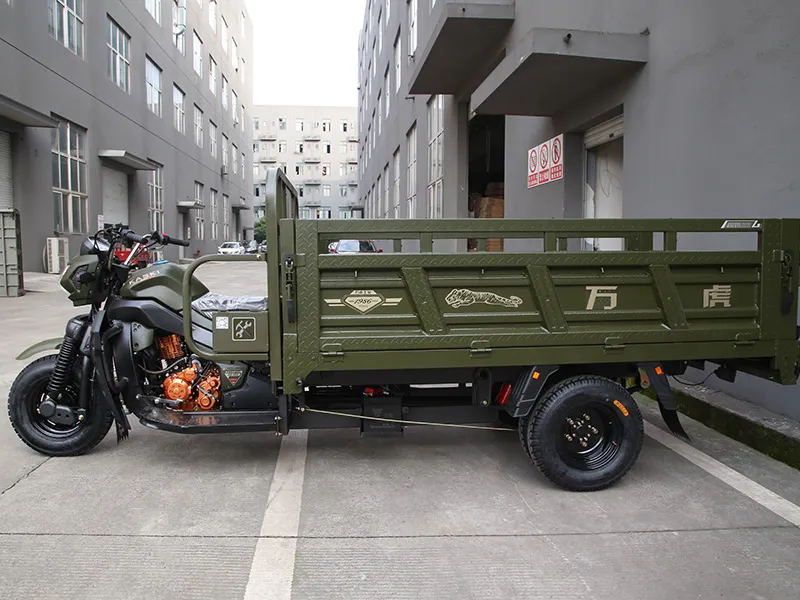
Corrosion protection is the fourth structural check and the one most buyers skip. Coastal humidity, rain, and salt eat unprotected steel within a season, and a rusted frame loses both strength and resale value. Wanhoo runs full-immersion electrophoretic coating rated for 500-plus hours of salt-spray testing, which is why its cargo range holds up in tropical and coastal service where thin-coated imports blister and rust.
How Much Does a Cargo Motorcycle Cost to Buy and to Run?
Purchase price is the number buyers compare, but running cost is the number that decides profit. A cargo motorcycle that costs 200 dollars less up front can lose thousands over a year if it burns more fuel, breaks down often, and sits idle waiting for parts.
Total cost of ownership on a motorized cargo tricycle combines the FOB purchase price, fuel consumption per 100km, maintenance frequency, and downtime cost when the vehicle is off the road. Downtime alone runs 50 to 200 dollars per day per vehicle in lost trips, which quickly outweighs a small saving on the sticker price.
Run the math on your route before you choose. A lighter 150cc trike like the Q1 sips as little as 3.4L on flat delivery work and suits budget-first buyers. A heavier machine costs more to run per kilometer but earns more per trip when it hauls double the load. The cheapest vehicle to buy is rarely the cheapest to own once idle days and parts delays are counted.
According to IMARC Group, three-wheelers provide an economical alternative to four-wheeled vehicles and are a preferred option for small-scale goods movement, being generally cheaper to buy and easier to maintain than larger vehicles. That maintenance advantage only holds when parts supply is reliable, which is where vertical integration pays off.
Which Wanhoo Cargo Model Fits Your Load?
The right pick comes down to your heaviest routine load and your route terrain. The table below compares Wanhoo's cargo motorcycle range by payload, engine, cooling, and starting FOB price so you can map a model to your work. Every model in this cargo motorcycle lineup uses a self-developed engine and reinforced chassis.
| Model | Engine | Cooling | Max Payload | FOB from | Best for |
|---|---|---|---|---|---|
| Q1 | 150cc | Air | ≤600KG | $830 | Entry, light parcels, lowest fuel use |
| K3 | 150cc | Water | ≤1000KG | $900 | Economical medium loads, large 2000mm box |
| HANHOO | 200cc | Water | ≤1800KG | $1,100 | All-round mid-tier freight |
| NIMBA | 250cc | Water | ≤1800KG | $1,270 | Compact heavy hauling, shorter 3450mm body |
| KINGTIGER | 250cc | Water | ≤1800KG | $1,450 | Heaviest loads, mining and building materials |
For light parcel and market work on flat routes, the Q1 at 830 dollars FOB is the budget entry with the lowest fuel burn. For economical medium hauling with a big box, the K3 adds water cooling and a 1000KG rating at 900 dollars. For mid-tier freight that still needs real capacity, the HANHOO pairs a 200cc water-cooled engine with an 1800KG rating.
For the heaviest work, two 250cc options split by body length. The NIMBA shares the KINGTIGER engine in a shorter 3450mm frame for tight sites and lower shipping cost per unit, while the KINGTIGER is the heavy-load flagship rated at Wanhoo's NO.1 Heavy Loading positioning. Wanhoo lets buyers customize cargo box size and configuration and supports SKD shipping at 24 units per 40HQ container to cut freight. FOB prices move with materials, so contact Wanhoo for the latest quote.
Nigeria's mining routes and Peru's high-altitude farms run these machines daily across 60-plus countries. According to Straits Research, the rise of e-commerce and demand for last-mile delivery has spurred a significant increase in three-wheeler usage in Nigeria, particularly among small businesses using them for commercial transport. That field record is the proof behind the spec sheet.
For deeper guidance, see the full cargo tricycle range, the cargo tricycle payload guide, and the broader walkthrough on how to choose the right three-wheeler. To price a specific configuration, request a factory-direct FOB quote with your country and target payload.
Frequently Asked Questions
**Is a cargo motorcycle the same as a cargo tricycle?**
For goods work, yes in practice. A cargo motorcycle built to haul freight is a three-wheeled motorized cargo tricycle with two driven rear wheels under a cargo box. The two-rear-wheel layout carries payloads from 600KG to 1800KG that a two-wheeled motorcycle cannot handle safely.
How much can a motorized cargo tricycle carry?
Commercial cargo tricycles carry between 600KG and 1800KG depending on engine size and frame strength. Wanhoo's range spans a ≤600KG Q1 for light parcels up to the ≤1800KG KINGTIGER for building materials and mining supply, with the frame and axle engineered above the stated rating.
Should I choose an air-cooled or water-cooled cargo three wheeler?
Choose water cooling for sustained heavy loads and hill climbing, and air cooling for lighter loads on short flat routes. Water-cooled engines hold temperature during long full-payload runs, while air-cooled engines run fine when they have time to shed heat between stops.
What engine size do I need for heavy cargo?
For heavy hauling of 1000KG and above, a 250cc water-cooled engine delivers the torque and gradeability to climb fully loaded. A 150cc engine suits light and medium loads on flatter routes. Wanhoo's KINGTIGER and NIMBA both use a self-developed 250cc water-cooled engine for the heaviest work.
Why are Chinese three-wheeler prices so different between suppliers?
Price gaps usually reflect what is under the body. Many exporters assemble the cheapest bought-in engines and thin-coated frames, which fail early. Wanhoo builds its own engines, reinforced chassis, and electrophoretic coating in one facility, so a lower rival price often means higher downtime and parts cost over a year.
Can I customize the cargo box and ship in bulk?
Yes. Wanhoo customizes cargo box dimensions, type, and color, and supports SKD shipping at 24 units per 40HQ container to reduce freight cost. Buyers can also discuss configuration changes and OEM branding, with factory-direct FOB pricing on the full cargo range.