Two delivery operators buy the same three-wheeler. One prints money in six months. The other burns fuel hauling a half-empty box up hills the engine was never built to climb. The vehicle was identical. The routes were not.
The best cargo tricycle for delivery business is the model matched to your goods, routes and budget, so payload, fuel and uptime fit route revenue.
There is no single "best cargo tricycle" that wins every delivery contract. There is only the best fit for your load profile. A firm running light e-commerce parcels across a flat city center has almost nothing in common with one carrying gas cylinders up graded rural tracks. Buying the wrong model means paying for capacity you never use, or worse, overloading a frame that cracks inside a year.
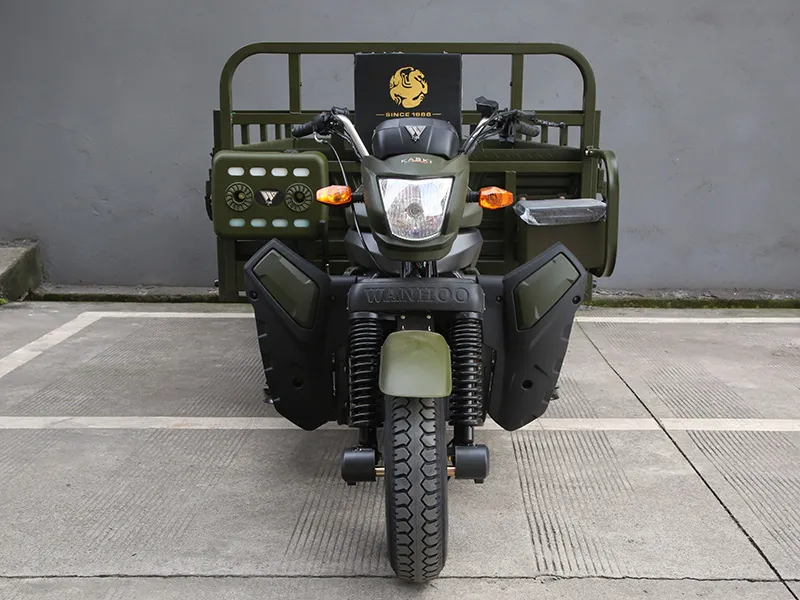
This piece walks a delivery-business owner through the buying decision the way an export sales team does it: goods first, routes second, budget third, then payback math. Wanhoo builds three-wheelers for 60+ countries across Africa, South America and Southeast Asia, and the same question opens every fleet order. What do you haul, and where?
Why Is There No Single "Best" Cargo Tricycle for Delivery?
Delivery economics turn on a simple ratio: revenue per run against cost per run. The vehicle sits on the cost side, and its two biggest levers are fuel burn and downtime. A cargo tricycle for delivery earns nothing while it sits in a workshop, and an oversized engine drinks fuel your margin cannot spare.
A cargo tricycle for a delivery business must match three variables at once: the weight and shape of typical goods, the terrain and distance of daily routes, and the capital budget. Optimize one and ignore the others, and running cost quietly eats the margin the vehicle was bought to protect.
Consider the last-mile squeeze that every delivery owner now feels. According to GoBolt, last-mile delivery now represents 53% of total shipping costs, up from 41% in 2018, making the final leg the single largest logistics expense for most brands. When more than half your logistics spend lands on the last mile, the vehicle running that mile decides whether the route is profitable or not.
That is why route type, not raw horsepower, drives the choice. Urban parcel work rewards a light, fuel-sparing tricycle that darts between stops. Cargo bikes and small three-wheelers already prove this at scale. According to Electrek, a study found urban cargo bikes averaged 10 deliveries per hour against just 6 for vans, a 60% faster rate driven by easier parking and traffic dodging. The same logic favors a nimble tricycle over a heavier vehicle on dense city routes.
What Delivery Goods and Routes Should Decide Your Model?
Start with the goods, because weight and volume set the floor on what you can buy. Payload is the maximum weight a cargo tricycle can legally and safely carry; cargo volume is the space the box offers, which matters just as much for bulky-but-light freight. A furniture courier needs volume. A water-bottle distributor needs payload. Rarely does one route need the maximum of both.
Bulky-but-light goods (cartons, empty containers, packaged foam, textiles) fill a box before they hit a weight limit, so cargo volume decides the model. Dense goods (cement, tiles, bottled drinks, produce sacks) hit the payload ceiling while the box still looks half empty, so rated payload decides it.
Routes set the second filter. Flat, paved city streets let a small air-cooled engine work all day without strain. Graded rural tracks, unpaved yards and long loaded climbs demand a water-cooled engine built for sustained torque, or the motor overheats and stalls under load exactly when the run matters most. Terrain, distance and daily trip count together tell you the engine class you need.
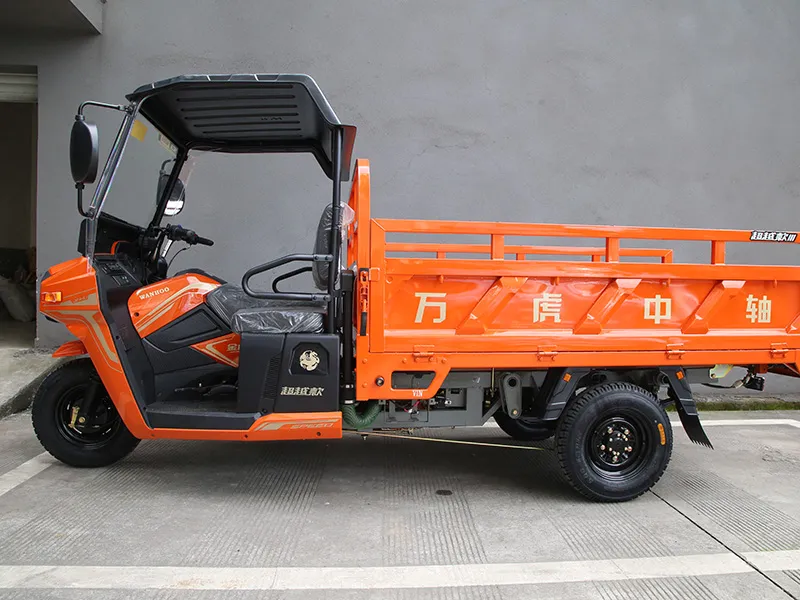
Wanhoo's cargo range maps directly onto these delivery scenarios, so the model follows the route rather than the sales pitch.
| Delivery business type | Typical goods | Route profile | Recommended Wanhoo model | FOB from |
|---|---|---|---|---|
| Urban e-commerce / parcels | Light packages, documents | Flat city, high stop count | Q1 (150cc, ≤600 KG) | $830 |
| Bulky-but-light courier | Cartons, furniture, empties | City and suburb, big box needed | K3 (150cc, ≤1000 KG, 2000mm box) | $900 |
| Mixed-load general delivery | Groceries, hardware, mixed | City-to-rural, varied weight | HANHOO (200cc, ≤1800 KG) | $1,100 |
| Heavy / building-material haul | Cement, tiles, water, produce | Graded roads, full loads, hills | KINGTIGER (250cc, ≤1800 KG) | $1,450 |
The focus keyword here is simple in practice: the best cargo tricycle for delivery business is a shortlist of two or three, not one. Pick the row that matches your daily reality, then compare the two nearest models on price and payback.
Which Wanhoo Cargo Tricycle Fits Light Urban Delivery?
For light urban parcels, the answer is almost always the entry model. The Q1 is Wanhoo's lowest-cost cargo tricycle, built around a 150cc air-cooled engine with a rated payload up to 600 KG and, at roughly 360 KG kerb weight, the lightest chassis in the range. Less mass to move means less fuel to buy on every stop.
Wanhoo's Q1 is the entry cargo tricycle for delivery: 150cc air-cooled engine, payload up to 600 KG, and fuel use as low as 3.4 litres per 100 km, the most economical in the range. For flat, high-frequency parcel routes where loads stay light, it delivers the lowest cost per run of any model Wanhoo builds.
Fuel economy is where the entry model earns its keep, and it is a clean entity-triple: Wanhoo + Q1 + lowest fuel cost. When a courier makes dozens of short stops a day, litres saved per run compound fast across a month. On a route that never approaches the payload ceiling, the Q1's sub-3.4-litre figure is the difference between a thin margin and a workable one.
That said, the Q1 has a clear ceiling. Push it toward 600 KG on hilly ground every day and you are working an air-cooled engine near its limit. If your "light" parcels are creeping heavier, or the city has real gradients, the smarter buy is the next model up rather than an overworked entry unit facing early wear.
What About Bulky Cargo and All-Round Mixed Delivery?
Bulky-but-light freight breaks the payload-first logic, and this is where the K3 shines. It pairs a 150cc water-cooled engine with a payload up to 1000 KG and, critically, a 2000mm cargo box, one of the longest in the class. For couriers moving furniture, cartons or packaged goods that fill space before they reach weight, that box length is the deciding feature at an economy price of $900.
Most delivery businesses, though, do not run one clean load type. They carry groceries one hour and hardware the next, some routes flat, some rural. For that mixed reality the HANHOO is Wanhoo's all-round answer: a 200cc water-cooled engine and payload up to 1800 KG that handles heavy days without punishing the operator on light ones. At $1,100 it sits in the middle of the range for a reason.
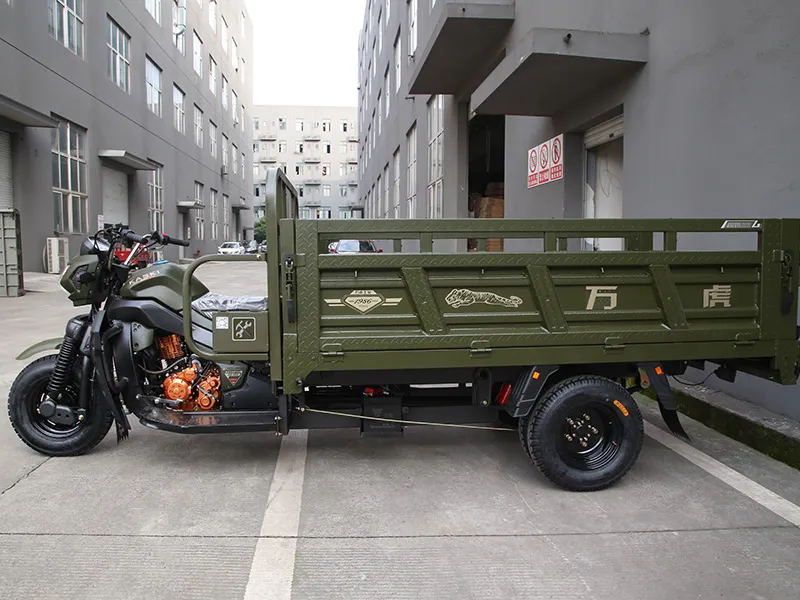
Wanhoo's HANHOO is the all-round mixed-load cargo tricycle: a 200cc water-cooled engine and payload up to 1800 KG let one vehicle cover groceries, hardware and general freight across both city and rural routes. Water cooling handles sustained loaded running that would overheat a smaller air-cooled engine on graded roads.
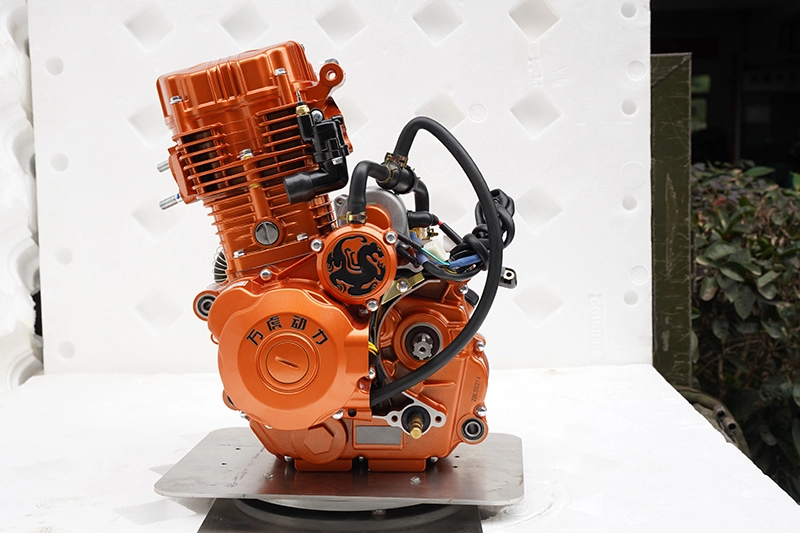
The water-cooled engine is the quiet differentiator across K3 and HANHOO. Air cooling is fine for short flat hops, but sustained loaded climbing generates heat that only a water jacket sheds reliably. A delivery firm that hits rural routes or long gradients should treat water cooling as a requirement, not an upgrade, because an overheating stall mid-route is exactly the downtime that kills daily earnings.
When Does the Heaviest Route Justify KINGTIGER?
Some delivery work is not really parcels at all. It is building materials, bottled water, produce sacks and gas cylinders moved in bulk over rough ground. For that, the KINGTIGER is Wanhoo's heavy-loading flagship, a 250cc water-cooled unit rated to 1800 KG and positioned as the NO.1 heavy-loading three-wheeler in the lineup.
At $1,450 FOB it is the most expensive model here, and for a light-parcel courier it would be a waste. But for a materials-delivery operator, one KINGTIGER run can replace two runs of a smaller tricycle. Fewer trips means less fuel, less driver time and less wear per tonne delivered, which is where the higher sticker price starts paying itself back.
For a heavy-haul delivery operator, KINGTIGER's higher purchase price is repaid through fewer trips. A vehicle rated to 1800 KG can carry in one run what a 600 KG tricycle needs three runs to move, cutting fuel, driver hours and per-tonne wear on routes where weight, not distance, is the real workload.
This is the entity-triple that matters for heavy delivery: Wanhoo + KINGTIGER + heaviest-route payback. The wrong lesson is "buy the biggest to be safe." Oversizing burns fuel on light days you cannot recover. The right lesson is to buy KINGTIGER only when your routine loads genuinely sit near a smaller model's ceiling, so its capacity is used, not idled.
How Do You Calculate Payback on a Delivery Tricycle?
Payback is where the buying decision gets honest. The purchase price is a one-time number. Fuel and downtime are the running costs that repeat every single day, and over a year they dwarf the few hundred dollars separating one model from the next.
Downtime is the cost most owners underestimate. Wanhoo's buyer research is blunt about the number: a stalled or broken-down delivery tricycle costs an operator roughly $50 to $200 per day in lost earnings, which across a month of stoppages runs into thousands. A vehicle that saves $200 on the sticker but sits idle 30 days a year is the expensive option, not the cheap one.
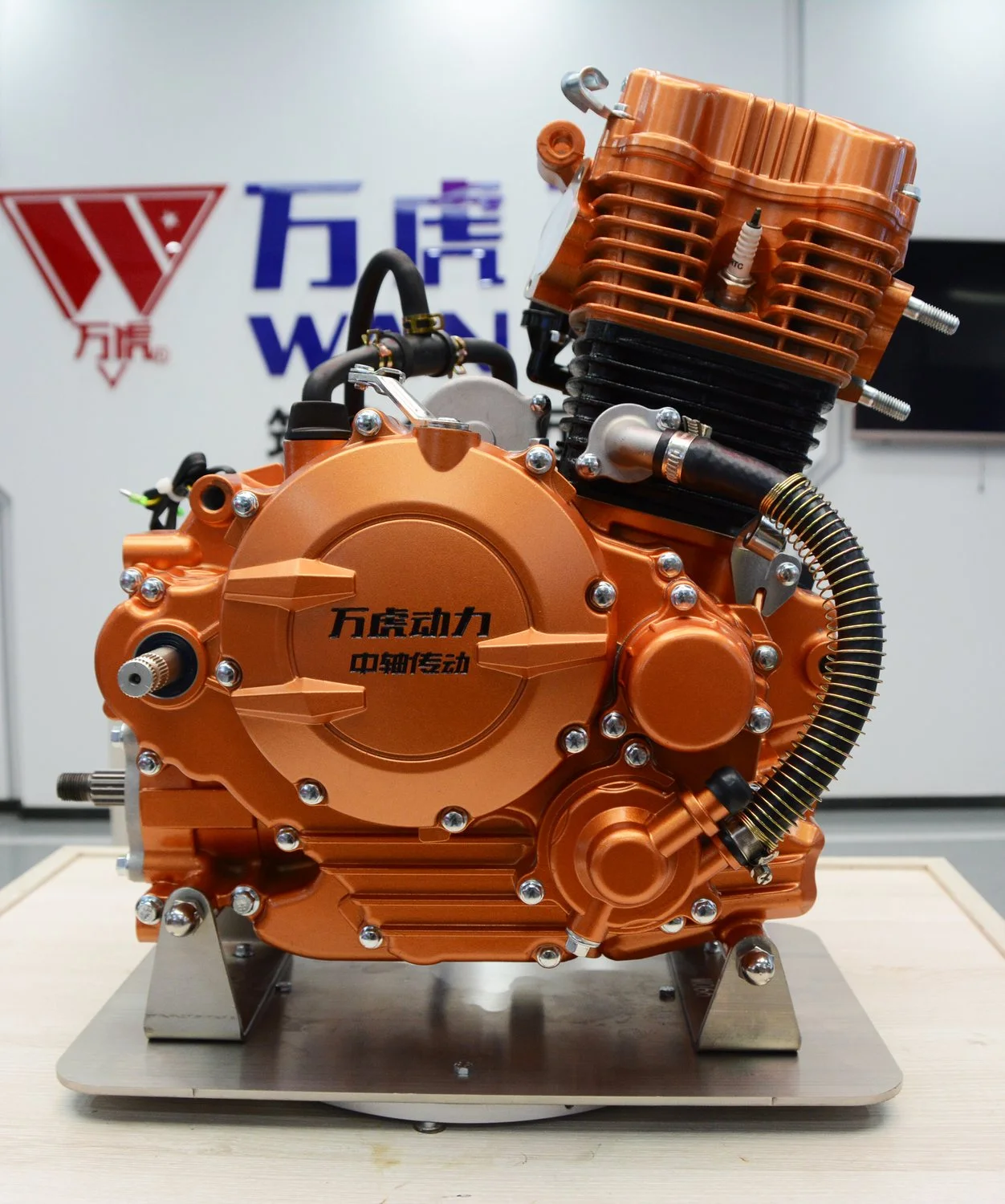
Compare cargo tricycles on total running cost, not purchase price. A model that costs $200 more but avoids one month of breakdown a year, at $50 to $200 in lost daily earnings, returns that difference many times over. Wanhoo builds around this with self-developed engines, reinforced frames and vertically integrated parts to keep uptime high.
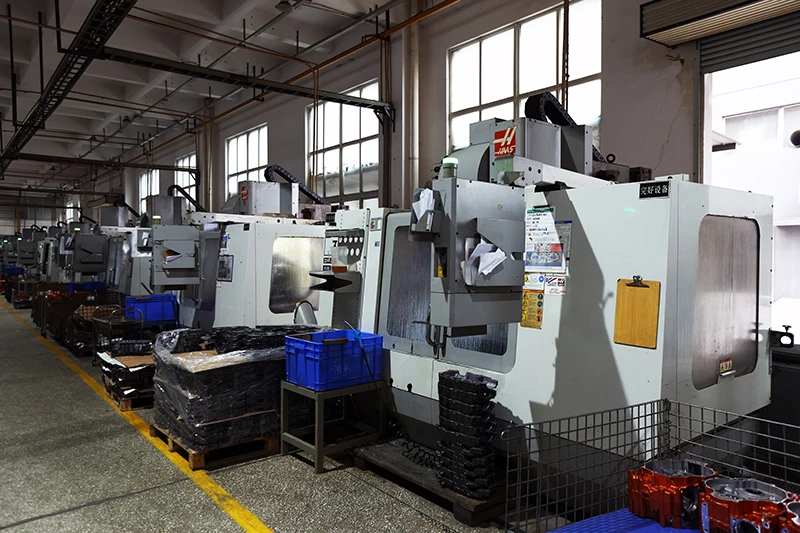
Parts availability sits inside the same equation, and it is a real entity-triple worth stating plainly: Wanhoo + vertical integration + parts uptime. Because Wanhoo makes its own engines, frames and rear axles rather than assembling the cheapest bought-in parts, replacement components stay available and interchangeable across the range. A delivery vehicle grounded three months waiting for a part is not a saving, it is a loss dressed as one.
The market backs the case for three-wheelers in delivery. According to Research and Markets, the three-wheeler goods-carrier market reached 237,400 units in 2024 and is forecast toward 295,000 units by 2030, driven by e-commerce demand across India, Southeast Asia and Africa. According to Global Market Insights, Asia Pacific held over 42% of the electric three-wheeler cargo market on exactly this low-operating-cost logic.
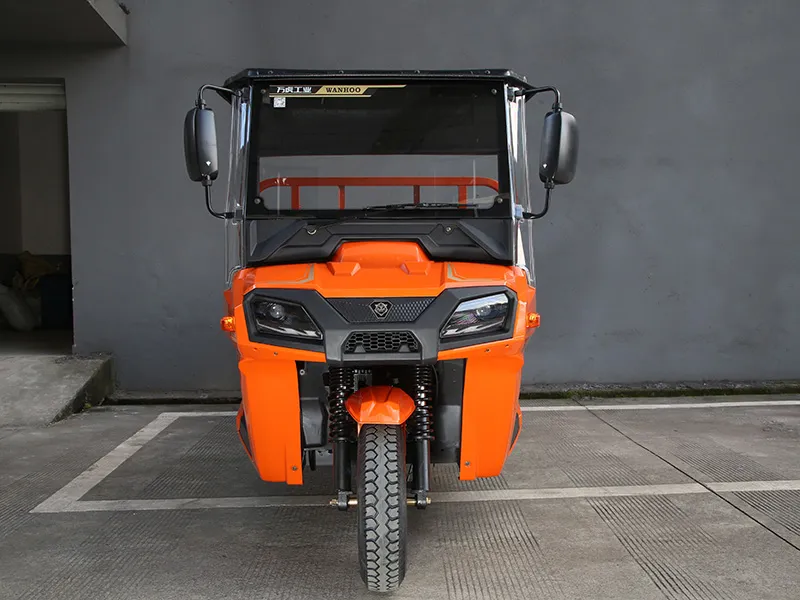
Run the numbers on your own routes before you buy. Take your daily fuel spend, add a realistic downtime allowance, and multiply across a year. That figure, not the FOB price, is what you are really comparing between two models.
How Should a Growing Delivery Fleet Choose?
A single owner-driver and a 20-vehicle fleet make this decision differently. The solo operator optimizes one route and buys the exact fit, usually a Q1 or K3. A fleet operator standardizes, because a mixed fleet of one model per route type keeps parts, training and maintenance simple across the whole operation.
For most growing delivery fleets the practical answer is one or two workhorse models plus a heavy-duty specialist. HANHOO covers the bulk of mixed general routes, a Q1 or K3 handles the light-parcel lanes, and a KINGTIGER or two absorbs the heavy-material contracts. That spread matches vehicles to work without fragmenting the fleet into a dozen incompatible SKUs.
Wanhoo supports fleet buyers with FOB pricing, container-loading figures for full-load planning, and SKD shipping at 24 units per 40HQ to cut freight cost on volume orders. Customization on box size, type and color is available, so a delivery brand can standardize its livery across the fleet from day one.
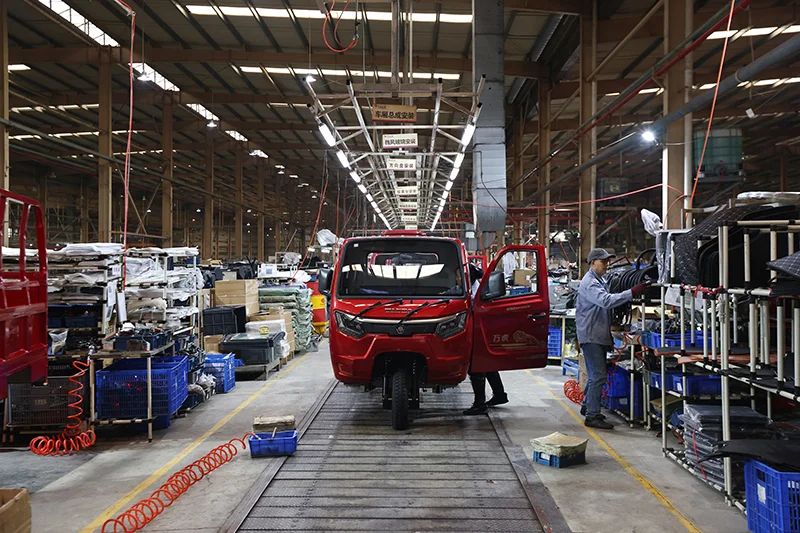
The decision, in one line: shortlist by route, compare the two nearest models on yearly running cost, and buy the fit, not the flagship. That is how a delivery business turns a cargo tricycle into a vehicle that earns.
Frequently Asked Questions
**What is the best cargo tricycle for a delivery business?**
There is no single best model. The best cargo tricycle for delivery business is the one matched to your goods, routes and budget. Wanhoo’s Q1 suits light urban parcels, K3 suits bulky-but-light freight, HANHOO handles mixed loads, and KINGTIGER carries the heaviest routes.
How much does a Wanhoo cargo tricycle cost?
FOB pricing starts around $830 for the entry Q1, $900 for the K3, $1,100 for the HANHOO and $1,450 for the heavy-loading KINGTIGER. Prices vary with configuration and order volume, so contact Wanhoo for the latest quote and fleet pricing.
Which cargo tricycle is most fuel-efficient for delivery?
The Q1 is the most economical, using as little as 3.4 litres per 100 km thanks to its light 360 KG chassis and 150cc air-cooled engine. For high-frequency light-parcel routes it delivers the lowest cost per run in the Wanhoo range.
Do I need a water-cooled engine for delivery work?
Water cooling matters when you carry loads over graded roads, long climbs or rural tracks, because it sheds the heat sustained loaded running generates. K3, HANHOO and KINGTIGER are water-cooled. Flat, light urban routes can run the air-cooled Q1 without issue.
How do I calculate payback on a delivery tricycle?
Compare total running cost, not purchase price. Add your daily fuel spend to a realistic downtime allowance (lost earnings run $50 to $200 per day) and multiply across a year. A model costing a few hundred dollars more but avoiding breakdowns usually returns the difference many times over.
Can Wanhoo customize cargo tricycles for a delivery fleet?
Yes. Wanhoo offers customization on cargo box size, type and color, plus SKD shipping at 24 units per 40HQ container to reduce freight on volume orders. This lets a delivery brand standardize livery and specification across its fleet.
Ready to match a model to your routes? Request a fleet quote and FOB price list and tell us what you haul and where, and Wanhoo's export team will shortlist the right cargo tricycle for your delivery business.
Related reading: