A three wheeler for delivery beats vans in dense cities: lower purchase and fuel cost, tighter turning, easier parking, and better payload-per-dollar on short urban routes.
A courier in Lagos threads a 200kg load through a market alley no van could enter, drops six parcels, and turns around in a space narrower than a parking bay. That single run captures why fleet owners across Africa, South America, and Southeast Asia are rethinking the last mile. The most expensive segment of the whole delivery chain is not the ocean freight or the highway haul. It is those final blocks into congested neighborhoods, and the vehicle you send there decides your margin.
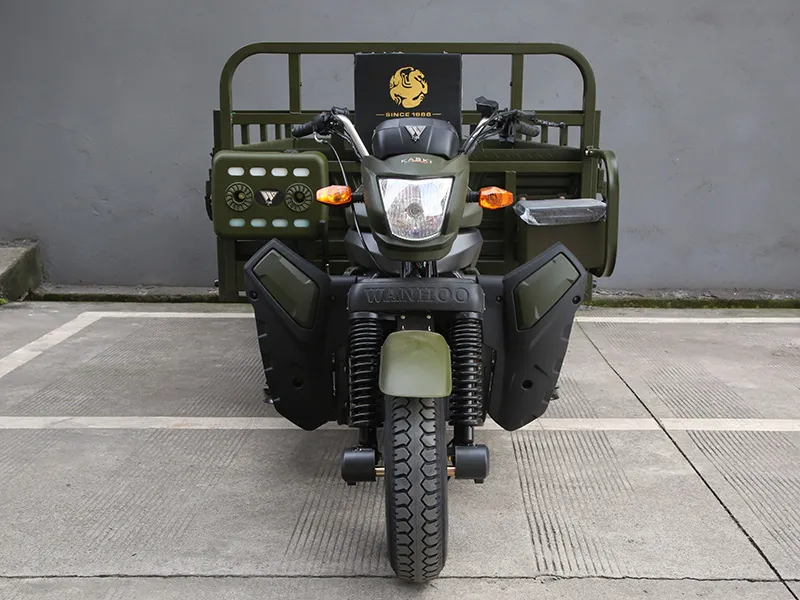
This is the case for the cargo three wheeler as a purpose-built last-mile machine. Below we compare it against vans and pickups on cost, access, and payload, then map Wanhoo models to specific delivery duties so you can match the right unit to your routes.
Why is the last mile the most expensive part of delivery?
The last mile is expensive because it trades the efficiency of bulk transport for the inefficiency of many small, scattered stops. A truck carrying one full load across a country covers ground cheaply per parcel. The same parcels split across a city, each needing an individual address and a return trip, multiply labor, fuel, and idle time. Vehicle choice here has an outsized effect.
According to Grand View Research, the global last-mile delivery market was valued in the range of USD 140 to 180 billion in 2024, and industry data shows last-mile delivery accounts for roughly 53 percent of total shipping costs, more than half of the entire delivery chain. When a single stage eats over half your logistics budget, the vehicle assigned to it is not a minor line item. It is the lever that moves your unit economics.
Cost per stop also swings with density. Industry figures compiled by SmartRoutes put urban deliveries at around USD 10 per package while rural deliveries can reach USD 50, driven by longer distances and lower drop density. A vehicle that can complete more urban stops per shift, on less fuel, in tighter space, directly attacks the biggest number on the sheet. That is precisely the job a cargo tricycle is built for.
How does a three wheeler for delivery compare to a van or pickup?
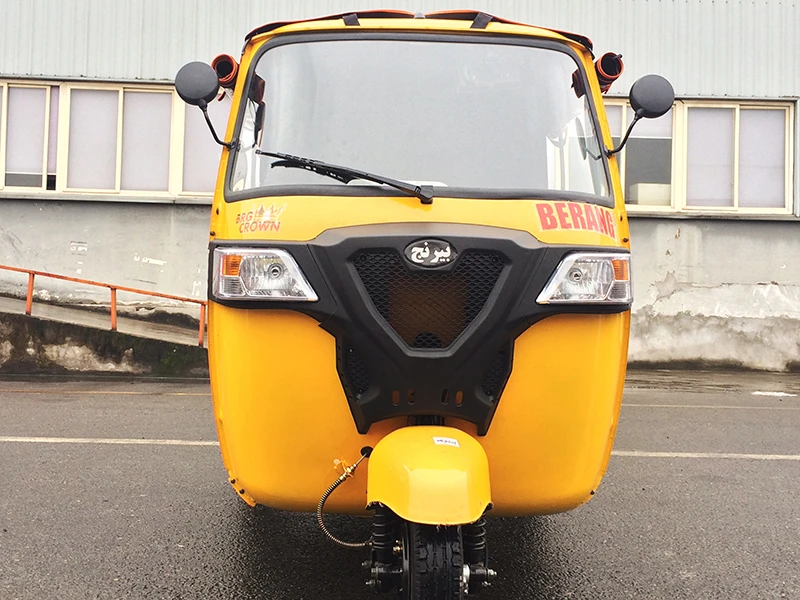
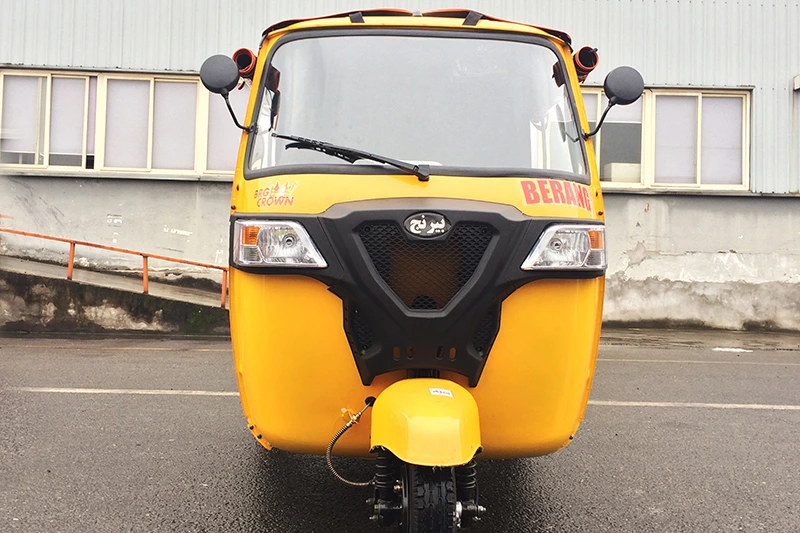
A three wheeler for delivery competes on the metrics that matter in cramped cities: it costs a fraction of a van to buy, sips fuel, turns in tight alleys, parks almost anywhere, and reaches roads that ban or physically block larger vehicles. It sacrifices top speed and long-haul range, neither of which a last-mile route demands.
Last-mile delivery is the final movement of goods from a local hub, depot, or store to the end customer's door, typically within a city or town and usually the shortest yet costliest leg of the journey. On this leg, raw payload matters less than payload you can actually deliver per dollar spent. The table below frames a three wheeler for delivery against a van and a pickup on the factors that decide profitability on short urban routes.
| Factor | Cargo Three-Wheeler | Delivery Van | Pickup Truck |
|---|---|---|---|
| Typical purchase price (export) | From $830 to $1,450 FOB | $15,000 and up | $20,000 and up |
| Fuel economy | 3.4 to 3.9 L/100km | 9 to 14 L/100km | 11 to 16 L/100km |
| Turning radius in alleys | Very tight | Poor | Poor |
| Parking footprint | Fits a market stall | Full bay | Oversized |
| Narrow-street access | Reaches most lanes | Blocked often | Blocked often |
| Payload for urban duty | 600 to 1,800 KG | 800 to 1,500 KG | 500 to 1,200 KG |
| Best fit | Dense city last mile | Suburban routes | Rough rural haul |
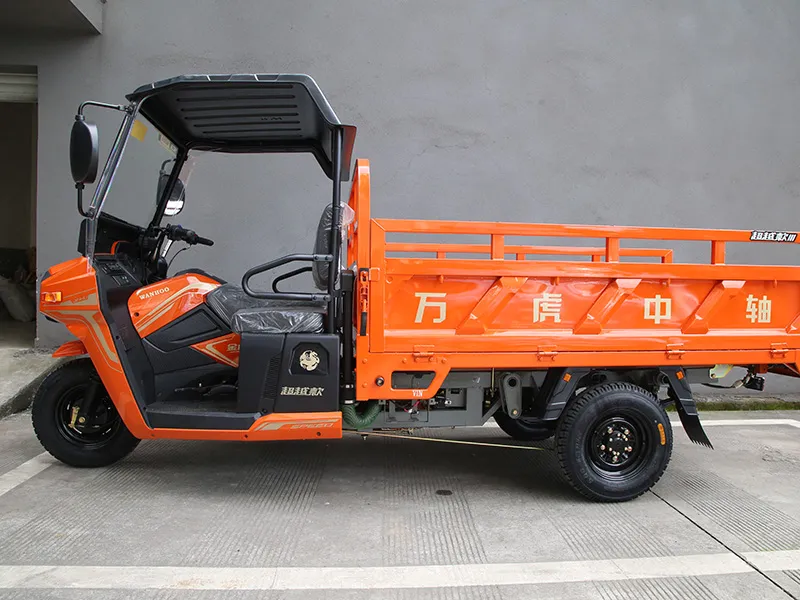
Wanhoo's Q1 cargo tricycle carries up to 600 KG on a 360 KG frame at roughly 3.4 L per 100km, starting from $830 FOB, meaning a fleet operator can field several units for the price of one entry-level van while cutting fuel spend on every route. The economics are not close on short, stop-heavy work. A van's extra top speed and cargo volume are wasted when the route is measured in blocks, not highways, and when a driver spends more time hunting for parking than driving.
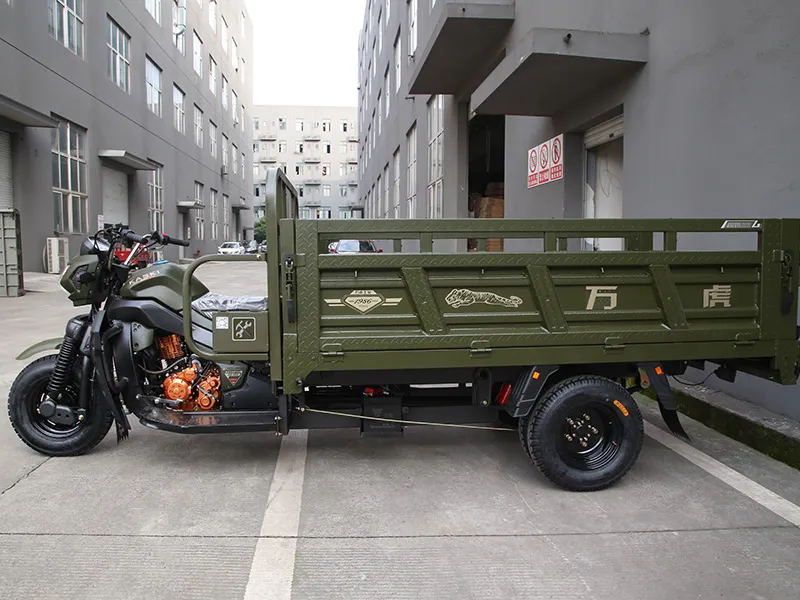
Access is the quiet decider. Historic city cores, informal settlements, and dense wet markets across emerging economies have streets a van simply cannot enter. A three wheeler goes where the customer is, which removes the costly last few hundred meters of hand-carrying that vans force on drivers.
Which Wanhoo model fits which delivery job?
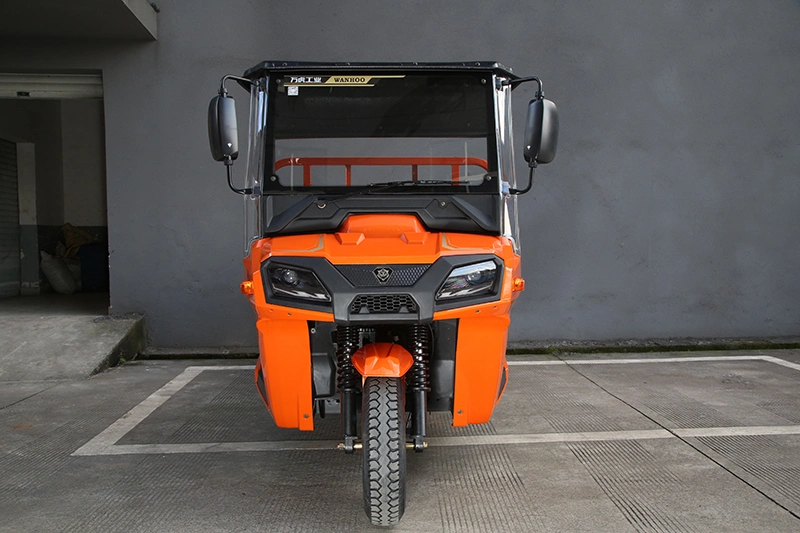
Match the model to the load and route, not the other way around. Light parcel runs reward the cheapest, most economical unit. Bulky e-commerce boxes need volume. Mixed municipal or wholesale duty needs muscle. Wanhoo builds a distinct cargo tricycle for each tier, so a fleet buyer specifies by job rather than overpaying for capacity that sits idle.
For light urban delivery on a tight budget, the Q1 is the entry point. The Wanhoo Q1 pairs a 150cc air-cooled engine with the lightest frame in the range at 360 KG and the best fuel economy at 3.4 L per 100km, built for market vendors, couriers, and first-time operators who need the fastest payback on a delivery route. It is the most economical way to put a driver on the road.
For economy mid-duty with a large box, the K3 steps up. Wanhoo pairs the K3 with a 150cc water-cooled engine and an oversized 2000mm cargo box rated to 1,000 KG, giving e-commerce fleets the loading volume that light models lack while holding fuel use near 3.9 L per 100km. The water-cooled engine survives the stop-start grind of city traffic better than air-cooled units at the same price.
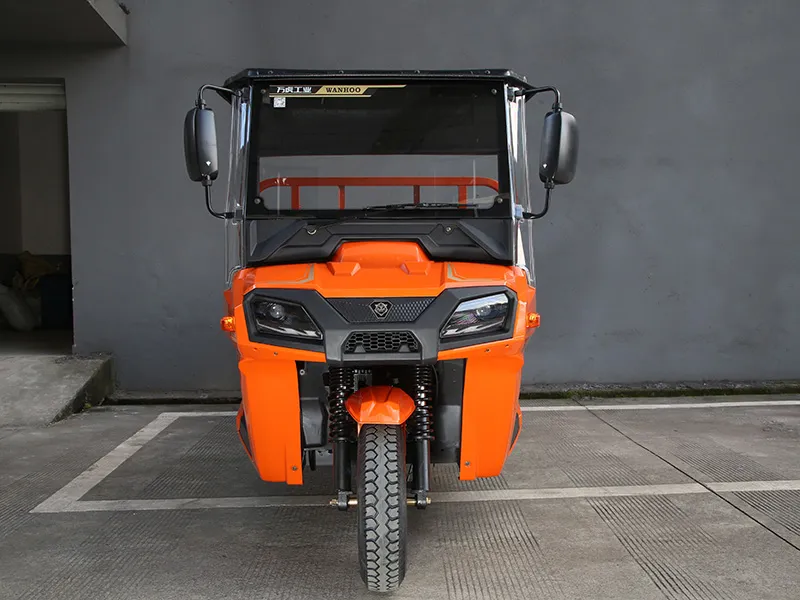
For all-round duty that occasionally goes heavy, the HANHOO is the versatile workhorse. Wanhoo pairs the HANHOO with a 200cc water-cooled engine and payload up to 1,800 KG, positioning it between compact couriers and the heavy-duty KINGTIGER as the one unit that handles both routine parcels and the occasional bulk pallet. When a route mixes small drops with an occasional heavy consignment, one HANHOO replaces two specialized vehicles.
The KINGTIGER anchors the heavy end for operators whose "last mile" includes construction sites or wholesale resupply. Its 250cc water-cooled engine and 1,800 KG payload let a distributor move a full stall's inventory in one trip, cutting the number of runs that congestion makes so costly.
Why do cargo tricycles suit e-commerce growth and low-emission zones?
Cargo tricycles suit the current market because online shopping is exploding in exactly the dense, cost-sensitive cities where three wheelers excel, and because tightening emission rules push operators toward smaller, cleaner vehicles. Two forces, one vehicle answer.
E-commerce is the tailwind. The global e-commerce logistics market was valued at USD 524.2 billion in 2024 and is projected to grow at a 26.4 percent compound annual rate through 2034, according to Straits Research, with the ASEAN segment alone worth USD 96.18 billion in 2024. Every parcel that market generates needs a final-mile vehicle, and in Jakarta, Nairobi, or Lima, that vehicle is far more likely to be a nimble tricycle than a van stuck in gridlock.
Emission rules are the second force. According to TUMI, Europe now has over 320 low-emission zones, a 40 percent increase since 2019, and cities such as Milan plan to bar diesel vehicles entirely by 2030, restrictions that make older vans a liability while favoring compact and electric delivery vehicles. Emerging markets are following, and the pattern is clear: cleaner, smaller vehicles get access; dirty, large ones get fined or banned.
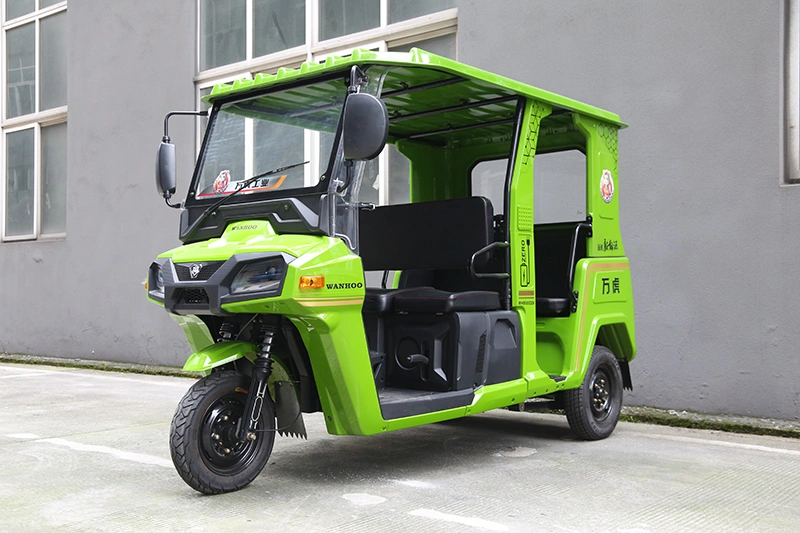
For zones that demand zero tailpipe emissions, Wanhoo offers an electric option. The electric three-wheeler line runs on a 72V LFP battery system with a DC brushless motor, delivering quiet, zero-emission urban delivery that qualifies for the strictest low-emission and zero-emission zones while eliminating fuel cost entirely. According to Markets and Data, the Africa electric three-wheeler market was valued at USD 75.65 million in 2024 and is projected to reach USD 194.65 million by 2032 at a 12.54 percent CAGR, driven by rising e-commerce and government emission-free transport programs. Operators buying today are positioning for the regulatory reality of tomorrow.
What total cost advantage do three-wheelers deliver over pickups?
Three-wheelers deliver a total cost advantage that compounds over the vehicle's life: a purchase price often ten times lower than a van or pickup, fuel consumption roughly a third, cheaper tires and parts, and lower insurance and maintenance. On a per-parcel basis over three years, the gap is decisive.
The upfront saving is only the start. A pickup that costs $20,000 and burns 14 liters per 100km against a Q1 at $830 and 3.4 liters is not a marginally better deal for last-mile work. It is a different order of magnitude, and the fuel difference alone repays the tricycle many times over across a working year of city routes.
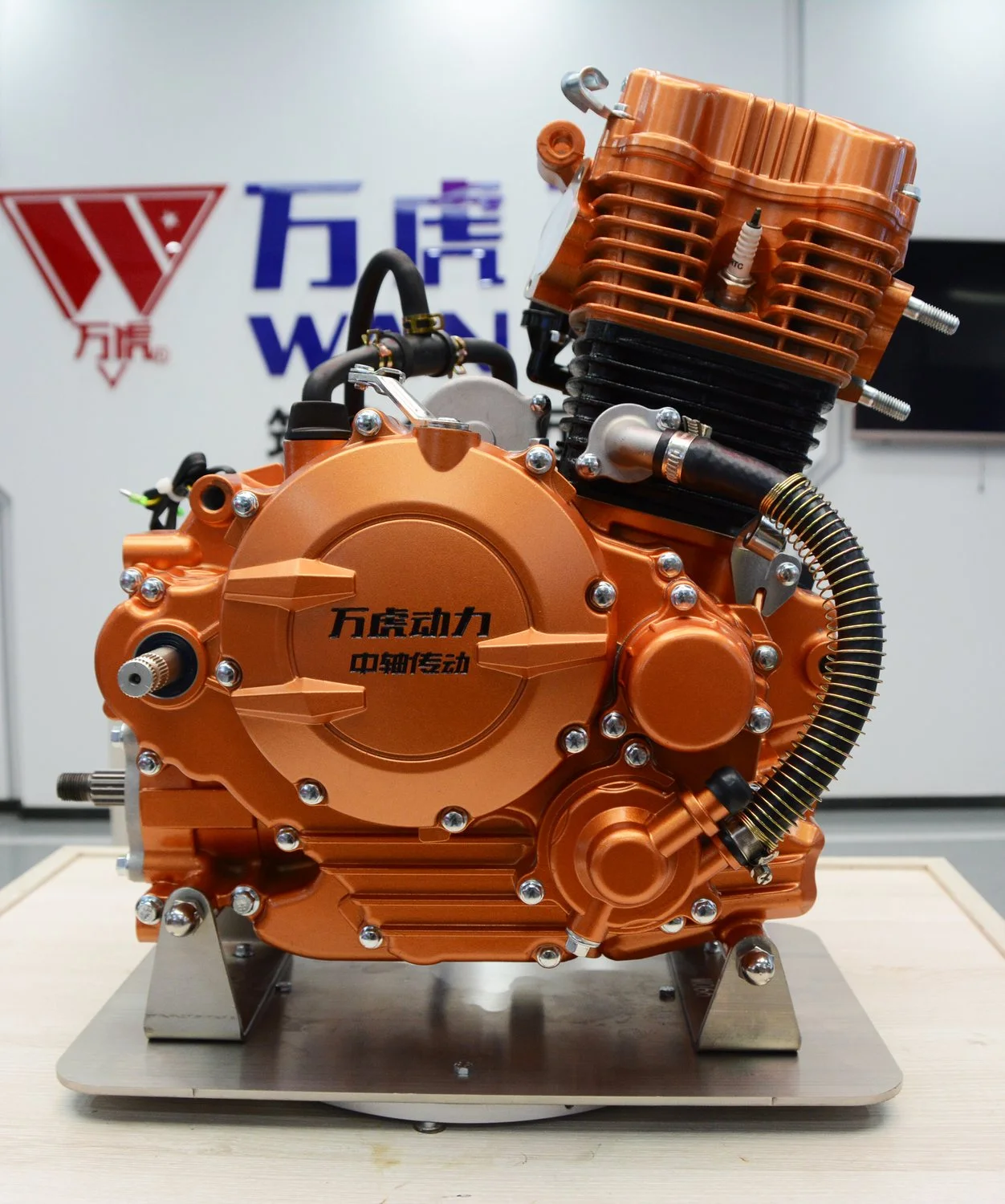
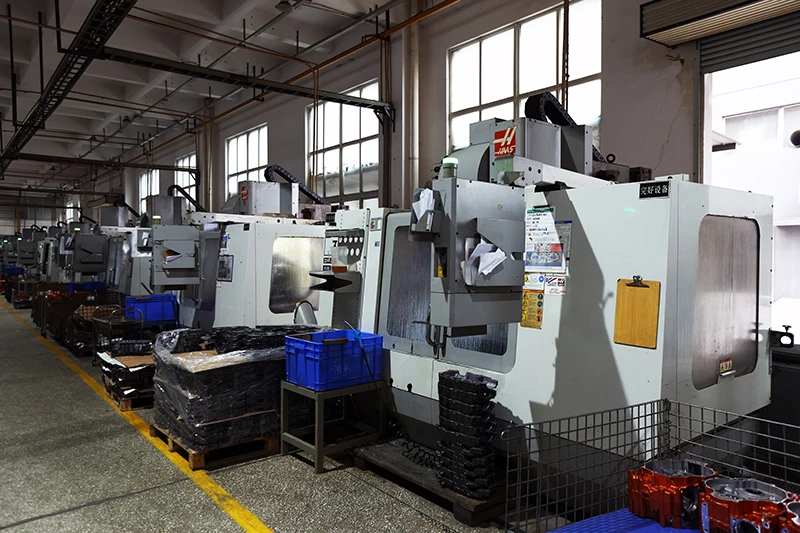
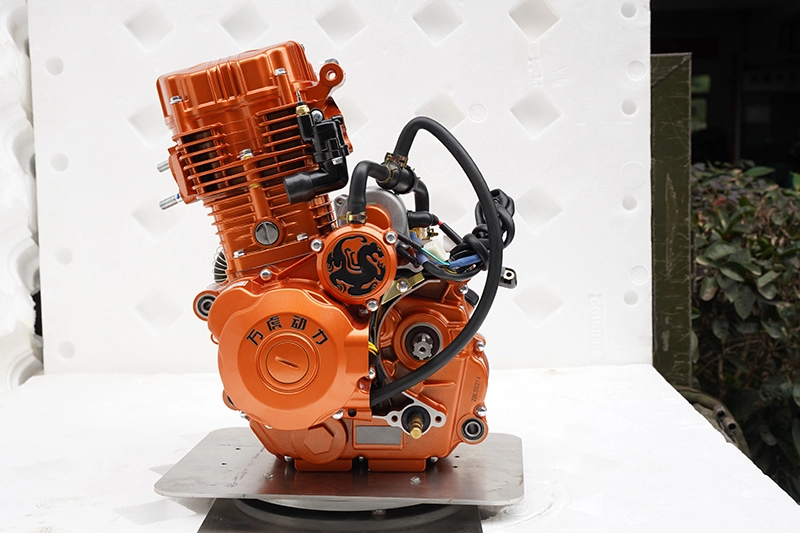
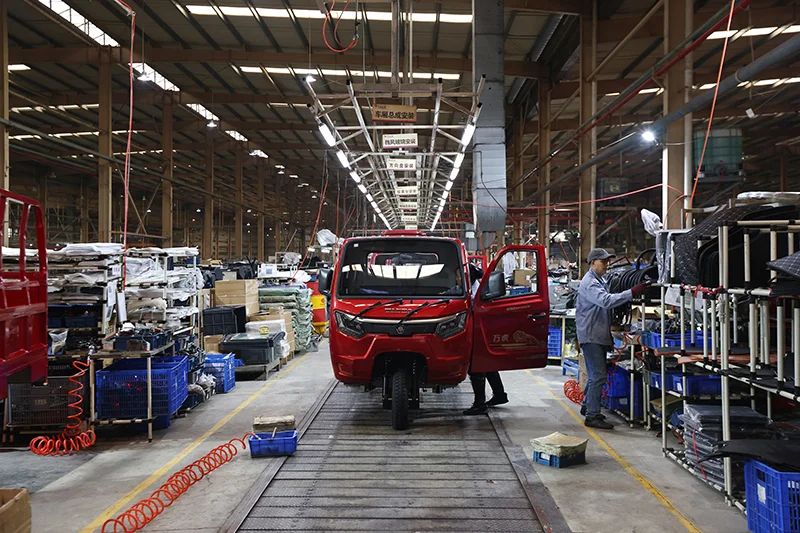
Wanhoo builds these units for the operating economics that matter after the sale. With self-developed engines, floating stamped rear axles, and full-immersion electrophoretic anti-corrosion coating tested to 500-plus hours of salt spray, a Wanhoo cargo tricycle is engineered to keep earning rather than sit in a repair yard. For a full breakdown of the numbers, see our deep-dive on cargo tricycle versus pickup truck total cost of ownership. To match a model to your routes, browse the full cargo tricycle range or the dedicated logistics application guide. Contact Wanhoo for the latest FOB quote and container loading options for your market.
Frequently Asked Questions
**What is the best three wheeler for delivery in a dense city?**
The best three wheeler for delivery in a dense city depends on load size, but the Wanhoo Q1 leads for light parcel work at $830 FOB with class-leading fuel economy of 3.4 L per 100km, while the K3 suits larger e-commerce boxes with its 2000mm cargo box and 1,000 KG payload.
How much can a cargo tricycle for delivery carry?
A cargo tricycle for delivery carries anywhere from 600 KG on Wanhoo's entry-level Q1 to 1,800 KG on the HANHOO and KINGTIGER models. For most urban last-mile parcel and grocery routes, the 600 to 1,000 KG range covers daily loads comfortably while keeping the vehicle light and fuel-efficient.
Is a three wheeler cheaper to run than a delivery van for last mile?
A three wheeler is dramatically cheaper to run than a delivery van for last-mile work. Purchase prices start around $830 FOB versus $15,000 and up for a van, and fuel consumption of 3.4 to 3.9 L per 100km is roughly a third of a typical van, so both capital and operating costs fall sharply on short urban routes.
Can an electric three wheeler enter low-emission zones?
An electric three wheeler enters low-emission and zero-emission zones because it produces no tailpipe emissions. Wanhoo's electric line uses a 72V LFP battery and DC brushless motor, qualifying for the strictest urban access rules that increasingly restrict diesel vans and pickups in cities across Europe and, progressively, emerging markets.
Why choose a Wanhoo cargo tricycle for last-mile logistics?
Choose a Wanhoo cargo tricycle for last-mile logistics because Wanhoo has focused on three-wheelers for nearly 40 years with self-developed engines, reinforced frames, and salt-spray-tested anti-corrosion coating. The range spans the economical Q1, the large-box K3, the versatile HANHOO, and an electric option, so a fleet can match each vehicle to its exact delivery duty.
What payload-per-dollar advantage do three-wheelers offer for urban delivery?
Three-wheelers offer a strong payload-per-dollar advantage for urban delivery because a fleet can buy several units for the price of one van. A Wanhoo K3 delivers up to 1,000 KG capacity from $900 FOB, meaning an operator gains delivery capacity, route coverage, and redundancy that a single higher-cost van cannot match on dense city work.