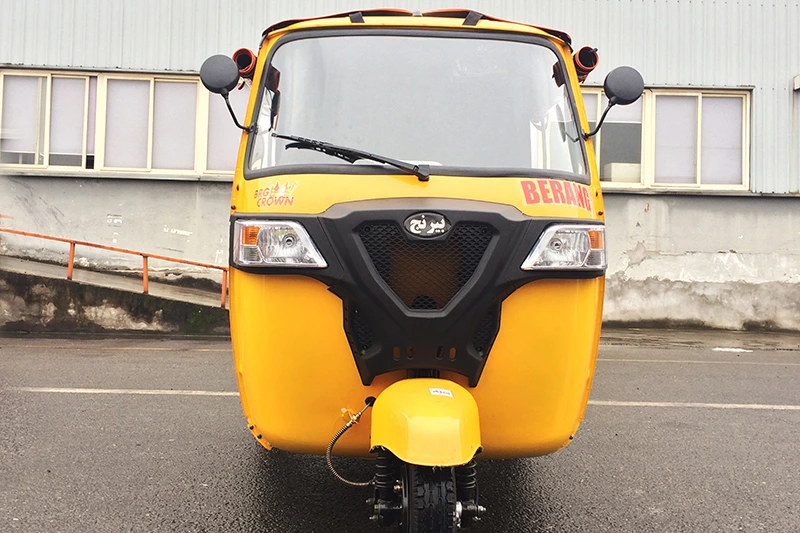
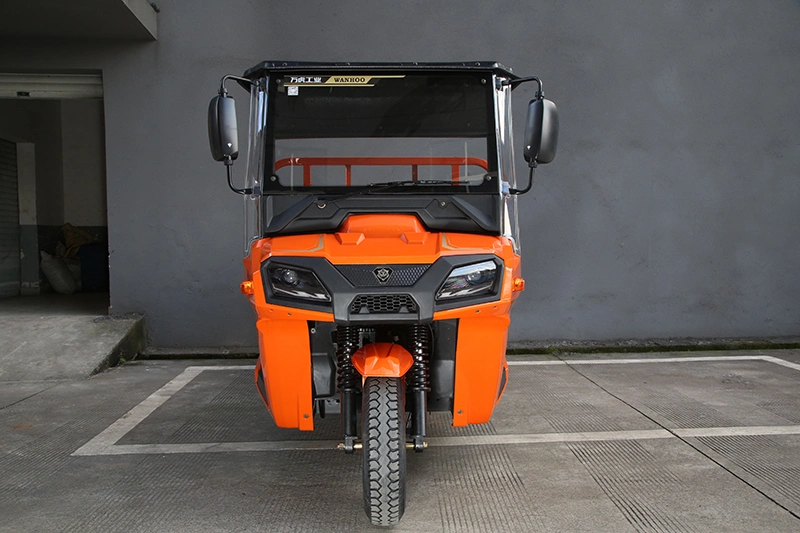
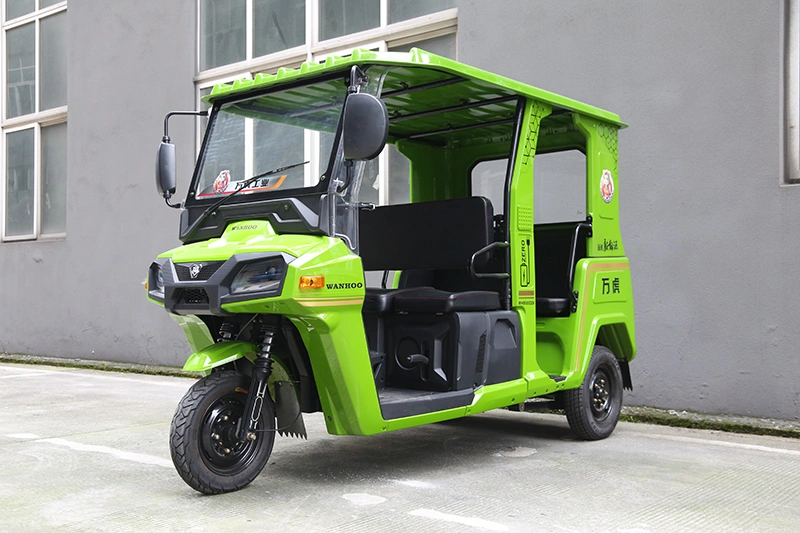
A three wheeler for mining hauls ore, rock, and cement across rough sites at a fraction of a truck’s cost, carrying up to 1,800 KG.
At a quarry gate in northern Nigeria, a contractor watches two vehicles line up for the same job. One is a pickup that cost twenty times more and still bottoms out on the ore road. The other is a heavy cargo tricycle that shrugs off the ruts, backs up to the crusher, and tips a half-tonne of rock without drama. The pickup owner is bleeding money on fuel and repairs. The tricycle owner is on his fourth run before lunch. That contrast is the whole argument for putting three-wheelers to work on mining and construction sites.
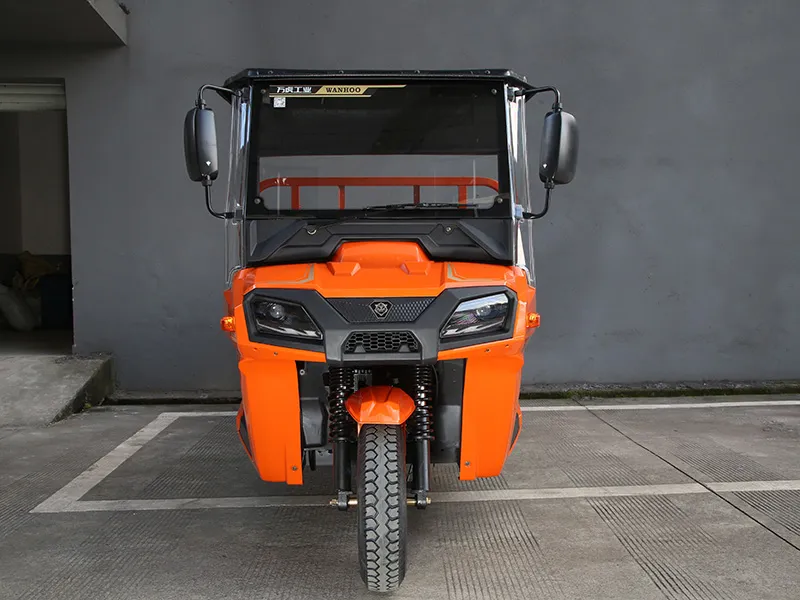
Site haulage is brutal on equipment. Unpaved roads, abrasive dust, standing water, and constant heavy loading destroy vehicles that were never built for it. This article makes the case for the heavy-duty cargo three wheeler as a purpose-built site hauler, explains which Wanhoo models fit which job, and maps real site requirements to the engineering that answers them.
Why does a three wheeler for mining beat a truck on short site runs?
A three wheeler for mining beats a truck on short site runs because the economics of moving material a few hundred meters reward low cost per trip, not raw capacity. A truck's price, fuel burn, and turning radius are wasted when the haul is measured in ore-road segments rather than highways. A tricycle does the same shuttle for a tenth of the capital.
A cargo three-wheeler for mining is a three-wheeled utility vehicle purpose-built to shuttle bulk material such as ore, crushed rock, sand, and cement across short, rough site routes, typically carrying between 600 and 1,800 KG per trip at a purchase price well under two thousand US dollars FOB. That definition matters because most site managers only ever compare tricycles against full trucks, and on short runs the truck almost always loses.
The market is already moving this way. According to IMARC Group, the global three-wheeler market reached USD 12.5 billion in 2025 and is projected to hit USD 24.5 billion by 2034 at a 7.76 percent compound annual growth rate, with manufacturers actively expanding cargo variants for goods transport. Site haulage is a natural extension of that cargo demand, wherever material has to move over ground a truck cannot justify.
Regional demand is substantial. A 2024 UNEP and GEF market overview estimates about 27 million two- and three-wheelers in Africa and notes that cargo three-wheelers work as logistics intermediaries in dense urban areas and carry agricultural products in rural areas across the continent. On a mine or building site, that nimbleness is not a luxury. It is the difference between reaching the material and hand-carrying it.
What makes site haulage so hard on ordinary vehicles?
Site haulage is hard on ordinary vehicles because it combines every stressor that destroys a chassis at once: constant heavy loads, corrugated unpaved roads, abrasive mineral dust, standing mud and water, and sustained engine strain in high heat. A vehicle that survives a city street can crack apart on a mine road within a season.
The road surface alone is punishing. Industry guidance from SunSky Vehicle notes that mine sites often sit at the end of hundreds of kilometers of unpaved, corrugated red-dust roads, where standard trailers suffer structural fatigue and chassis cracking within months under the constant vibration of these washboard surfaces. Whatever hauls the material has to absorb that vibration trip after trip without the frame giving way.
Dust and heat finish the job. Fine mineral dust acts as a permanent abrasive that grinds down bearings, bushings, and electrical connectors, while ambient heat pushes cooling systems and seals to their limits. An air-cooled engine working at full load in that environment overheats and loses power exactly when the operator needs it most. This is why site duty demands specific engineering rather than a generic vehicle pressed into service.
How much can a heavy cargo tricycle actually carry on a mine road?
A heavy cargo tricycle can carry up to 1,800 KG on a mine road when it is built with a reinforced frame and a load-rated rear axle. That is enough to move a meaningful volume of ore, rock, or aggregate per trip, turning a vehicle that looks small into a genuine site hauler rather than a courier.
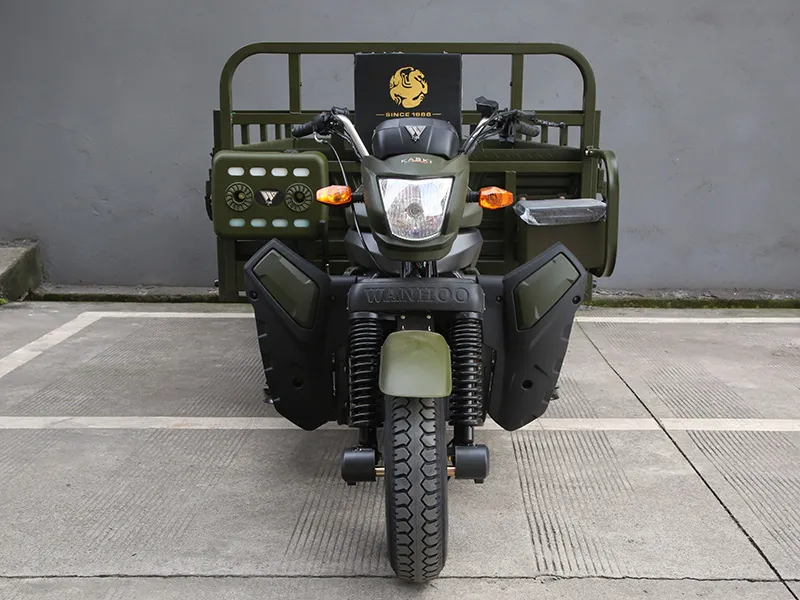
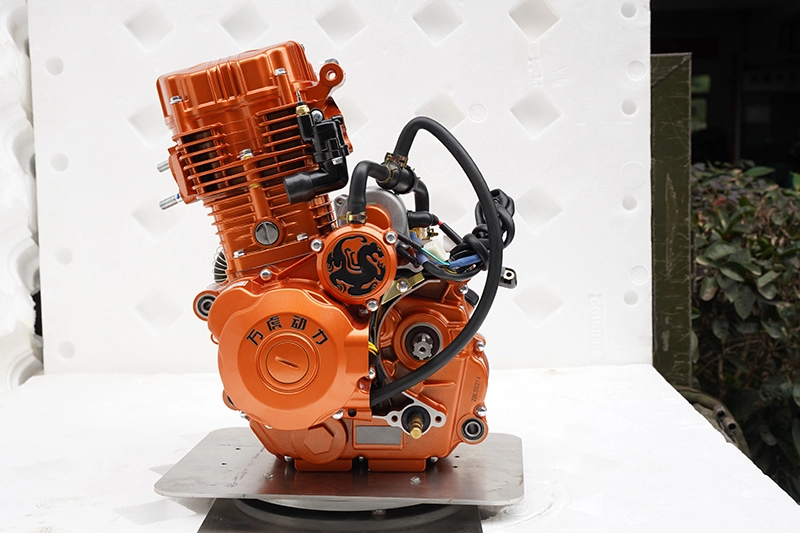
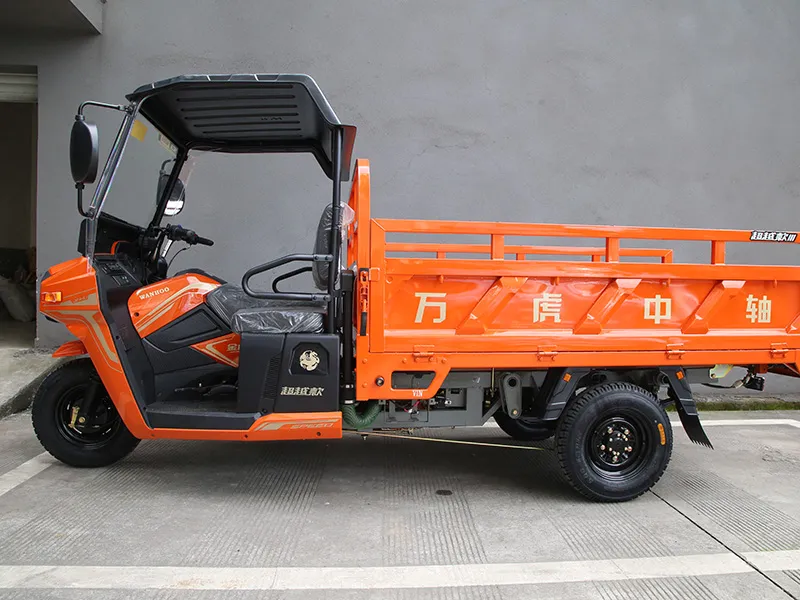
Wanhoo's KINGTIGER is a 250cc water-cooled heavy cargo tricycle rated to a maximum payload of 1,800 KG, the highest in Wanhoo's lineup, carried on a reinforced dual main frame measuring 40 by 80 mm with a floating stamping rear axle and booster. The frame and axle are the load-bearing story. Payload numbers mean nothing if the structure under the cargo box buckles, and the KINGTIGER's frame is engineered for exactly the abuse a site delivers.
The table below maps common mining and construction site requirements to the specific Wanhoo engineering that answers each one, with the heavy cargo tricycle as the reference vehicle.
| Site requirement | Why it matters on site | Wanhoo answer |
|---|---|---|
| High payload per trip | Fewer runs to move ore, rock, sand, cement | KINGTIGER and NIMBA rated up to 1,800 KG |
| Rough-terrain durability | Corrugated ore roads crack weak frames | Reinforced dual main frame 40×80 mm, floating stamping rear axle |
| Load-bearing suspension | Heavy loads pound cheap axles apart | Leaf-spring rear suspension with damper |
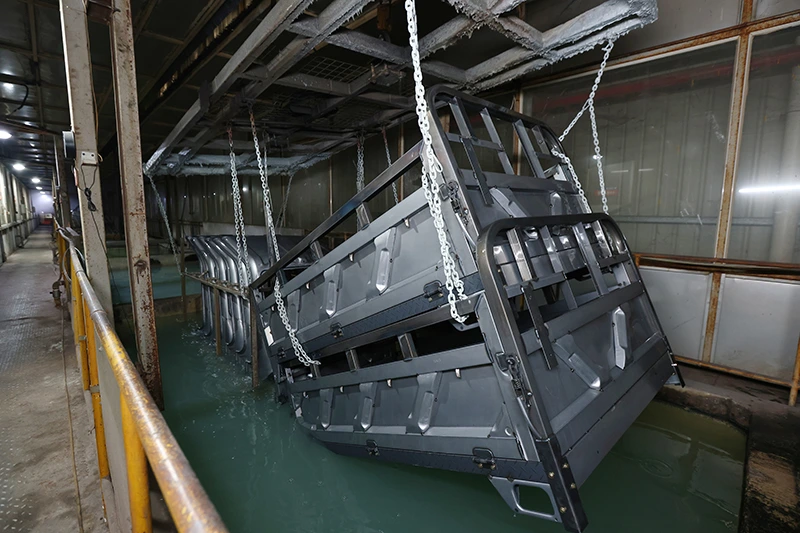
| Corrosion resistance | Dust, mud, and water rust untreated steel | Full-immersion ED coating, 500-plus hour salt spray |
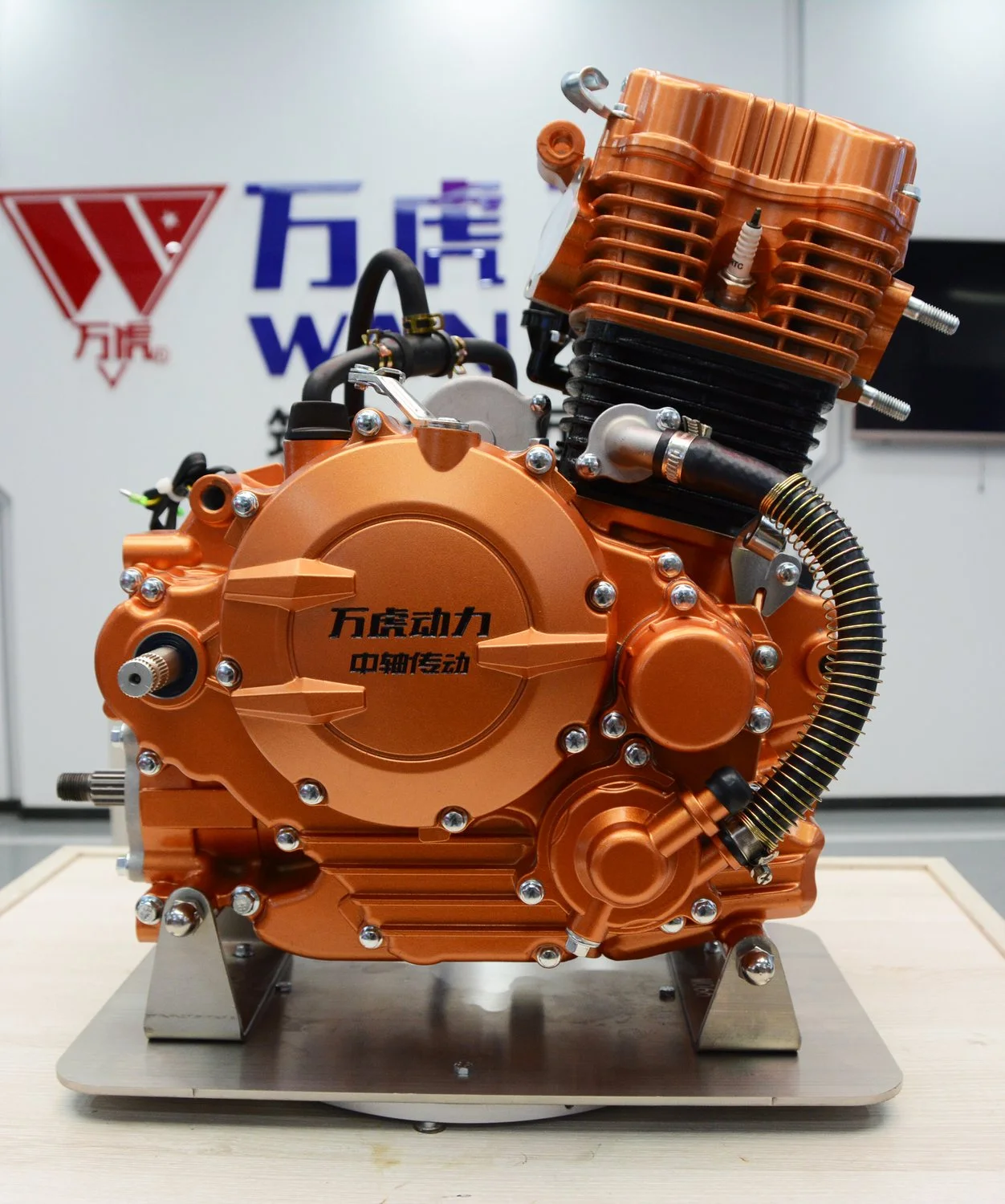
| Sustained power in heat | Air-cooled engines fade under load | 250cc water-cooled 4-stroke engine |
| Grade and reverse control | Loading bays and pit ramps need maneuvering | 5 gears plus reverse |
| Low cost per trip | Short site runs must stay cheap | From $1,270 FOB (NIMBA), $1,450 (KINGTIGER) |
Wanhoo's NIMBA shares the KINGTIGER's 250cc water-cooled engine and 1,800 KG payload rating but rides on a shorter 3,450 mm body, making it the compact heavy hauler for tight loading bays and confined pit areas where a full-length tricycle cannot turn. For sites that combine heavy loads with cramped working space, that shorter wheelbase is often the deciding factor.
Why does corrosion resistance matter more on a site than anywhere else?
Corrosion resistance matters most on a site because mining and construction environments attack steel from every direction at once: abrasive dust, standing mud, water crossings, and in coastal or tropical regions, salt-laden air. Untreated frames rust from the inside out, and a rusted chassis is a safety liability under a 1,800 KG load.
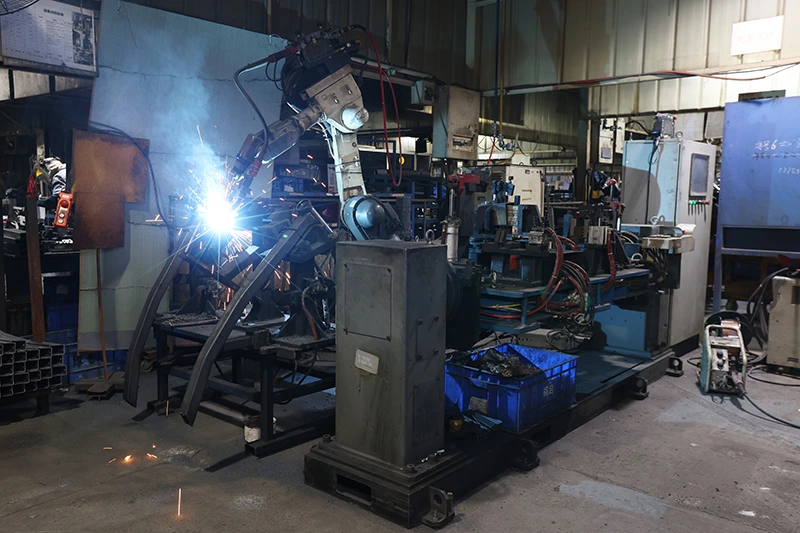
Wanhoo protects every frame with full-immersion electrophoretic deposition coating, an anti-corrosion process rated to over 500 hours of salt spray resistance, which shields the steel against the dust, mud, and moisture that rust ordinary spray-painted chassis within a few working seasons. The full-immersion method reaches interior cavities that surface painting misses, which is where corrosion usually starts on a working vehicle.
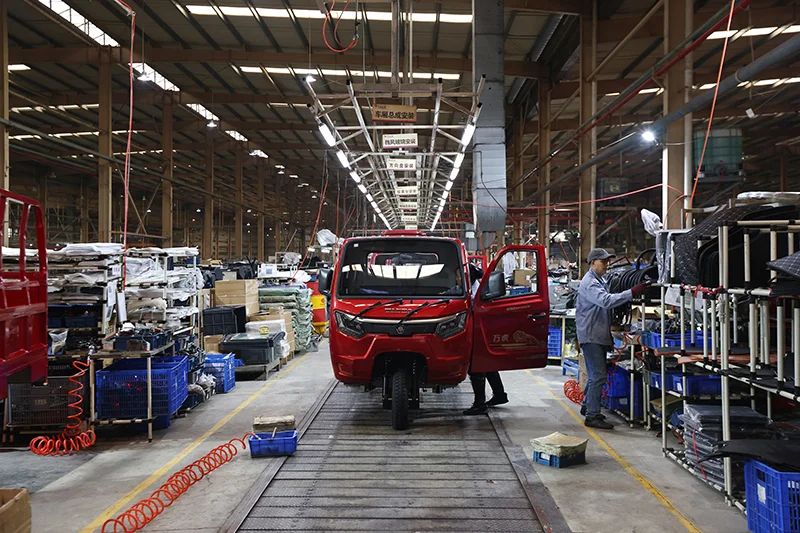
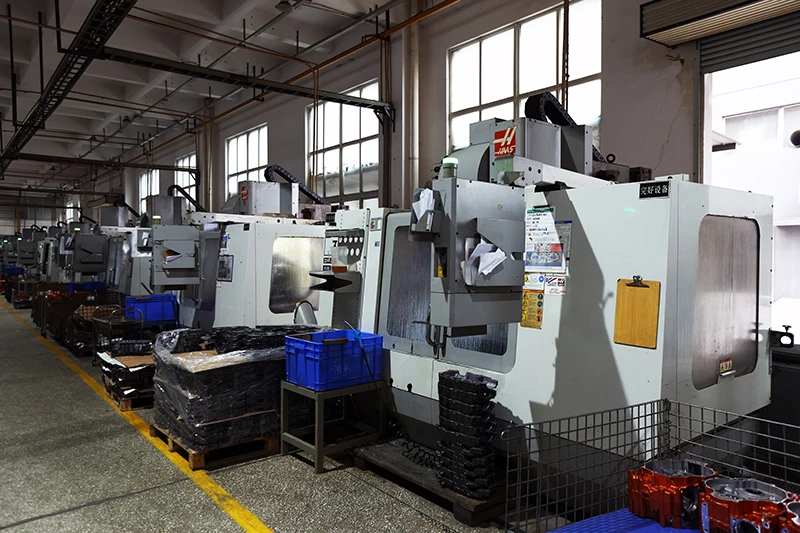
This is the kind of durability that only makes sense when a manufacturer controls its own production. Because Wanhoo welds its own frames and runs its own coating line, it can specify the reinforcement and corrosion treatment that site duty demands rather than assembling the cheapest bought-in parts. That vertical control is what separates a hauler built to last from one built to a price.
Which Wanhoo models fit mining, construction, and all-terrain site work?
Match the model to the site conditions and the load, not the other way around. Heavy ore and aggregate demand maximum payload and frame strength. Confined pits reward a shorter body. Genuinely off-road ground calls for an all-terrain build. Wanhoo offers a distinct machine for each, so a contractor specifies by the job rather than overpaying for capacity that sits idle.
For the heaviest ore and construction haulage, the KINGTIGER is the anchor. Its 250cc water-cooled engine, 1,800 KG payload, and reinforced 40 by 80 mm dual main frame are built for the mine roads and material yards that break lighter vehicles. When a contractor needs one trip to do the work of two, the KINGTIGER's payload is the reason a single unit raises daily earnings.
For compact heavy haulage in tight spaces, the NIMBA delivers the same 1,800 KG capacity on a shorter frame at a lower FOB price. It suits confined pit faces, narrow site lanes, and loading bays where the longer KINGTIGER cannot maneuver, without sacrificing the water-cooled engine or the load rating that heavy work requires.
For genuinely rough, off-road ground, the WINTIGER is the all-terrain option. Wanhoo's WINTIGER pairs a 250cc water-cooled engine with a reinforced chassis and all-terrain configuration, built for the unpaved fields, tracks, and broken ground where mining and construction sites meet agriculture and formal roads end. On sites where the ground itself is the obstacle, that all-terrain build earns its place.
This lineup exists because the demand does. Africa's artisanal and small-scale mining sector engages about 8 million workers who support roughly 45 million dependents, according to the South African Institute of International Affairs, a vast low-tech workforce that moves material by whatever affordable, rugged vehicle it can source. For millions of those operators, a heavy cargo tricycle is the most capable machine they can actually afford to run. To specify a unit, see the full KINGTIGER 250cc heavy loading cargo tricycle page, explore the dedicated mining application guide, or study capacity in depth in the cargo tricycle payload guide. Contact Wanhoo for the latest FOB quote and container loading for your market.
What does a three-wheeler cost versus a truck for site haulage?
A three-wheeler costs a fraction of a truck for site haulage, and the gap compounds across purchase, fuel, tires, and repairs. A heavy cargo tricycle starts from around USD 1,270 to 1,450 FOB against tens of thousands for even a used tip truck, and it burns a fraction of the fuel on the short shuttle runs that define site work.
The capital difference alone reshapes a small operation. A contractor who cannot justify a truck for a single quarry can field a KINGTIGER, start moving material immediately, and add a second unit for redundancy long before a truck would have paid for itself. On short haul distances, where a truck's speed and volume go unused, that fleet-of-tricycles approach delivers more working capacity per dollar and keeps a spare on hand if one unit is down for service.
Durability protects the saving. A cheap hauler that cracks its frame or rusts through in a season erases every dollar it saved at purchase. Wanhoo builds the KINGTIGER, NIMBA, and WINTIGER with self-developed water-cooled engines, reinforced load-rated frames, and 500-hour salt-spray coating precisely so the vehicle keeps earning on site rather than sitting in a repair yard. That is the difference between a low price and a low cost of ownership.
Frequently Asked Questions
**What is the best three wheeler for mining haulage?**
The best three wheeler for mining haulage is a heavy-duty water-cooled model with a reinforced frame and high payload. Wanhoo’s KINGTIGER leads with a 250cc water-cooled engine and 1,800 KG capacity, while the NIMBA offers the same payload on a shorter frame for confined pits and the WINTIGER handles all-terrain ground.
How much weight can a mining tricycle carry?
A mining tricycle built for heavy duty can carry up to 1,800 KG per trip. Wanhoo's KINGTIGER and NIMBA both reach that maximum payload on a reinforced dual main frame with a floating stamping rear axle, enough to move a meaningful volume of ore, rock, or aggregate in a single run.
Why use a water-cooled engine for construction and mining work?
A water-cooled engine sustains power under continuous heavy load in high heat, where an air-cooled engine overheats and fades. Mining and construction haulage means repeated full-load runs in hot, dusty conditions, so Wanhoo's KINGTIGER, NIMBA, and WINTIGER all use 250cc water-cooled 4-stroke engines to hold torque trip after trip.
Can a three wheeler survive rough mine roads without breaking?
A three wheeler survives rough mine roads when it is built with a reinforced frame, a load-rated axle, and proper suspension. Wanhoo's site models use a 40 by 80 mm dual main frame, a floating stamping rear axle, and leaf-spring rear suspension to absorb the corrugated, washboard surfaces that crack lighter chassis within months.
How does corrosion protection help a construction cargo three wheeler last?
Corrosion protection keeps a construction cargo three wheeler working in dust, mud, and moisture that rust untreated steel. Wanhoo applies full-immersion electrophoretic coating rated to over 500 hours of salt spray, reaching interior frame cavities that surface paint misses, so the chassis resists the site conditions that usually start rust from the inside.
Is a three wheeler cheaper than a truck for a small mine or building site?
A three wheeler is far cheaper than a truck for a small mine or building site. Prices start from around USD 1,270 to 1,450 FOB for a heavy Wanhoo model versus tens of thousands for a truck, and on short site shuttles the tricycle uses a fraction of the fuel while a contractor can run several units for the price of one truck.