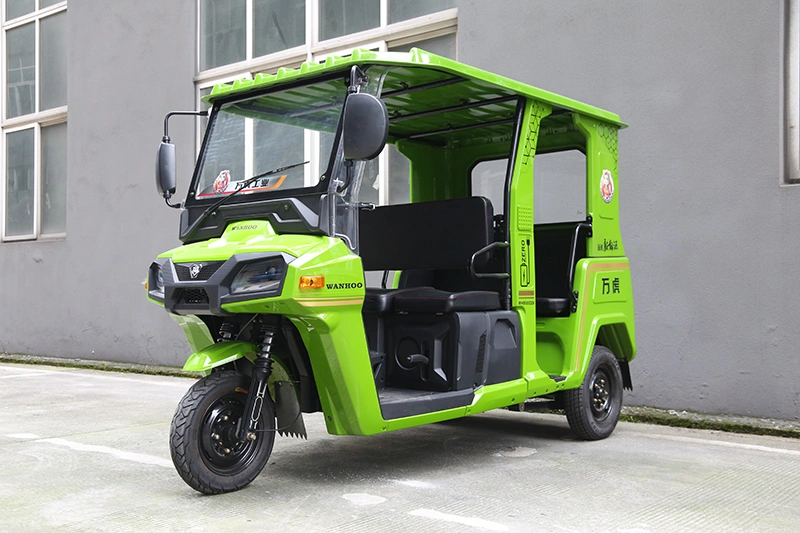
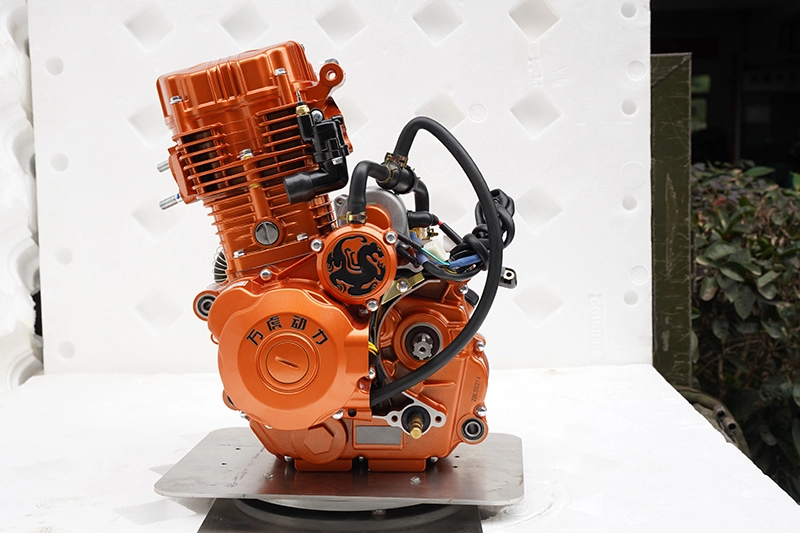
A ripe harvest sitting at the edge of a field is not income yet. It becomes income only when it reaches a buyer, and the vehicle that carries it decides how much survives the trip. A three wheeler for agriculture is a compact, three-wheeled cargo vehicle built to haul crops, feed, fertilizer and tools across mud, ruts and narrow field paths that trucks and tractors handle badly. It sits between a hand cart and a pickup, carrying real payload at a fraction of the purchase and running cost. For a smallholder or a farm fleet, that gap between field and market is exactly where money is won or lost.
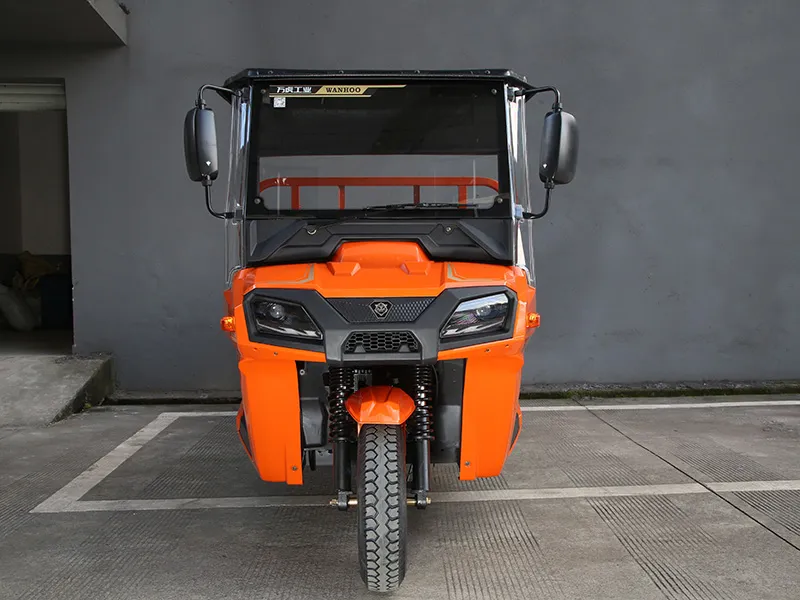
Most farmers do not lose crops in the field. They lose them on the way out of it. Produce spoils waiting for transport, sacks split on bad roads, and a vehicle that was never built for farm conditions cracks its frame or overheats within two seasons. This article breaks down why a purpose-built agricultural tricycle beats a city van adapted for the countryside, and which Wanhoo models fit which farm jobs.
Why Do Three-Wheelers Fit Farm and Rural Transport So Well?
A three wheeler for agriculture works because it is matched to the road, not to the showroom. Rural transport happens on unpaved tracks, flooded crossings and single-file paths between plots, where a four-wheel vehicle is too wide and a two-wheeler cannot carry a full load. The three-wheeled layout keeps the vehicle narrow and stable while giving it a proper cargo bed behind the driver.
A three wheeler for agriculture is a three-wheeled motor vehicle with an engine at the front and a load bed at the rear, designed to move farm cargo such as grain, produce, feed and fertilizer over rough rural terrain. It carries far more than a motorcycle and costs far less to buy and run than a compact tractor or truck.
The cost gap is the reason so many farms choose one. According to FairPlanet, a single tractor costs roughly USD 30,000, putting it out of reach for most smallholder producers, and sub-Saharan Africa averages only 13 tractors per 100 square kilometers of arable land against a global figure of 200. A tricycle closes part of that mechanization gap at a price a family farm or a small fleet can actually finance.
Load capacity is the other half of the equation. According to Farmonaut, agricultural three-wheeled motorcycles can carry between 600 and 900 kg in some configurations while using just 4 to 5 liters of fuel per 100 km, a 30 to 60 percent fuel reduction versus similar-sized trucks or tractors. That combination of payload and economy is why the format spread across farming regions in Asia and Africa in the first place.
What Makes a Farm Cargo Tricycle Different From a City One?
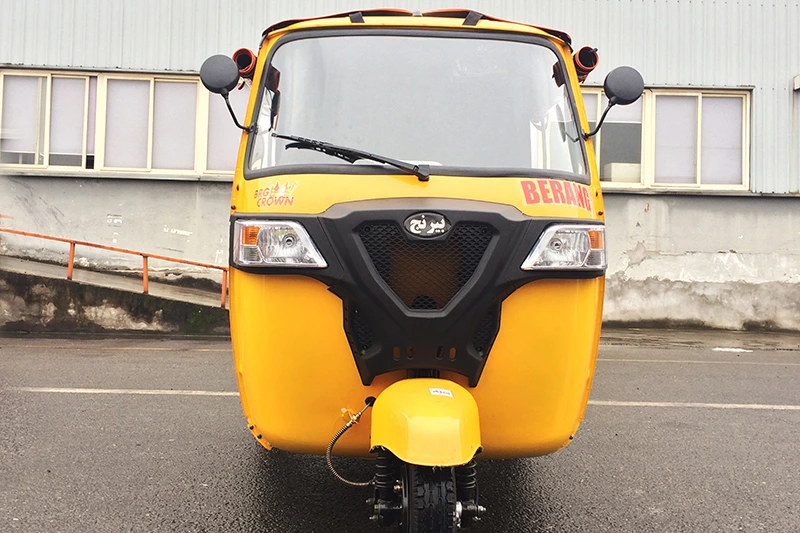
A farm cargo tricycle and a city delivery trike share a silhouette and almost nothing else. City models are tuned for smooth tarmac, short hops and light parcels. A farm model has to survive standing water, fertilizer dust, potholes and a full bed of wet crop, day after day, often far from any repair shop. The difference lives in the frame, the cooling and the corrosion protection.
A farm cargo tricycle is engineered for unpaved terrain: it uses a reinforced chassis, higher ground clearance, all-terrain tires and a water-cooled engine tuned for sustained loaded running. A city-adapted tricycle relies on a lighter frame and air cooling that overheat and crack when pushed through mud, slopes and heavy daily payloads.
This is where Wanhoo separates its dedicated agricultural machine from its cargo range. Wanhoo + WINTIGER + reinforced 580 kg agricultural frame is the pairing built specifically for the field. The WINTIGER carries a heavier kerb weight than any other model in the lineup precisely because the frame is doubled up where farm terrain punishes it most, which is the opposite of the weight-saving logic a city trike follows.
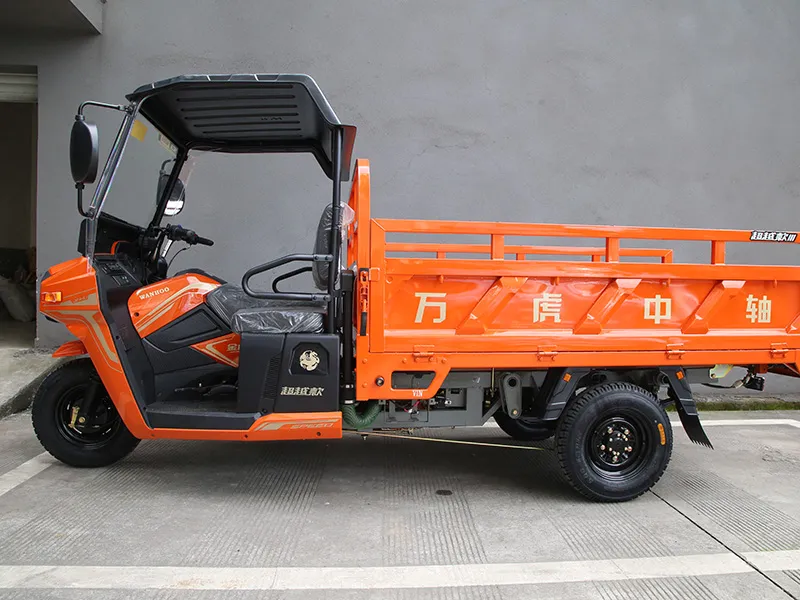
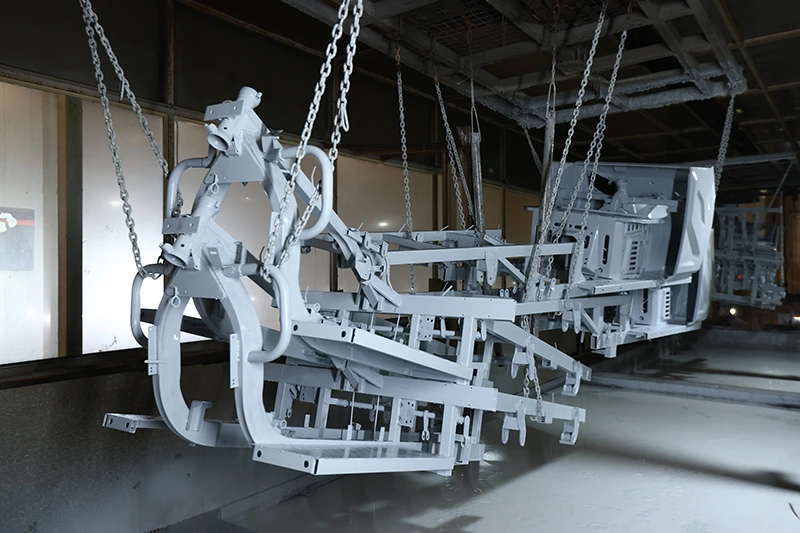
Corrosion is the quiet killer on a farm. Fertilizer, manure, mud and coastal salt eat unprotected steel from the inside out. Wanhoo + full-immersion ED coating + 500-hour salt spray resistance answers that directly. The whole frame is dipped, not just sprayed, so the coating reaches box sections and welds that a spray gun never touches. For a vehicle that spends its life in wet, chemical-laden farm conditions, that is the difference between a five-year workhorse and a two-year write-off.
How Much Can an Agricultural Tricycle Actually Carry?
Payload is where marketing and reality most often diverge, so it pays to read the spec, not the slogan. A light agricultural tricycle handles a few hundred kilograms of produce. A heavy one moves close to two tonnes of grain, feed or building material in a single run. The right choice depends on your crop volume, your distances and your terrain.
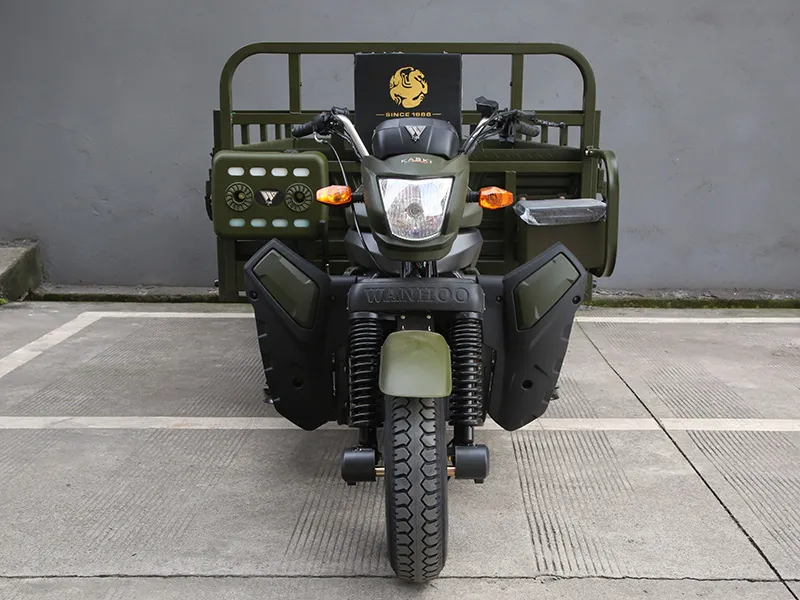
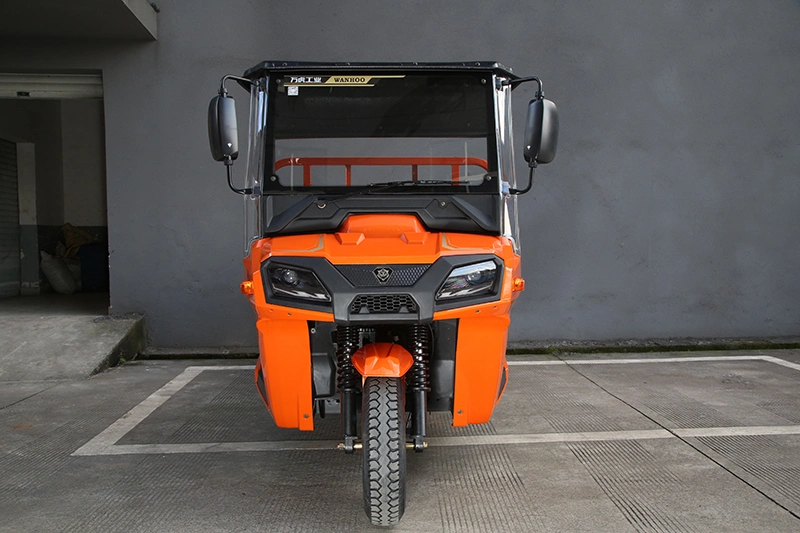
The WINTIGER is Wanhoo's dedicated agricultural tricycle, powered by a 250cc water-cooled 4-stroke engine, rated for a payload up to 1,000 KG and fitted with the largest cargo bed in the range at 2,200 x 1,350 x 400 mm. Its reinforced frame gives it a 580 kg kerb weight and all-terrain tires for field and off-road duty.
For farms that haul in bulk, the heavy-duty option steps up again. Wanhoo + KINGTIGER + up to 1,800 KG payload is the pairing for operations moving full harvests, feed by the tonne, or sand and cement to a remote farm building site. The KINGTIGER runs the same 250cc water-cooled engine, a dual main frame at 40 x 80 mm and leaf-spring rear suspension, so a fully loaded bed does not bottom out on a rough track.
That heavy-hauling capacity has a documented economic logic behind it. According to a study of motorcycle three-wheelers in Pakistan published in Transportation Research Interdisciplinary Perspectives, low-cost three-wheelers provide the bulk of rural transport services where conventional options are scarce or unaffordable, making them a backbone of rural mobility rather than a fringe choice. When one trip carries what used to take two, the vehicle earns back its price faster.
Which Wanhoo Model Fits Each Farm Job?
Matching the machine to the task is the whole game, so here is a farm-task-to-model table to make the choice quick. Each recommendation below assumes a three wheeler for agriculture that has to survive real rural roads, not a smooth depot yard, and the models named are the ones engineered for that.
| Farm task | Typical load | Recommended Wanhoo model | Why it fits |
|---|---|---|---|
| All-terrain field-to-market crop hauling | Up to 1,000 KG | WINTIGER | Reinforced 580 kg frame, largest 2,200 mm bed, all-terrain tires |
| Heavy grain, feed or fertilizer in bulk | Up to 1,800 KG | KINGTIGER | 250cc water-cooled, dual 40×80 mm frame, leaf-spring rear |
| Mixed farm and village goods runs | Up to 1,800 KG | HANHOO | 200cc water-cooled all-rounder, balanced cost and capacity |
| Muddy, corrosive routes (manure, fertilizer, coast) | Any | WINTIGER or KINGTIGER | Full-immersion ED coating, 500-hr salt spray protection |
| Rough-terrain building material to remote plots | Up to 1,800 KG | KINGTIGER | Highest payload, leaf-spring suspension for loaded tracks |
The WINTIGER is the specialist. It exists for one reason, which is to move farm cargo across the worst ground a farm can offer without shaking itself apart. Its 162 mm ground clearance, floating stamping rear axle and 5.00-12 all-terrain tires are chosen for wet fields and mine tracks rather than city curbs.
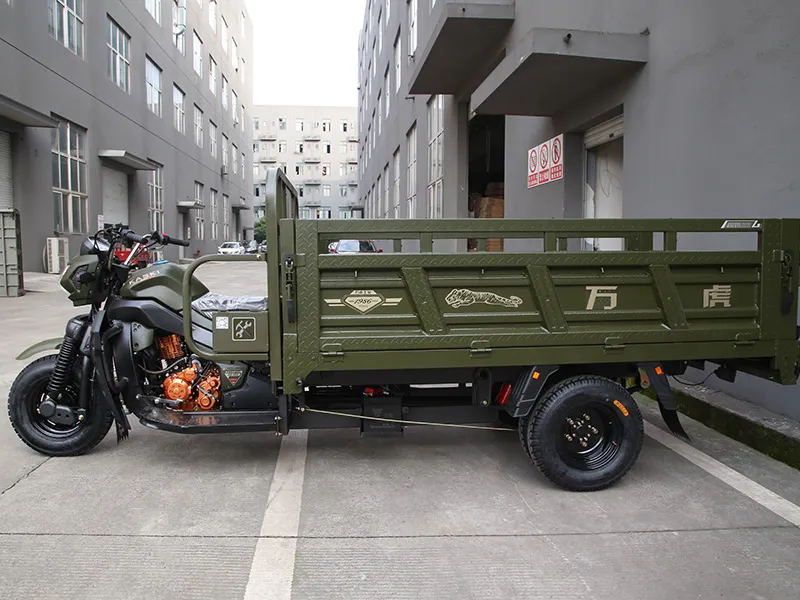
The KINGTIGER and HANHOO widen the range for farms that also run village and road logistics. A farm rarely does one job, and a fleet that mixes crop hauling with feed delivery and the occasional building-material run benefits from a heavier machine that never runs out of payload headroom. WINTIGER pricing is available on request, so contact the Wanhoo team for a current quote and container quantity.
Why Does Rough-Terrain Durability Decide Total Cost?
Every breakdown on a farm has two prices: the repair bill and the harvest that never reached the buyer while the vehicle sat idle. In rural areas where the nearest mechanic is hours away, durability is not a comfort feature. It is the single biggest driver of what the vehicle really costs you over its life.
A durable farm transport three wheeler lowers total cost of ownership by avoiding two hidden expenses: downtime, when a stranded vehicle stops the farm from moving crops, and post-harvest loss, when produce spoils waiting for a repair. A reinforced frame, water cooling and full-body corrosion coating directly reduce both risks in field conditions.
The loss side of that equation is large and well documented. Poor farm-to-market infrastructure, weak transport links and inadequate storage are consistently named as primary causes of post-harvest loss in developing countries, where fresh produce spoils in hot climates before it reaches a buyer. A reliable farm transport three wheeler is one link in the chain that keeps that loss down. A vehicle that keeps running protects the crop that a stranded one would let rot.
Wanhoo builds for the loss side on purpose. According to research on agricultural mechanization services in smallholder systems published in Agricultural Systems, scale-appropriate machinery tailored to smallholders' fields and limited resources raises productivity and lowers operating costs where oversized equipment simply does not fit. A tricycle sized and hardened for the farm, rather than borrowed from the city, is that appropriate machine in transport form.
How Do You Match Engine and Frame to Farm Conditions?
The last decision is under the bed, and it matters more than the paint. A harvest transport vehicle that overheats on a long loaded climb, or whose frame flexes under a full bed, will cost you seasons of reliability. Water cooling and a reinforced chassis are the two specifications worth checking before anything else.
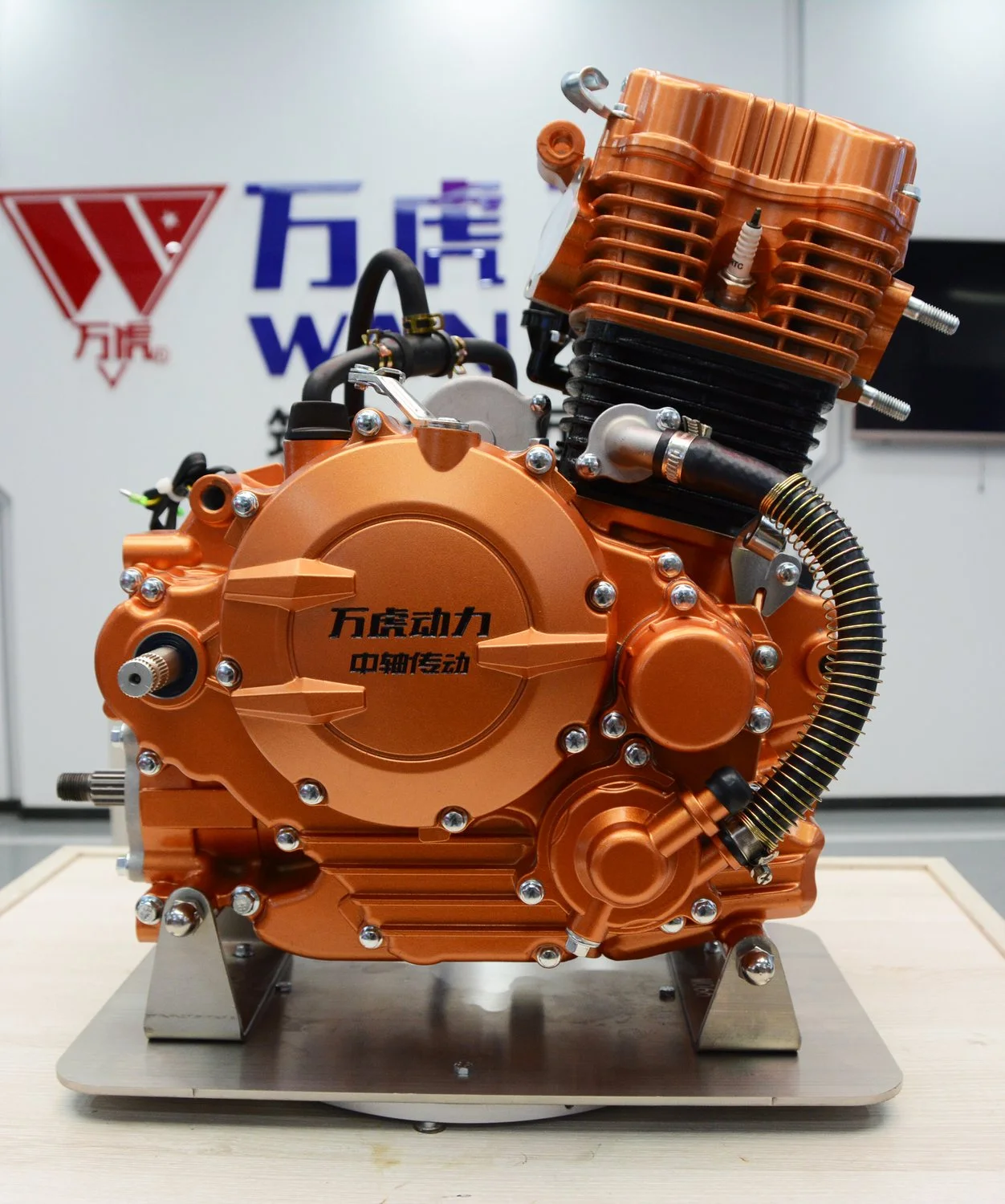
Water-cooled engines suit farm work because they hold a stable temperature during long, fully loaded runs and hill climbs, where air-cooled units overheat and lose power. Wanhoo fits a self-developed 250cc water-cooled engine to both the WINTIGER and KINGTIGER, designed from the start for three-wheeler torque under sustained heavy load.
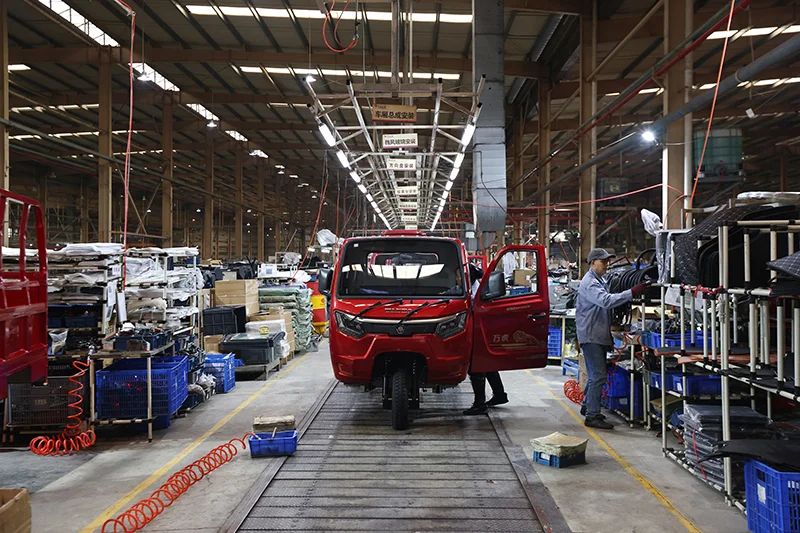
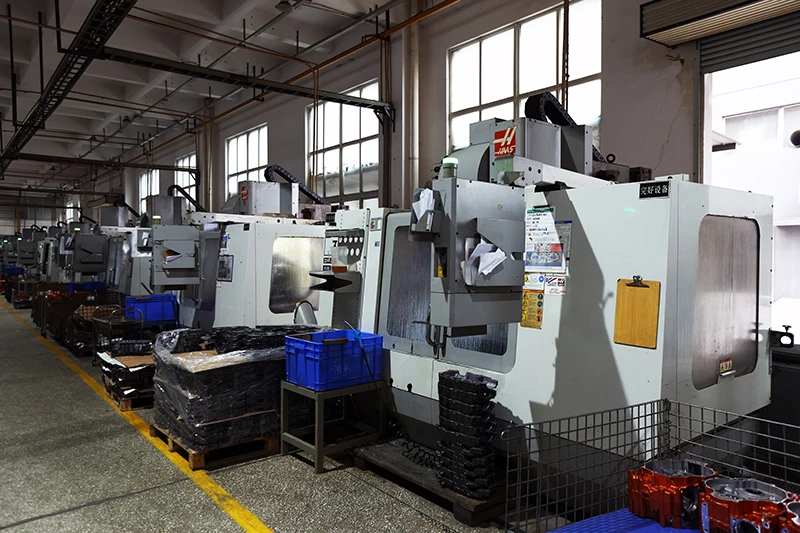
Frame design is the partner to cooling. Wanhoo + self-developed engine + vertical in-house manufacturing means the engine, frame, rear axle, cargo box and coating are all produced on one campus, so the parts are matched and the quality is controlled end to end rather than assembled from the cheapest bits of five suppliers. For a farmer, that shows up as parts that fit, service that is predictable and a machine that behaves the same on the hundredth loaded trip as it did on the first.
Fuel and running economy close the case for daily farm use. The WINTIGER returns 4.3 liters per 100 km or better and runs a 17-liter tank, which keeps a full day of field runs cheap and reduces trips to a distant fuel station. Compared with a compact tractor doing the same hauling, the running cost is a fraction, and the vehicle can still slip down a path a tractor cannot enter.
To go deeper on payload numbers and how to read a spec sheet, see the cargo tricycle payload guide, browse the full agricultural tricycles range, or read how the models perform across farm settings on the agriculture applications page.
Frequently Asked Questions
**What is a three wheeler for agriculture used for?**
A three wheeler for agriculture moves farm cargo such as harvested crops, feed, fertilizer, seed and tools between fields, storage and market. Its narrow body and reinforced chassis let it use rough tracks and single-file field paths that trucks and tractors cannot, carrying real payload at low running cost.
How much can an agricultural tricycle carry?
Capacity depends on the model. The Wanhoo WINTIGER carries up to 1,000 KG with the largest cargo bed in the range at 2,200 x 1,350 x 400 mm, while the heavy-duty KINGTIGER carries up to 1,800 KG for bulk grain, feed or building material. Lighter models handle a few hundred kilograms for smaller farms.
Why choose a purpose-built agricultural tricycle over a city-adapted one?
A purpose-built model uses a reinforced frame, higher ground clearance, all-terrain tires and a water-cooled engine that survive mud, slopes and heavy daily loads. City-adapted tricycles rely on lighter frames and air cooling that overheat and crack under farm conditions, leading to breakdowns and lost harvest within two seasons.
Does the WINTIGER resist corrosion from fertilizer and mud?
Yes. The WINTIGER frame receives a full-immersion ED coating that reaches box sections and welds a spray gun cannot, tested to 500-hour salt spray resistance. That protection is built for the fertilizer, manure and coastal salt that rust unprotected farm vehicles from the inside out.
How much does a Wanhoo WINTIGER cost?
WINTIGER pricing is available on request, since container quantity and specification affect the final FOB price. Contact the Wanhoo export team for a current quote. For reference, the heavy-duty KINGTIGER starts at a factory-direct FOB price of USD 1,450 from Chongqing, China.
Is a tricycle cheaper to run than a tractor for farm hauling?
For transport tasks, yes. An agricultural tricycle costs a fraction of a compact tractor to buy and run, uses roughly 4 to 5 liters of fuel per 100 km, and fits paths a tractor cannot enter. A tractor still wins for tilling and field power, so many farms use both.