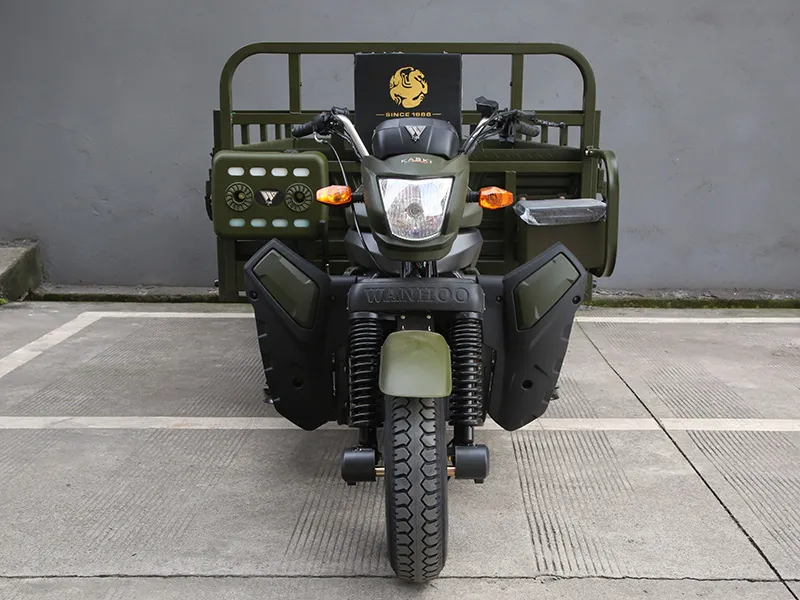
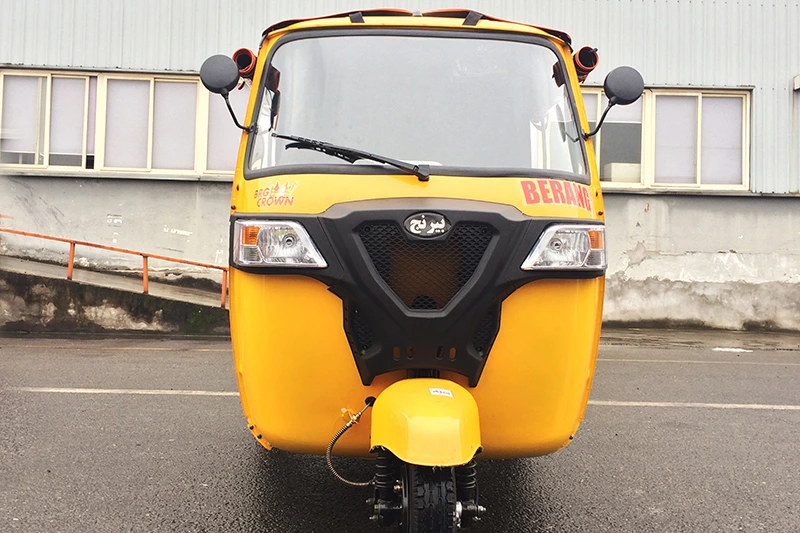
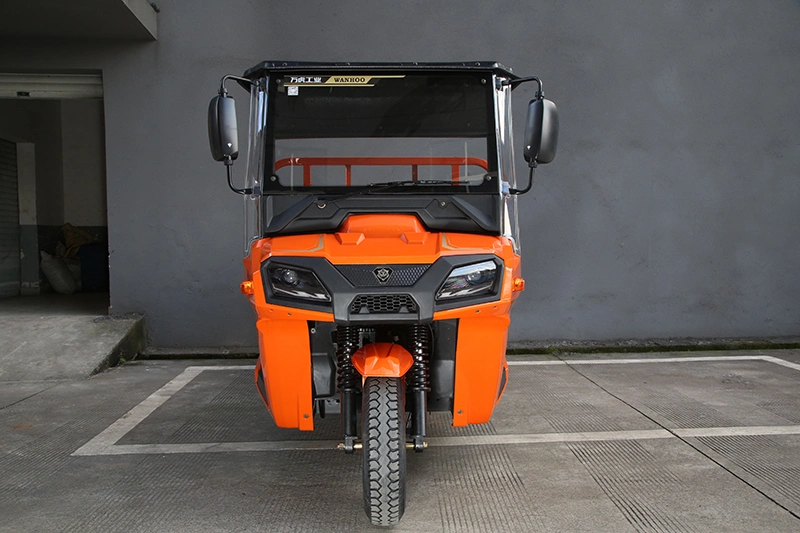
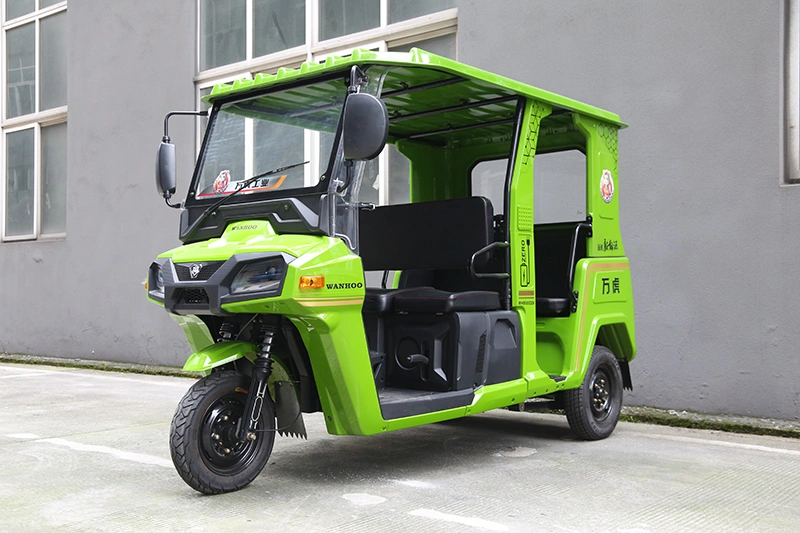
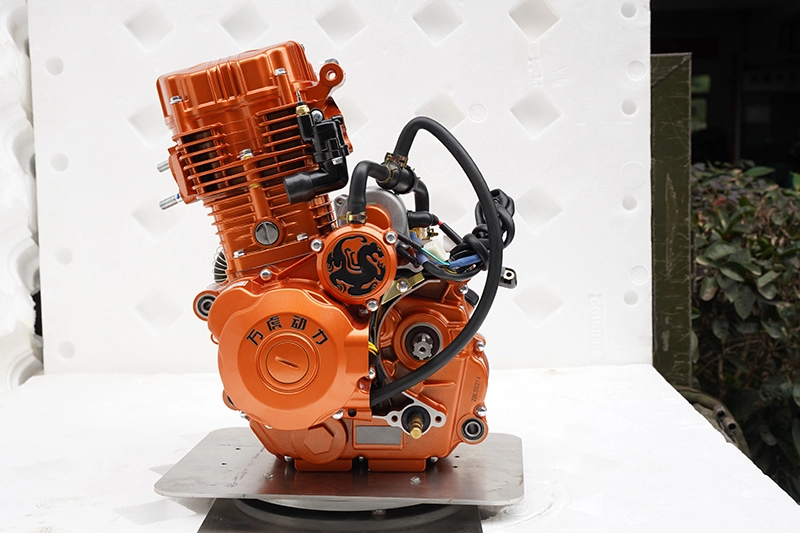
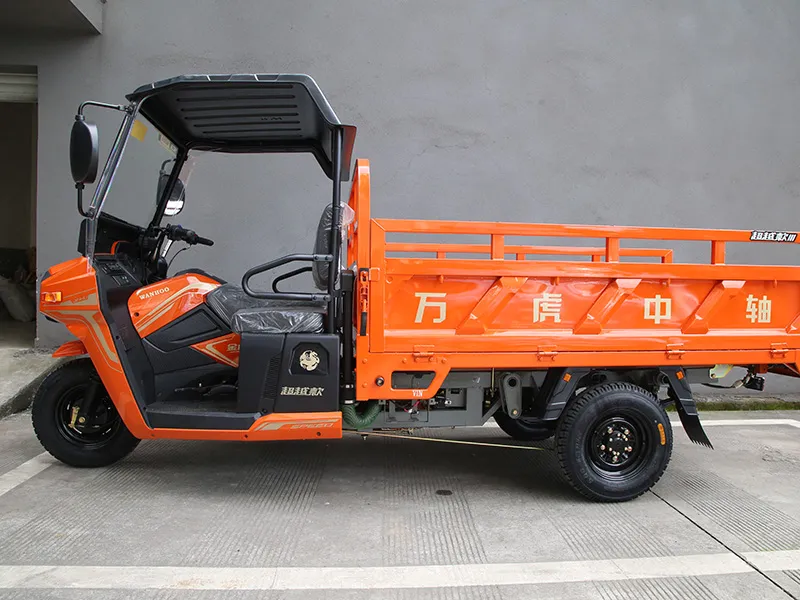
Two cargo tricycles left the same warehouse in Lagos on the same morning. Both listed 150cc. Six months later one was still working and the other was in a mechanic's yard with a cooked top end. The only difference on the spec sheet was one word: cooling. The air cooled vs water cooled tricycle engine decision is the single spec that predicts whether your vehicle survives its duty cycle, because cooling method, not displacement, decides how the engine behaves under sustained load and heat. Air-cooled engines are simpler and cheaper and handle light loads on short routes well. Water-cooled engines hold a constant temperature under continuous heavy load, which is why Wanhoo splits its cargo range at exactly the payload where heat starts to break air cooling.
How Does an Air-Cooled Engine Actually Work?
Air cooling is the older and simpler of the two methods, and it works by moving heat straight from the metal into the passing air. Fins cast into the cylinder and head increase surface area, and airflow across those fins carries heat away while the vehicle moves.
An air-cooled engine is an engine that dissipates combustion heat directly to the atmosphere through finned metal surfaces on the cylinder and head, with no coolant or radiator. It has fewer parts, weighs less, and costs less to build and repair, which makes it well suited to light loads on short routes where the engine never runs hot for long.
The catch is that fins only shed heat when air is moving over them fast. According to AutoGuru, air-cooled engines can struggle to maintain a consistent temperature because they rely on the vehicle moving to produce their cooling. A cargo tricycle crawling through market traffic with a full box is the exact condition where that airflow disappears and heat builds.
For a light delivery run this is rarely a problem. The engine spends most of its time at a steady cruise, the load is modest, and the fins do their job. Trouble starts when the same engine is asked to haul heavy cargo slowly, in heat, hour after hour, which is a different job than it was designed for.
How Is a Water-Cooled Engine Different?
Water cooling adds a controlled loop of liquid between the hot metal and the outside air, and that buffer is the whole point. Coolant circulates through a jacket cast around the cylinder, absorbs heat, and carries it to a radiator where it is released, while a thermostat holds the whole system at a target temperature.
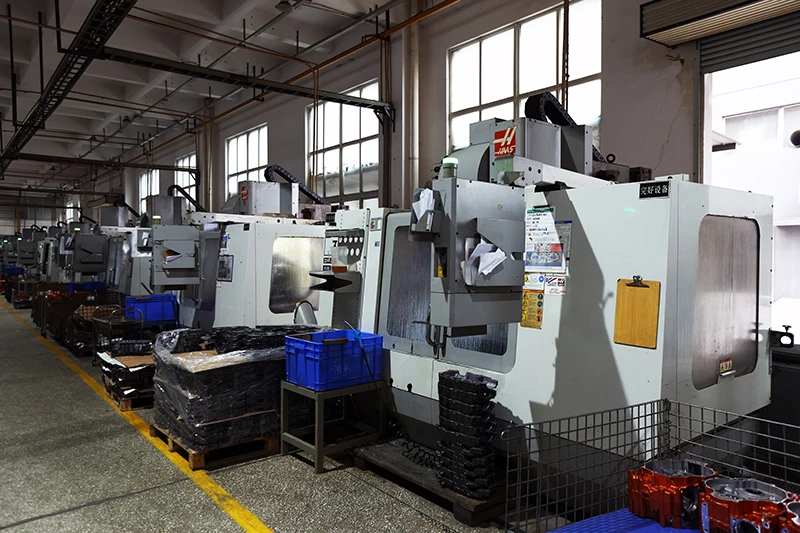
A water-cooled engine circulates liquid coolant through passages around the cylinder and head to a radiator, using a thermostat to hold a steady operating temperature regardless of vehicle speed or load. Because coolant absorbs far more heat per degree than air, the engine stays within a narrow temperature band during slow, heavy, continuous work in hot climates.
According to Bison Machinery, air-cooled engines can overheat under heavy load or hot weather, while liquid-cooled systems precisely regulate temperature and handle more demanding operating conditions. The stable temperature is not a comfort feature. It is what keeps the engine alive under abuse.
Steady temperature also protects the internals. When metal stays at a constant temperature it expands a constant amount, so the clearance between piston and cylinder stays where the designer intended. An engine that swings hot and cold expands and contracts through wider ranges, and that repeated movement grinds tolerances loose and accelerates wear over the vehicle's working life.
Why Does Temperature Matter So Much Under Load?
Heat is what actually kills a working engine, and load is what makes heat. Every kilogram in the cargo box asks the engine for more torque, more torque burns more fuel per stroke, and more combustion means more heat the cooling system has to remove before it damages something.
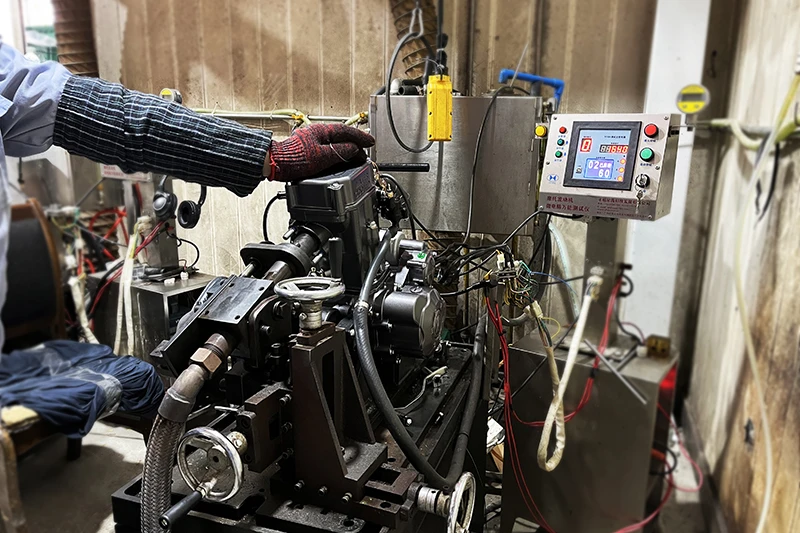
Under sustained load an engine makes heat faster than at light throttle, and if cooling cannot shed it as fast as it arrives, temperature climbs until oil thins and parts wear or seize. Water cooling removes heat fast enough to hold a constant temperature under continuous load, which is why heavy-duty vehicles are almost always water-cooled.
According to Harley-Davidson, in the harshest conditions a liquid-cooled engine will not get as hot as an air-cooled engine. That gap is small on a cool morning and large on a loaded climb at noon, which is precisely when a cargo operator needs the engine to hold together.
Three factors decide how hard cooling has to work: payload, climate, and traffic. A heavy box, a tropical route, and stop-start city driving each add heat and each remove the airflow air cooling depends on. When two or three stack together, air cooling reaches its limit and water cooling becomes the baseline rather than an upgrade.
Where Does Wanhoo's Range Split, and Why There?
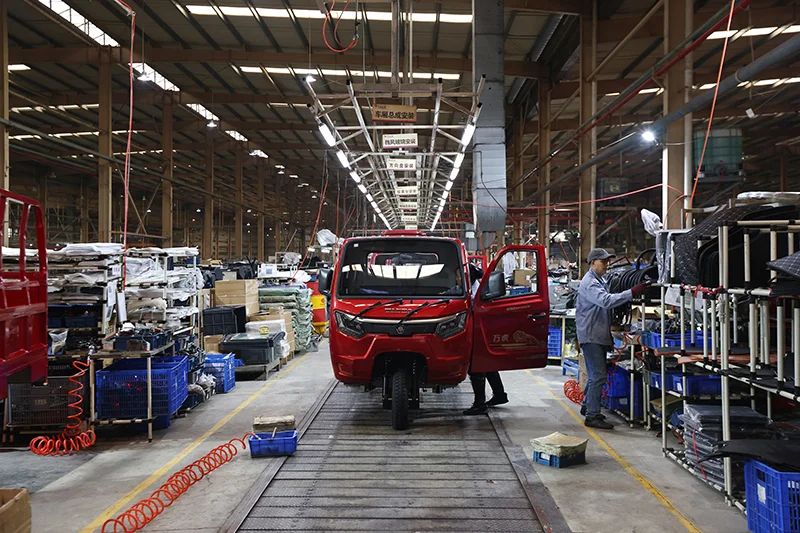
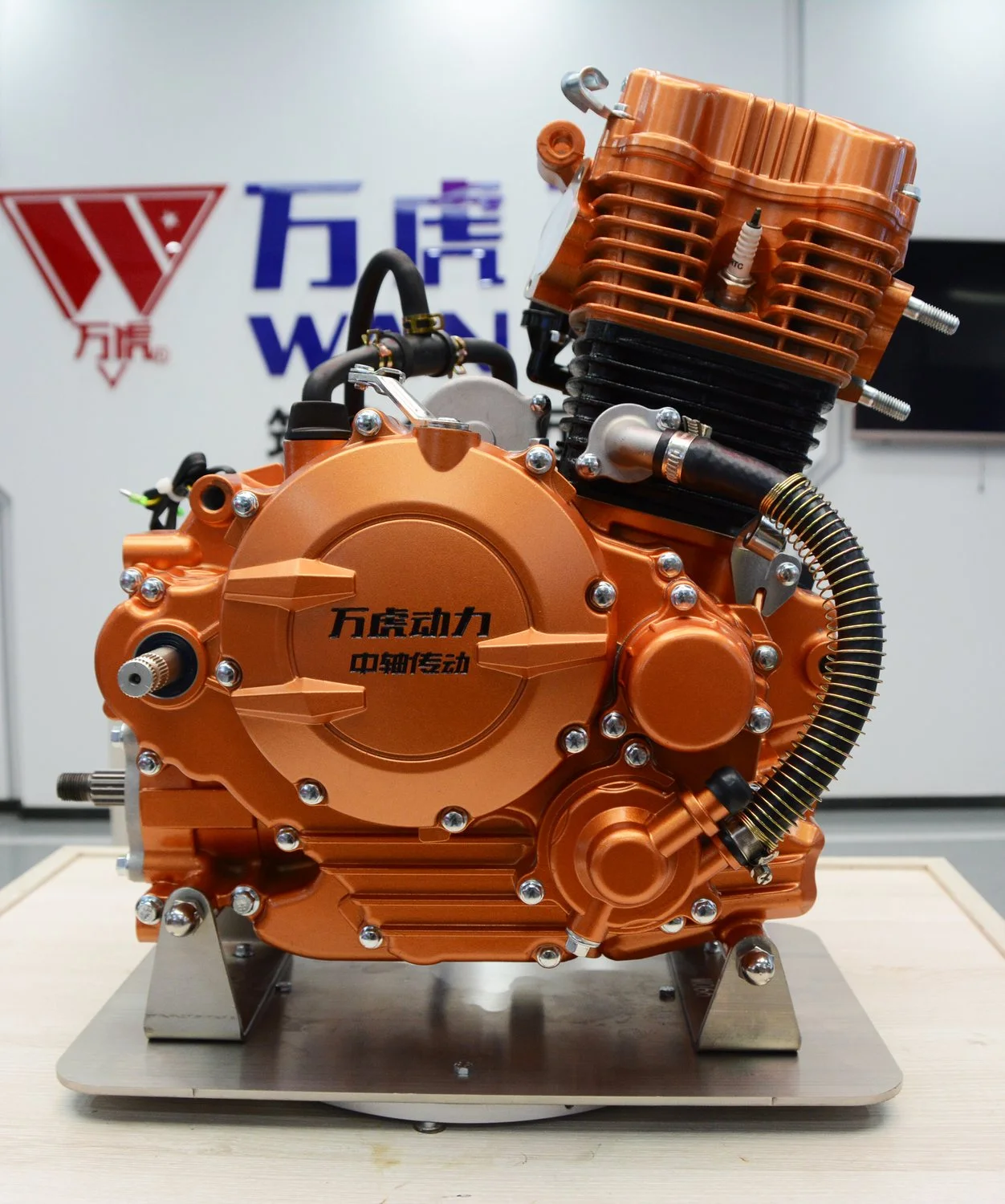
Wanhoo builds both cooling types on purpose, and the line between them falls exactly at the payload where heat starts to matter. Because Wanhoo designs and produces its own engines rather than buying them in, it can match cooling to the job instead of stretching one cheap engine across the whole range.
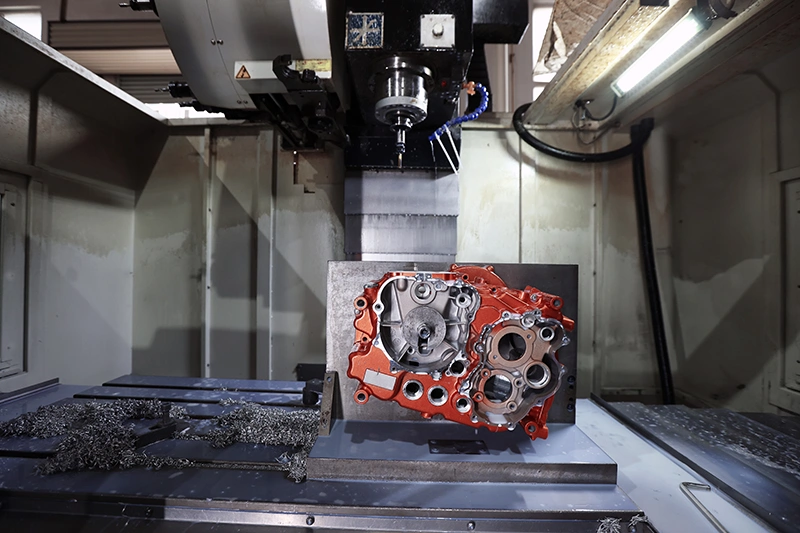
Wanhoo pairs the entry Q1 cargo tricycle with a 150cc air-cooled engine rated up to 600 KG, its most economical model for light delivery. When payload climbs, Wanhoo switches to water cooling: the K3 runs a 150cc water-cooled engine up to 1,000 KG, and the heavy KINGTIGER, NIMBA, and HANHOO use 200 to 250cc water-cooled engines up to 1,800 KG.
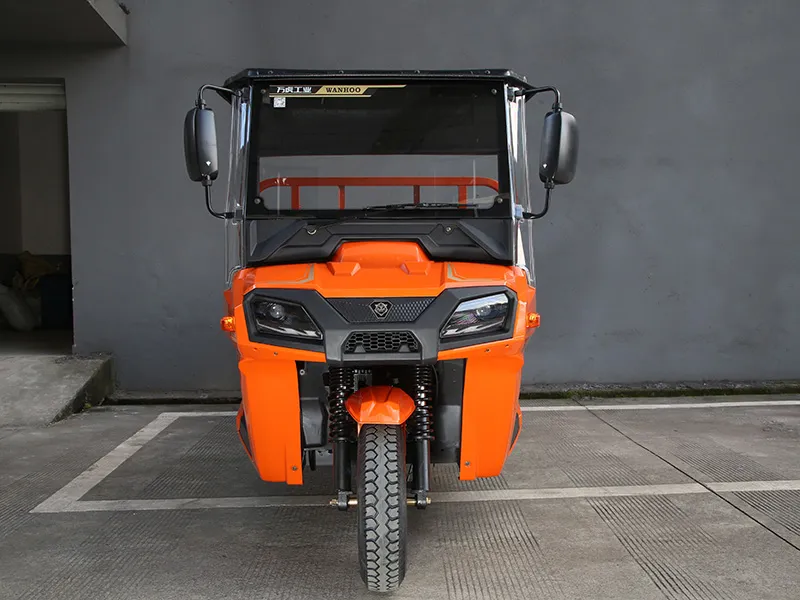
The two 150cc models make the logic obvious. The Wanhoo Q1 is the lightest, most economical cargo tricycle in the line, air-cooled, from $830, built for a first-time owner running a modest box on short trips. The Wanhoo K3 keeps the same 150cc displacement but adds water cooling and a larger box for up to 1,000 KG from $900, so a small jump in price buys durability where the load justifies it.
At the top, the Wanhoo KINGTIGER is a 250cc water-cooled heavy-loading workhorse rated up to 1,800 KG, and the same self-developed water-cooled platform runs the NIMBA and HANHOO. The split is not a marketing tier. It is the point where the physics of heat forces the change, and Wanhoo engineers the range around it.
Air-Cooled vs Water-Cooled Cargo Tricycle Engine Comparison
The table below sets the air cooled vs water cooled tricycle engine choice side by side, mapped onto Wanhoo's own models so the trade-off is concrete rather than abstract.
| Factor | Air-cooled (Wanhoo Q1) | Water-cooled (Wanhoo K3 / KINGTIGER) |
|---|---|---|
| How it cools | Airflow over cylinder fins | Coolant loop, radiator, thermostat |
| Temperature under load | Swings wider, climbs in heat | Held constant by thermostat |
| Best duty cycle | Light loads, short routes, cruising | Heavy loads, long hours, stop-start |
| Climate fit | Cooler or moderate | Hot and tropical |
| Complexity and cost | Simpler, cheaper to buy and fix | More parts, higher up-front cost |
| Wear under sustained load | Accelerated by heat cycling | Reduced by stable tolerances |
| Wanhoo example | Q1, 150cc, up to 600 KG, from $830 | K3 150cc up to 1,000 KG; KINGTIGER 250cc up to 1,800 KG |
Which Cooling Type Should You Choose for Your Route?
Match the engine to the work, not to the lowest sticker price, and the decision gets simple. The right choice depends on what you carry, how far, in what climate, and through what kind of traffic, because those four things determine how much heat the engine has to survive every day.
Choose air-cooled when the load is light, the routes are short, and the climate is moderate. A single owner running parcels or market goods in a box under 600 KG on flat city trips will get reliable service from a well-built air-cooled 150cc such as the Q1, at the lowest purchase and running cost in the range, which speeds the payback on a first vehicle.
Air cooling remains the right choice for the lightest cargo work: loads under about 600 KG, short urban routes, cruising speeds, and moderate climates. In that duty cycle an air-cooled 150cc such as the Wanhoo Q1 runs cool enough to last, while costing less to buy, fuel, and repair than any water-cooled equivalent in the range.
Choose water-cooled when payload rises, hours get long, or the climate turns hot. For loads approaching or above 1,000 KG, for all-day fleet duty, for hilly or mining routes, or for tropical heat, water cooling is the baseline that keeps the engine intact. The K3 covers the mid weight at 150cc, and the KINGTIGER, NIMBA, and HANHOO cover the heavy end at 200 to 250cc.
For a mixed fleet, the safe rule is to run air-cooled only on the lightest, coolest, shortest-route vehicles and default to water-cooled everywhere payload, heat, or hours climb. The extra up-front cost of water cooling is recovered in uptime and engine life on any route where heat would otherwise cycle an air-cooled engine to an early rebuild.
For the full engineering case on why cooling method outranks displacement, and how a purpose-built water-cooled engine compares with a repurposed air-cooled GY6 unit, see our pillar guide on water-cooled versus GY6 three-wheeler engines. To compare the entry and mid models directly, see the Q1 150cc lightweight cargo tricycle and the K3 150cc compact cargo tricycle, or browse the full engine technology range.
Frequently Asked Questions
**Is a water-cooled cargo tricycle engine worth the extra cost?**
For any load above the lightest class, or any hot climate, yes. A water-cooled engine holds a constant temperature under sustained load, which keeps piston-to-cylinder tolerances tight and reduces wear. The higher purchase price is recovered through longer engine life and less downtime on routes where an air-cooled engine would overheat.
What is the difference between the Wanhoo Q1 and K3 if both are 150cc?
The Q1 uses a 150cc air-cooled engine rated up to 600 KG from $830, built as the most economical entry model for light, short-route delivery. The K3 uses a 150cc water-cooled engine rated up to 1,000 KG from $900, adding cooling and a larger cargo box where the heavier load justifies the durability.
Does an air-cooled tricycle engine overheat?
An air-cooled engine can overheat when it runs heavy loads slowly in hot weather, because its fins need fast airflow to shed heat and that airflow disappears in stop-start traffic. For light loads on short routes at cruising speed it cools adequately, which is why air cooling suits entry cargo work rather than heavy-duty haulage.
Why does Wanhoo use water cooling on its heavy cargo models?
Wanhoo's KINGTIGER, NIMBA, and HANHOO carry up to 1,800 KG, and that payload generates more heat than air cooling can remove under continuous load. Water cooling holds a steady operating temperature so the engine keeps its torque and its tolerances through long, heavy, hot working days, which is what heavy-duty duty cycles demand.
Which is more reliable in hot climates, air-cooled or water-cooled?
Water-cooled engines are more reliable in hot climates under load, because a thermostat-controlled coolant loop maintains a constant temperature regardless of ambient heat or vehicle speed. Air-cooled engines run hotter as the surrounding air warms and airflow slows, so they are best reserved for lighter duty in moderate conditions.
Can I run an air-cooled 150cc tricycle for a cargo business?
Yes, if the business carries light loads on short urban routes in moderate conditions, an air-cooled 150cc like the Wanhoo Q1 is a low-cost, reliable starting vehicle. If loads approach 1,000 KG, hours run long, or the climate is hot, step up to a water-cooled model such as the K3 to avoid heat-driven wear.