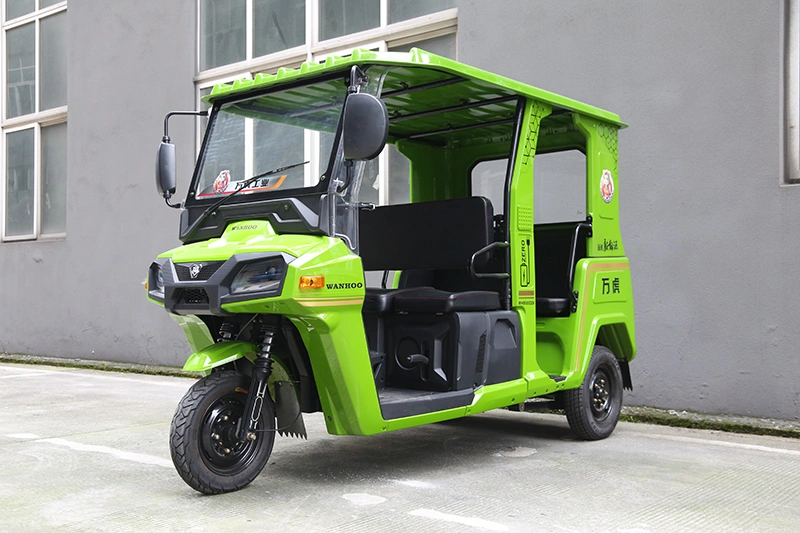
The engine gets the attention, but the box is what earns the money. A three-wheeler with the wrong cargo bed either wastes half its capacity on empty air or forces a driver to leave paying goods behind. The cargo box tricycle you buy should be specified around what you actually haul, not around whichever bed the factory bolts on by default. A cargo box tricycle carries goods in an open or enclosed bed mounted over the rear axle, and the right box depends on three decisions: bed dimensions matched to your load, box type matched to your goods, and material matched to your route. This guide breaks down all three so you order a bed that fits the work instead of fighting it.
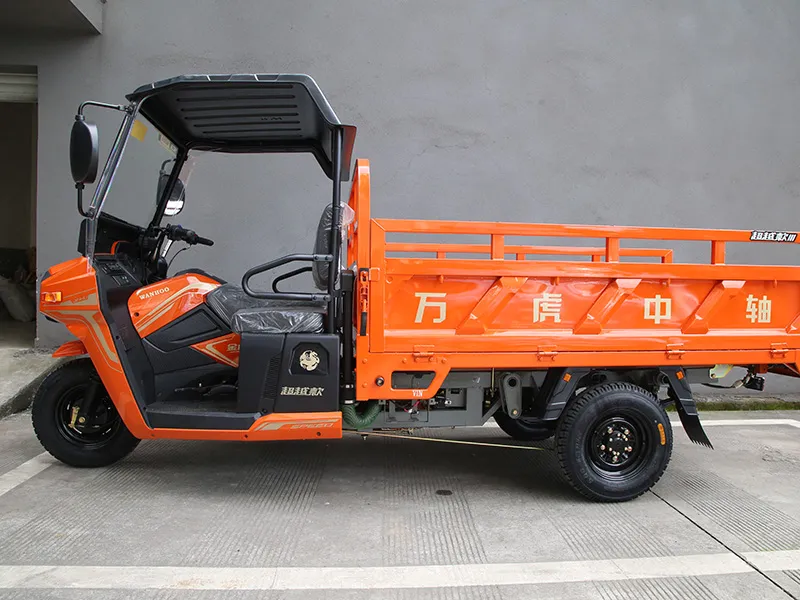
What Is a Cargo Box on a Three-Wheeler, and Why Does It Decide Profit?
A cargo box is the load-carrying bed mounted behind the driver on a three-wheeler, sitting over the reinforced rear axle and frame. It sets two hard limits at once: how much weight the vehicle can carry, and how much volume that weight is allowed to occupy.
A three wheeler cargo box is the goods-carrying bed fixed over the rear axle, defined by its internal length, width, and height in millimetres. Those three numbers set the vehicle's volume ceiling, while the frame and engine set its weight ceiling. A load stops when it hits whichever ceiling comes first.
Most buyers spec the weight rating and ignore the box, then discover the mismatch in the field. That mismatch has a name in freight logistics. According to Warp, cubic capacity becomes the binding constraint when freight is light but bulky, meaning a vehicle runs out of space before it reaches its weight limit. A tricycle sized only for weight will cube out on light cargo and leave payload unused.
The reverse trap is just as costly. A box too large for a heavy, dense load tempts a driver to overfill it, pushing weight past the frame's safe limit and cracking the rear axle over months. Getting the box right means reading your goods first, then choosing dimensions that let the vehicle reach its weight rating without exceeding it and without wasting it.
How Do You Match Cargo Box Size to the Goods You Haul?
The rule is simple to state and easy to get wrong: match the box to the density of your cargo. Dense goods like sand, ore, or cement blocks weigh out long before they fill a large bed, so they need a strong frame more than a big box. Light, bulky goods like packaged parcels, poultry crates, or foam products cube out first, so they need volume more than raw payload.
Cargo tricycle box size should track load density. Heavy dense goods weigh out before filling the bed, so a compact high-sided box on a strong frame suits them best. Light bulky goods cube out before reaching the weight limit, so they need the longest, tallest bed the model offers to carry a full paying load.
This is why a longer box is not automatically the better box. A vendor hauling wet sand gains nothing from a 2,200mm bed, because the frame reaches its weight ceiling with the bed barely half full. A courier moving parcels, by contrast, needs every extra centimetre of length because the load is light and bulky. The right size is the one that lets the vehicle reach its weight rating exactly as the box fills.
Wanhoo builds its cargo range with graduated box sizes for precisely this reason. The lineup spans from a compact 1,700mm entry bed to a 2,200mm agricultural bed, so a buyer can match the tricycle cargo bed to load density rather than accept one bed for every job. The table below sets the real internal box dimensions against payload across the range.
Cargo Box Dimensions by Wanhoo Model
| Model | Cargo box L×W×H (mm) | Approx. volume | Max payload | Best-fit goods |
|---|---|---|---|---|
| Q1 | 1700×1250×300 | ~0.64 m³ | ≤600 KG | Light parcels, market goods, short urban runs |
| KINGTIGER | 1800×1300×390 | ~0.91 m³ | ≤1,800 KG | Ore, sand, blocks, heaviest daily hauling |
| NIMBA | 1800×1300×390 | ~0.91 m³ | ≤1,800 KG | Heavy dense loads on narrow lanes |
| HANHOO | 1800×1300×390 | ~0.91 m³ | ≤1,800 KG | Mixed city and rural cargo |
| K3 | 2000×1350×400 | ~1.08 m³ | ≤1,000 KG | Bulky lighter goods, large-volume delivery |
| WINTIGER | 2200×1350×400 | ~1.19 m³ | ≤1,000 KG | Agricultural bulk, crops, feed, all-terrain |
Read this table by comparing volume against payload, not by chasing the biggest number. The KINGTIGER, NIMBA, and HANHOO share the same 1800×1300×390 bed but carry up to 1,800 KG, because their job is dense heavy loads that weigh out inside a mid-size box. The K3 and WINTIGER offer larger beds at a 1,000 KG rating, because their job is bulkier, lighter cargo that needs room before it needs raw payload.
Wanhoo builds the WINTIGER with the largest bed in its range, a 2200×1350×400mm cargo box on a reinforced all-terrain frame, sized for bulky agricultural loads like crops and feed. Its 1,000 KG rating reflects that its goods cube out before they weigh out, so volume, not payload, is the limiting number.
Which Cargo Box Type Fits Your Cargo: Flatbed, High-Side, Dropside or Enclosed?
Box type matters as much as box size, because it decides how goods are loaded, retained, and protected. The four common configurations each solve a different problem, and the correct one depends on what you carry and how often you load and unload.
A cargo box configuration is the structural type of the bed: an open flatbed for oversized items, a high-side box for loose bulk, a dropside box with hinged panels for easy loading, or a fully enclosed box for security and weather protection. Each type trades loading convenience, cargo retention, and protection differently.
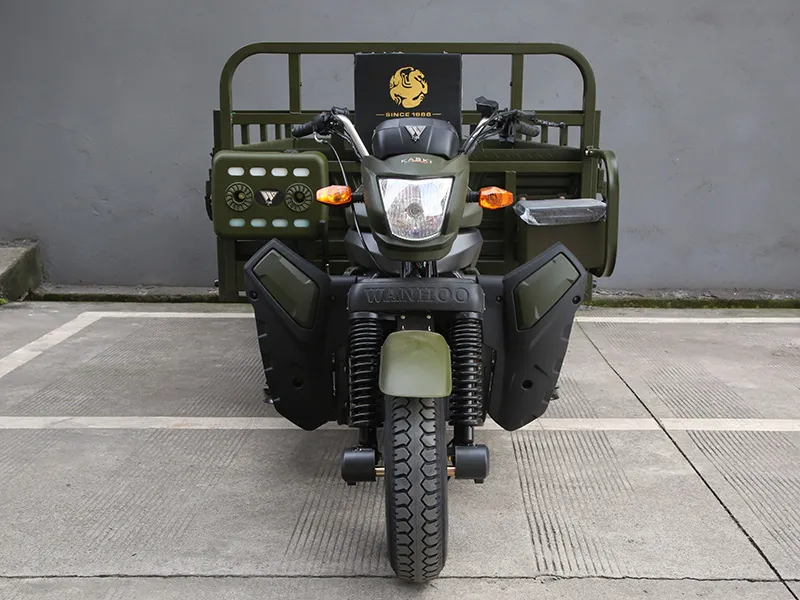
An open flatbed carries oversized or awkward loads that overhang a walled bed, such as long pipe, timber, or furniture, and loads fastest from any side. A high-side box adds tall fixed walls to contain loose bulk like sand, grain, or gravel that would spill from a flatbed. A dropside box uses hinged side and rear panels that fold down flat, giving the retention of walls with the easy side-loading of a flatbed, which suits operators loading heavy items by hand or pallet.
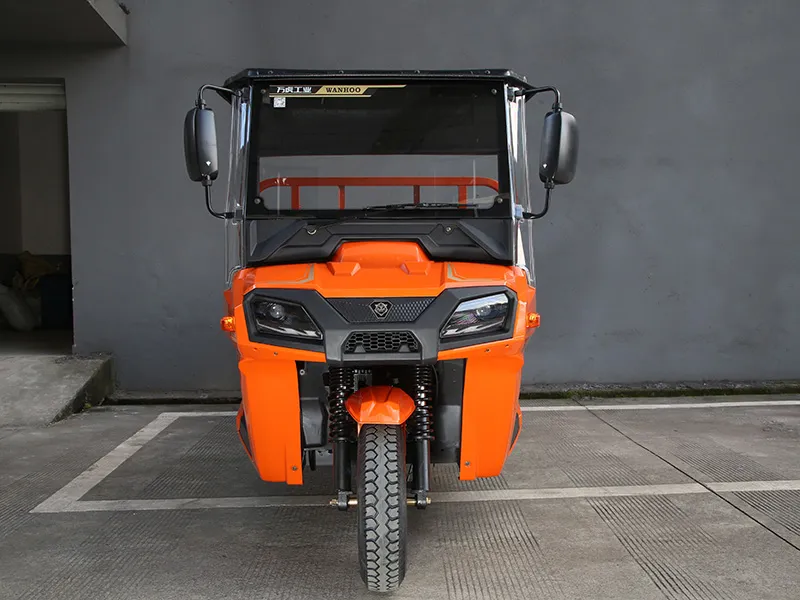
A fully enclosed box seals the cargo behind rigid panels and a lockable door, protecting goods from rain, dust, and theft. It is the right call for parcel delivery, food distribution, pharmacy runs, and any route where weather or security is a real risk. The trade-off is added weight and a fixed interior shape, so it fits high-value light goods better than dense bulk.
Whatever the type, the load has to stay put once the vehicle moves, and that is a safety issue, not a preference. According to JACO Superior Products, unsecured cargo causes more than 25,000 crashes on US highways each year, and the most dangerous assumption in hauling is that a load is heavy enough that it will not move. The same source advises placing the heaviest cargo low and centred over the axle, then strapping it so it does not shift under braking.
Load securement on a three-wheeler starts with the box type. A high-side or enclosed bed retains loose bulk that a flatbed cannot, while heavy items in any box should sit low and centred over the rear axle and be strapped down. A shifting load raises the centre of gravity and threatens the three-wheeled vehicle's stability in a turn.
What Material and Build Should a Durable Cargo Box Have?
A cargo box lives a brutal life. It is loaded by shovel, scraped by blocks, rained on, and often run in tropical heat or coastal salt air. The material and coating decide whether it stays sound for years or rusts through in a season, and this is where cheap vehicles cut a corner buyers only discover later.
The bed floor and walls should be steel gauged for the load class, welded rather than merely bolted at the high-stress corners, and protected against corrosion from the first day. Wanhoo builds its cargo beds in-house from reinforced steel and runs every frame and bed through a full-immersion electrophoresis (ED) coating rated for 500 hours of salt-spray resistance, the same anti-corrosion process used on the vehicle frame.
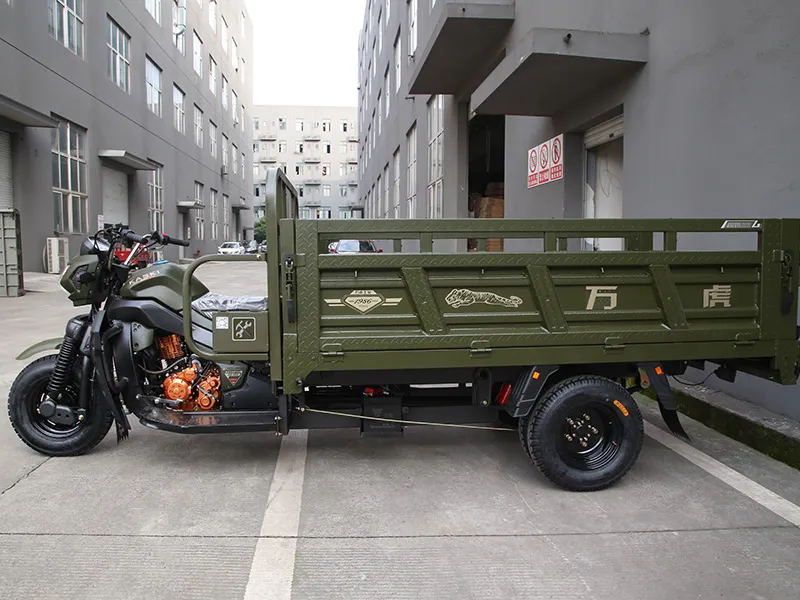
Wanhoo manufactures its cargo boxes from reinforced steel treated with full-immersion electrophoresis coating rated for 500 hours of salt-spray resistance, matching the corrosion protection of the vehicle frame. A bed built to this standard survives shovel loading, dense abrasive cargo, and tropical or coastal conditions that rust a thin painted box within a single working season.
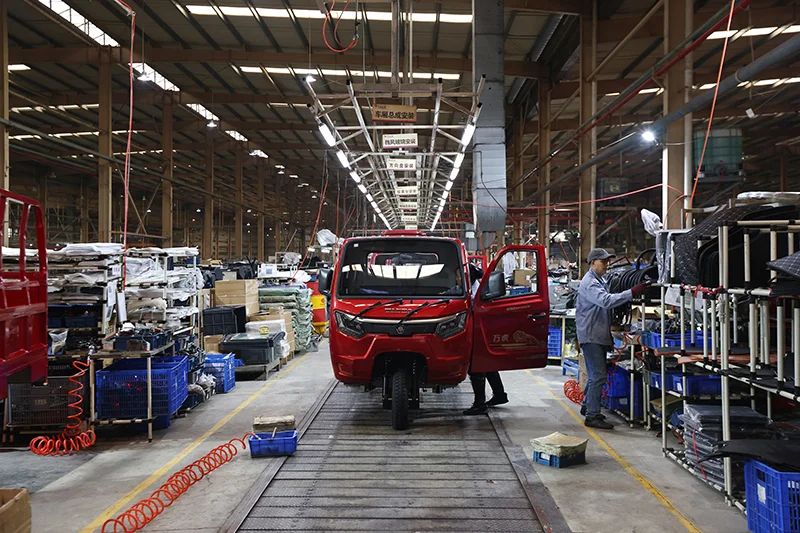
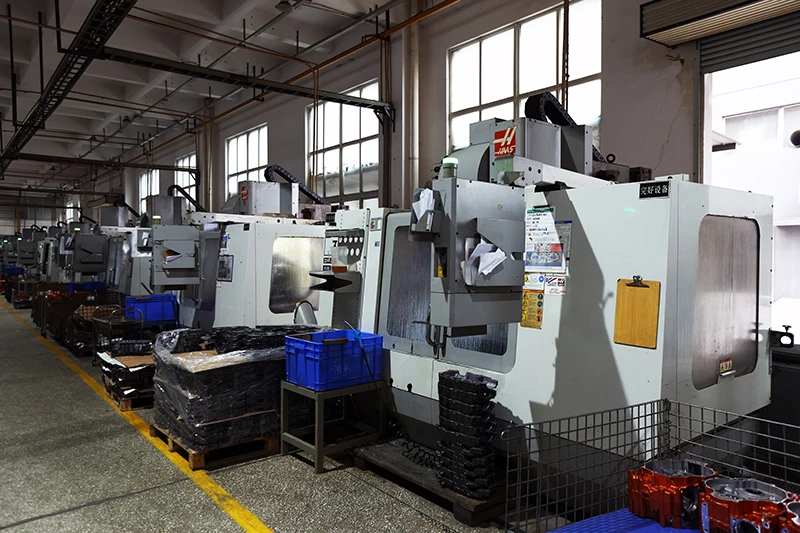
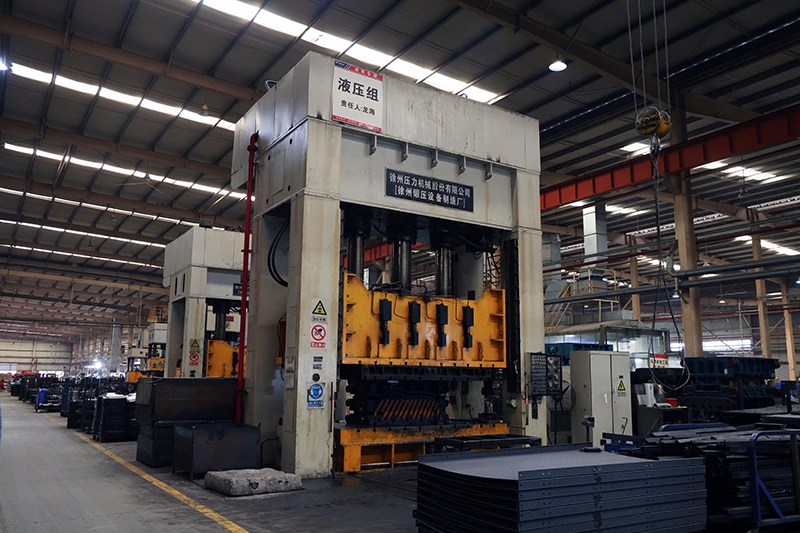
Build quality traces directly back to how the box is made. Wanhoo stamps its cargo bed panels on in-house hydraulic presses rather than sourcing pressed panels from outside suppliers, which keeps panel thickness and weld quality consistent across every unit. That vertical control is the reason a Wanhoo bed holds its shape under repeated heavy loading where a bought-in box flexes and splits at the seams.
The box is a structural part of the payload equation, not an accessory bolted on at the end. A frame rated for 1,800 KG is worthless if the bed above it buckles at 1,200 KG, so the bed has to be engineered to the same standard as the frame it sits on. Reading the payload guide alongside this one gives the full picture of how frame, axle, and box together set the real working limit.
Can Wanhoo Customize the Cargo Box Dimensions and Type?
Yes, and this is where vertical manufacturing changes what a buyer can order. Because Wanhoo builds the engine, frame, rear axle, and cargo bed under one roof, it can alter box dimensions, box type, and configuration to fit a specific trade rather than forcing every customer into a standard bed.
Wanhoo customizes cargo box dimensions, type, and configuration because it manufactures the bed in-house rather than buying it in. Buyers can request a taller high-side box for loose bulk, a dropside bed for hand loading, or an enclosed box for parcel delivery, and specify length and height to match local goods and road regulations.
That flexibility matters most where local rules or local goods do not fit a generic bed. A poultry hauler may need extra height and ventilation, a gas-cylinder distributor may need a low flat bed with fixed anchor points, and a market cooperative may need an enclosed weatherproof box. A vertically integrated factory can build each of these on the same proven frame, which a trader-assembler buying boxes from a third party cannot reliably promise.
The vehicle underneath still has to suit the region, and matching box to goods works best when the base model already fits the route. Compact vehicles earn their keep in dense cities for a measured reason. According to Alke, extremely compact vehicles drive smoothly along narrow streets and remain unrestricted in circulation where larger vehicles cannot operate, which is exactly why a right-sized cargo tricycle beats an oversized truck on tight urban routes.
To spec a box, start from your heaviest and bulkiest routine load, choose the model whose payload and volume bracket it with headroom, then select the box type your loading method and weather demand. The full cargo tricycle range covers 600 to 1,800 KG, and the KINGTIGER for dense heavy hauling or the Q1 for light urban work anchor the two ends of that span.
Frequently Asked Questions
**What is the standard cargo box size on a three-wheeler?**
There is no single standard, since box size scales with the vehicle class. Wanhoo’s cargo beds run from 1700×1250×300mm on the compact Q1 to 2200×1350×400mm on the WINTIGER, with the popular heavy models sharing an 1800×1300×390mm bed. The right size depends on whether your goods weigh out or cube out first.
How do I know if I need a bigger cargo box or a higher payload?
Check whether your load fills the bed or hits the weight limit first. If your goods are dense, like sand or blocks, you weigh out before the bed fills and need payload, not volume. If your goods are light and bulky, like parcels or crates, you cube out first and need a longer, taller box.
What are the main types of cargo box for a tricycle?
The four common types are the open flatbed for oversized loads, the high-side box for loose bulk, the dropside box with folding panels for easy loading, and the fully enclosed box for weather protection and security. Each trades loading convenience against cargo retention and protection differently.
Can a cargo box be fully enclosed for parcel or food delivery?
Yes. A fully enclosed box seals goods behind rigid panels and a lockable door, protecting them from rain, dust, and theft, which suits parcel delivery, food distribution, and pharmacy routes. Wanhoo can build an enclosed configuration on its standard cargo frames to match this kind of work.
What material makes a durable cargo box?
A durable bed uses steel gauged for the load class, welded at the high-stress corners, and coated against corrosion from day one. Wanhoo builds its beds from reinforced steel with a full-immersion electrophoresis coating rated for 500 hours of salt-spray resistance, so the box survives abrasive loads and tropical or coastal conditions.
Does Wanhoo customize cargo box dimensions and type?
Yes. Because Wanhoo manufactures the cargo bed in-house alongside the engine and frame, it customizes box length, height, type, and configuration to fit local goods and regulations. Buyers can request high-side, dropside, or enclosed boxes and specify dimensions, subject to a minimum order quantity.