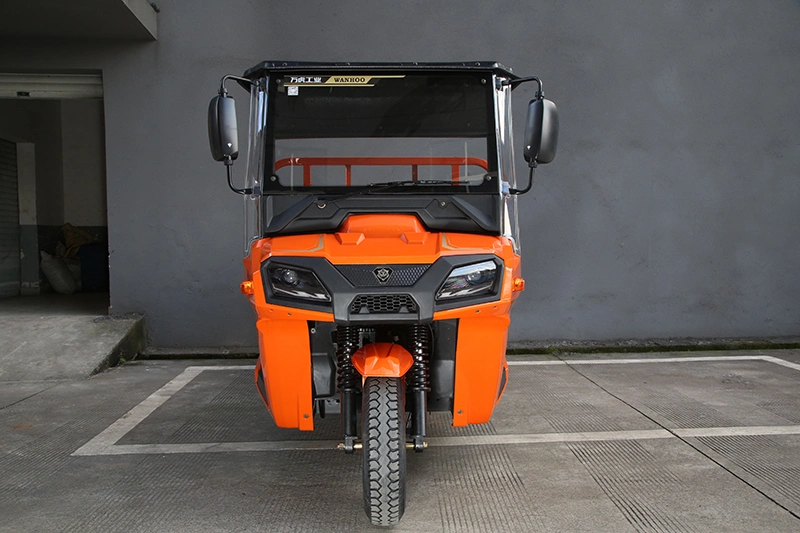
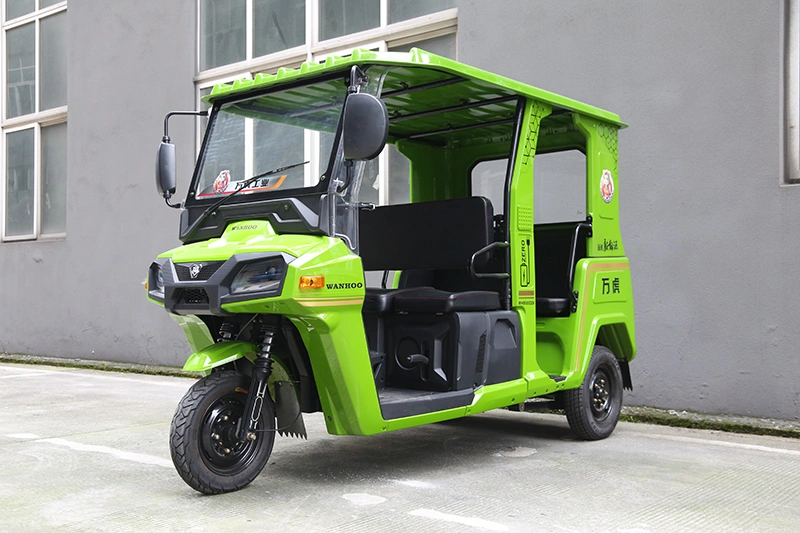
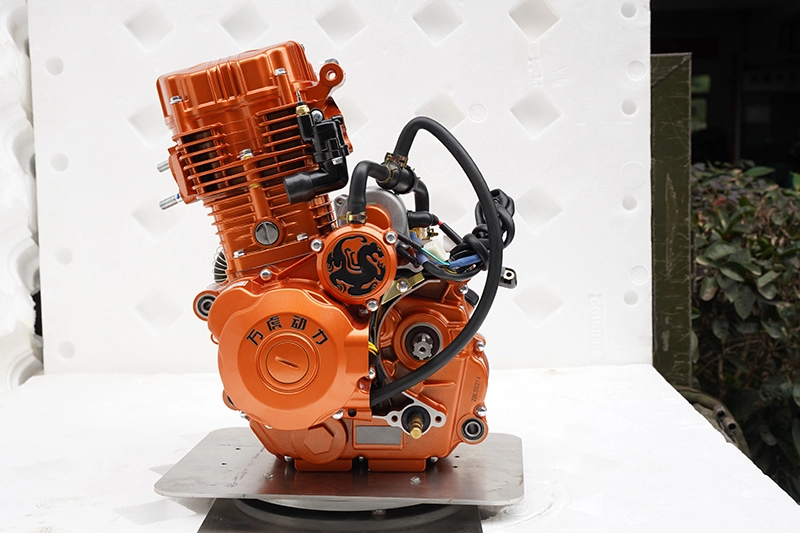
An in-house engine programme can give a three-wheeler manufacturer more direct control over design changes, validation and parts planning. It does not guarantee reliability or long-term parts supply, so buyers still need model-specific evidence and written commitments.
Ask a supplier whether it is a factory or a trading company and you will hear “factory” almost every time. The question is binary. The reality is a spectrum. A sourcing agent with a rented meeting room says factory. A workshop that bolts bought-in parts together says factory. A company that machines its own crankcases also says factory. All three answers are defensible, and none of them tells an importer what they actually need to know before wiring a deposit.
Asking a supplier whether it is a factory or a trading company produces almost no information, because every supplier answers factory. The useful question is which layers of the product the supplier controls: assembly, design authority, or the engine itself. Control determines what a buyer can actually request.
What follows is Wanhoo’s five-rung purchasing-audit framework, not an industry standard. Every rung is a legitimate business that can serve somebody well. A trading company is not a fraud. An assembler is not a lesser creature. The framework is a diagnostic tool, not a moral ranking, and its purpose is to show which decisions a supplier controls directly and which require another company.
The Capability Ladder
| Rung | What they control | What they can do for you | What they do not directly control |
|---|---|---|---|
| 1. Trading company / sourcing agent | Commercial coordination | Consolidate mixed orders, manage export documents, find alternative sources fast | Factory process, design authority and engineering decisions unless delegated in writing |
| 2. Assembler | Final assembly quality | Build to an existing configuration, adjust fitment and finishing, respond quickly on small volumes | The design and lifecycle of bought-in components |
| 3. Contract manufacturer (OEM for others) | Manufacturing process, tooling, inspection | Hold tolerances, repeat a build consistently, scale volume | Design changes unless the drawing owner authorises them |
| 4. Own-brand manufacturer | Design and specification | Evaluate changes to dimensions, load structure, layout and equipment | The engine’s development path when the engine is bought in |
| 5. Own-engine manufacturer | Vehicle design plus the engine programme | Coordinate engine and vehicle validation and manage parts planning more directly | Service quality, warranty execution or future parts availability without written commitments |
Rung 1: Trading company or sourcing agent
The first rung owns no machinery, and that is not a criticism. Cross-border paperwork is genuinely difficult and genuinely expensive, and a competent agent absorbs a large part of it. According to the World Trade Organization, “the full implementation of the TFA could reduce trade costs by an average of 14.3%”, which is a measure of how much value sits in documentation, customs handling and border procedure rather than in the vehicle itself. An agent who removes that friction has earned a margin.
A trading company can add real value by consolidating orders and managing documentation and shipping. It normally does not control the factory process or design authority directly, so corrective action, customisation and engineering answers depend on its access to the original manufacturer.
The practical limit shows up the first time something goes wrong. When a batch arrives with the wrong rear axle ratio, or you ask whether the frame can carry an extra 200 kg, the agent forwards your email. Every technical exchange runs through an intermediary with no authority over the answer.
Rung 2: Assembler
The second rung has a building, a line and staff. It buys frames, engines, wheels, wiring looms and cabs, then joins them into a vehicle. The quality of that joining is a real skill: torque discipline, weld inspection where welding is done, brake bleeding, wiring routing, and a final inspection that catches what the line missed.
An assembler buys frames, engines and components from other suppliers and joins them into a finished vehicle. Its quality control covers fitment, wiring, torque and final inspection, which matters. The design and lifecycle of bought-in parts remain with the original component supplier unless a contract says otherwise.
The exposure at this rung is upstream. If a component supplier revises a casting, changes a bearing size or stops production of a model, the assembler learns about it at roughly the same moment its customers do. There is no advance notice, because there is no seat at the table where the decision was taken.
Rung 3: Contract manufacturer building for others
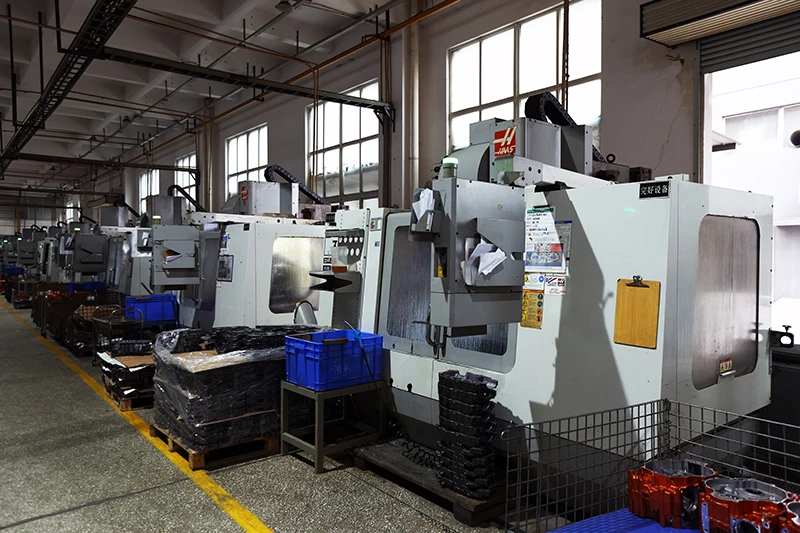
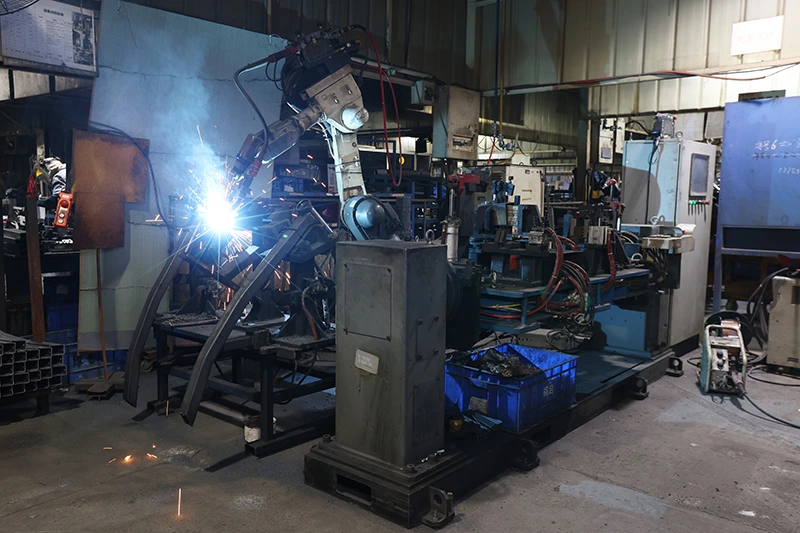
The third rung is a real factory doing real manufacturing, but to somebody else’s drawings. Press lines, welding jigs, paint plant and measurement equipment all exist and are all used properly. What sits elsewhere is design authority.
A contract manufacturer runs real production: welding, painting, assembly lines and inspection stations, often to a high standard. It builds to another company’s drawings, so process control is genuine while design authority sits elsewhere. Asking whose drawings a vehicle is built to separates this rung from an own-brand manufacturer.
This distinction is easy to miss during a factory visit, because a contract manufacturer’s floor can look identical to an own-brand manufacturer’s floor. The difference is not visible in the equipment. It is visible in the answer to one question: whose drawing number is on the frame print.
Rung 4: Own-brand manufacturer
At the fourth rung, the drawings belong to the company you are talking to. That single fact changes the conversation from selection to negotiation.
An own-brand manufacturer owns the drawings and the specification, which means it can change them. This is the first rung where customisation is a decision rather than a menu choice: cargo bed dimensions, frame reinforcement, wheel and tyre selection, and electrical layout become negotiable rather than fixed by someone else.
A useful test is to request a change that is modest but outside the catalogue, such as a reinforced tailgate hinge or a lighting layout for an unusual regulation. A rung 4 supplier will answer with a cost, a lead time and an engineering opinion about whether it is a good idea. A lower rung will answer that the model is available in three versions.
Rung 5: Own-engine manufacturer
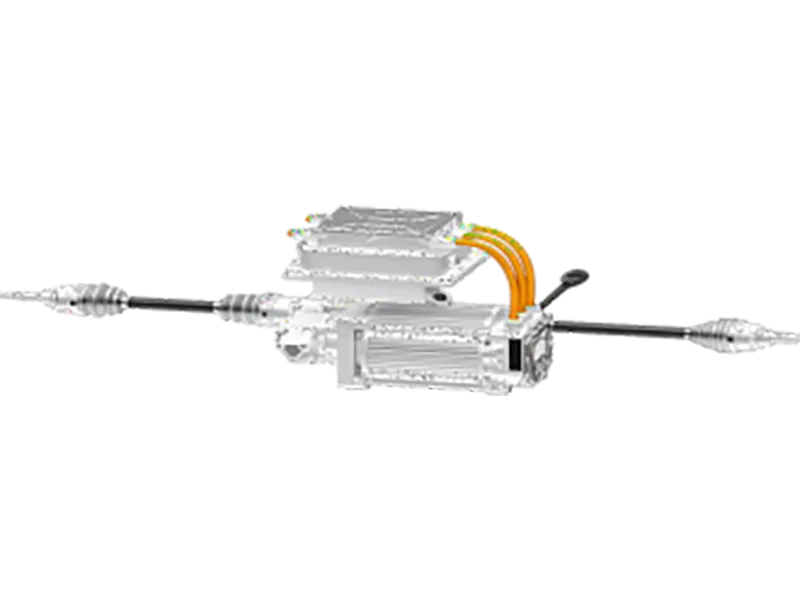
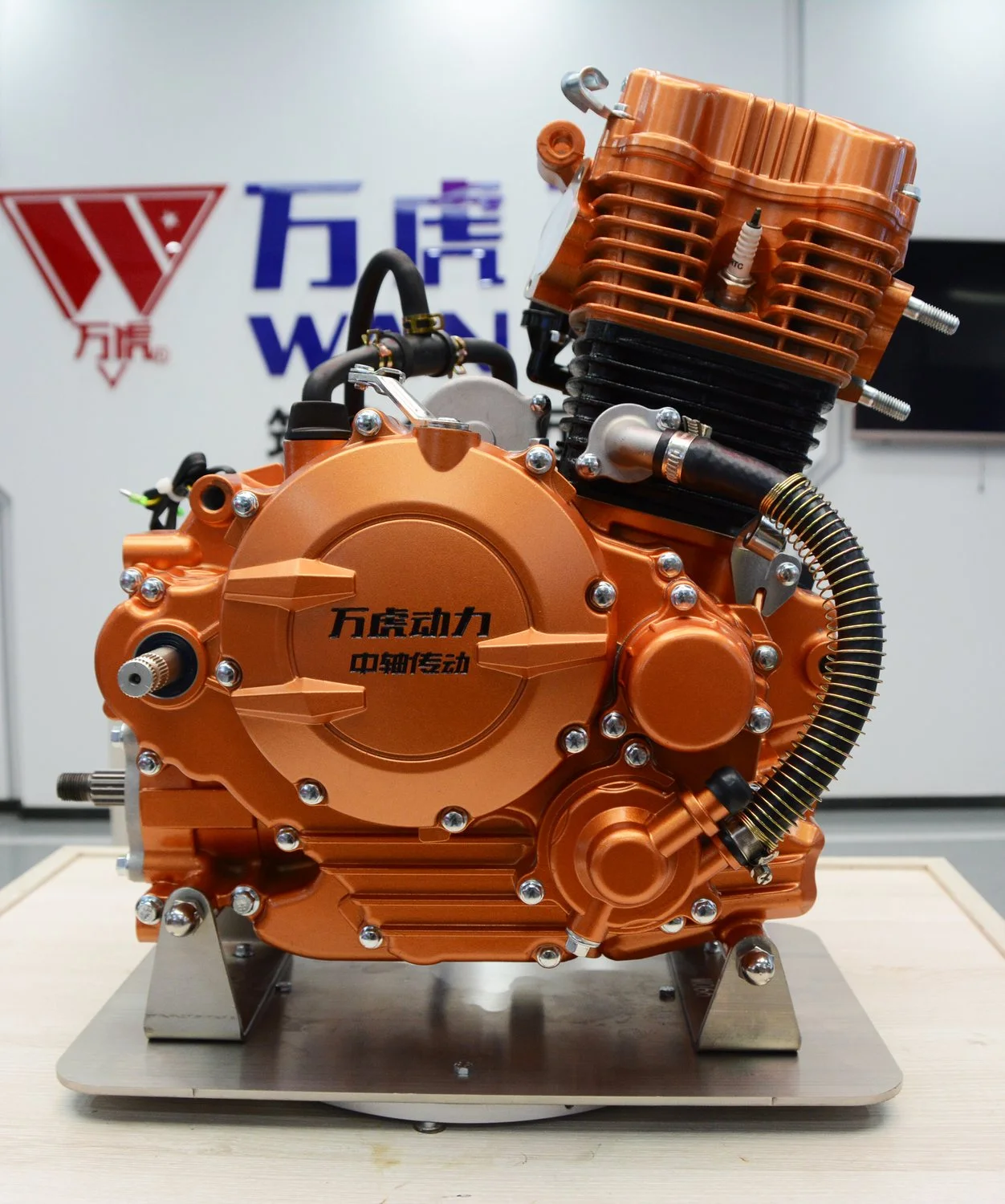
The fifth rung designs and produces the engine. When a supplier claims an in-house engine programme, it should be checked rather than assumed because the depth of design, machining, assembly and validation can vary.
Why Engine Capability Deserves Separate Due Diligence
Every rung boundary matters, but this one deserves an explanation rather than an assertion.
An in-house engine programme can shorten the path between a field problem and the team responsible for design, validation and parts planning. That control is useful, but it is not proof of reliability, service life or future parts availability; those claims require model-specific test evidence and written policies.
Four things stack up. Cost: the engine is a major line item in the bill of materials. Development difficulty: an engine programme requires validation, emissions work and materials knowledge beyond final assembly. Service exposure: powertrain repairs can create expensive downtime. Parts lifecycle: engine components may be needed years after sale, which makes documented supply planning important.
That last point is where geography enters. According to the World Bank, there are “more than one billion people living more than 2km away from an all-weather road”, and those roads are exactly where cargo and passenger three-wheelers earn their keep. A vehicle working on that kind of surface is not near a dealer network. Its owner needs a piston kit, a clutch plate or a valve to be available years after purchase, from a supply chain that has no reason to disappear.
The buyer of those parts is usually not a fleet accountant. According to the International Labour Organization, “Over 60 per cent of the world’s workforce and 80 per cent of enterprises operate in the informal economy.” Repairability and parts access can therefore matter as much as purchase price. A distributor should promise only the support period that the supplier has committed to in writing, regardless of whether the engine is made in house or bought in.
Why the Ladder Takes Time to Climb
Some capabilities on this framework require sustained investment rather than a quick rebranding exercise.
Design and engine-development claims should leave dated evidence: drawings, tooling, test equipment, approvals, patents, production records and revision histories. A supplier’s age alone proves nothing, so buyers should ask for documents and dates rather than adjectives.
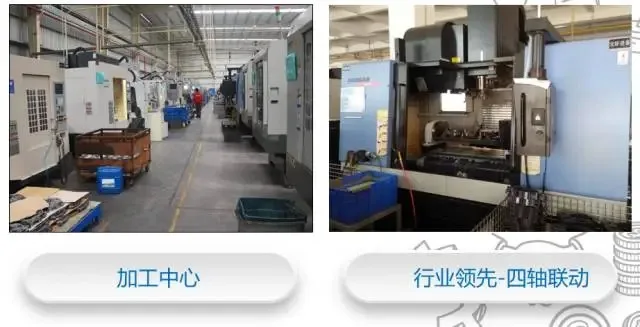
Tooling is capital, and capital follows volume. Test equipment is capital plus the discipline to keep using it when the schedule is tight. Engineering judgement also takes time to build: repeated design reviews, test failures and field feedback help a team diagnose whether a cracked mounting bracket came from load, vibration or weld sequence.
This is the honest reason a supplier’s history is worth asking about. Not because old companies are virtuous, but because certain capabilities have a minimum elapsed time and leave dated evidence behind. A brand registration has a year. An emissions approval has a year. A first production engine has a year. Adjectives such as advanced, professional and world-class have no year, which is precisely why they are so easy to write.
What to Ask to Place a Supplier on the Ladder
These questions can be pasted into an email. Each one is answerable in a sentence by a supplier who knows, and hard to answer convincingly by one who does not.
| What to ask | What the answer tells you |
|---|---|
| Whose drawings is this vehicle built to? | Separates rungs 3 and 4. A contract manufacturer will name another company, or change the subject |
| Who made the engine, and can you send a photo of the manufacturer’s plate and casting marks on an actual unit? | Separates rungs 4 and 5. A bought-in engine carries somebody else’s name, which is fine, but it should be visible |
| Which components do you machine in-house, and which do you buy? | Reveals the real depth of manufacturing behind the word factory |
| What happens to parts supply if this engine goes out of production, and who makes that decision? | Shows whether the supplier controls its own lifecycle or inherits it |
| When did you start designing your own engines, and what changed in the product as a result? | Turns a claim into a dated, checkable sequence |
| How long have you supplied parts for models you sold ten years ago? | Tests the parts promise against history rather than intention |
The answers should be checked against engine plates, drawings, test records and the written parts policy. A delayed answer is not proof of weak capability, but an unverifiable answer should not be used in a sourcing decision. This is not a full vetting checklist; certifications, export record, parts guarantees and SKD capability are a separate exercise.
One Documented Climb
A worked example helps, provided it is treated as an illustration of the method rather than a recommendation.
According to a report published by Chongqing Daily on 7 April 2024, Wanhoo began building three-wheelers as a contract manufacturer for other companies in 1996, which places it at rung 3 at that point. The same report states that the company registered its own brand in 2007, a move from rung 3 to rung 4. It began independent development of mid-shaft engines in 2010, and in 2018 became the first company in China to develop and fully deploy mid-shaft engines across its three-wheeler range. That eight-year gap between starting engine development and completing deployment is the shape of a rung 5 transition, and it is worth noting that the report describes a first within China rather than a first anywhere.
The same report adds that the company met China’s National IV emission standard in 2019, ahead of the deadline, and describes an approximately 13% market share in southwest China. It also reports that in the first half of 2023, according to Chongqing Daily, the company’s sales rose about 5% while the industry declined about 16%. The recognitions it lists include a Chongqing municipal enterprise technology centre, a municipal industrial design centre, a technology innovation demonstration enterprise designation, a hidden champion specialised-and-sophisticated designation, and a 2020 China Three-wheeler Industry Outstanding Exporter award. General manager Xie Zhiliang is quoted in that report saying that without taking that step at the time, everything now would be empty talk.
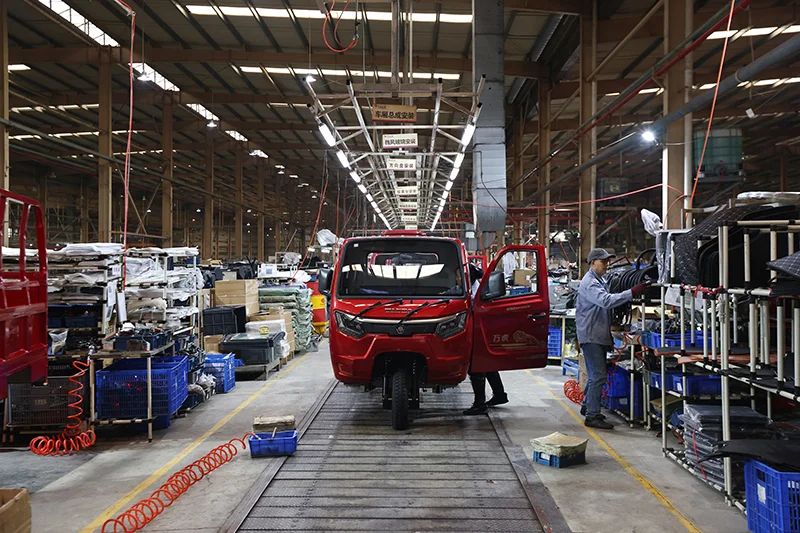
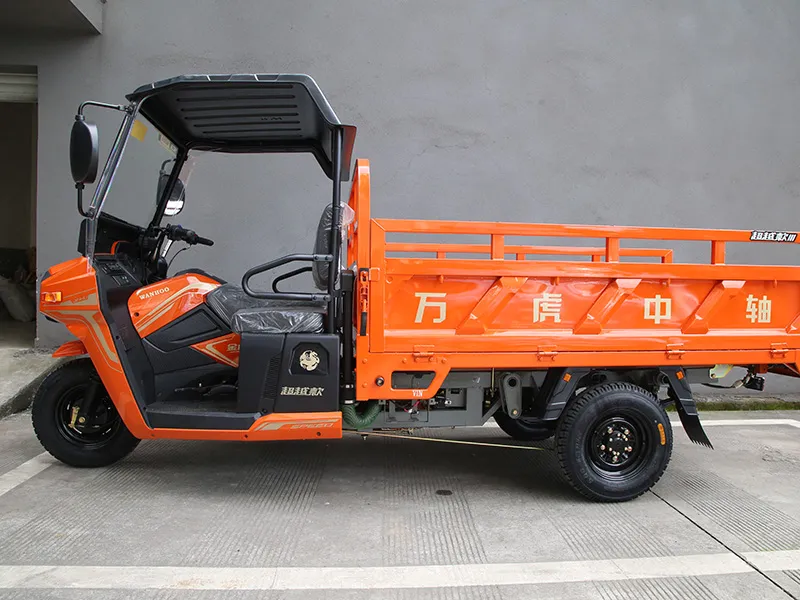
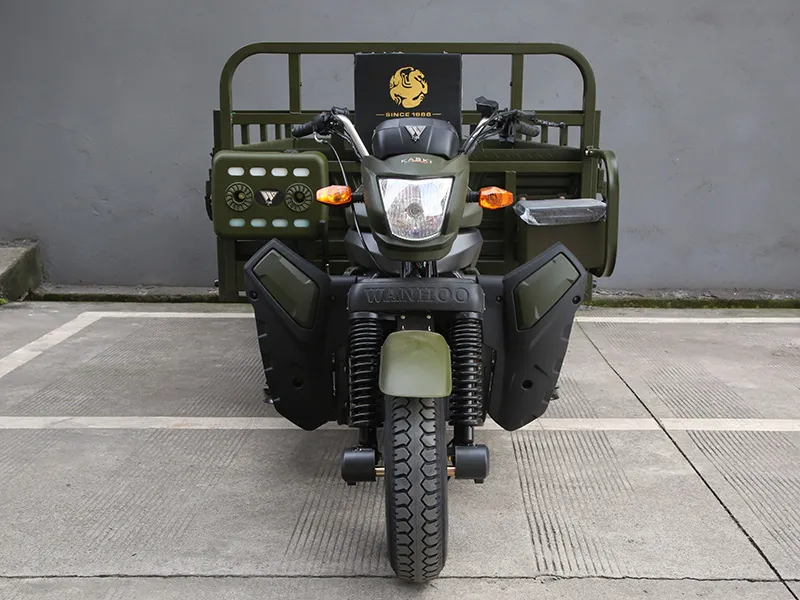
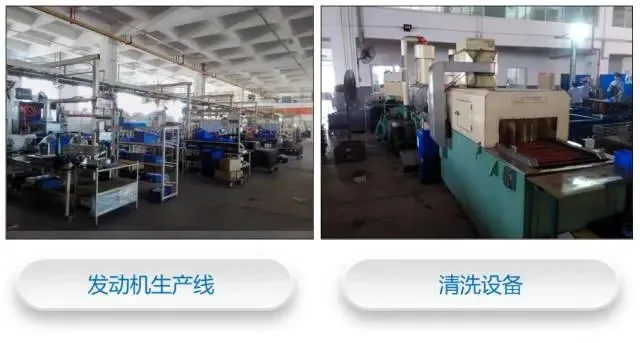
The surrounding company facts are straightforward. Wanhoo was founded in Chongqing in 1986, employs more than 1,000 people, operates a 60,000 square metre plant, exports to more than 50 countries, and has annual capacity of 100,000 vehicles and 300,000 engines. It builds its own engines and its own frames.
The reason to set this out is not the company. It is the shape: a documented sequence of dates, each one checkable, with the engine programme as the step that moved the business from rung 4 to rung 5. Any supplier should be asked for the same thing. Request the dates, then verify them against something that is not a brochure.
The Ladder Tells You the Risk, Not the Answer
A higher rung does not automatically make a better supplier. A small assembler with fast local service and stocked parts can outperform a distant integrated manufacturer for some buyers. The ladder describes the kind of risk a buyer is accepting, not which company should receive the order.
An importer buying 40 units a year into a compact market with a strong local workshop may be better served by a nimble assembler who answers the phone at nine in the evening. An importer building a distribution network across three countries needs a written parts policy, model-revision controls and clear engineering escalation, whether the engine is made in house or supplied by another manufacturer.
Both buyers are making a reasonable decision. The difference is that one of them knows which risk they took, and the other found out later.
Frequently Asked Questions
**What is the difference between an assembler and a manufacturer?**
An assembler buys major components and joins them into a finished vehicle, controlling final assembly quality. A manufacturer may also control process tooling, drawings or component design. Both can build good vehicles; the practical difference is which changes each can authorise directly and which require approval from another company.
Why does it matter whether a three-wheeler supplier makes its own engine?
An in-house engine programme can give the vehicle maker more direct control over design changes, validation and parts planning. It does not guarantee reliability or future supply. Ask for model-specific test evidence, revision controls and a written parts-availability commitment.
How can I tell if a supplier really builds its own engines?
Ask who manufactures the engine, then ask for a photograph of the engine plate and casting marks on an actual unit. Ask when engine development began and what changed as a result. Ask which engine parts are machined in house. Vague or shifting answers are themselves an answer.
Is a trading company always a bad choice?
No. A trading company can consolidate mixed orders, handle documentation and simplify shipping, which has real value for smaller or first-time buyers. It normally does not control factory processes or design authority directly, so corrective actions and engineering changes depend on its access to the original manufacturer.
What should I ask about parts supply before ordering?
Ask what happens if the fitted engine goes out of production, who approves substitutions, and how long parts are contractually supported. Request examples for models sold five or ten years ago. An integrated manufacturer may answer directly; an assembler or trader should document the original supplier’s commitment.
Does a longer company history guarantee better quality?
No. A longer history can leave more dated evidence of tooling, testing and field experience, but age does not prove quality. Ask for records and dates rather than adjectives: when the brand was registered, when engine development began and which model-specific standards or approvals were met.