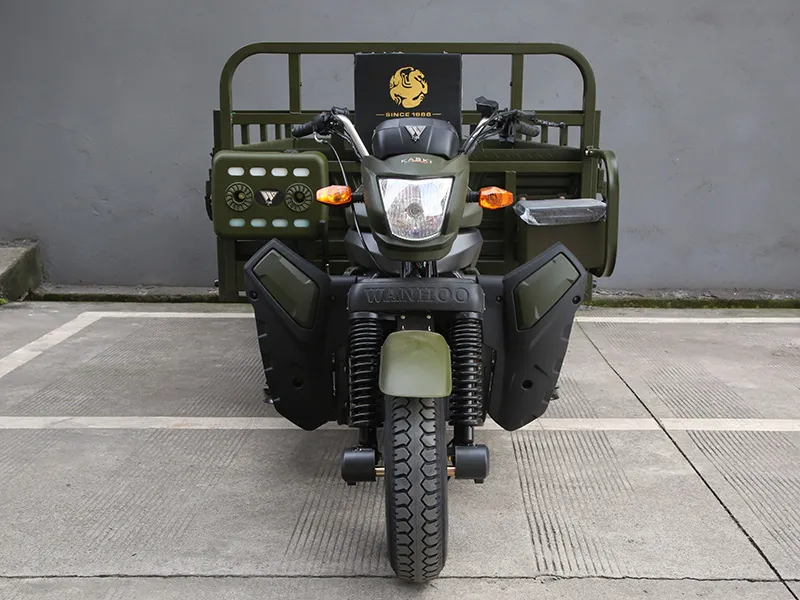
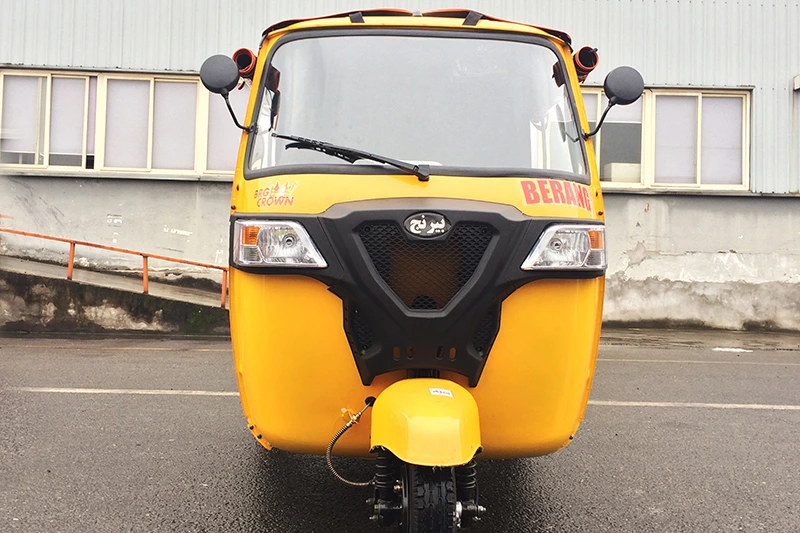
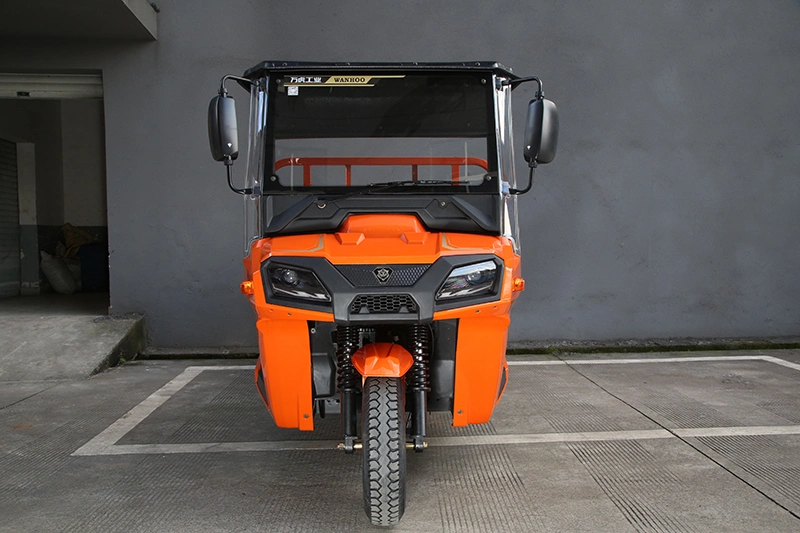
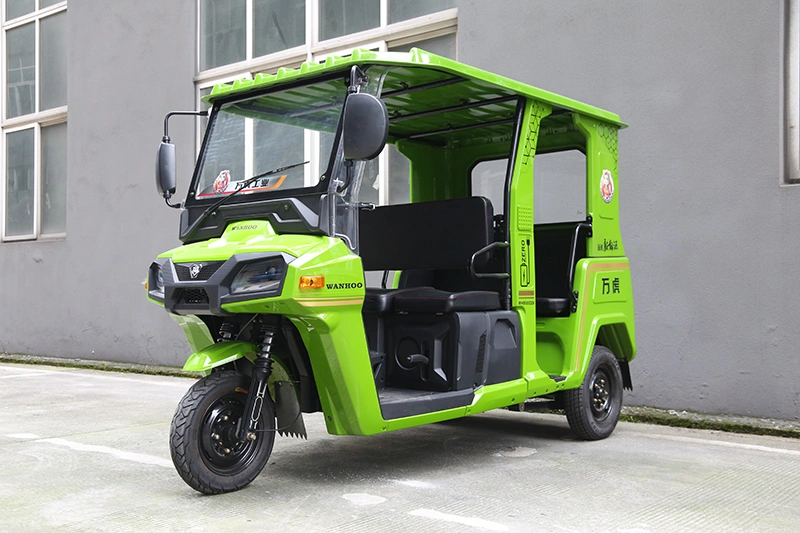
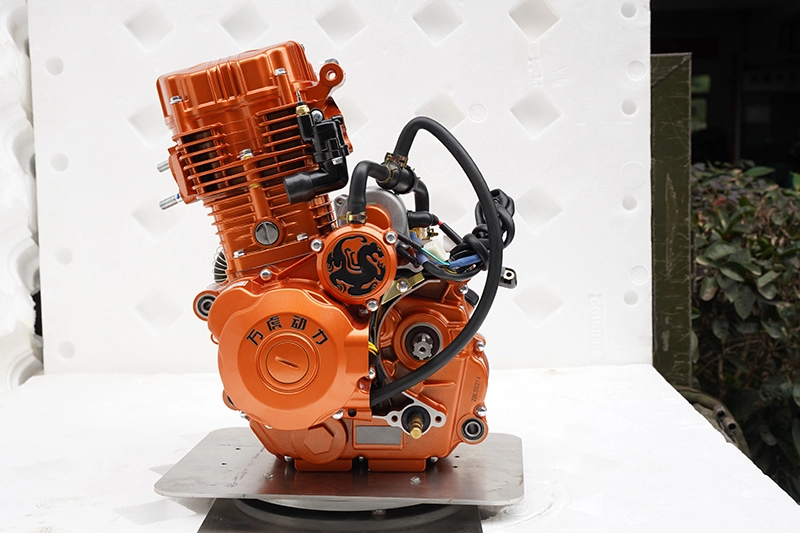
Two tricycles sit side by side on a dealer lot. One is 150cc, the other 250cc. The 150cc costs less and sips fuel. So why does a fleet buyer hauling sand up a 12% grade pay more for the bigger engine, and why does the wrong choice strand a driver at the bottom of that hill with a stalled machine and a full load?
Three wheeler engine displacement is the total cylinder volume swept by the pistons, measured in cubic centimetres (cc). It ranges from about 150cc for light loads to 330cc for the heaviest work. Displacement sets the ceiling on torque and payload, but cooling and gearing decide how much of that ceiling a loaded tricycle actually reaches on a real road.
Picking the right cc is the single decision that most affects whether a cargo tricycle earns money or costs money over its working life. Undersize it and drivers overheat the engine, burn extra fuel lugging up grades, and replace parts early. Oversize it and you pay for capacity that never leaves the depot. This guide maps displacement to real payload and terrain, and shows where torque and cooling matter as much as the raw number.
What Does Engine Displacement Actually Mean?
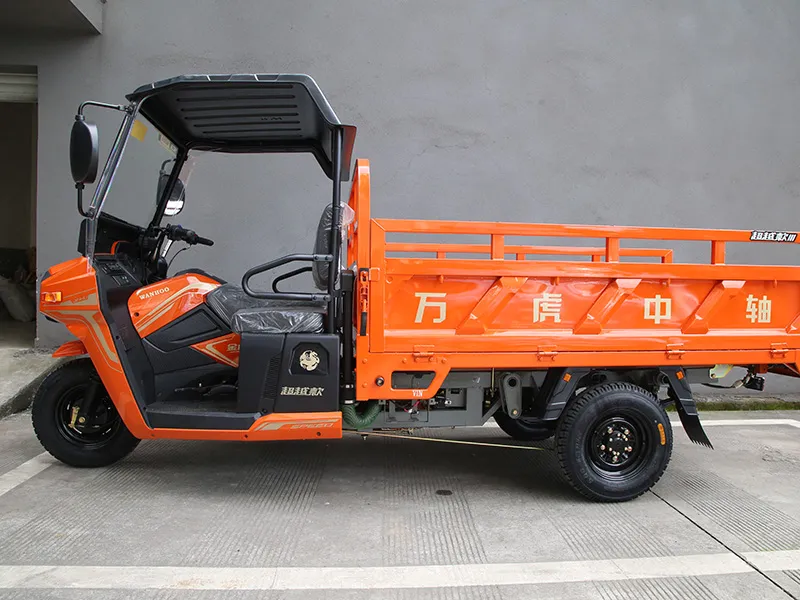
Engine displacement is a definition worth getting exactly right, because the whole cc conversation rests on it. It is the combined volume that every piston sweeps as it travels from the top of its stroke to the bottom, across all cylinders in the engine. A single-cylinder 250cc three-wheeler engine displaces 250 cubic centimetres of air-fuel mixture on each intake stroke.
According to Wikipedia, engine displacement is "the measure of the cylinder volume swept by all of the pistons of a piston engine, excluding the combustion chambers," and it serves "as an indicator of the power an engine might be capable of producing and the amount of fuel it should be expected to consume." Buyers read cc as capacity.
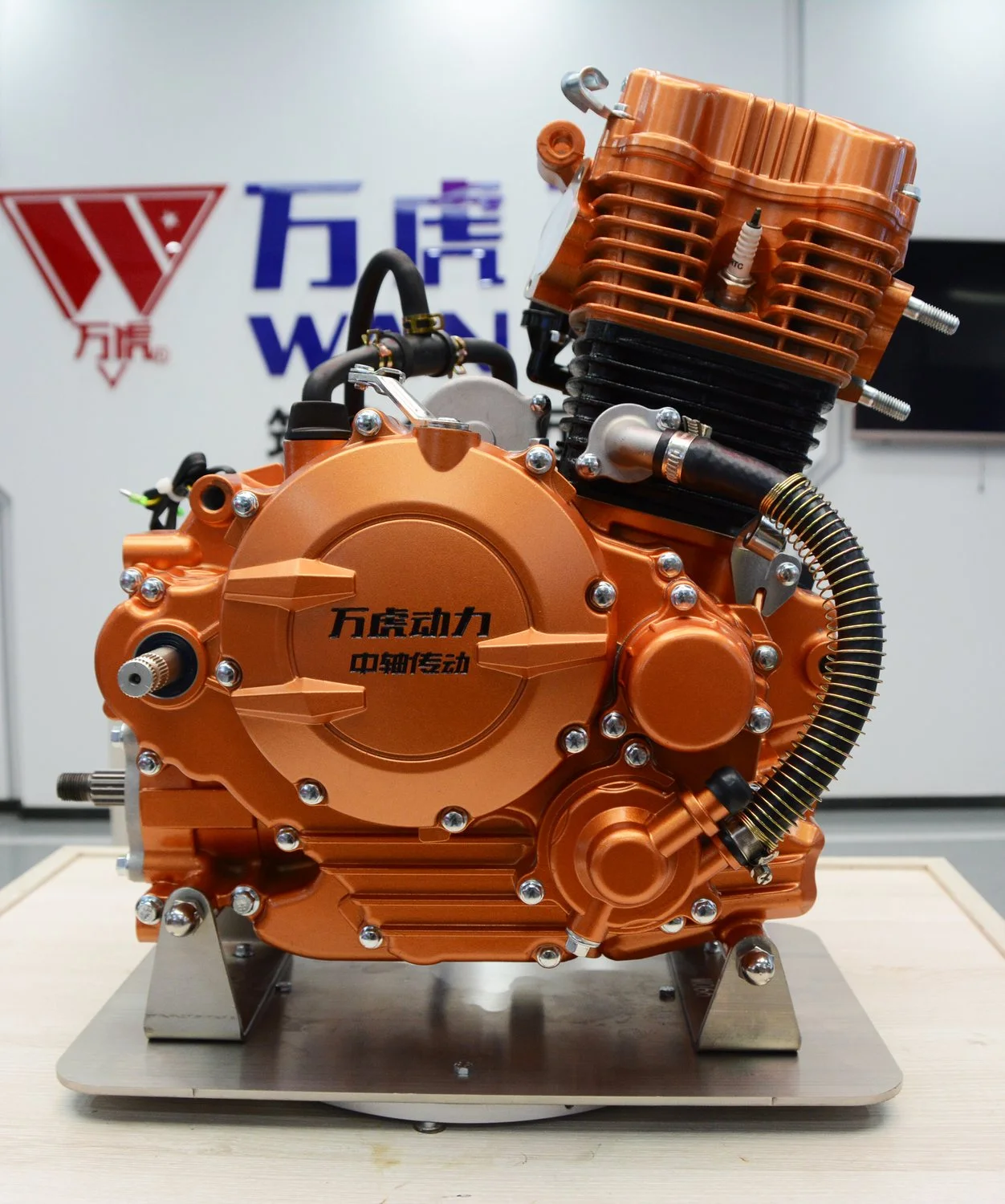
The number comes from three physical dimensions. Displacement equals the stroke length times the circular area of the cylinder (calculated from the bore diameter) times the number of cylinders. Most three-wheeler engines run a single cylinder, so bore and stroke alone define the figure. Wanhoo's self-developed WH170MM-2B, for example, uses a 70mm bore and 65mm stroke to reach 250cc.
Bigger displacement pulls in more air and fuel per cycle, which is why cc correlates with power. The Omnicalculator engine-displacement reference confirms that displacement "indicates the power generated by the engine and amount of fuel consumed," with larger-displacement engines typically producing more power but requiring greater fuel consumption. So cc is not a marketing label. It is a volume that constrains both output and running cost.
How Does Engine Size Relate to Power, Torque, and Payload?
For a loaded cargo tricycle, torque matters more than peak horsepower. Torque is the twisting force that gets a heavy load moving from a standstill and drags it up a slope. Horsepower describes how fast the engine can keep doing that work at speed. A tricycle spends its day starting, stopping, and climbing under load, so low-end torque is the trait that keeps it from stalling.
Displacement raises the torque ceiling, but engine geometry decides where that torque arrives in the rev range. According to Motofomo, a short-stroke engine "means that at a given piston speed, all other things equal, you can afford to be doing higher RPM," which favours peak horsepower over accessible low-RPM torque. Long-stroke designs do the opposite, delivering pulling power lower down where a laden tricycle needs it.
This is why two engines of the same cc can behave very differently. A 250cc engine tuned for low-end torque will haul a full box up a grade at low revs without the driver flogging it. The same displacement tuned to rev high would feel gutless off the line and force constant downshifting. Wanhoo tunes its cargo engines for torque at the wheel, not for headline power figures.
Cooling is the third variable, and it is decisive under sustained load. An engine that makes strong torque still overheats if it cannot shed the heat, and a hot engine loses power, burns more fuel, and wears faster. That is why Wanhoo's heavy models run water cooling rather than relying on airflow the vehicle rarely gets while crawling uphill fully loaded.
Which cc Three Wheeler Do You Need for Your Load?
Matching displacement to payload is the practical core of the three wheeler engine size question, and it comes down to the weight you carry and the terrain you carry it over. The table below maps common displacements to real payload bands, typical use, cooling, and the Wanhoo model built for each. Use it as a starting shortlist, then confirm against the exact grades and load cycles on your route.
| Displacement | Typical payload | Best-fit use | Cooling | Wanhoo model |
|---|---|---|---|---|
| 150cc | up to 600 KG | Light urban delivery, last-mile, budget-first | Air-cooled | Q1 |
| 150cc | up to 1,000 KG | Economy mid-size cargo, large box | Water-cooled | K3 |
| 200cc | up to 1,800 KG | All-round cargo, town-and-country | Water-cooled | HANHOO |
| 250cc | up to 1,800 KG | Heavy cargo, sand, block, mining approach roads | Water-cooled | KINGTIGER, NIMBA |
| 250cc | up to 1,000 KG | All-terrain agricultural, reinforced frame | Water-cooled | WINTIGER |
| 300-330cc | Heavy / specialist | Highest-demand hauling and export specs | Water-cooled | Mid-Shaft and Lateral-Shaft series |
Notice that two 150cc entries carry very different payloads: the air-cooled Q1 rates up to 600 KG, while the water-cooled K3 rates up to 1,000 KG at the same displacement. Cooling and drivetrain, not cc alone, explain the gap. This is the clearest proof that raw displacement never tells the whole story for a cargo tricycle.
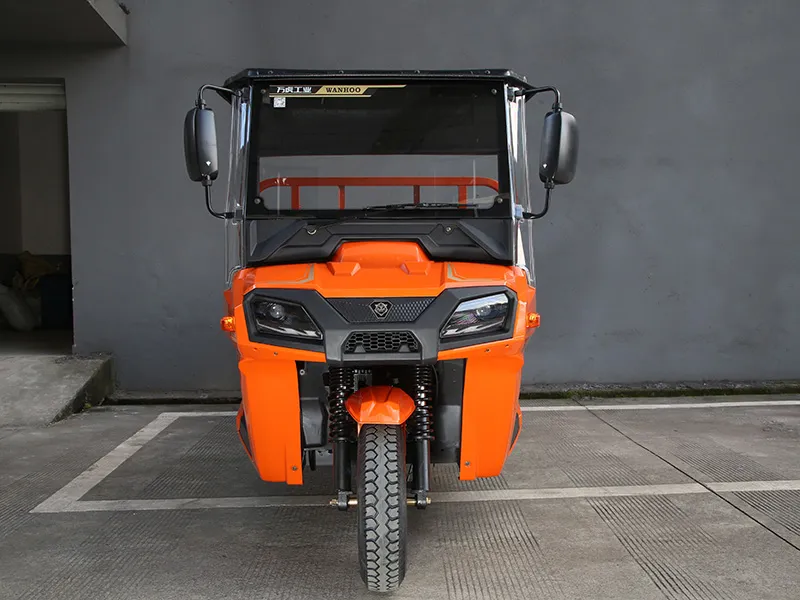
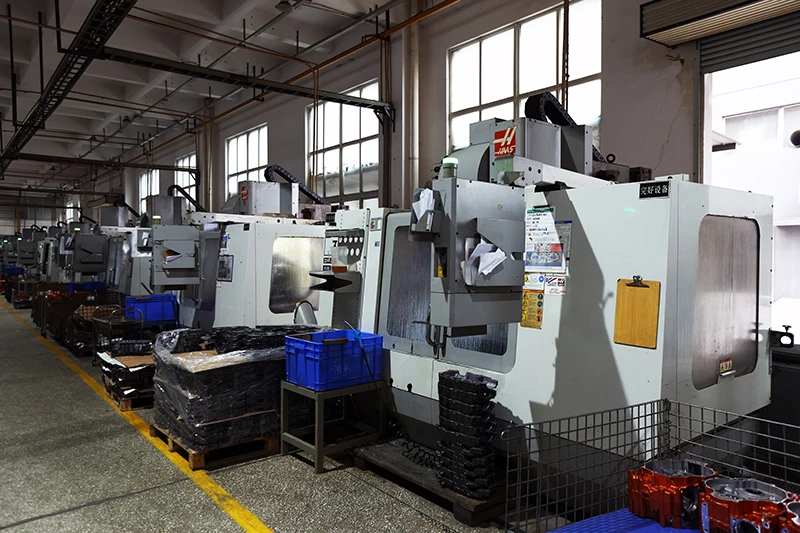
The 250cc band shows the same principle. KINGTIGER and NIMBA share the same 250cc water-cooled WH170MM-2B engine and both rate up to 1,800 KG, yet NIMBA packs that capability into a shorter 3,450mm body for tighter streets and denser container loading. Wanhoo pairs one proven engine with different chassis to fit different routes without changing the powertrain buyers trust.
Is 150cc vs 250cc the Right Comparison, or Should You Look at 200cc?
The 150cc vs 250cc three wheeler debate often skips the middle, and that middle is where many buyers actually belong. A 150cc water-cooled machine like the K3 handles up to 1,000 KG economically with its large 2,000mm box, and the air-cooled Q1 is the lightest, most fuel-frugal entry at up to 600 KG and roughly 3.4L consumption. For light, flat, cost-sensitive routes, 150cc is the right answer, not a compromise.
The 200cc vs 250cc tricycle question is subtler because both can reach the 1,800 KG payload class. Wanhoo's 200cc HANHOO uses the water-cooled WH163ML-B (197cc), making 14.2 N·m of torque, and serves as the all-round workhorse for mixed town-and-country duty. Its lower purchase price and running cost suit operators who load heavy sometimes but not constantly, and whose grades are moderate.
Step up to 250cc when the load is heavy most days or the terrain is punishing. The WH170MM-2B produces 18 N·m of torque, a clear margin over the 200cc unit, and that reserve is what keeps the engine off its limit on long climbs. A torque reserve matters because gradeability, the ability to climb a slope, depends on the engine delivering enough twisting force at low RPM to overcome gravity plus the weight of the load. Running an engine at its ceiling all day is exactly what shortens its life. KINGTIGER, NIMBA, and WINTIGER live in this band.
For the heaviest or most specialised work, Wanhoo's broader engine lineup runs beyond 250cc. The Mid-Shaft series reaches 300cc and 330cc water-cooled, and the Lateral-Shaft Tiger Roar series spans 200cc to 330cc, giving fleet and export buyers a displacement for nearly any load profile without leaving the same in-house engineering.
Why Do Torque and Cooling Matter as Much as the cc Number?
A number on a spec sheet does not climb a hill. The same 250cc engine can either lug a full load up a grade at 1,500 metres or overheat and fail on the second climb of the morning, and the difference is torque delivery and heat management. This is the trap buyers fall into when they shop on cc alone and ignore how the engine is built and cooled.
Cooling sets the ceiling on sustained work. Air-cooled engines depend on airflow across the fins, which a heavily loaded tricycle crawling uphill in hot weather simply does not generate. Water-cooled engines circulate coolant through a radiator, holding temperature steady under continuous heavy load. Wanhoo specifies water cooling on every engine in its heavy and mid-range cargo lineup, from the 200cc HANHOO to the 250cc KINGTIGER, precisely because those machines work hard in hot climates.
Serviceability is the fourth pillar behind cc, torque, and cooling. Wanhoo builds standard models with carburetors rather than fuel injection because roadside mechanics in emerging markets can repair a carburetor without diagnostic tools or EFI training, keeping the vehicle earning. Fuel injection is available on request for buyers who want it.
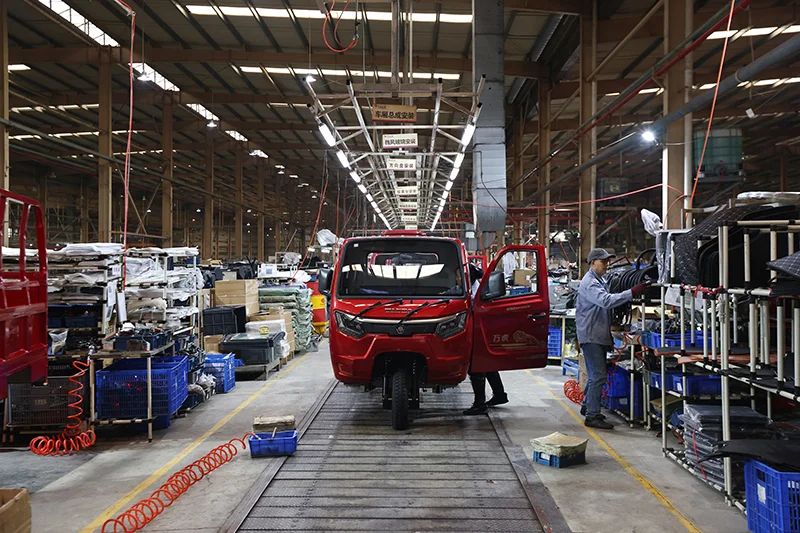
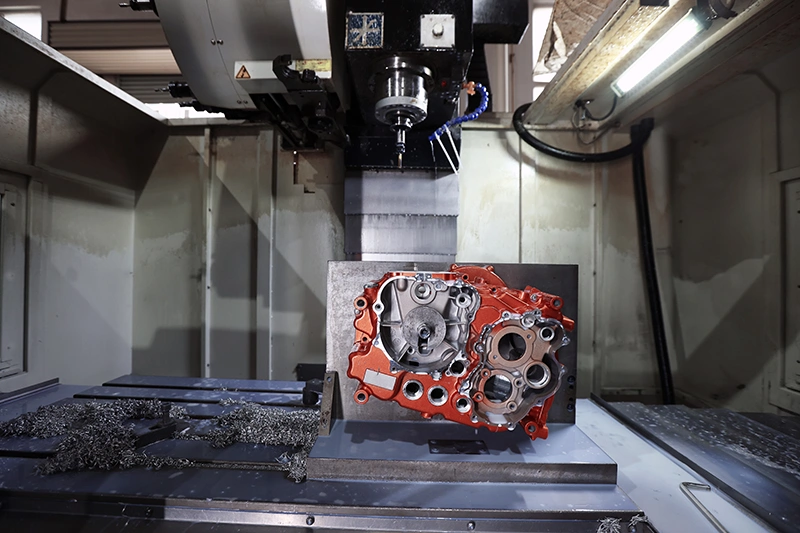
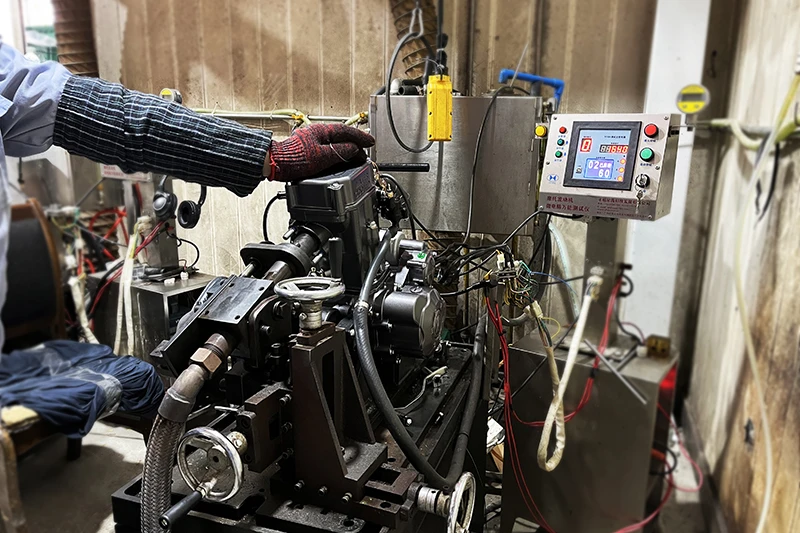
The engineering behind all of this sits in-house. Wanhoo is one of the few three-wheeler manufacturers in the world that designs, develops, and produces its own engines from scratch on 21 imported CNC machining centres, backed by more than 30 patents. Most competitors adapt motorcycle engines built for two-wheel revs, not for the low-end torque a loaded tricycle demands.
Frequently Asked Questions
**What is engine displacement on a three-wheeler?**
Engine displacement on a three-wheeler is the total volume of air and fuel the cylinder sweeps on each intake stroke, measured in cubic centimetres (cc). Most three-wheeler engines are single-cylinder, so bore and stroke set the figure. A larger displacement generally raises the engine’s torque ceiling and payload potential, along with fuel use.
Is a 150cc or 250cc three-wheeler better for cargo?
It depends on the load and terrain. A 150cc tricycle like the water-cooled Wanhoo K3 handles up to 1,000 KG economically on light, mostly flat routes. A 250cc machine like KINGTIGER or NIMBA carries up to 1,800 KG and holds a torque reserve for steep grades and daily heavy loads, so it suits demanding duty where a 150cc engine would run at its limit.
How does 200cc compare to 250cc on a tricycle?
Both Wanhoo's 200cc HANHOO and 250cc KINGTIGER reach the 1,800 KG payload class, but the 250cc engine makes 18 N·m of torque versus 14.2 N·m for the 200cc unit. That extra torque is a reserve for hard, frequent hauling and steep terrain. The 200cc HANHOO costs less to buy and run and suits mixed-duty routes with moderate grades.
Which cc three-wheeler is most fuel efficient?
Among Wanhoo's cargo lineup, the 150cc air-cooled Q1 is the most fuel efficient, consuming roughly 3.4L and weighing the least at about 360 KG, rated up to 600 KG payload. Smaller displacement burns less fuel per cycle, so for genuinely light loads a right-sized 150cc engine lowers running cost without leaving the driver short of power.
Does bigger displacement always mean more power?
No. Displacement raises the ceiling, but engine tuning, bore-to-stroke ratio, and cooling decide the real-world result. Two 150cc engines can carry very different payloads: Wanhoo's air-cooled Q1 rates up to 600 KG while the water-cooled K3 rates up to 1,000 KG. Torque delivery and heat management often matter more than the raw cc figure for a loaded tricycle.
How high does Wanhoo's engine range go?
Wanhoo's self-developed engine lineup runs from 150cc up to 330cc across its Mid-Shaft and Lateral-Shaft series. The Mid-Shaft series reaches 300cc and 330cc water-cooled, and the Lateral-Shaft Tiger Roar series spans 200cc to 330cc. All are designed, developed, and machined in-house on 21 CNC centres for three-wheeler torque needs.
For a deeper comparison of cooling systems, read our guides on GY6 vs water-cooled three-wheeler engines and air-cooled vs water-cooled cargo tricycle engines. To match capacity to real loads, see the cargo tricycle payload guide, and explore the full lineup on the engine technology hub.