Seventy dollars. That is the entire price difference between Wanhoo's two entry cargo models, and it is also the decision that separates a light urban runabout from a mid-size hauler. For a first-time buyer counting every unit of landed cost, that gap deserves a straight answer rather than a sales pitch.
For a compact cargo tricycle, pick the Wanhoo Q1 ($830, air-cooled, up to 600 KG) for light urban work, or the K3 ($900, water-cooled, up to 1,000 KG) for heavier loads.
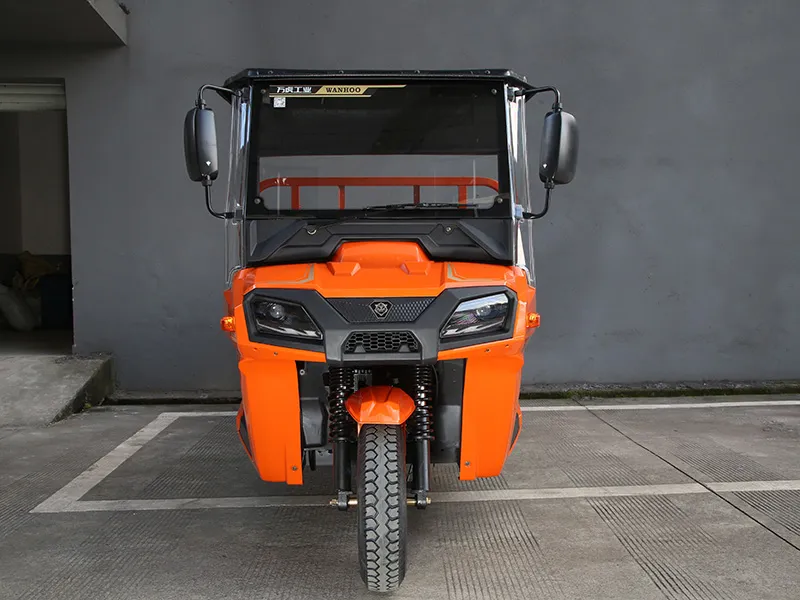
Both models sit at the bottom of the Wanhoo cargo lineup, and both run a 150cc engine rated at 8.0 kW (10.7 hp). The similarity ends there. The Q1 is built to be the lightest, cheapest, most fuel-sipping way to move goods across a city. The K3 spends that extra $70 on a water-cooled engine, a bigger cargo box, and nearly double the rated payload. This guide breaks down exactly when the step up earns its keep.
What Makes the Q1 and K3 Entry-Level Cargo Tricycles?
An entry-level cargo tricycle is a three-wheeled goods carrier priced at the lowest point of a manufacturer's range, built for first-time commercial buyers who need reliable transport without a large capital outlay. Wanhoo places two models in this tier, and the distinction between them is deliberate.
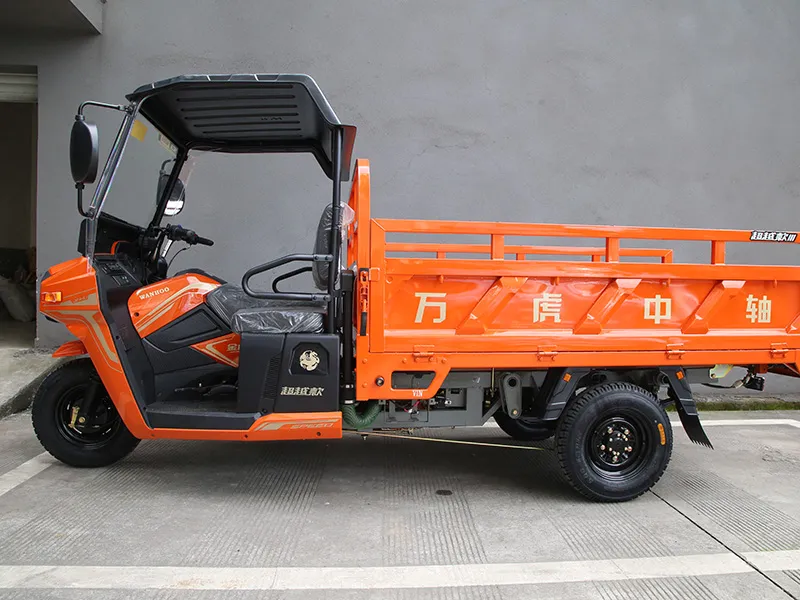
The Wanhoo Q1 is the lightest and cheapest cargo tricycle in the range, with a net weight of just 360 kg, a 150cc air-cooled engine, up to 600 KG payload, and an FOB Chongqing price from $830. It is engineered for agile, low-cost urban delivery.
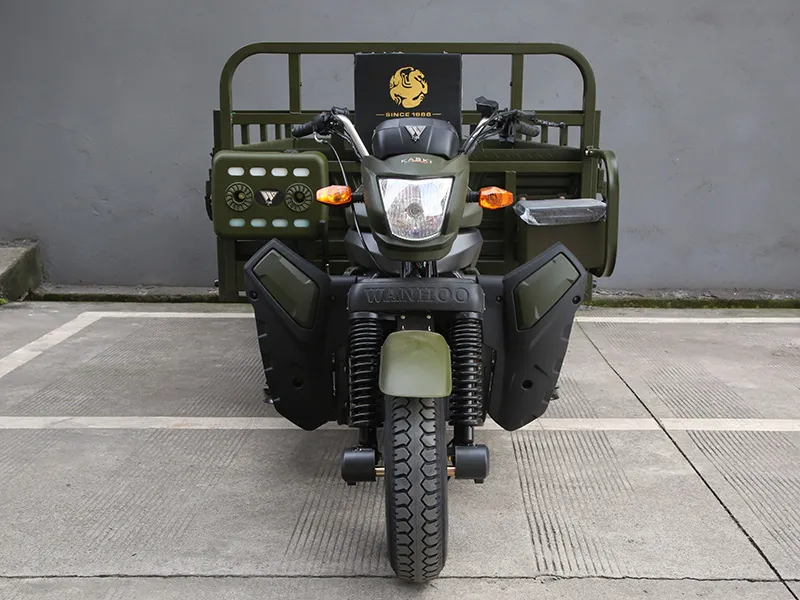
The K3 answers a different question. Buyers who need real hauling capacity, but still on a tight budget, often find that cheap tricycles cut corners on cooling and cargo size. Wanhoo built the K3 to close that gap. It pairs a water-cooled 150cc engine with a 2,000 mm cargo box and a rated payload up to 1,000 KG, all from $900. This is the entity triple worth remembering: Wanhoo plus K3 plus water-cooled durability at an entry price.
The two vehicles share the same engine displacement and the same 40×80 mm main frame, so the choice is not about raw power. It is about how much weight you carry, how long you carry it, and how much heat the engine has to shed while doing it.
How Do the Q1 and K3 Compare Side by Side?
The clearest way to weigh a compact cargo tricycle purchase is a direct specification comparison. The table below sets the verified figures for both Wanhoo models next to each other so the trade-offs are visible at a glance.
| Specification | Q1 (Entry / Lightweight) | K3 (Economy Mid-Size) |
|---|---|---|
| Engine | 150cc air-cooled, 4-stroke | 150cc water-cooled, 4-stroke |
| Max power | 8.0 kW (10.7 hp) | 8.0 kW (10.7 hp) |
| Max payload | ≤600 KG | ≤1,000 KG |
| Cargo box (L×W×H) | 1,700×1,250×300 mm | 2,000×1,350×400 mm |
| Net weight | 360 kg (lightest in range) | 399 kg |
| Fuel economy | ≤3.4 L/100km (most economical) | ≤3.9 L/100km |
| Fuel tank | 13 L | 14 L |
| Max speed | ≥55 km/h | ≥60 km/h |
| Rear axle | Standard | Floating stamping (with booster) |
| Units per 40HC | 45 | 40 |
| FOB price (Chongqing) | from $830 | from $900 |
Against the Q1, the Wanhoo K3 adds a water-cooled engine, raises rated payload from 600 KG to 1,000 KG, and enlarges the cargo box from 1,700 mm to 2,000 mm in length, for a price increase of just $70 FOB. The Q1 stays lighter and more fuel-efficient.
Two numbers move in the Q1's favor. It weighs 39 kg less and burns roughly half a liter less fuel per 100 km, which lowers running cost on light routes. Every other capability number favors the K3. That split is the whole decision.
Why Does the K3 Use a Water-Cooled Engine?
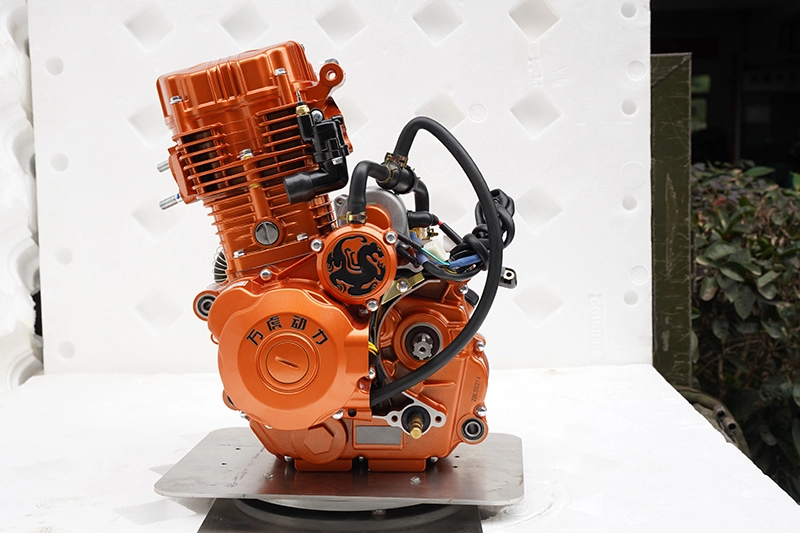
Both models displace 150cc, so the cooling system is the single most important mechanical difference. Air cooling relies on airflow over finned cylinder walls, while water cooling circulates coolant through a radiator to hold a steadier temperature under load. The distinction matters most when an engine works hard for long stretches.
According to KAMAX Group, air cooling is optimized for simplicity and cost efficiency, while liquid cooling is optimized for stability under higher thermal load, with air suited to 125cc–150cc commuting and liquid cooling better for sustained high-RPM use.
Air-cooled engines struggle to dissipate high heat levels fast enough during heavy loads, slow traffic, or high ambient temperatures, which can lead to overheating. Water cooling maintains more consistent temperatures, supporting longer sustained engine loads without the same thermal risk.
Yamaha Motor explains that air-cooled motorcycle engines depend on airflow over cooling fins, while liquid-cooled systems reduce the effect of outside-temperature changes and provide more stable, consistent engine performance.
This is why Wanhoo specifies water cooling on the K3, the model designed to carry up to 1,000 KG. A tricycle running near its payload ceiling, on a hot day, in stop-start city traffic, asks a lot of its cooling system. The K3's water jacket keeps engine temperature in a safer band across those sustained hauls. The Q1's air-cooled unit is the right match for its lighter 600 KG duty cycle, where heat build-up is far less of a concern and the simpler design keeps cost and maintenance down.
When Is the Q1 the Smarter Buy?
The Q1 is Wanhoo's answer for the buyer whose priority is the lowest possible cost of ownership on light work. Its case rests on three verified strengths: the lowest FOB price at $830, the lightest net weight at 360 kg, and the best fuel economy in the range at 3.4 L/100km. Together these make it the fastest vehicle in the lineup to pay back its purchase price.
The Wanhoo Q1 fits market vendors, rural couriers, and first-time owner-operators moving parcels, produce, or retail goods across a city. At 3.4 L/100km and $830 FOB, it minimizes both the upfront outlay and the daily fuel bill that can otherwise erode a small operator's margin.
The Q1 also loads more efficiently for importers. At 45 units per 40-foot high-cube container against the K3's 40, the lighter model spreads freight cost across more vehicles per shipment, which matters when you are landing a first batch and watching per-unit economics. For a dealer testing a new market with light-cargo demand, the Q1 lowers the risk on that opening order.
Choose the Q1 when your routes are urban, your loads sit comfortably under 600 KG, and fuel and purchase price are the numbers that decide whether the vehicle earns money. It is the most economical entry point Wanhoo builds, and for genuinely light work it is often all the tricycle a buyer needs. Explore the full specification on the Q1 150cc lightweight cargo tricycle page.
When Is the K3 Upgrade Worth the Extra $70?
The K3 becomes the smarter buy the moment your loads get heavier or your engine has to work for longer periods. For $70 more, the payload ceiling nearly doubles to 1,000 KG, the cargo box grows to 2,000 mm in length, and the engine gains water cooling for sustained duty. That is a large capability jump for a small price step.
The Wanhoo K3 suits buyers hauling construction materials, agricultural produce, or mixed cargo where loads regularly approach the top of the Q1's range. Its 2,000 mm cargo box, floating stamping rear axle with booster, and 1,000 KG payload deliver serious hauling capacity from $900 FOB.
Cargo volume is easy to underestimate. The K3's box is 300 mm longer, 100 mm wider, and 100 mm deeper than the Q1's, which adds up to substantially more usable space for bulky but not necessarily heavy goods. Buyers who move furniture, bagged feed, water containers, or building supplies frequently run out of box before they run out of payload. Reviewing a proper cargo tricycle payload guide helps match box size and rated weight to your real cargo profile.
The K3's floating stamping rear axle with booster is built to handle heavier, sustained loads more reliably than a standard entry axle. Combined with the water-cooled engine, it turns the K3 into a durable workhorse rather than a stretched light-duty model. The upgrade is worth it whenever your work involves real weight, long runs, or hot conditions. Full specifications sit on the K3 150cc compact cargo tricycle page, and the cooling trade-off is covered in depth in our guide to air-cooled vs water-cooled cargo tricycle engines.
Which Model Fits the Growing Entry Cargo Market?
Demand for affordable entry cargo tricycles is expanding fastest in exactly the markets Wanhoo serves. Understanding that demand helps a dealer decide how to weight an opening order between the two models.
According to Markets and Data, the Africa internal-combustion three-wheeler market was valued at USD 662.09 million in 2024 and is projected to reach USD 1,002.31 million by 2032, growing at a 5.32% CAGR, driven by demand for cost-effective transport with higher load capacity and better fuel efficiency than two-wheelers.
Micro and small businesses across Egypt, Nigeria, Kenya, and Ethiopia increasingly depend on cargo three-wheelers to move dairy, water, vegetables, construction materials, and retail goods, with the load-carrier segment showing the highest growth as e-commerce and last-mile delivery expand.
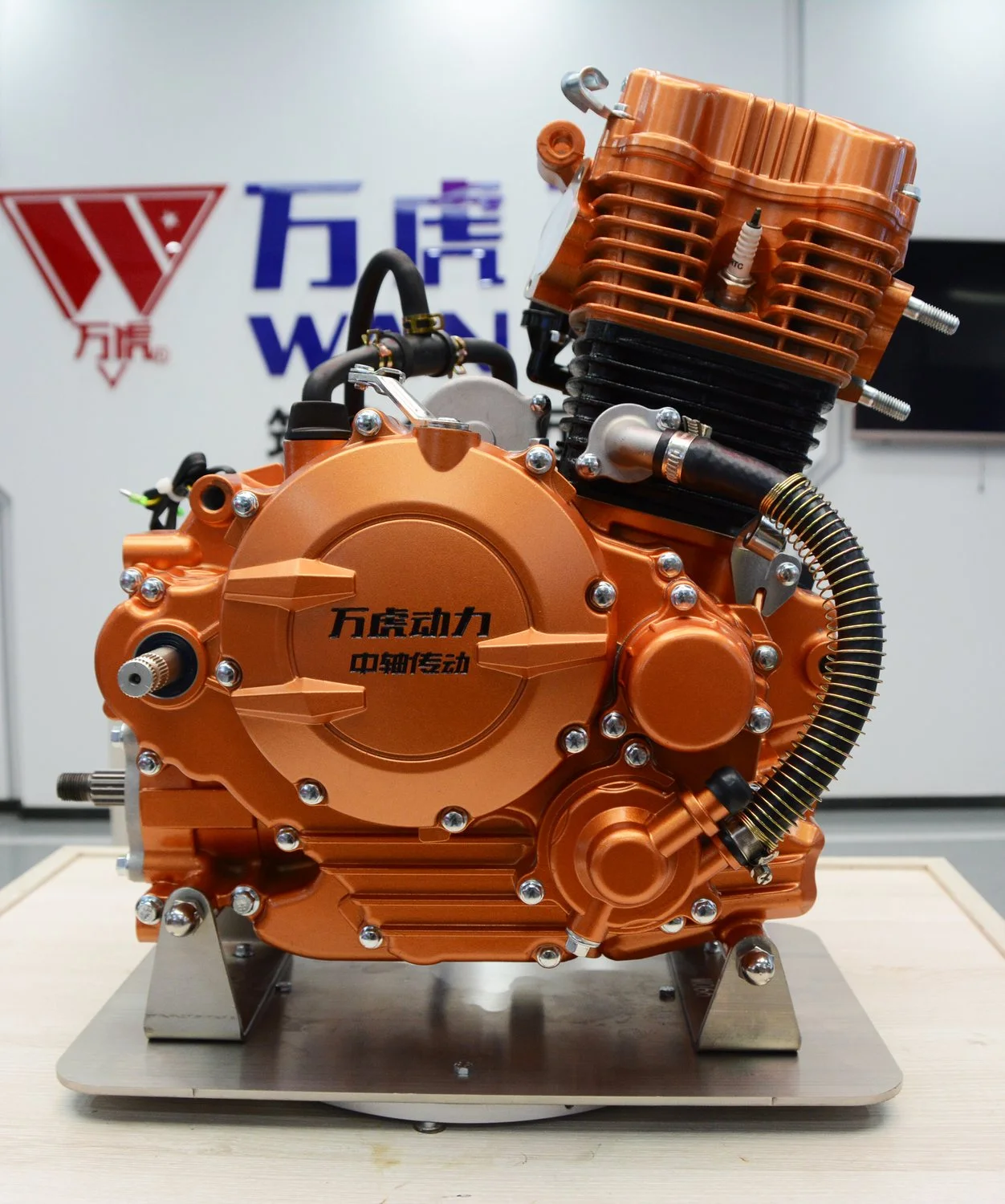
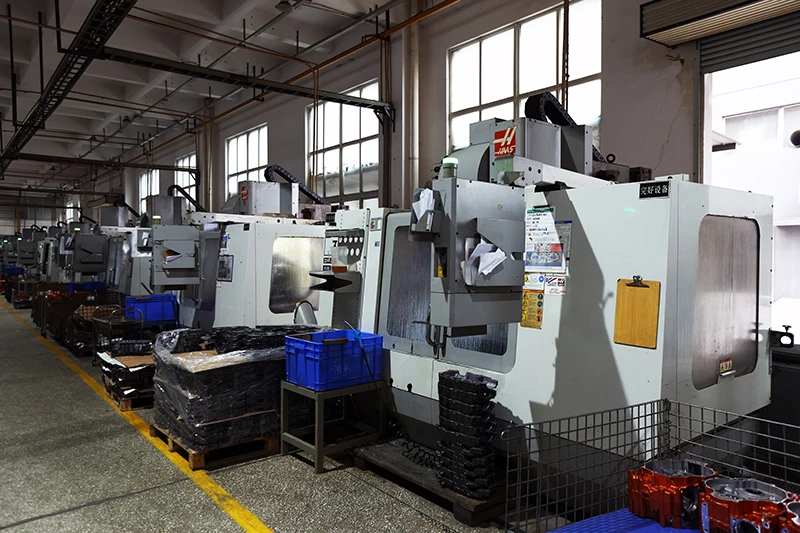
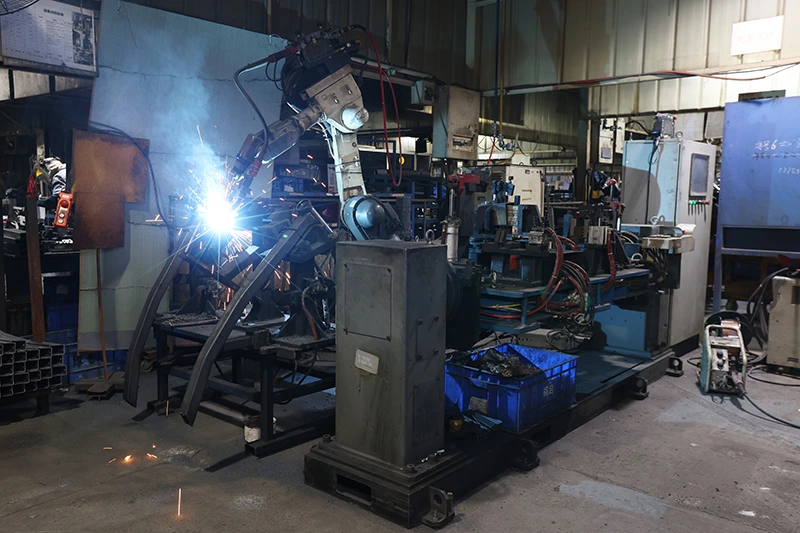
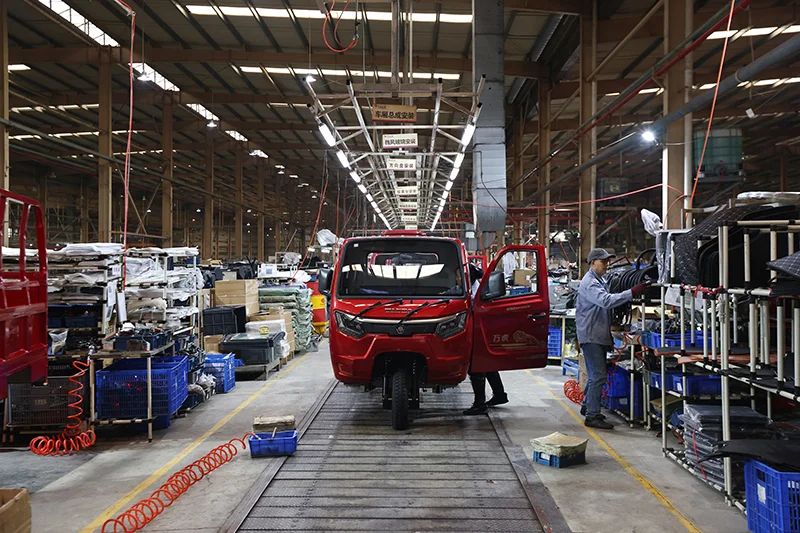
Both Wanhoo models are built to serve that demand at the entry price point, and they are manufactured on the same vertically integrated lines. Wanhoo develops its own engines and welds its own frames on robotic lines, so the Q1 and K3 share the build quality of the heavier cargo range despite their budget positioning. That is the entity triple that matters for a buyer weighing risk: Wanhoo plus entry cargo tricycle plus self-developed, in-house manufacturing.
For a first order into a light-cargo urban market, the Q1 lets a dealer land more units and test demand cheaply. Where buyers are hauling heavier mixed loads, the K3's small price premium buys the capacity and cooling that keep those buyers loyal. Many dealers stock both and let the customer's cargo profile decide.
Frequently Asked Questions
**What is the price difference between the Q1 and K3?**
The Q1 starts from $830 FOB Chongqing and the K3 from $900, a difference of $70. For that step up, the K3 adds a water-cooled engine, nearly double the payload at up to 1,000 KG, and a larger 2,000 mm cargo box. FOB prices fluctuate, so contact Wanhoo for the latest quote.
Is the Q1 air-cooled or water-cooled?
The Q1 uses a 150cc air-cooled engine, which keeps its weight, cost, and maintenance low for light urban work. The K3 uses a 150cc water-cooled engine for better heat management under sustained heavier loads. Both are rated at 8.0 kW (10.7 hp).
Which model has better fuel economy?
The Q1 is the most economical in the Wanhoo range at ≤3.4 L/100km, roughly half a liter less per 100 km than the K3's ≤3.9 L/100km. Its lighter 360 kg net weight is a key reason it sips less fuel on light-duty routes.
How much can each tricycle carry?
The Q1 carries up to 600 KG, ideal for light urban cargo. The K3 carries up to 1,000 KG and offers a larger cargo box measuring 2,000×1,350×400 mm, making it the better choice for heavier or bulkier loads.
Which is better for importing in bulk?
The Q1 loads 45 units per 40-foot high-cube container against the K3's 40 units, so it lowers per-unit freight cost on an opening order. Buyers testing a light-cargo market often start with the Q1, then add K3 units as heavier-load demand appears.