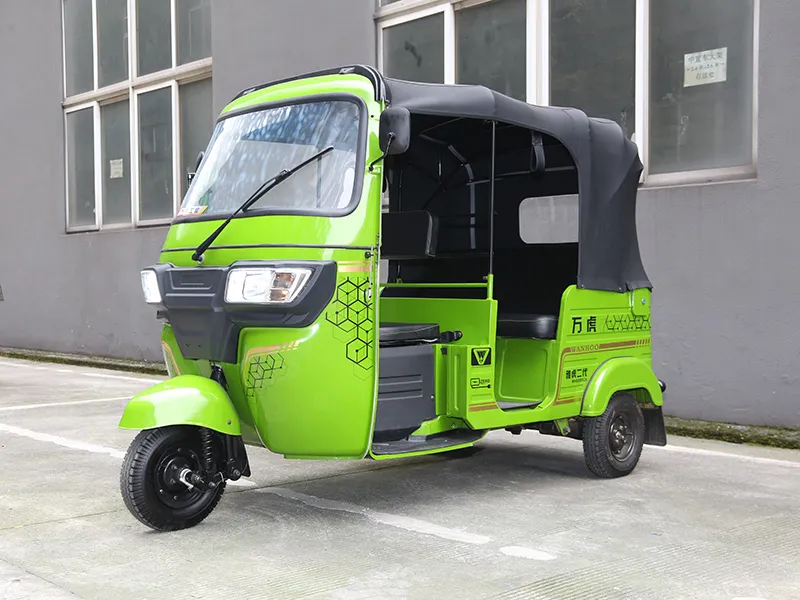
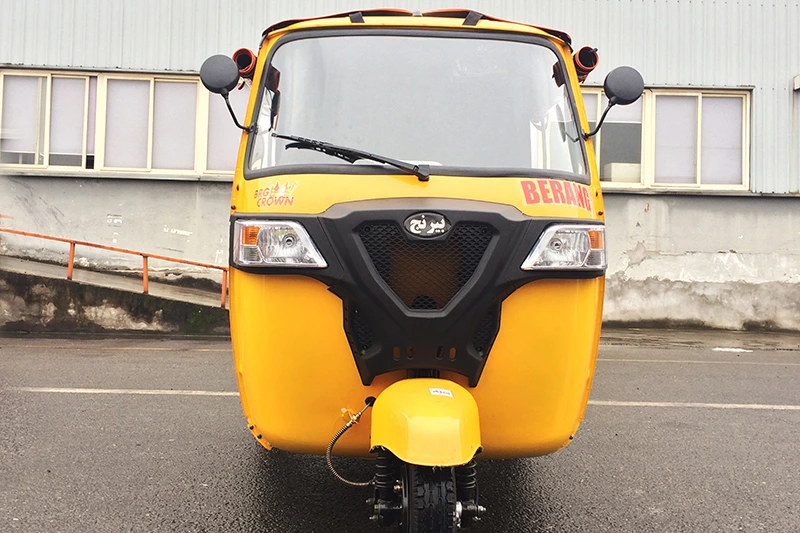
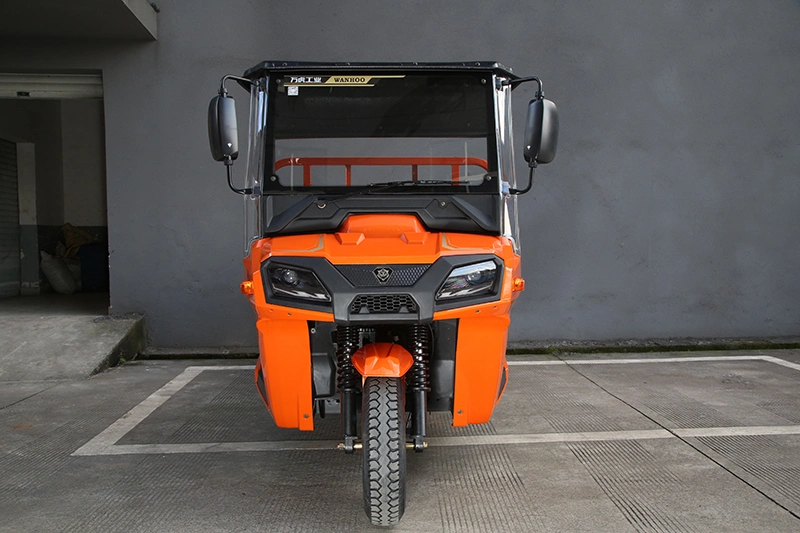
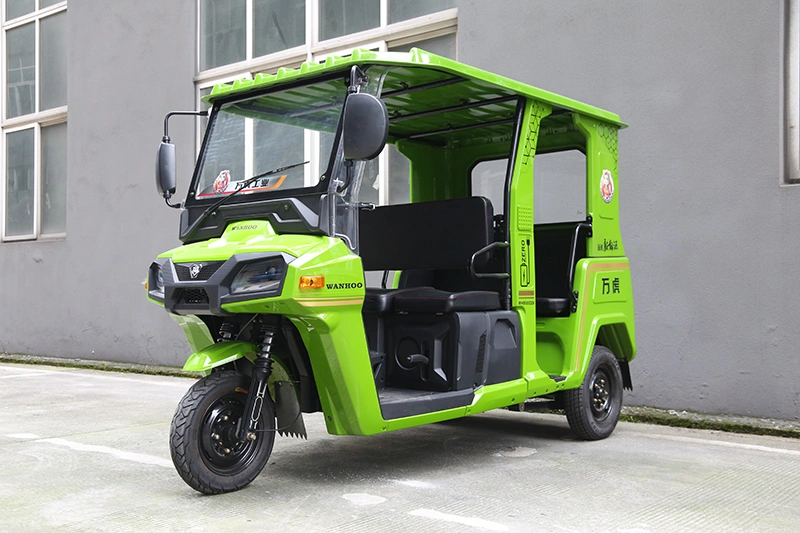
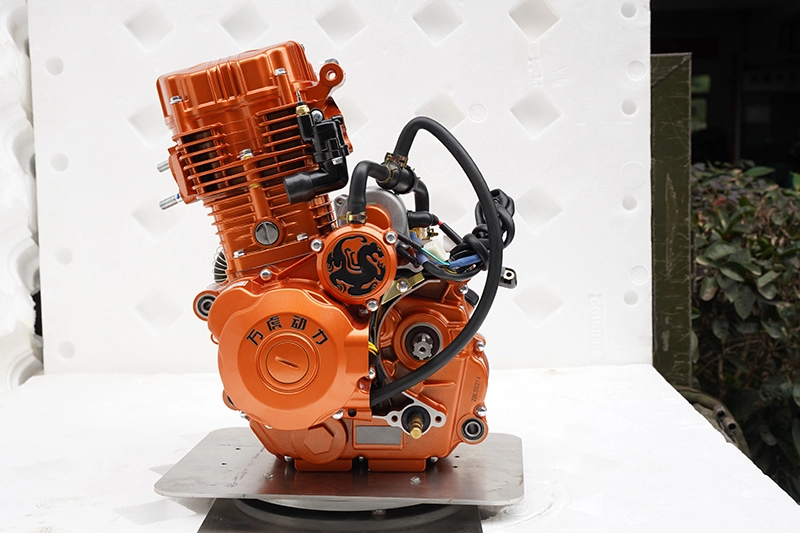
In the yahoo electric vs gasoline decision, petrol wins on lower upfront cost and refuel-anywhere flexibility, while the electric YAHOO-II pays back faster on high-mileage urban routes through far lower running cost.
A taxi operator running one route six days a week does the same sum every morning: a full tank of petrol against a night of cheap charging. That single line, repeated 300 times a year, is what separates the petrol YAHOO from the electric YAHOO-II long after both leave the showroom. The sticker price is the smaller half of the story.
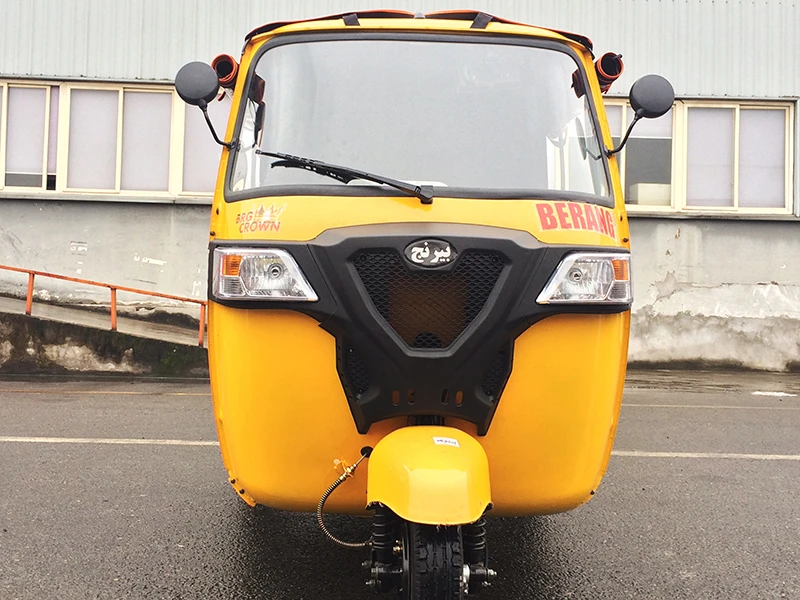
This is a focused head-to-head for one buyer: a passenger or taxi operator choosing between the petrol YAHOO 200cc at $1,640 FOB and the electric YAHOO-II-Electric at $1,670 FOB. Both are Wanhoo's passenger flagship. The difference is what they cost to run, and how fast the cheaper-to-run one earns back its price. For a full fleet-wide breakdown, see our electric tuk-tuk vs gasoline cost deep-dive.

What is the real upfront cost of each YAHOO, petrol versus electric?
The two headline prices sit almost on top of each other, and that is where most buyers make their first mistake. The petrol YAHOO 200cc ships from Chongqing at $1,640 FOB with everything on board. The electric YAHOO-II-Electric lists at $1,670 FOB, but that figure is without battery, so the real landed cost of the electric unit is higher once the LFP pack is added to the quote.
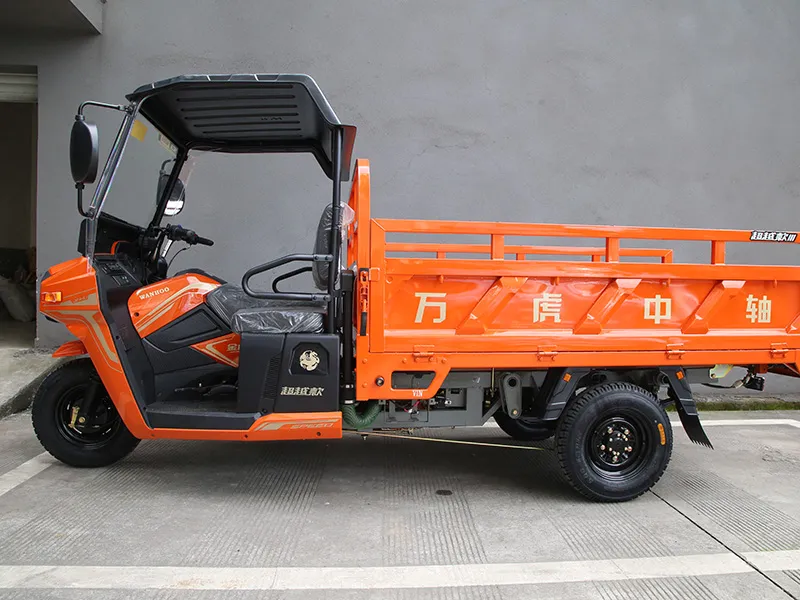
The Wanhoo YAHOO 200cc petrol tricycle is priced from $1,640 FOB Chongqing as a complete, ready-to-run vehicle. The YAHOO-II-Electric lists from $1,670 FOB without battery, so a buyer must add the 72V 150AH LFP pack to reach a true delivered price. The two are close on paper but not once the battery line is included.
That battery line is the single biggest variable in the whole comparison. An LFP pack for a passenger three wheeler is a meaningful cost, and it is why the electric unit asks for more capital on day one. Wanhoo quotes the YAHOO-II-Electric without battery precisely so operators can price the pack against their local supply and charging setup rather than pay for a one-size assumption.
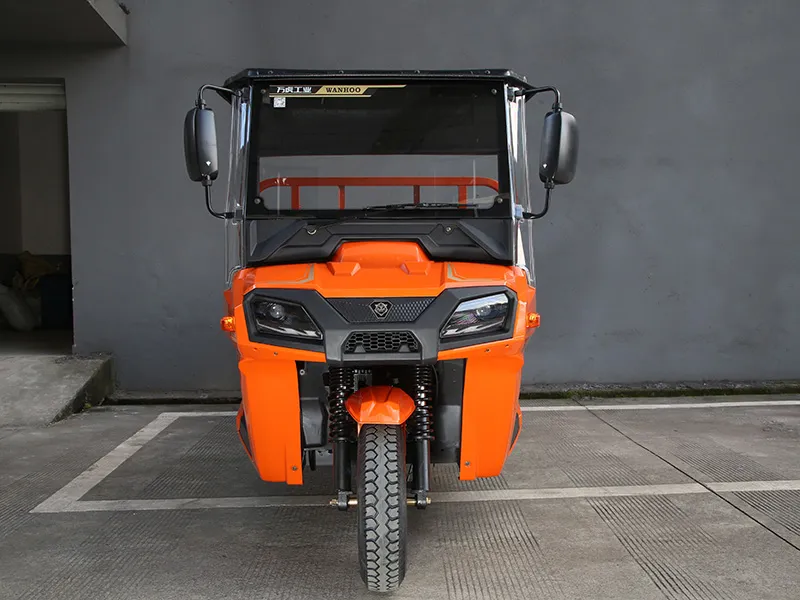
Both vehicles carry the same passenger job. The petrol YAHOO seats 3 to 4 adults on a 200cc air-cooled engine; the electric YAHOO-II seats 3 on a 72V LFP platform. So the buyer is not trading capacity for chemistry. The question is purely whether the electric unit's higher day-one price earns itself back through cheaper daily running.
How much cheaper is the electric YAHOO to run each day?
Daily running cost is where the yahoo electric vs gasoline gap opens widest and fastest. The petrol YAHOO burns fuel that tracks the local pump price, which climbs without warning. The electric YAHOO-II draws electricity that is both cheaper per kilometer and far more stable, which is the whole reason its running cost lands up to roughly 70% below a comparable petrol unit.
According to AGL-Trike, charging an electric tuk-tuk for 100 km of daily running costs about $2.00 in electricity, against roughly $6.00 in gasoline for the same distance, which is 70 to 80% less to move the same vehicle the same distance. Across 300 working days that $4 daily gap becomes about $1,200 saved per vehicle every year.
Running an electric passenger three wheeler for 100 km typically costs around $2.00 in electricity versus about $6.00 in petrol for the same distance. That $4 daily difference, repeated across roughly 300 working days, adds up to near $1,200 in annual energy savings for a single high-use taxi unit before any maintenance is counted.
Real operators see the same direction. According to The Standard, Nairobi drivers covering 150 km a day spend about Sh650 on electric battery swaps against roughly Sh850 on diesel, cutting daily fuel cost by up to 30% under real load and road conditions. The exact percentage moves with local power and fuel prices, but the electric unit is cheaper to run wherever fuel is expensive.
The catch is that this saving only fully lands for a high-mileage operator. A YAHOO that runs 100 or 150 km a day banks the full $1,200-plus a year. A YAHOO that only does 30 or 40 km on a quiet semi-urban route saves far less in absolute dollars, which is exactly why daily mileage, not the price tag, decides which vehicle pays back faster.
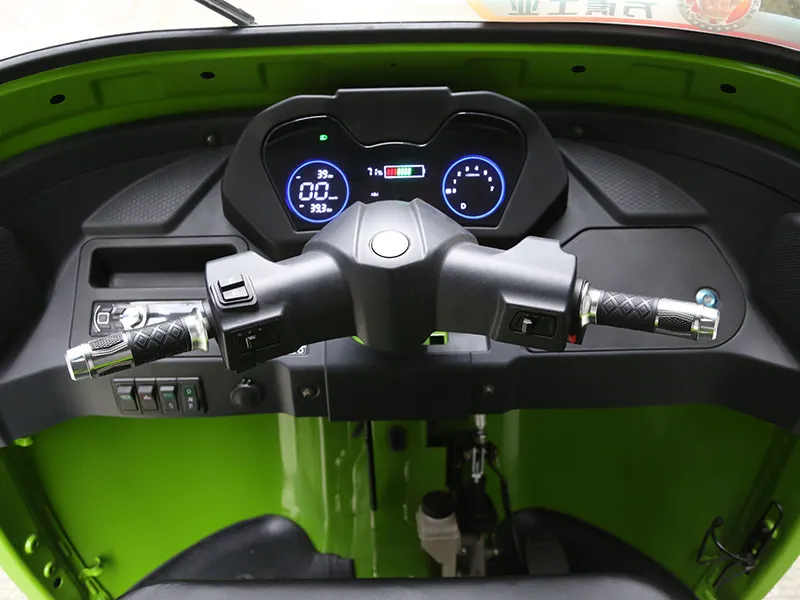
Petrol running cost tracks the local pump price, which rises without notice and hits margin directly, while electricity cost per kilometer stays comparatively low and stable. For a taxi operator, that stability is as valuable as the raw saving, because it makes daily earnings predictable instead of hostage to the next fuel price shock.
How do range, refueling, and charging downtime compare?
Downtime is earning lost, so how each YAHOO refuels matters as much as what it costs. The petrol YAHOO 200cc carries an 8.3 L tank and refills in two minutes at any roadside station, giving it near-total flexibility on routes far from power. The electric YAHOO-II covers 80 to 100 km per charge, then needs 3.5 hours on a 50A charger or 7.5 hours on a 25A one.
The petrol YAHOO 200cc refuels from an 8.3 L tank in minutes anywhere fuel is sold, so its usable range is effectively unlimited across a working day. The electric YAHOO-II-Electric delivers 80 to 100 km per charge, then requires 3.5 hours at 50A or 7.5 hours at 25A to refill, which suits routes that return to a charging base overnight.
For a single-shift urban taxi, 80 to 100 km often covers a full day, so the electric YAHOO charges overnight and loses no working hours. The petrol YAHOO wins the moment a route runs two shifts, covers long distances between towns, or operates where grid power is thin or unreliable. Wanhoo builds the YAHOO-II-Electric on a 72V platform with regenerative braking to stretch each charge, but physics still caps the range.
This is the honest split. Charging downtime is a non-issue for a predictable urban shift that parks at night, and a real constraint for high-utilization or thin-charging operations. An operator planning to run one vehicle across two drivers around the clock should look hard at the petrol YAHOO, because a charging pause it cannot avoid is revenue it cannot recover.
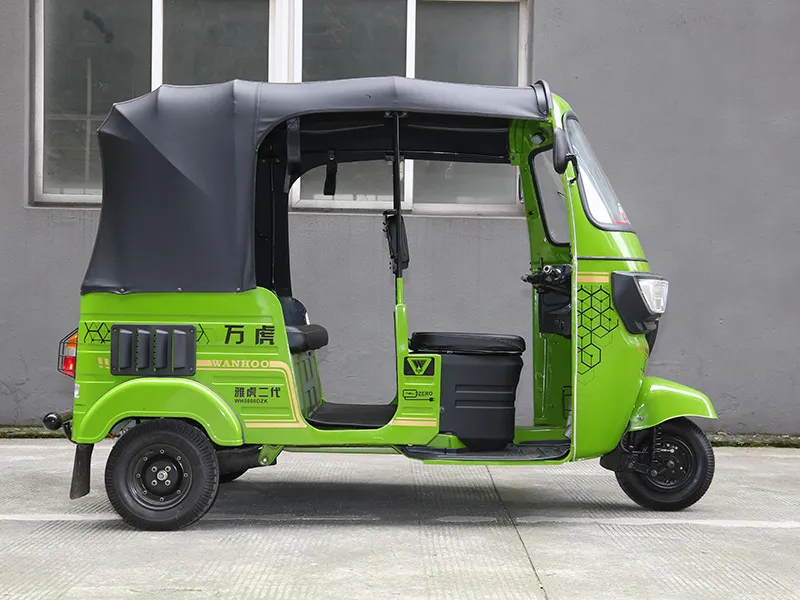
Why does LFP battery life protect the electric YAHOO's payback?
The payback case only holds if the battery lasts, and that is exactly why Wanhoo uses LFP rather than lead-acid. A battery replaced every 18 months would wipe out the fuel savings; a battery that runs for most of the vehicle's life lets those savings accumulate. The chemistry inside the YAHOO-II-Electric is what turns a running-cost advantage into a real payback.
An LFP battery uses lithium iron phosphate as its cathode, giving it strong thermal stability, long cycle life, and a lower risk of thermal runaway than other lithium chemistries. For a passenger tricycle charged daily, those properties mean a service life measured in years rather than months, so the fuel saving is not eaten by frequent pack replacement.
The cycle numbers carry the argument. According to Deltic, LFP delivers 3,000 to 5,000 full charge cycles and 5 to 7-plus years of daily use, against 1,500 to 2,000 cycles for NMC, and just 300 to 500 cycles or 1 to 2 years for lead-acid. A pack that outlasts a lead-acid unit several times over is what keeps the electric YAHOO's cost per kilometer low across its whole working life.
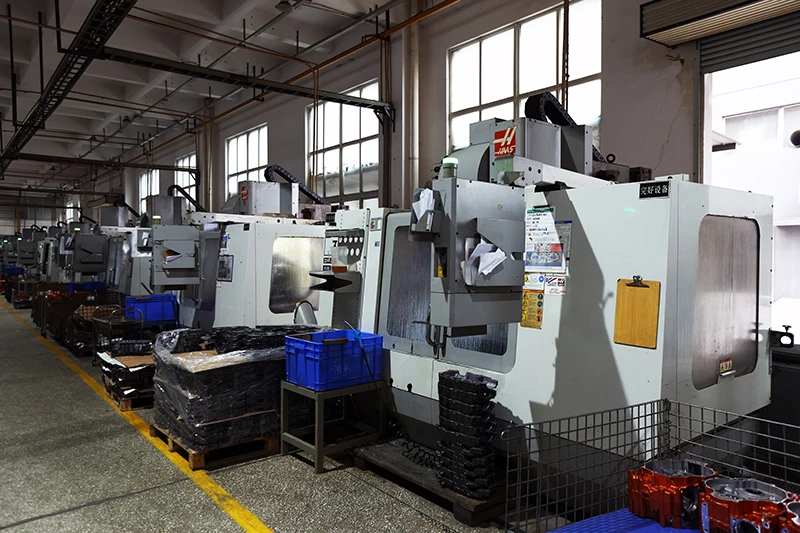
Wanhoo has designed and built its own three-wheeler powertrains since 1986, and specifies the YAHOO-II-Electric's 72V 150AH LFP pack for the daily commercial duty a taxi demands. That is the counter to the cheap-import worry: the day-one price is higher, but an LFP battery you are not swapping every 18 months is precisely what makes the multi-year payback real rather than theoretical.
Which YAHOO pays back faster, and where does each one win?
Payback comes down to one lever: daily mileage. The electric YAHOO-II asks for more capital up front, mostly in the battery, and returns roughly $1,200 a year on a 100 km daily route. The more kilometers a unit runs, the faster that annual saving repays the price gap, which is why a busy urban taxi reaches break-even far sooner than a lightly used one.
The table below compares the two YAHOO models on the numbers that drive the yahoo electric vs gasoline payback. Read it as direction and structure, not a fixed quote, since local fuel, power, and duty cycles move the exact figures. The electric column assumes a battery is added to the FOB price, and a high-use route close to the 100 km daily case.
| Factor (per vehicle) | YAHOO 200cc (Petrol) | YAHOO-II-Electric |
|---|---|---|
| FOB price (Chongqing) | From $1,640, complete | From $1,670, without battery |
| Powertrain | 200cc air-cooled petrol | 72V 150AH LFP, DC motor |
| Passengers | 3 to 4 adults | 3 adults |
| Energy cost / 100 km | ~$6.00 petrol | ~$2.00 electricity |
| Annual energy (300 days, 100 km/day) | ~$1,800 | ~$600 |
| Range / refuel | 8.3 L tank, minutes to refuel | 80 to 100 km, 3.5 h at 50A |
| Engine maintenance | Oil, plugs, filters, recurring | None; LFP pack, minimal service |
| Best fit | Long / two-shift / thin-charging routes | High-mileage urban routes, low-emission zones |
Break-even between the petrol and electric YAHOO is set by daily mileage: the roughly $1,200 annual energy saving from a 100 km-per-day electric unit repays its higher battery-inclusive price within a small number of years, then keeps saving. Below about 40 km a day, the absolute saving shrinks and the petrol YAHOO's lower price often wins outright.
The break-even logic is simple once mileage is fixed. On a high-use urban route near 100 km a day, the electric YAHOO's roughly $1,200 annual energy saving repays its higher price within a small number of years, then keeps paying. On a low-mileage or long-distance route, the petrol YAHOO's lower price and refuel-anywhere freedom win outright.
So the choice is not electric-good, petrol-bad. Choose the petrol YAHOO 200cc for flexibility, long or unpredictable routes, and areas where charging is scarce. Choose the electric YAHOO-II-Electric for high-mileage city taxi work and low-emission zones where its cheaper running cost compounds fastest. Match the vehicle to the route, and either can be the smarter buy.
Frequently Asked Questions
**Is the electric YAHOO-II cheaper than the petrol YAHOO 200cc to buy?**
No, once the battery is included the electric unit costs more up front. The petrol [YAHOO 200cc](/passenger-tricycles/yahoo-200cc-passenger-tricycle) is from $1,640 FOB complete, while the YAHOO-II-Electric is from $1,670 FOB without battery, so the LFP pack is an added line on top of that price.
How much can the electric YAHOO-II save on running cost versus petrol?
Wanhoo cites up to roughly 70% lower operating cost for the YAHOO-II-Electric versus a comparable petrol unit. Industry figures put electricity at about $2.00 per 100 km against roughly $6.00 in petrol, which works out near $1,200 in annual energy savings for a vehicle running 100 km a day over 300 working days.
How far can the YAHOO-II-Electric go, and how long does it take to charge?
The YAHOO-II-Electric covers 80 to 100 km on a single charge from its 72V 150AH LFP battery. Recharging takes about 3.5 hours on a 50A charger or 7.5 hours on a 25A charger, which typically means an overnight charge for a single-shift urban taxi route.
When does the electric YAHOO pay back its higher price?
Payback depends on daily mileage. A unit running near 100 km a day banks around $1,200 in annual energy savings, repaying the price gap within a small number of years and then continuing to save. A low-mileage vehicle saves far less in absolute terms, so its payback is slower and petrol may cost less overall.
Which YAHOO is better for routes far from charging points?
The petrol YAHOO 200cc is the better fit for thin-charging areas, long-distance routes, or two-shift operation. It refuels from an 8.3 L tank in minutes anywhere fuel is sold, so it never loses working hours to a charging pause, which the electric unit cannot fully avoid.
Does the YAHOO-II-Electric use a safe, long-life battery?
Yes, it uses a 72V 150AH LFP (lithium iron phosphate) battery, which offers strong thermal stability and a long cycle life. Industry data puts LFP at 3,000 to 5,000 charge cycles and 5 to 7-plus years of daily use, well beyond lead-acid, which is what keeps the electric YAHOO's long-term cost per kilometer low.