Safe perishable transport starts with the commodity’s required time-temperature control, food-grade containment, hygiene and local food law. Shade, airflow, careful stacking and route planning may support some fresh-produce loads but do not replace a validated cold chain.
A crate of tomatoes that looked firm at the farm gate at six in the morning looks different by half past seven. The top layer is still fine. The bottom layer has gone slightly soft where the weight of the crates above pressed fruit against the slats, and those soft patches are where the rot will start two days later, in somebody else's kitchen, blamed on somebody else. Nothing dramatic happened. No accident, no breakdown, no rain. The load simply spent ninety minutes on a steel bed in open sun, doing what warm fruit does.
Most of the craft of moving food that spoils is unglamorous and cheap. It is a sack, a jerrycan of water, a departure time, and a decision about where to park. Most of it needs almost no capital. Almost all of it is invisible to the trader who pays you, right up until the day it fails.
The loss happens where nobody is looking
There is a habit of treating food loss as a cold chain problem, which conveniently makes it somebody else's problem: the packhouse, the refrigerated truck, the supermarket chiller. According to the FAO, global food loss is measured specifically as the share of food lost after harvest and up to but not including the retail stage, and its Food Loss Index has put that share at roughly 13 percent of food produced. That measurement window contains the leg a three-wheeler runs, alongside on-farm handling, storage, processing and wholesale. The three-wheeler owns a slice of it, not the whole.
Post-harvest loss is rarely one event. It is an accumulation of small ones: a bruise at loading, an hour parked in the sun, a crate crushed under two others, a wilt that takes a leaf from sellable to marked down. Most of it happens in the informal first and last kilometres, where nobody is measuring and no cold chain exists.
The first kilometres matter disproportionately because they are the roughest ones. According to the World Bank, more than a billion people live more than two kilometres from an all-weather road, which is another way of saying that the first leg out of the field routinely runs off the all-weather network altogether. The load that gets shaken hardest is therefore the one that has just been picked, at its most turgid and most fragile, travelling the worst surface of the entire journey, usually on the simplest suspension in the chain. Everything downstream inherits that damage without ever seeing it happen.
What is actually going wrong inside the crate
Three different things spoil a load, and they do not call for the same response.
Heat does not merely warm produce. It speeds the plant's own respiration, because a harvested tomato or leaf is still alive, still breathing, still consuming its own sugars and water. Warm it and it burns through its reserves faster, softening and wilting well before any microbe becomes the problem. That sequence holds for fruit and vegetables, and for nothing else on the list below.
Vibration is a mechanical injury instead of a metabolic one. Skin pressed against a wooden slat over an hour of corrugated road does not bruise once, it abrades continuously. Leafy stems tear where they fold. Eggs crack where they touch. Vibration damage is usually invisible at handover, so the driver is rarely blamed and therefore rarely learns which loading habit caused it.
Microbial growth is the third mechanism, and on some loads it arrives first rather than last. Fish, raw milk, live poultry and cooked food do not lose quality for a while before safety becomes the question. Warmth accelerates the organisms already on them from the moment the load leaves, the change is usually neither visible nor smelled, and nothing later undoes it. That is a public health matter rather than a freshness one.
Matching the countermeasure to the load
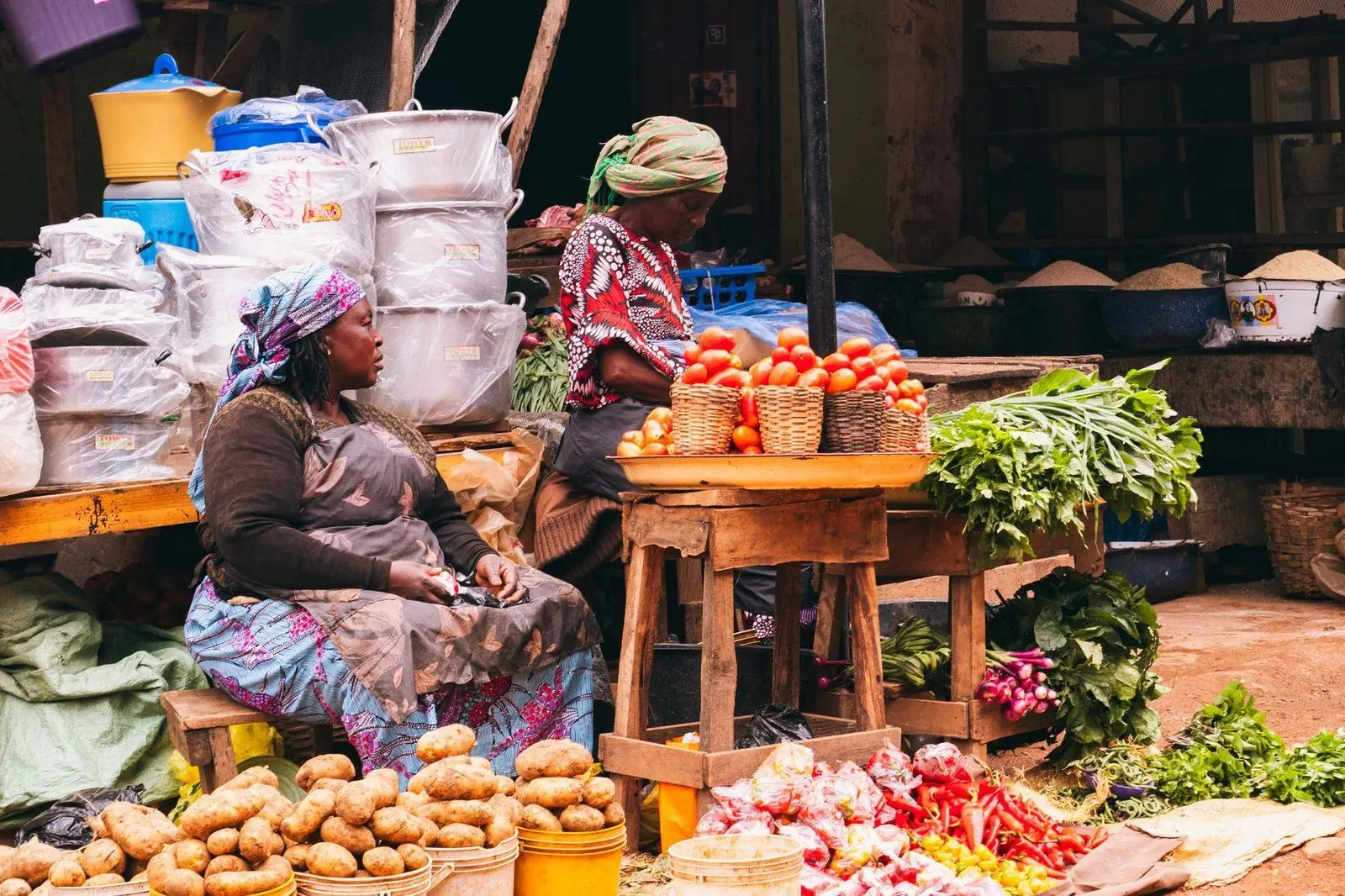
The practical starting point is a written product and route risk assessment. Identify the commodity, required temperature range, maximum exposure time, food-contact materials, cleaning method, cross-contamination risks and the law or customer specification that applies. The correct control varies by product and jurisdiction.
Shade, airflow or a wet cloth cannot make an unsafe load safe. For fish, milk, meat, poultry, prepared food and other temperature-controlled products, elapsed time is not the only control: the operator needs validated temperature control, hygienic handling, monitoring and records required by the local food-safety authority and the buyer's food-safety plan.
| Load | Main risks to assess | Minimum planning control | Verification before transport |
|---|---|---|---|
| Tomatoes and soft fruit | Compression, vibration, field heat and contamination | Food-grade rigid crates, load restraint and a product-specific handling plan | Buyer specification, crate hygiene and stack/load limits |
| Leafy greens | Water loss, heat, crushing and contaminated water | Food-grade containers plus the approved cooling and humidity method | Product standard, water quality and recorded condition |
| Fish | Pathogen growth, temperature abuse, drainage and cross-contamination | An approved cold-chain system with food-grade containment and drainage | Required temperature, calibrated monitoring, cleaning and local fish-transport rules |
| Milk and dairy | Pathogen growth, temperature abuse and container hygiene | Closed food-grade containers and an approved cold chain | Dairy rules, temperature records and sanitation procedure |
| Live poultry | Animal welfare, heat stress, biosecurity and contamination | A dedicated, lawful transport plan using approved crates and stocking density | Veterinary, welfare and biosecurity requirements; never infer food compatibility |
| Cooked or prepared food | Time-temperature abuse and cross-contamination | Closed food-grade containers with the required hot or cold control | Food-handler, temperature, cleaning and segregation rules |
Shade is not the same as sealing
This is the most common expensive mistake, and it is made with good intentions.
For produce that is approved for non-refrigerated ventilated transport, a cover can change heat and moisture around the load. Select and secure the cover under the commodity handling plan; do not assume ventilation is correct for every food or use it in place of required temperature control.
Where the approved plan calls for ventilation, use a clean, food-compatible cover system designed and restrained for the vehicle so it cannot contact moving parts, obscure lights or detach in traffic. The required opening and airflow should come from the commodity guidance or a qualified cold-chain specialist, not a universal gap measurement or an improvised frame.
Material, colour, cleanability, food-contact approval, weather resistance and restraint all matter. Confirm the cover with the buyer's handling specification and local transport rules rather than selecting it by colour alone.
Wet sacking, and when it does nothing
Wet sacking is not a general food-safety control. It may introduce contaminated water, moisture or mould and cannot demonstrate a required product temperature. Use it only if the commodity guidance and documented food-safety plan permit it, with potable water and no unapproved food contact.
Humidity and airflow affect evaporation, but a driver's impression is not validation. If evaporative cooling is part of an approved plan, the plan should define water quality, materials, food-contact separation, monitoring, replacement and cleaning. Otherwise use the specified cooling and packaging method.
Crates, stacking, and the bottom layer
Food-grade rigid crates can transfer stacking load through their walls rather than through the produce, provided they are designed, loaded and stacked as specified.
Use the crate manufacturer's stack limit, the vehicle's rated payload and load-restraint plan. Do not improvise a tall or mixed stack based only on which product feels sturdy; the commodity owner should approve compatibility, orientation and maximum height.
Use only a food-compatible, cleanable bed liner or pallet system approved for the commodity and secured for the vehicle. Cardboard, straw, old sacking or tyre rubber may retain contamination or fail cleaning requirements. The sanitation plan should define inspection, cleaning, disinfection where required, drying and replacement between loads.
Never lower tyre pressure as an improvised vibration control. Set and check tyres at the manufacturer's specified cold pressure for the exact tyre, axle and load; incorrect pressure can increase heat, damage and loss of control. Reduce vibration through lawful speed, route selection, securely restrained food-grade containers and vehicle or suspension options approved by the manufacturer.
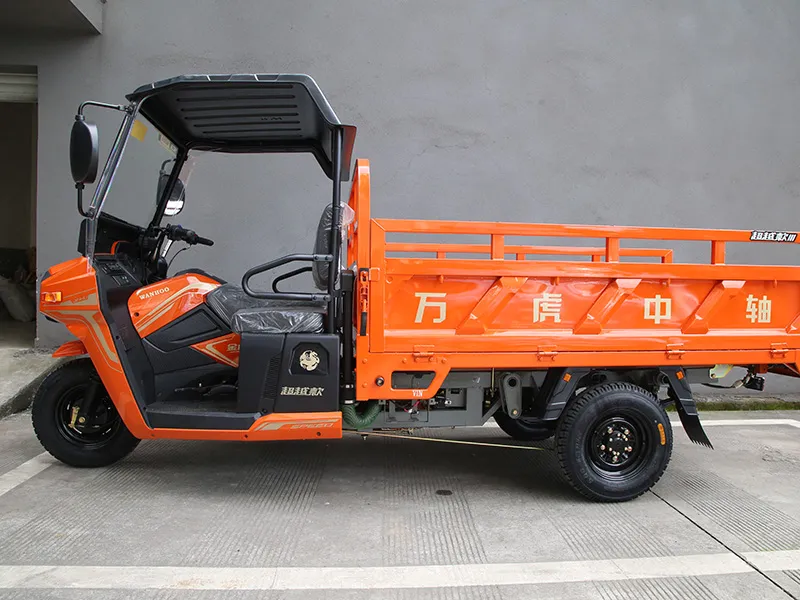
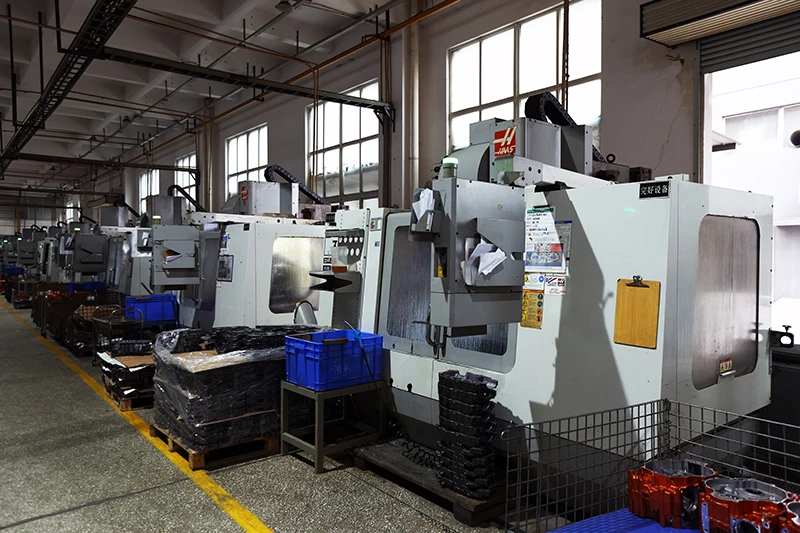
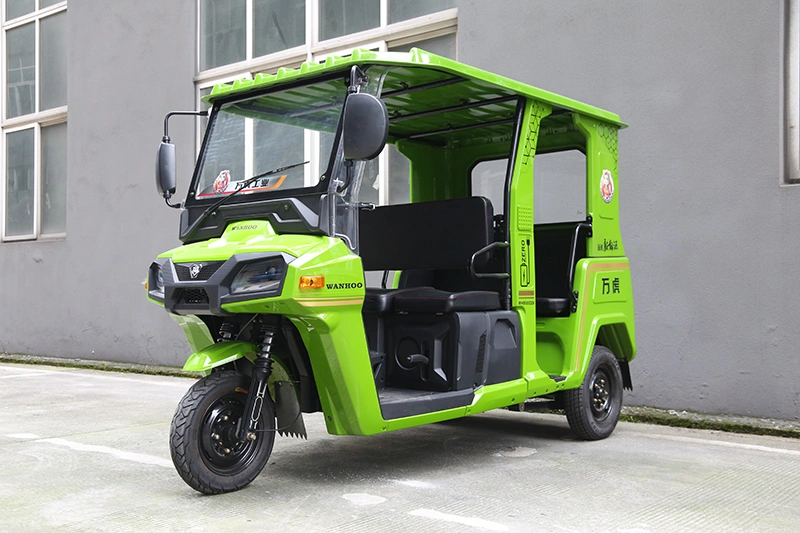
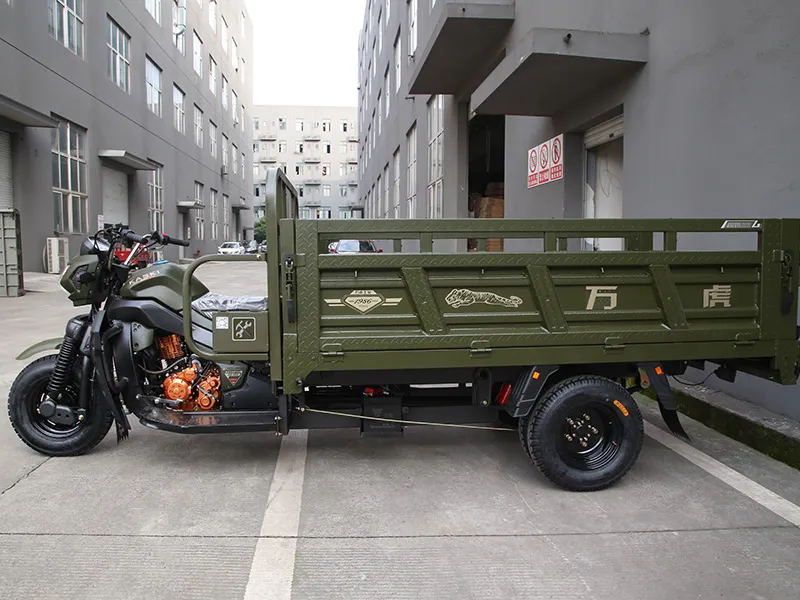
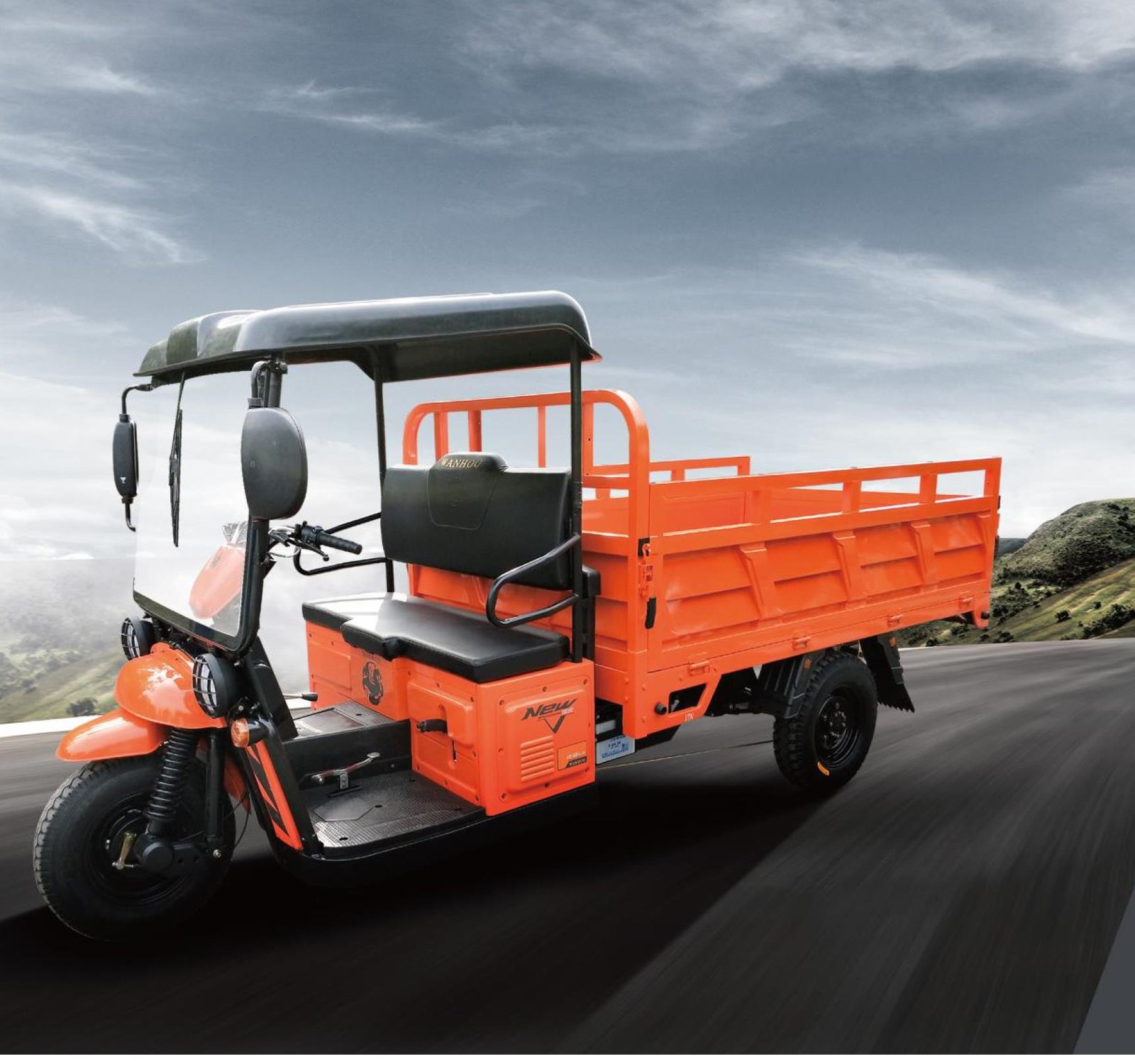
Wanhoo was founded in 1986 and manufactures three-wheelers in Chongqing. It has exported to more than 50 countries. A vehicle sale does not supply the buyer's local food-transport compliance plan: food-grade lining, containers, restraints, temperature controls, sanitation and records must be specified for the commodity and jurisdiction.
Leaving before the sun does
For some fresh produce, a cooler departure period may support quality. It is not a substitute for any legally required cold chain or temperature limit.
Where commodity guidance permits it, coordinate harvest, pre-cooling, loading and departure to reduce field heat and avoid unnecessary delay. Record actual product temperature where the plan requires it; an early start does not prove the load stayed within specification.
Waiting is another exposure to control
Loading, driving, queueing and unloading all contribute to total exposure. Measure time and product temperature through the whole trip where required; do not assume movement alone provides adequate cooling or that one stage is always the worst.
Do not trade road safety for a shorter trip. Plan the route and receiving slot so the vehicle can travel lawfully and unload within the validated time-temperature window.
Confirm the receiving appointment, contingency plan and permitted unloading sequence with the buyer. Maintain required temperature control during any delay, park only where lawful and safe, and do not leave food unattended or make an unapproved drop.
Your rate already contains an estimate of spoilage
According to the ILO, over 60 percent of the world's workforce and around 80 percent of enterprises operate in the informal economy. In that setting there is no written service level, no penalty clause, no insurance claim and no arbitration. The cost of unreliability is settled somewhere else entirely: in the number the trader says when you ask for the job.
Careful handling may have commercial value, but a higher freight rate is not guaranteed. Record rejection, damage, temperature compliance and on-time delivery, then use the buyer's measured results in a written service and rate discussion.
Suppose, purely as an illustration and not as a measured figure, that a trader expects one crate in twenty to arrive unsellable and quietly prices that into what he offers drivers. A driver who consistently beats that expectation is handing the trader something worth keeping. That is the whole negotiation, and it is won long before rates are discussed.
The standing arrangement
The real economics of a driver's week is not the fare per trip. It is how many of the week's trips were already spoken for before the week began. A driver hunting loads each morning competes on price against everyone else hunting loads. A driver with two or three traders who have stopped shopping around competes on nothing, because he has already won.
Standing arrangements are earned by being predictable rather than impressive:
- Arrive in the agreed window, not the convenient one, including on the days when it is inconvenient.
- Report damage yourself before the trader finds it, because a driver who hides one crate loses the account over it.
- Keep the same lining, the same crate discipline and the same departure time every trip, so the trader can plan around you.
None of that requires a better vehicle. It requires that the ninety minutes between the farm gate and the market are treated as part of the job rather than as dead time between the parts that pay. The crate of tomatoes that arrives firm at the bottom is not luck, and after a few months it is not unnoticed either.
Frequently Asked Questions
### What is the single cheapest change that reduces spoilage on a three-wheeler load?
There is no single safe answer across foods. First identify the commodity's legal and buyer-specified temperature, hygiene, container and monitoring requirements. An earlier departure may support some fresh-produce plans, but it cannot replace pre-cooling or a required cold chain.
Should I cover a perishable load with a tarpaulin or leave it open?
Follow the commodity handling plan. For produce approved for ventilated transport, use a clean, food-compatible cover system designed and restrained for the vehicle. Temperature-controlled food needs its specified cold or hot chain; neither an open bed nor a tarpaulin proves compliance.
Does wet sacking actually cool a load or is it just tradition?
It is not a general food-safety control and can introduce contaminated water, excess moisture or mould. Use it only where the commodity guidance and written food-safety plan permit it, with potable water, approved material, defined separation and monitoring. It does not replace required temperature control.
Why is waiting at the market worse for produce than driving?
Waiting is one part of the total exposure and is not always worse than driving. Record time and product temperature through loading, travel, queueing and unloading, maintain the specified controls during delay, and arrange a lawful receiving slot and contingency plan.
How do I get a trader to pay more for careful handling?
A higher rate is not guaranteed. Agree how rejection, damage, temperature compliance and on-time delivery will be measured, document results over a defined trial, and use the buyer's own figures in a written service and rate discussion.
Can I carry fish and vegetables on the same trip?
Do not rely on a universal mixing rule. Carry them together only if local food law and the buyer's written food-safety plan explicitly allow it and a qualified food-safety professional has validated containment, temperature control, cross-contamination prevention, load restraint, cleaning and records. Otherwise use separate, dedicated trips.