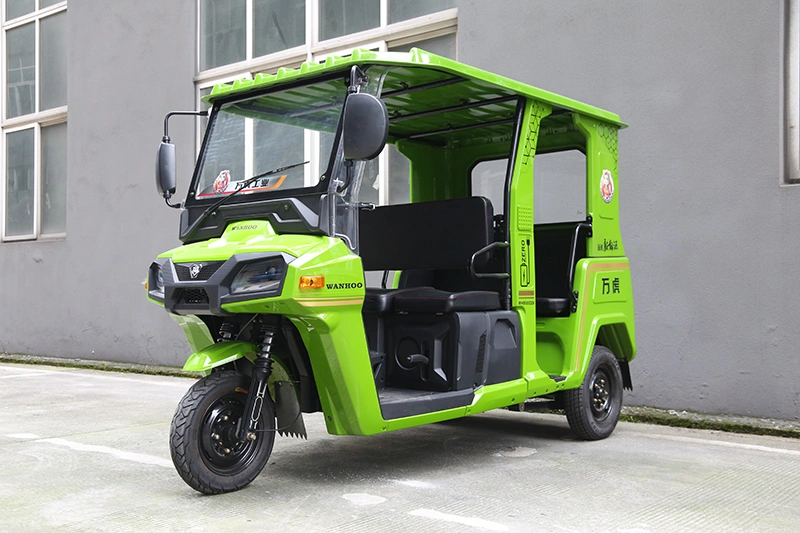
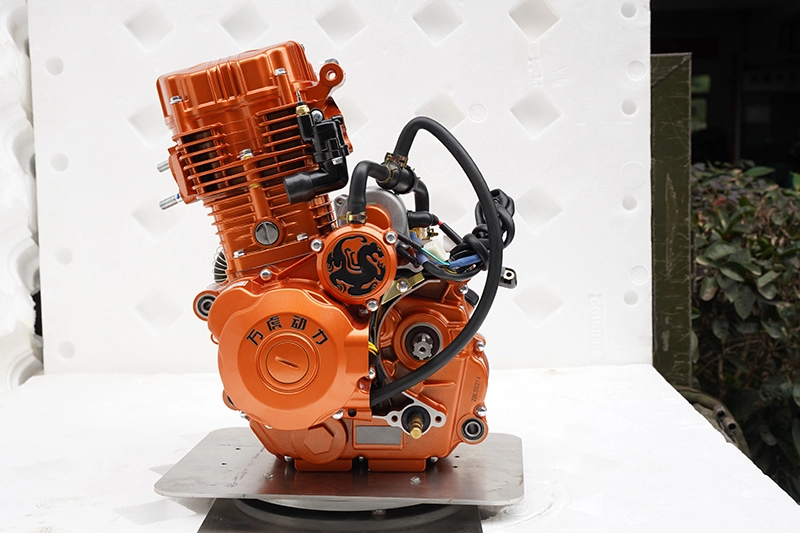
A published cargo tricycle fuel consumption figure is a model specification, not a promise for every route. Ask for its test protocol, then build a safe tank-to-tank baseline for your own work.
A driver comes back on Saturday with a fistful of pump receipts, and the arithmetic does not agree with the specification sheet. That gap does not by itself prove that either number is false; it shows that a model specification and an operating measurement may have been produced under different conditions.
The specification gives a model-level number. The operator is asking a larger question: how much fuel will this vehicle use on my route, with my load, driver and traffic? A supplier cannot reliably predict that without your operating conditions. Ask how the published number was measured, then build a baseline from your own operation.
Published figures do vary between models and engine sizes, and which model carries the lowest one is a separate comparison covered elsewhere. This piece is about the distance between any published figure and the number on your own receipts.
What a published figure actually is
A public fuel-consumption number is only comparable when its unit and test protocol are known. The cited Wanhoo product pages list upper limits in L/100 km, but they do not publish a matched protocol covering load, speed, route, temperature and fuel, so the figures should not be treated as a controlled cross-model test.
Load, speed, gradients, stop frequency, engine temperature, weather, fuel and measurement method all affect a consumption result. Unless those conditions are published and matched, the figures do not establish how much one model would use relative to another on the same route.
What Wanhoo's "≤" figure does and does not show
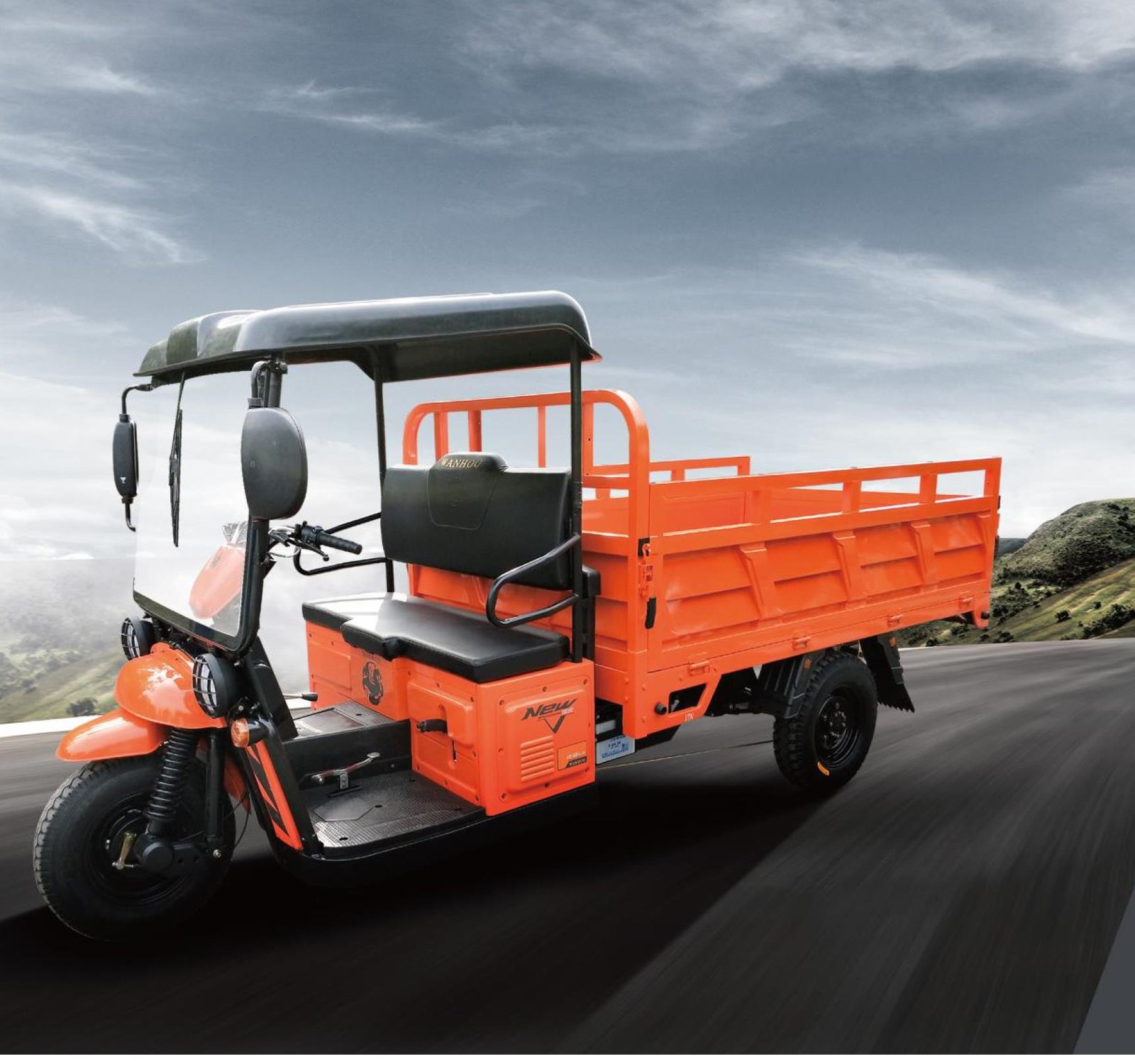
Wanhoo's public product pages show consumption as an upper limit rather than a central value.
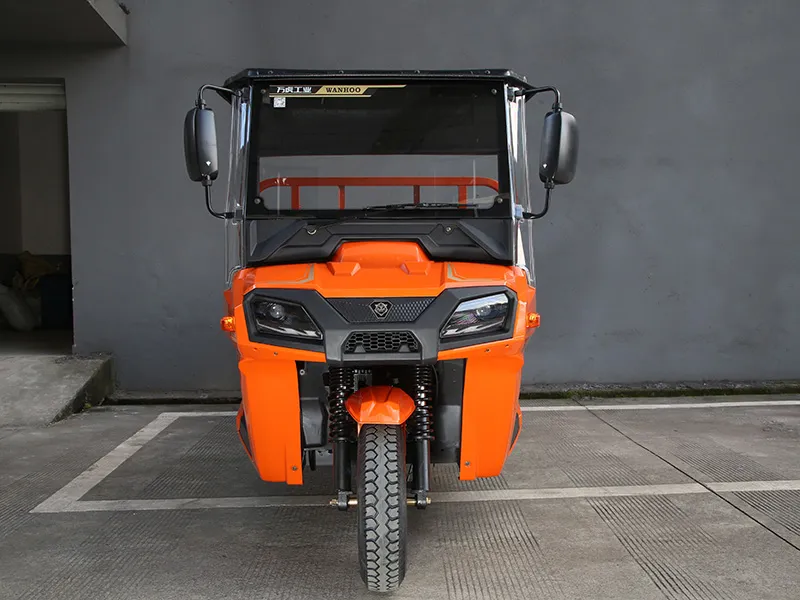
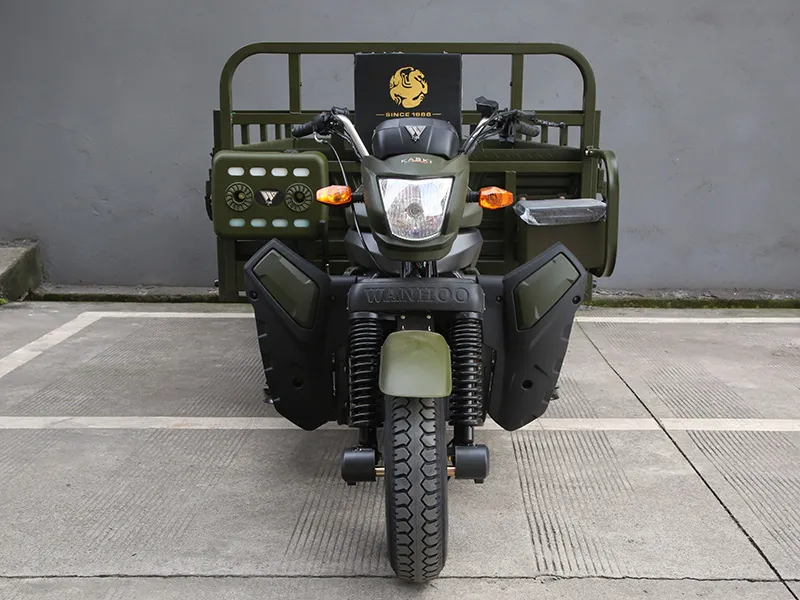
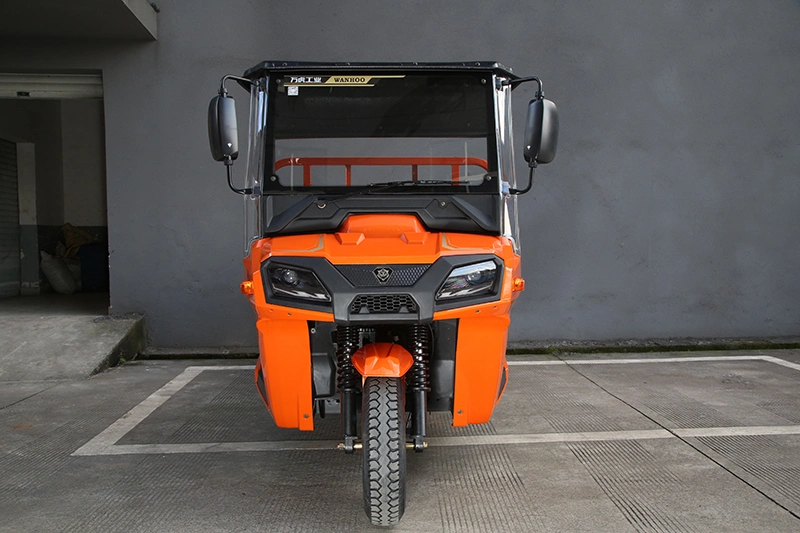
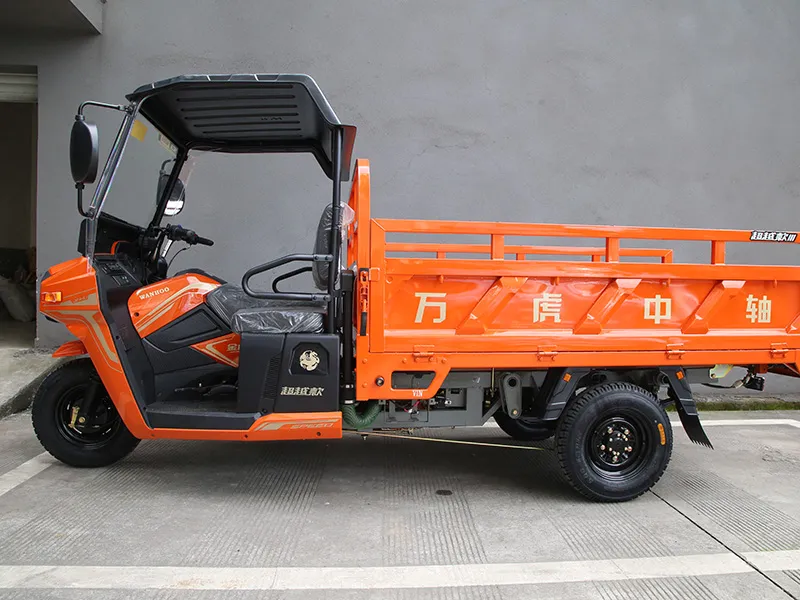
The "≤" sign marks a published upper limit, not a fleet average or a route guarantee. Wanhoo currently lists ≤3.4 L/100 km for the Q1, ≤3.9 L/100 km for the K3 and ≤4.3 L/100 km for the WINTIGER; the public pages do not show a matched test protocol.
Be clear about what that does and does not establish. It identifies the upper-limit value published for each model. It does not establish a real-world fleet average, a result for your route, or the difference between models under identical conditions.
Your working result can be higher or lower because duty cycles differ. Never overload or run with under-inflated tyres in an attempt to reproduce or challenge a specification; measure only during normal, compliant operation.
Where the working day pulls away from the test
The useful question is which parts of your operation move your own baseline, so you know where to look when the receipts change.
| Operating factor | Example change | Likely direction, all else equal |
|---|---|---|
| Load | More mass within the rated limit | Often rises on stop-start or climbing routes |
| Gradient and surface | More climbing or softer ground | Often rises |
| Traffic | More stops and acceleration | Often rises |
| Trip length | More cold, short trips | Often rises per kilometre |
| Waiting | More time idling | Fuel per job rises |
| Tyres | Pressure below the vehicle specification | Rolling resistance rises |
| Maintenance | Restricted carburetted intake or incorrect fuelling | May rise; inspect to the manual |
| Weather | Sustained headwind or severe conditions | May rise |
These are directional mechanisms, not percentages for a Wanhoo tricycle. A lighter route or steadier operation could produce a lower result, which is another reason not to call the public upper limit a daily average.
Some of these effects have been quantified, though not on three-wheelers. According to the US Department of Energy and EPA fuel economy programme, "Aggressive driving (speeding, rapid acceleration and braking) wastes gas," and "Idling can use a quarter to a half gallon of fuel per hour, depending on engine size." Read that carefully: the measurements come from passenger cars and light trucks with engines many times the size of a 150cc or 250cc single-cylinder tricycle unit. The litres per hour do not transfer. The direction does, and "depending on engine size" is the caveat built into the source itself.
The same programme reports that an extra 100 pounds can reduce passenger-vehicle MPG by about 1%. Its maintenance guidance reports about 0.6% average improvement from correct tyre pressure. Both figures come from cars and should not be transferred to a three-wheeler; the cited pages are useful only for the mechanisms and the need to use the vehicle's specified pressure.
One finding from that programme deserves reading rather than lifting: replacing a clogged air filter on vehicles with fuel-injected, computer-controlled petrol engines does not improve fuel economy, though it does improve acceleration. That result is specific to engines that compensate for restricted airflow. Carburetted engines of the kind used across small cargo tricycles do not, so a dust-loaded filter shifts the mixture rich and the engine burns more. A fuel-economy finding is only valid inside the technology it was measured on, which is the same lesson as the "≤" sign.
The tank to tank method
If the published figure cannot tell you what you will burn, measure it. The method needs no instrument beyond a pump, an odometer and a pen, which matters because most enterprises running these vehicles have no telematics or fuel cards. According to the International Labour Organization, "Over 60 per cent of the world's workforce and 80 per cent of enterprises operate in the informal economy." A method depending on fleet software is useless to most people who need the answer. A method depending on a receipt is not.
To measure cargo tricycle fuel consumption, use a consistent safe fill point without topping off, record the odometer, work normally for several representative trips, then refill under the same safe conditions. Divide litres added by kilometres travelled and multiply by one hundred.
The result is litres per hundred kilometres, the same unit the specification uses. You now hold two numbers in the same currency: what the vehicle did on a test bed, and what it does for you.
Three details in that procedure carry more weight than they look.
Work normally. The measurement is worthless if the driver knows he is being watched and drives gently for a week. You are capturing the operation you actually have, idling and overload included, not a demonstration.
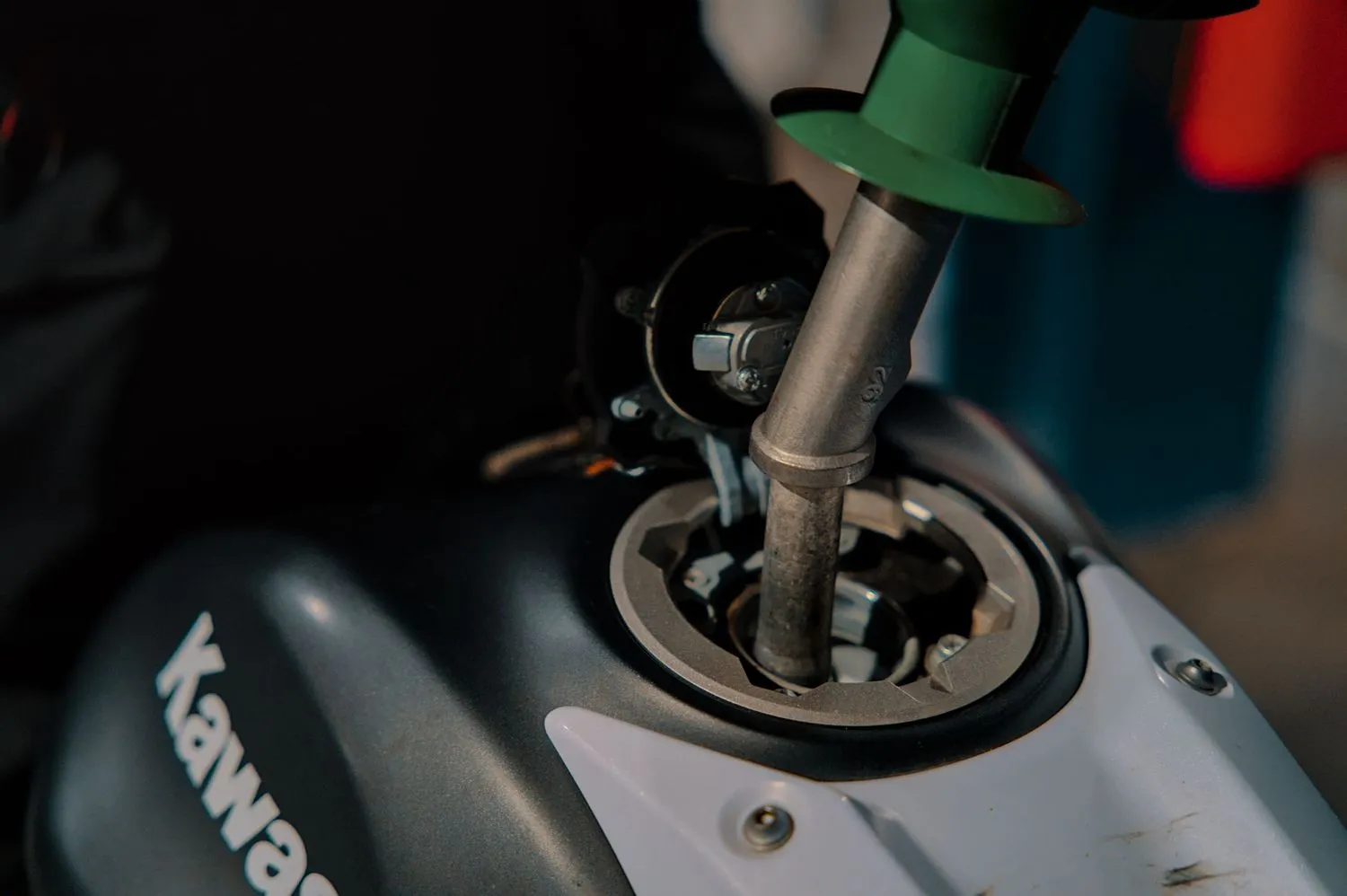
Use a repeatable safe fill point. Follow the owner manual and pump instructions, stop at the first appropriate automatic cut-off where applicable, and never top off or fill into the expansion space. A spill is not acceptable measurement error.
Use the same pump and the same nozzle. This sounds superstitious and is not.
Why one tank is not enough
One refill is a snapshot affected by fill level and operating conditions. Using the same safe fill procedure and level parking reduces measurement variation; repeating the calculation over several representative periods shows a more useful operating range.
Different pumps can cut off at different points and nozzles sit at different depths. Parking angle and fill procedure can therefore move the result. Keeping them consistent reduces that variation, but does not make it disappear; do not keep adding fuel after cut-off to force an exact level.
Then there is sample size. A single week may contain one unusually heavy job, one wet day, one route closure. A month of weekly measurements gives you four numbers instead of one, and the spread between them is itself information. If three weeks agree closely and one is far higher, look at what was different about that week rather than averaging it away. The method does not just produce a figure, it produces a series, and a series shows change.
An illustrative worked example
The numbers below are invented round figures shown only to demonstrate the arithmetic. They describe no Wanhoo model and no real vehicle. Substitute your own readings.
Illustrative BEFORE. Fill to the same safe reference point on Monday morning without topping off. Odometer reads 12,000 km. Write it on the receipt.
Illustrative AFTER. Refill with the same safe procedure at the same pump the following Monday. Odometer reads 12,500 km. The pump delivers 20 litres.
Distance is 12,500 minus 12,000, or 500 km. Fuel is 20 litres. Divide 20 by 500 to get 0.04 litres per kilometre, then multiply by one hundred for 4.0 L/100 km.
That is the whole calculation. Zeroing the trip meter at the fill removes the subtraction and one chance of error. With no working odometer, the method still runs on a fixed route of known length multiplied by the number of runs, though the result is coarser.
What to do with the number you get
A measured figure is a baseline for your own operation. Compare it against your next month, against a second route, against a different driver on the same route. Movement in that number points at something you can act on. It is not evidence for or against a brochure.
This is the part operators most often get wrong. The measured number is not ammunition for a complaint, because it was produced under conditions no supplier claimed. Using it that way wastes a useful management tool.
Use it comparatively instead. Two vehicles of the same model on different routes, measured the same way, tell you about the routes. The same vehicle before and after a tyre pressure discipline tells you whether it works. The same route with two drivers tells you about driving style, often the largest single lever an operator has, because driving style is free to change.
The dry season figure against the wet season figure tells you about road surface, no small factor for these vehicles. According to the World Bank, there are "more than one billion people living more than 2km away from an all-weather road." The last-kilometre surfaces cargo tricycles are bought to serve are frequently not the level, paved, predictable ground a consumption test assumes, and a measured baseline is the only way to price that into your own operation.
When a model has no published figure
The cited public Wanhoo pages list L/100 km upper limits for the Q1, K3 and WINTIGER. This article does not estimate an unpublished figure for other models.
When a model-specific L/100 km figure is not public, do not substitute tank size or a guess. Ask the supplier in writing for the current value and protocol, including load, speed, route or test cycle, temperature and fuel; without matched conditions it is not a controlled comparison.
Apply that test to every supplier you deal with, including this one. A consumption figure quoted without its conditions is not a specification, it is a marketing claim, and two such claims cannot be compared because you do not know whether they were measured the same way. Asking in writing costs nothing and tells you a great deal about how a supplier handles data it would rather not give you. If the conditions do not come back, the fallback is the method above, run on a demonstration unit before you commit to a fleet.
Fuel is one line, not the whole cost
Fuel is the most visible operating cost because it is paid in cash, weekly, by the person driving. Visibility is not size. Tyres, brakes, chain and sprocket wear, servicing, a day off the road and residual value at resale sit in the same account, and several respond to the same behaviours that drive fuel use. A vehicle run permanently overloaded burns more fuel and consumes drivetrain and suspension parts faster, so the fuel number is partly a proxy for wear you have not yet paid for.
Fuel is only one input in three-wheeler total cost of ownership. Measuring it gives you one repeatable line of that account, alongside maintenance, parts, downtime and financing.
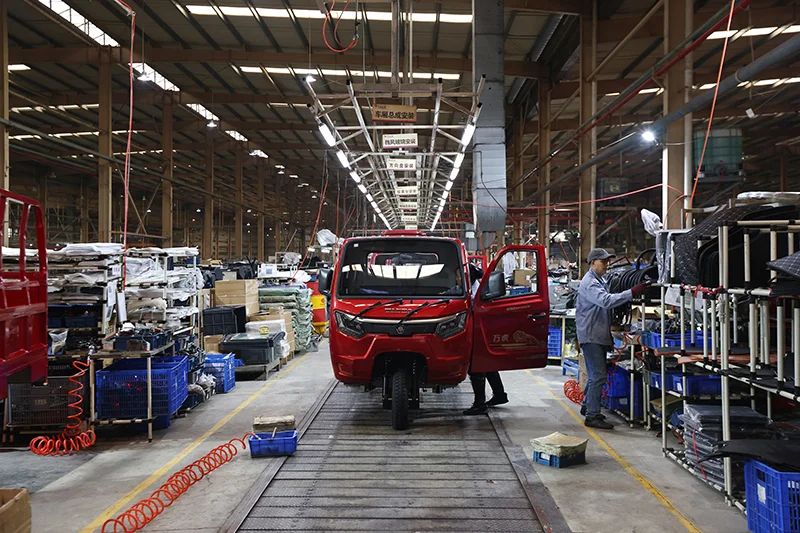
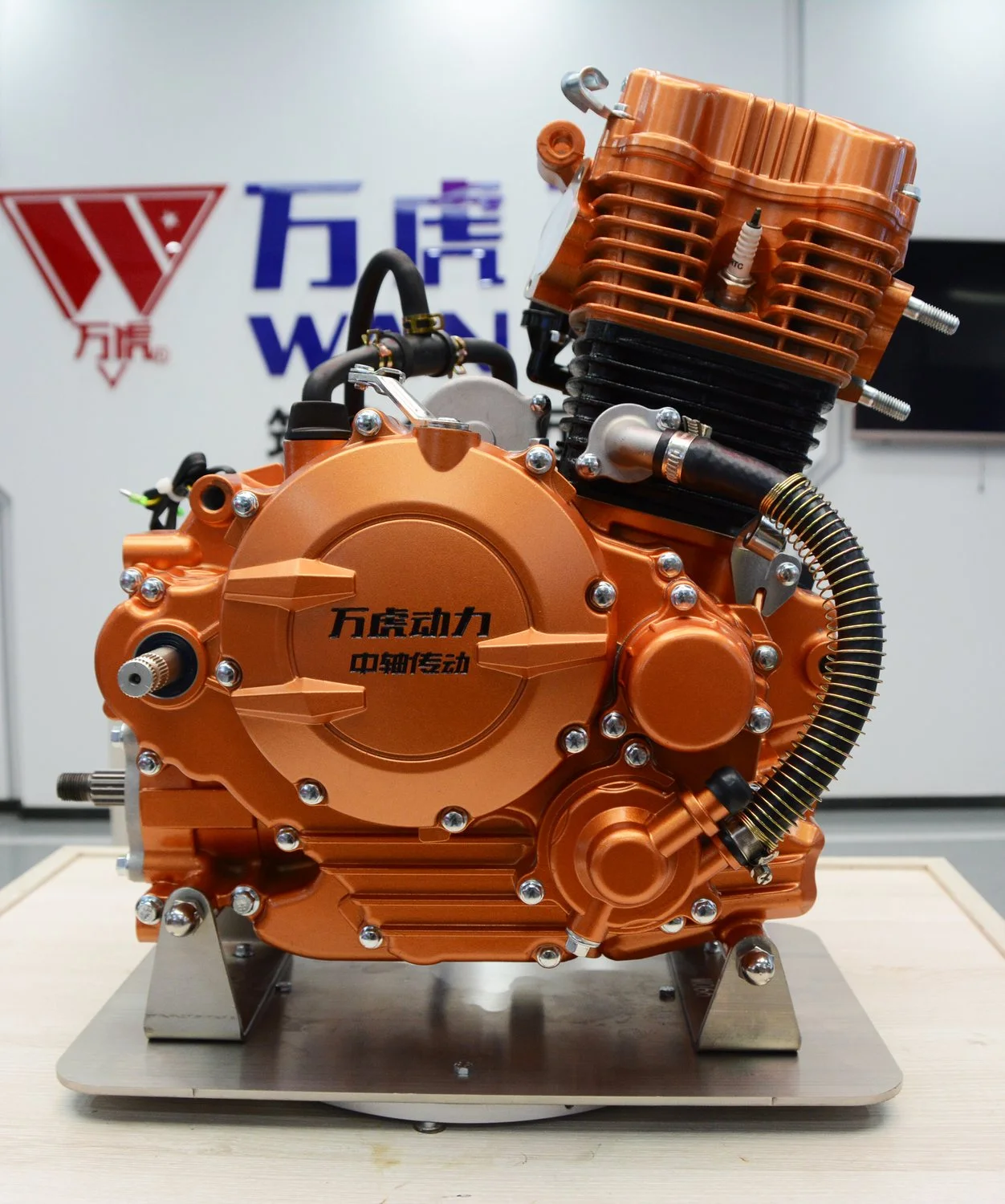
Wanhoo, founded in Chongqing in 1986, builds three-wheelers, with more than 1,000 employees, a 60,000 m² plant, annual capacity of 100,000 vehicles and 300,000 engines, and exports to more than 50 countries. Those manufacturing facts do not document the fuel-test protocol. Ask for the current model data, then use your own safe measurement series for route planning.
Frequently Asked Questions
**Is a published cargo tricycle fuel consumption figure a guarantee of what I will burn?**
No. It is a model specification, not a promise for a particular route. The cited public pages do not provide a matched protocol, so the figures do not establish a controlled model ranking or predict work that includes different loads, gradients, temperatures, traffic and waiting.
Which Wanhoo models have a published fuel consumption figure?
The cited public pages list upper limits for three models: Q1 at ≤3.4 L/100 km, K3 at ≤3.9 L/100 km and WINTIGER at ≤4.3 L/100 km. This article does not infer an L/100 km value from the tank size of any other model. Request current data and its protocol in writing.
What does the ≤ sign actually commit to?
It marks the upper-limit value published for that model. It is not a fleet average, a floor or a guarantee for your route. Because the cited public pages do not show matched test conditions, the limits should not be used to calculate the real difference between models.
How long should I measure before I trust the result?
One refill is a snapshot. Measure several representative periods using the same safe fill procedure and record route, load and waiting time. The spread is useful: if one period sits far above the others, investigate what changed rather than averaging it away.
Why does using the same pump matter so much?
Different pumps can cut off at different points and nozzles sit at different depths, so the reference level can change. Keeping the pump, nozzle, parking position and safe fill procedure consistent reduces variation. Never top off or fill into the expansion space merely to reproduce a reading.
My measured figure is higher than the published one. Is the vehicle faulty?
Not necessarily, because your duty cycle may differ from the unpublished protocol behind the specification. Confirm that loads and tyre pressures stay within the vehicle instructions, then review idling, route, trip length and maintenance. A sudden jump against your own baseline is a stronger diagnostic signal than a one-off comparison with the product page.