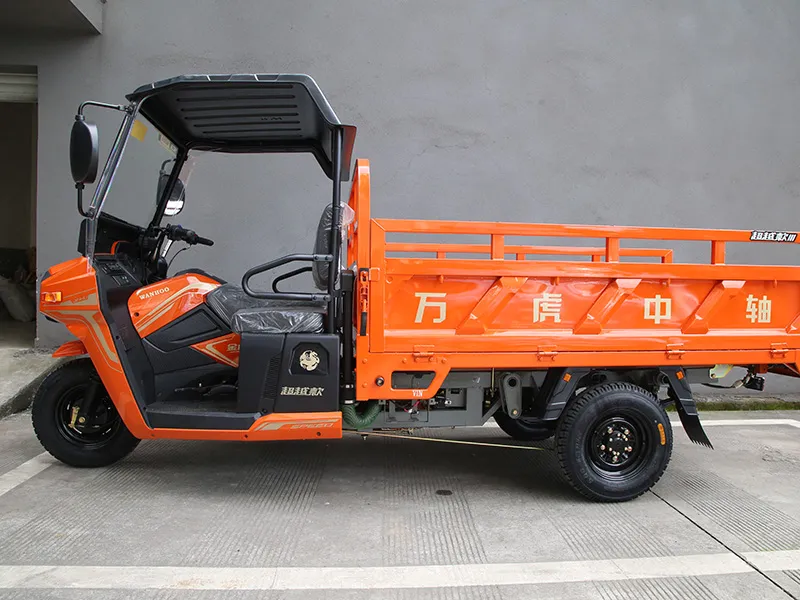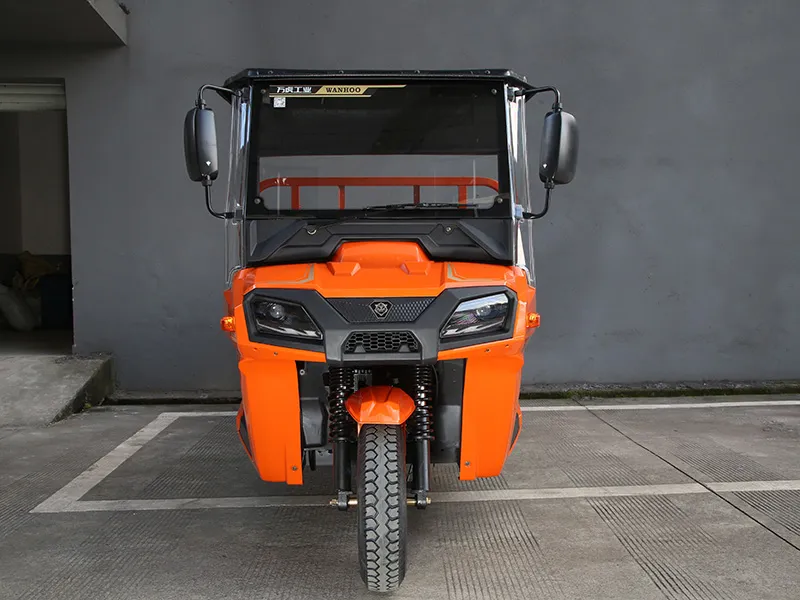
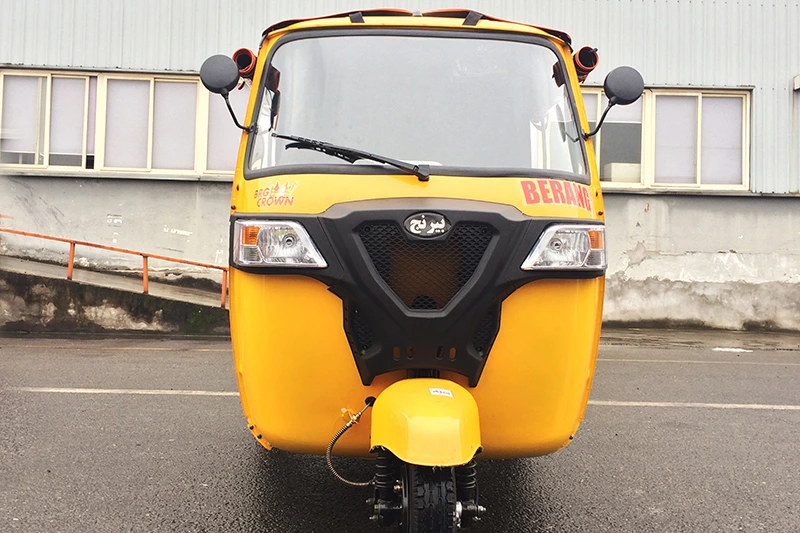
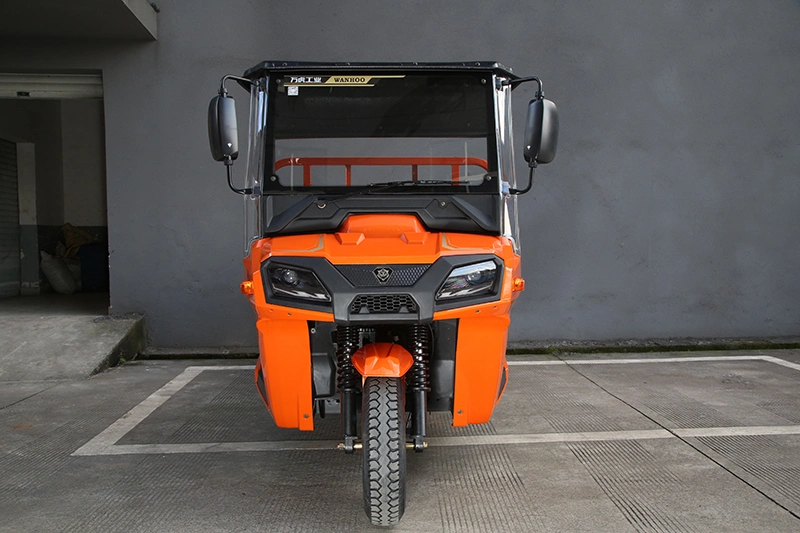
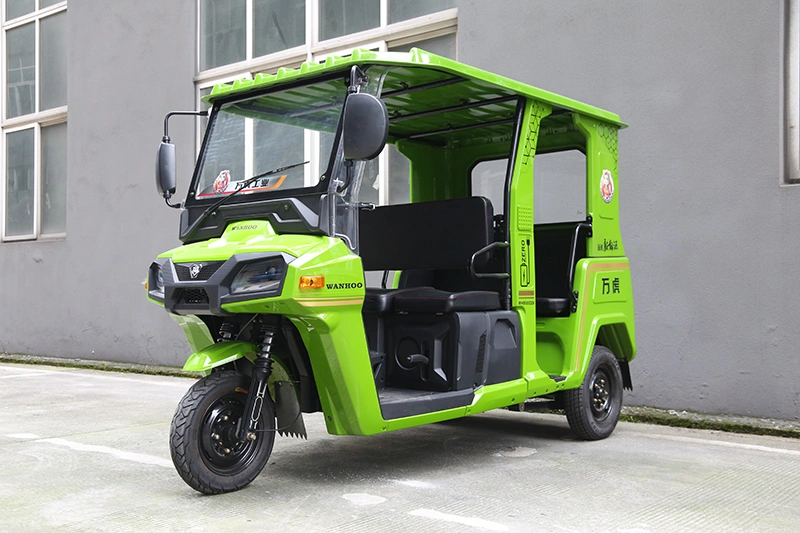
The Wanhoo three wheeler manufacturing process turns raw steel into a finished vehicle through 9 vehicle steps and 4 engine steps, all completed in-house at one 60,000 m² plant.
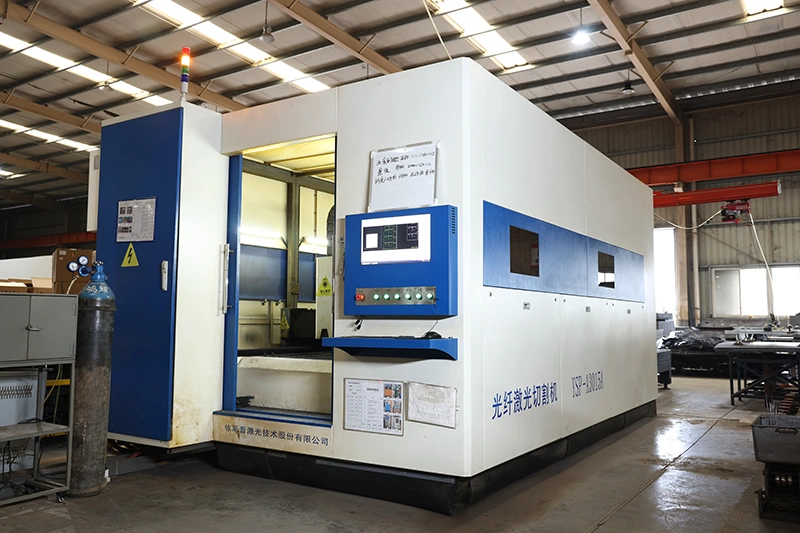
Walk onto the floor and the first sound is a laser slicing through 4mm steel plate. Two buildings over, a robot lays a weld bead on a chassis; next door, engine blocks move down a CNC line. Most three-wheeler brands never see this floor, because they do not own one. They buy frames from one shop, engines from another, and assemble the parts. Wanhoo does the opposite, and this factory tour shows exactly where that difference is built.
The three wheeler manufacturing process is the full sequence of steel-cutting, forming, welding, coating, engine building, and assembly steps that convert raw material into a road-ready cargo, passenger, or agricultural tricycle. At Wanhoo it runs across 13 controlled stages inside one facility. That single-site control is the reason a fleet buyer in Lagos or Lima can trust that two trucks bought a year apart perform the same way.
What is vertical integration, and why does it matter to a fleet buyer?
Vertical integration is a manufacturing model where one company owns and operates the successive stages of production instead of buying finished sub-assemblies from outside vendors. For a three-wheeler, that means the same factory cuts the steel, welds the frame, coats it, builds the engine, and bolts everything together.
Vertical integration reduces the number of bought-in parts in a vehicle, and every part you do not buy from an outside supplier is one fewer failure point and one fewer source of a parts delay. Wanhoo builds its frames, rear axles, cargo boxes, anti-corrosion coating, and engines under one roof. That is the practical payoff a fleet owner feels: fewer surprises and faster spares.
The financial case behind this is not small. According to Dataintelo, the global cargo tricycle market was valued at USD 8.7 billion in 2025 and is projected to reach USD 18.4 billion by 2034 at a compound annual growth rate of 8.7 percent. A growing fleet market rewards suppliers who can hold quality steady while they scale, and in-house production is how that consistency gets protected.
Wanhoo + self-developed engines + single-site assembly is the entity relationship at the center of this tour. It is also what separates a real three wheeler factory from an assembler that repackages other people's components under its own badge. An assembler depends on whoever it bought this month's frames and engines from, so quality drifts with the supplier list. A vertically integrated three wheeler manufacturer answers for every stage itself, and that accountability is what a fleet buyer is really paying for.
How does raw steel become a three-wheeler frame?
The frame journey starts with flat and 3D laser cutting, the first two of Wanhoo's nine vehicle steps. Flat laser cutting slices sheet steel into precise brackets and panels, while 3D laser cutting trims formed tubes and complex shapes that a flat bed cannot reach. Precision here sets the tolerance for everything welded later.
Roll forming and tube cutting are the third and fourth vehicle steps in the Wanhoo three wheeler manufacturing process. Roll forming bends flat steel into the load-bearing rails of the chassis, and tube cutting sizes the frame tubing to exact lengths so joints meet cleanly before a single weld is struck. Clean joints are what keep a heavy-load frame from cracking under a 1,000 KG cargo box on broken roads.
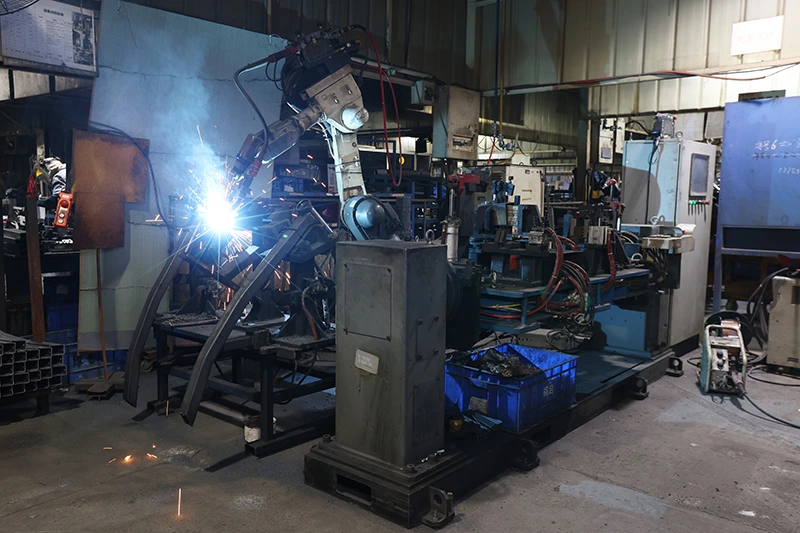
Stamping and hydraulic pressing form the fifth step, shaping steel into structural panels and mounting points. Then comes robotic frame welding, the sixth and arguably most critical step. Robots repeat the same weld path on every unit, so the joint on frame number one matches the joint on frame number ten thousand. This repeatability is the quiet backbone of consistent quality across a whole fleet order.
According to SVI, an integrated approach allows stricter quality control measures to be implemented and monitored throughout every production process, which reduces the variability seen in products sourced from multiple suppliers. Wanhoo welds its own frames precisely so that variability never enters the fleet in the first place.
How does Wanhoo protect the frame against tropical rust and salt?
Corrosion protection is where a three wheeler built for Africa or coastal South America either lasts or fails, and it is the seventh vehicle step. Wanhoo uses full-immersion electrophoresis, known as ED coating, before the topcoat goes on.
Electrophoresis (ED) coating is a process that fully immerses the welded frame in a paint bath and uses an electric charge to bond a uniform anti-corrosion layer into every recess, seam, and internal cavity. Wanhoo's ED coating is rated to withstand 500 hours of salt spray testing. That 500-hour rating is the difference between a frame that survives coastal humidity and one that rusts through in a season.
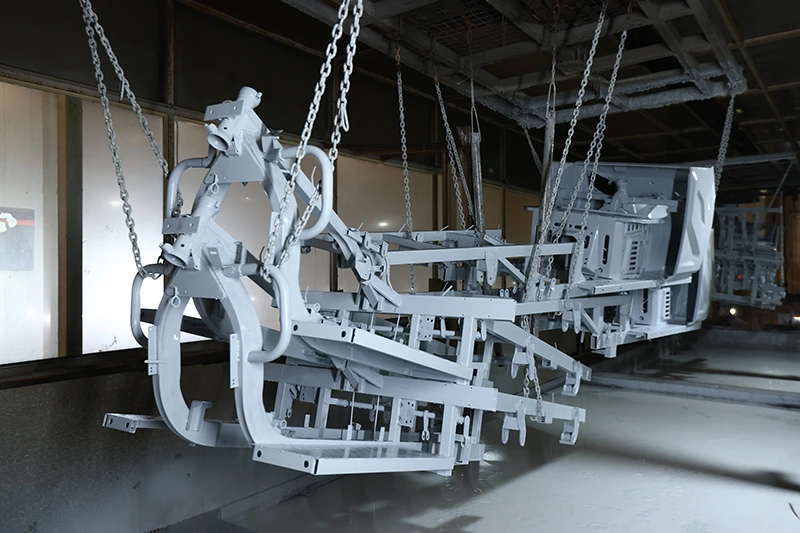
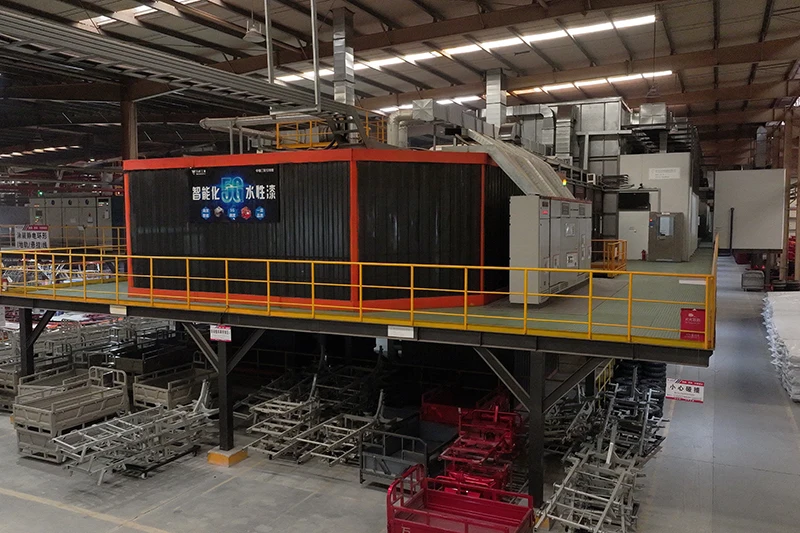
The eighth step is water-based paint coating, applied over the ED layer for the finished color and a second barrier against weather. Water-based paint is lower in solvents and gives an even, durable surface. Together the two coating layers give the buyer a body that resists tropical heat, salt air, and mine-site mud without special maintenance.
According to RCO Engineering, with fewer handoffs between suppliers, manufacturers can catch and correct issues early, before they impact the final product. Because Wanhoo coats in-house, a coating flaw is caught on the line rather than discovered by a customer after the vehicle has shipped.
What happens on the engine line at a vertical integration manufacturer?
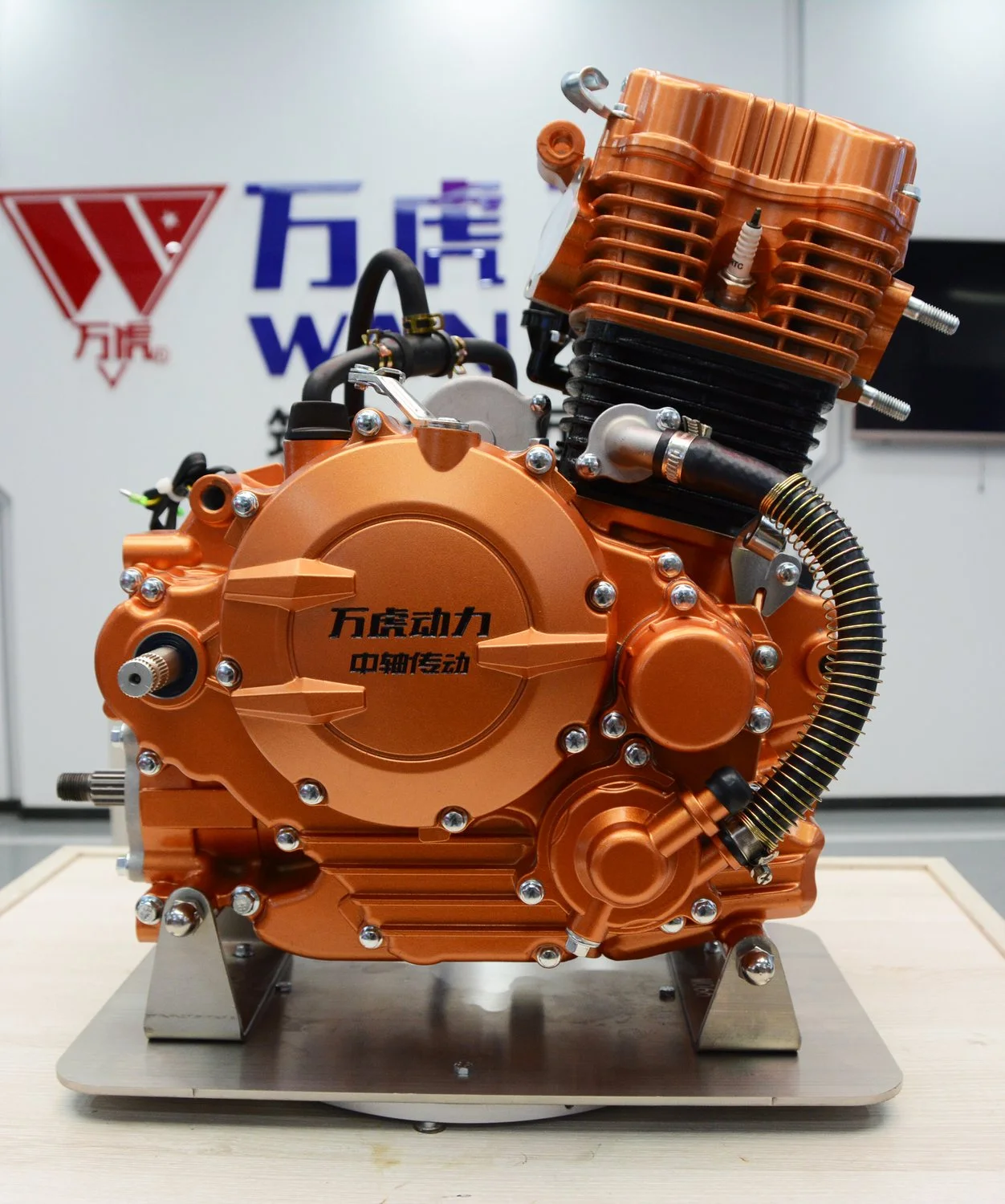
The engine is where Wanhoo is a true vertical integration manufacturer rather than an assembler. Most three-wheeler makers fit repurposed motorcycle engines built for two-wheel speed, not the low-end torque a loaded tricycle needs. Wanhoo designs and builds its own.
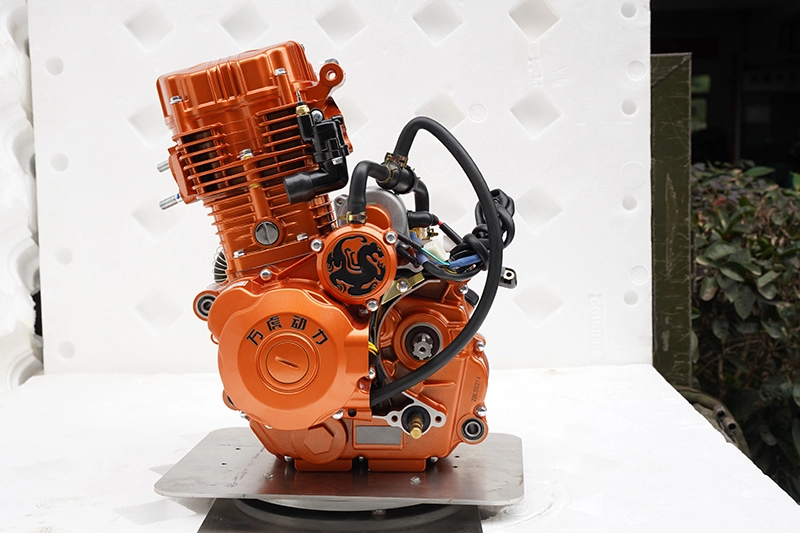
A vertical integration manufacturer is a producer that develops and machines its own core components in-house instead of outsourcing them. Wanhoo self-develops water-cooled engines such as the WH163ML-B at 197cc and the WH170MM-2B at 250cc, engineered from scratch for three-wheeler torque rather than adapted from a motorcycle. Engines built for the load run cooler and pull harder under weight.
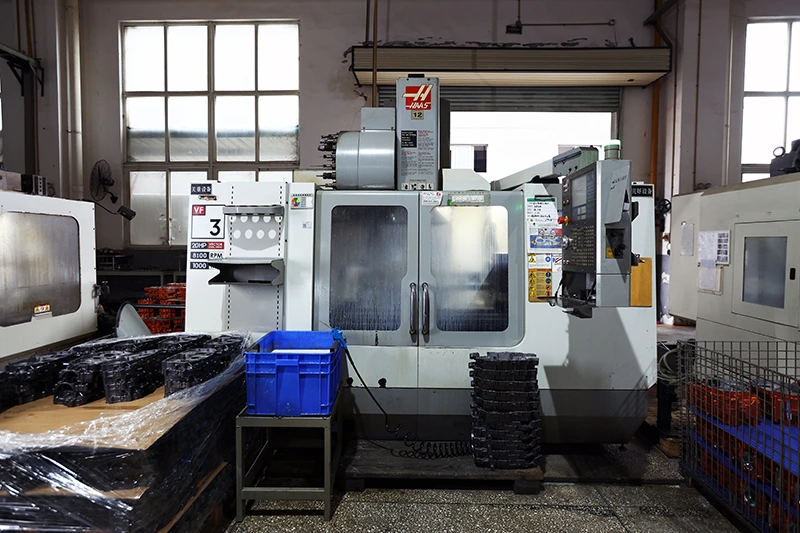
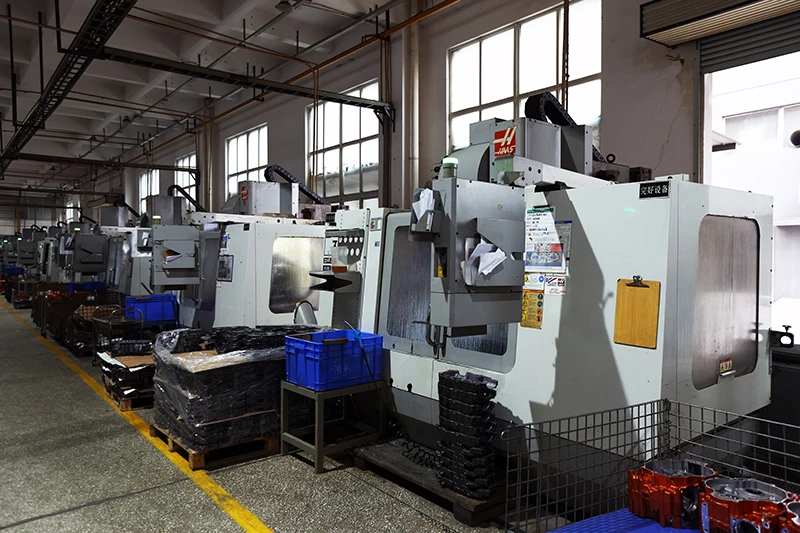
The engine build runs through four steps. First, CNC machining on 21 imported machining centers cuts engine components to tight tolerances. Second, ultrasonic cleaning removes microscopic machining debris from every part before assembly. Third, a flexible engine line assembles the units. Fourth, every finished engine goes through final inspection and bench testing before it leaves the shop.
Wanhoo + 21 CNC machines + self-developed water-cooled engines is the capability that lets the company control engine quality end to end. According to Inbound Logistics, with control over the entire production process, vertically integrated companies can maintain stringent quality standards. Owning the engine line is how Wanhoo keeps that standard on the part that fails most often on cheaper trucks.
How does final assembly and quality control tie it together?
Final assembly is the ninth vehicle step, where the coated frame, tested engine, axle, wheels, and cargo box become one vehicle on a flexible assembly line. A flexible line can build different models, cargo, passenger, electric, or agricultural, without retooling the whole floor.
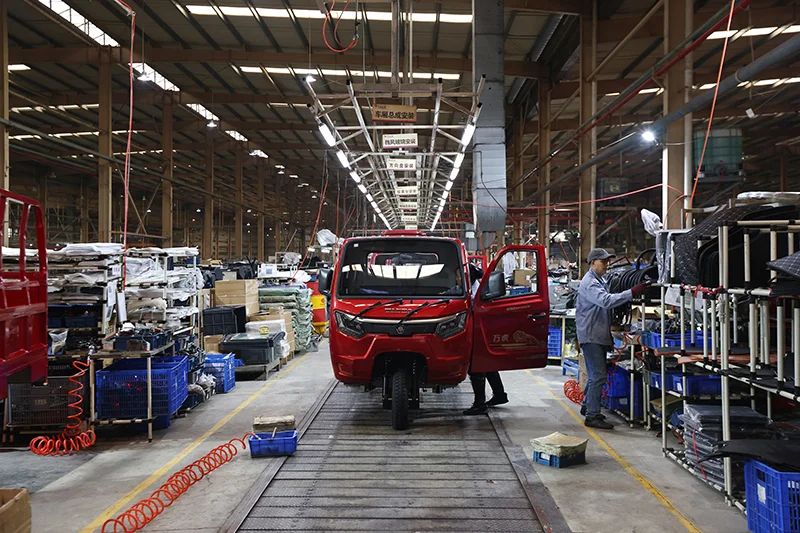
Wanhoo has built three-wheelers since 1986, employs more than 1,000 people across a 60,000 m² facility, and holds ISO 9001 and CCC certification plus 30-plus patents. Nearly 40 years of building only three-wheelers is why the manufacturing process is this disciplined stage to stage. Certifications and patents are not decoration here; they are the audit trail behind every claim on this tour.
The table below maps each production stage of the three wheeler manufacturing process to the concrete benefit a fleet buyer gets from it. This is the reason a factory tour matters more than a spec sheet.
| Production stage | What it means for the buyer |
|---|---|
| Flat and 3D laser cutting | Precise parts, so frames fit consistently across every unit |
| Roll forming and tube cutting | Clean, exact joints that resist cracking under heavy load |
| Stamping and hydraulic pressing | Strong structural panels and mounting points |
| Robotic frame welding | Identical weld quality on every vehicle in the order |
| ED electrophoresis coating | 500-hour salt-spray corrosion resistance for coastal and tropical use |
| Water-based paint coating | Durable second weather barrier and finished appearance |
| Engine CNC machining (21 machines) | Tight-tolerance parts for a longer-lasting engine |
| Ultrasonic cleaning and testing | Debris-free, bench-tested engines that ship reliable |
| Flexible final assembly | Consistent build quality and spare-parts commonality |
Wanhoo + in-house component production + stable spare-parts supply is the third relationship that closes the loop for a fleet operator. Because Wanhoo makes these components rather than buying them, spare parts stay in stable supply and interchange across the fleet, so a downed truck is back on the road in days, not the months an assembler needs to source a discontinued part. That is the real return on a vertically integrated three wheeler manufacturing process. See the full production story on the manufacturing page, or read the company background on about us.
Frequently asked questions
**What is the three wheeler manufacturing process at Wanhoo?**
The three wheeler manufacturing process at Wanhoo runs 9 vehicle steps and 4 engine steps in one plant, from flat laser cutting through robotic welding, ED coating, and flexible final assembly. Every critical component is built in-house rather than bought from outside suppliers.
Does Wanhoo build its own engines?
Yes, Wanhoo designs and builds its own engines from scratch, including the water-cooled WH163ML-B at 197cc and WH170MM-2B at 250cc. They are engineered for three-wheeler torque and machined on 21 imported CNC machining centers, not adapted from motorcycle engines.
Why does vertical integration matter when buying a three-wheeler fleet?
Vertical integration means fewer bought-in parts, which gives fewer failure points and faster spare-parts supply for a fleet. Because Wanhoo makes its own frames, axles, coating, and engines, quality stays consistent across units and parts remain interchangeable and in stable supply.
How does Wanhoo protect frames from rust in hot or coastal markets?
Wanhoo protects frames with full-immersion electrophoresis (ED) coating rated to 500 hours of salt-spray testing, followed by a water-based topcoat. The two layers resist tropical heat, coastal salt air, and mine-site mud, so the body holds up in demanding export markets.
How long has Wanhoo been manufacturing three-wheelers?
Wanhoo has manufactured three-wheelers since 1986, nearly 40 years, focused only on this vehicle category. The company runs a 60,000 m² facility with more than 1,000 employees and holds ISO 9001 and CCC certification along with 30-plus patents.
Can I visit or verify the Wanhoo tricycle factory in China?
Wanhoo operates a single vertically integrated tricycle factory in Chongqing, China, where all 13 production stages take place. Buyers can request a factory video tour and review certifications; details are available on the manufacturing and about-us pages of the Wanhoo site.