The electric tuk tuk operating cost runs roughly $0.02 per kilometre in electricity, plus a small battery and maintenance amount, landing near 70% below gasoline.
A driver in Nairobi finishes a 90 km shift, plugs in overnight, and pays about two dollars for the electricity that will carry the vehicle all of tomorrow. That single number is where the whole operating-cost story starts, and it is the reason fleet owners keep asking what an electric three wheeler really costs per kilometre once every line is added up honestly.
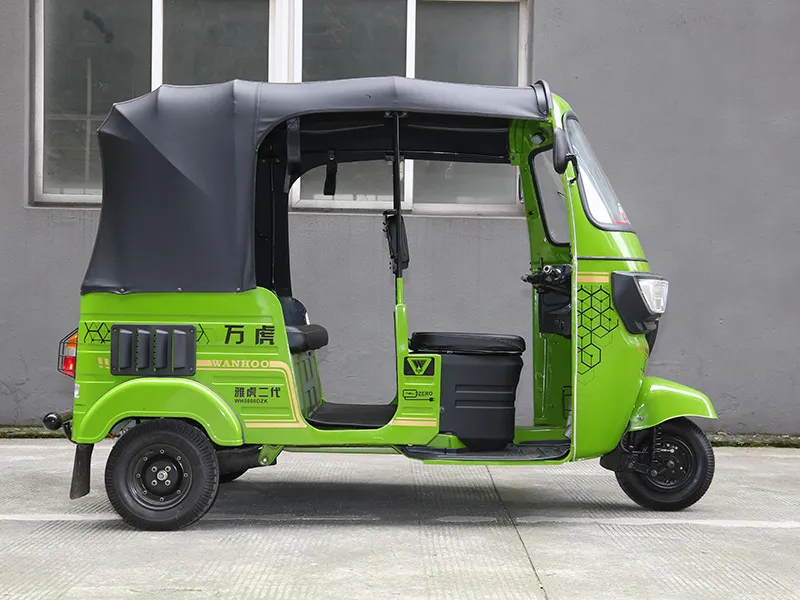
Most buyers already know the electricity is cheap. What they want is the full picture: the charge, the eventual battery, the maintenance a battery drivetrain still needs, and how those combine. This breakdown walks each line for a real machine, the Wanhoo YAHOO-II-Electric, so the total is a structure you can plug your own power price into rather than a marketing round number.
What goes into the operating cost of an electric tuk tuk?
The electric tuk tuk operating cost is built from three lines, not one. Electricity per kilometre is the biggest and the one everyone quotes. Underneath it sit two smaller lines that people forget: the battery, amortised across its cycle life, and the maintenance a simpler drivetrain still asks for. Add the three and you have a true cost per kilometre rather than just an energy figure.
The operating cost of an electric three wheeler is the sum of three running lines: the electricity consumed per kilometre, the battery cost spread across its charge-cycle life, and the reduced maintenance of a motor-and-battery drivetrain. It excludes the purchase price, which is a capital cost, not a running one, and is quoted separately. Keeping those separate is what makes the math trustworthy.
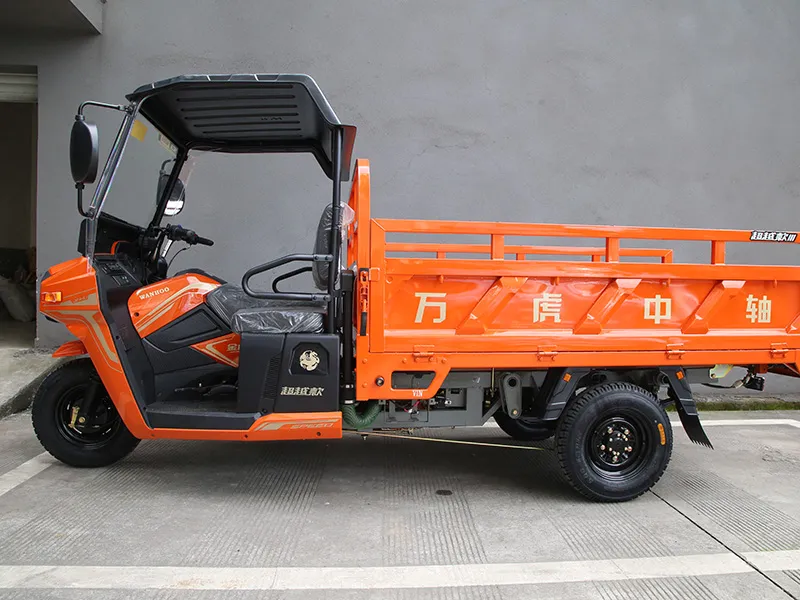
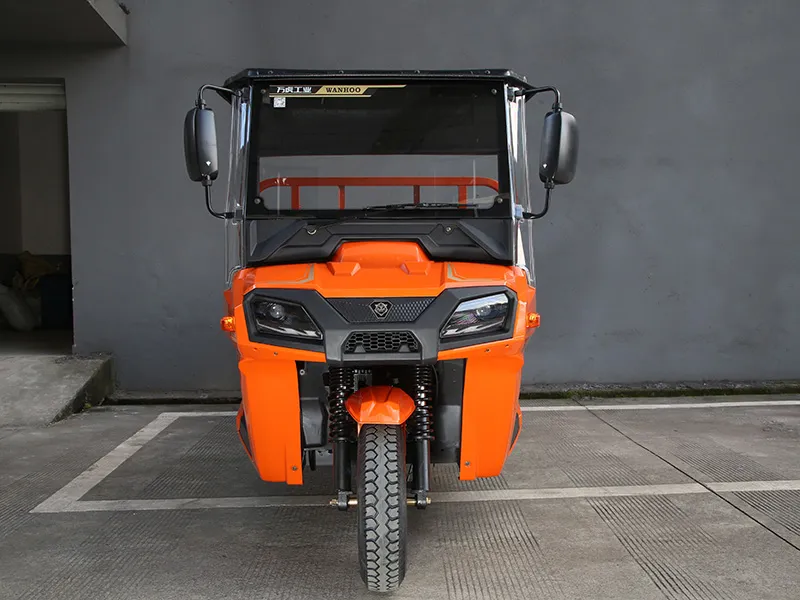
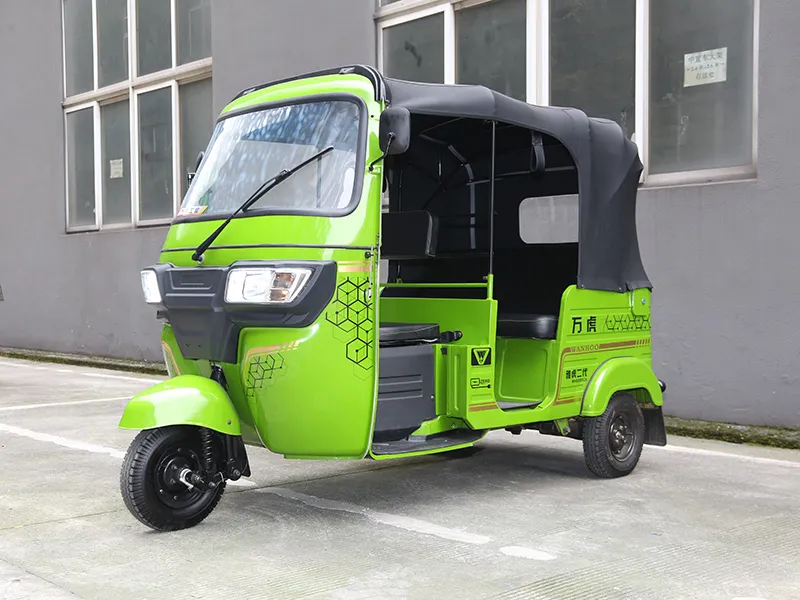
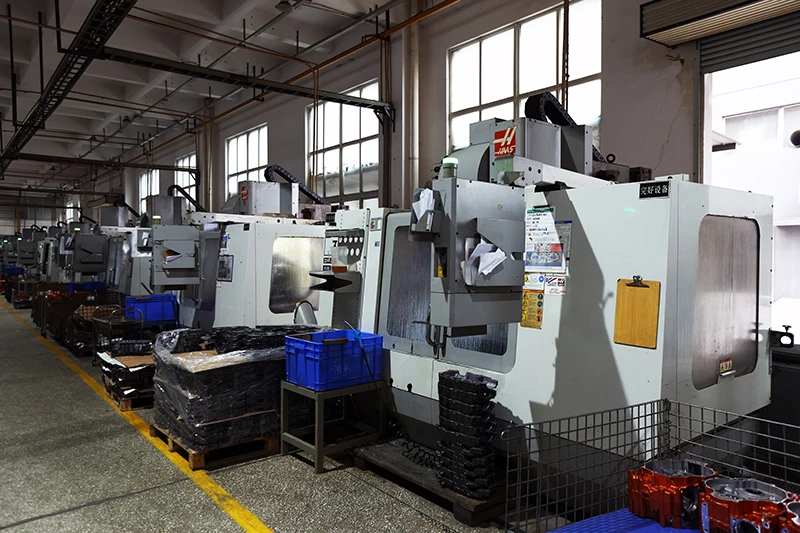
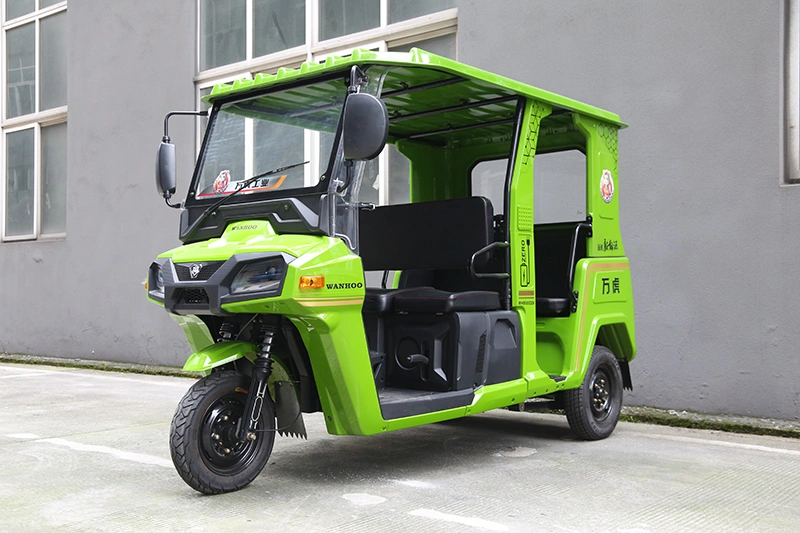
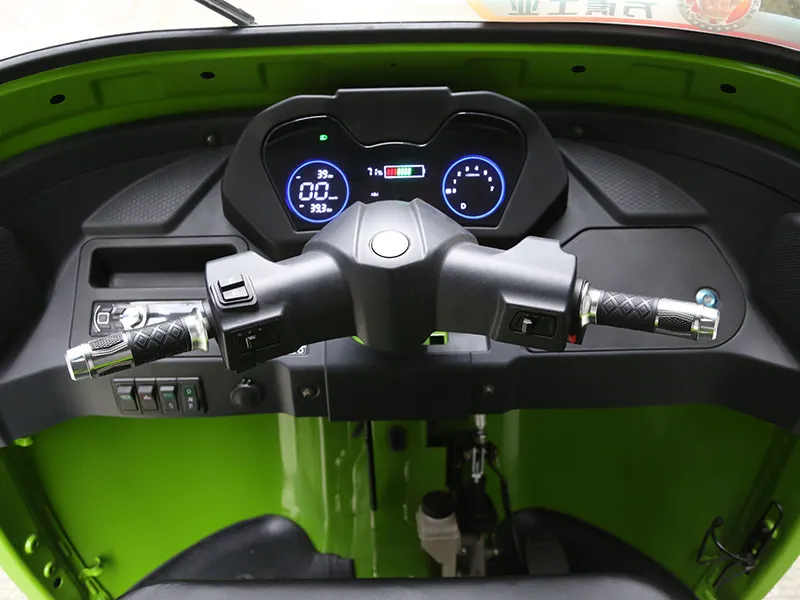
Wanhoo's flagship electric passenger unit, the YAHOO-II-Electric, is the worked example throughout. It carries a 72V 150AH LFP battery, seats up to three passengers, and delivers an 80 to 100 km range on a single charge. Wanhoo builds the powertrain in-house on the same platform it has refined since 1986, so the running-cost numbers below sit on a drivetrain engineered for daily commercial duty rather than light personal use.
One number belongs to the capital column, not this one. The YAHOO-II-Electric ships from Chongqing at $1,670 FOB, and that price is without battery, so a battery-included quote is a separate line to request. That matters here because the battery you buy is exactly what the amortisation line below is spreading across tens of thousands of kilometres.
How much does the electricity cost per kilometre?
Electricity is the dominant running line, and it is small. An electric three wheeler uses roughly 10 kWh to cover 100 km, so the cost per kilometre is simply your local power price times about 0.1 kWh. At a typical $0.20 per kWh that is around $0.02 per km, or near $2.00 for a full 100 km day, which is where the headline daily figure comes from.
According to agl-trike, charging an electric tuk-tuk for 100 km of daily running costs about $2.00 in electricity against roughly $6.00 in gasoline, and consumes close to 10 kWh per 100 km. That 10 kWh figure is the one to anchor on, because it turns any electricity tariff you know into a per-kilometre cost in one multiplication.
An electric three wheeler drawing about 10 kWh per 100 km costs its operator the local electricity price times roughly 0.1 kWh for every kilometre driven. At $0.20 per kWh that is near $0.02 per km; at $0.10 it halves to $0.01. The per-kilometre energy cost is therefore a direct function of the grid tariff, nothing more. Local power price is the single biggest variable.
The same pattern holds in high-volume markets. According to Astro Motors, an electric auto rickshaw runs at about ₹1 to ₹1.5 per km on electricity, using 4 to 5 units to cover 100 km, versus ₹3.5 to ₹4.5 per km on petrol. Converted roughly, that Indian electricity cost sits near the same $0.01 to $0.02 per km band, which is why the figure travels across regions.
Charging time shapes how the day is run, not the cost. The YAHOO-II-Electric charges in about 7.5 hours on a 25A charger or 3.5 hours on a 50A charger, so a fleet typically fills overnight at the depot on the cheapest tariff. Charging at off-peak hours can cut the per-unit cost further, pushing the per-kilometre energy line lower still for operators who plan their charging windows.
How much of the running cost is the battery over its life?
The battery is a real running line, and LFP chemistry is what keeps it small. The pack is a capital purchase, but spread across its cycle life it becomes a per-kilometre cost, and that cost depends entirely on how many kilometres the battery delivers before replacement. A battery lasting twice as long costs half as much per kilometre, which is the whole reason chemistry matters to a fleet accountant.
Battery cost per kilometre equals the pack price divided by the total distance it delivers over its cycle life. A pack that survives many more charge cycles spreads its cost across far more kilometres, so its contribution to the running cost shrinks accordingly. This is why cycle life, not just purchase price, drives the true battery cost of an electric three wheeler. Cycle life is the lever.
Wanhoo standardises on LFP (lithium iron phosphate) cells rather than lead-acid or NMC, and the cycle numbers explain the choice. According to Deltic, LFP delivers 3,000 to 5,000 full charge cycles and 5 to 7-plus years of daily use, against 1,500 to 2,000 cycles for NMC and just 300 to 500 cycles or 1 to 2 years for lead-acid. Wanhoo rates its LFP platform at 2,000-plus cycles for hard commercial duty.
Run those cycles through the range and the per-kilometre battery cost falls away. At 2,000-plus charge cycles and 80 to 100 km per charge, an LFP pack can deliver well over 150,000 km before replacement. According to agl-trike, a $1,000 to $1,300 battery spread across that kind of lifetime works out near $0.006 per km, a fraction of the electricity line above it.
An LFP battery is a lithium-ion battery using lithium iron phosphate as its cathode, giving strong thermal stability, long cycle life, and a lower risk of thermal runaway than other lithium chemistries. For a three wheeler that charges every day, those properties mean the pack lasts most of the vehicle's working life instead of needing replacement every year or two. That longevity is the point of the chemistry.
Safety rides along with the economics. The Deltic comparison puts LFP's thermal-runaway threshold near 270 degrees Celsius against about 210 for NMC, a wider margin that matters in the hot climates across Africa, South America, and Southeast Asia where these vehicles work all day. Wanhoo pairs LFP cells with a DC brushless motor across its 72V platform, so the whole powertrain is built for daily commercial duty.
Why is maintenance so much lower on an electric three wheeler?
Maintenance is the third running line, and a battery drivetrain shrinks it because there is simply less to service. No oil, no spark plugs, no fuel filters, no clutch, no exhaust: each of those is both a parts bill and a day of lost earning downtime on a gasoline unit, and each one disappears on an electric three wheeler. What remains is brakes, tyres, and the occasional electrical check.
According to Saera, e-rickshaws cut maintenance costs against traditional rickshaws through fewer moving parts and a longer service life, while still delivering a running cost near the same per-kilometre band as the vehicles they replace. Fewer parts to fail means fewer unplanned stops, which for a fleet is money saved twice: once on parts, once on uptime.
A battery-electric three wheeler removes the recurring engine maintenance a gasoline unit needs: no oil changes, no spark plugs, no fuel filters, no clutch adjustments, and no exhaust repairs. What remains is brake pads, tyres, and periodic electrical inspection, so the maintenance line drops sharply and takes much of the downtime cost with it. Fewer moving parts is fewer failure points.
The industry puts a number on it. Multiple e-rickshaw operators report saving up to 70% on annual maintenance versus internal-combustion autos, driven by the absence of an engine to service. That saving compounds with the low electricity and battery lines above, and together the three are what produce the up-to-roughly-70% lower operating cost figure Wanhoo cites for the YAHOO-II-Electric overall.
What is the full per-kilometre operating cost, worked out?
Stacking the three lines gives the true electric tuk tuk operating cost per kilometre. The table below builds it from the figures already cited: electricity from the 10 kWh per 100 km rate, battery from LFP cycle life, and maintenance from the reduced-service reality. Read the totals as structure and direction, since your local electricity price moves the largest line up or down directly.
| Operating cost line (per km) | Electric tuk tuk (YAHOO-II-Electric) | Basis |
|---|---|---|
| Electricity | ~$0.01 to $0.02 | ~10 kWh / 100 km at local tariff |
| Battery (amortised) | ~$0.006 | LFP pack over 150,000+ km, 2,000+ cycles |
| Maintenance | Low; no oil, plugs, filters, clutch, exhaust | Brakes, tyres, electrical only |
| Indicative total | ~$0.03 per km | Sum of the three lines |
| Daily energy (100 km) | ~$2.00 | vs ~$6.00 gasoline for same distance |
| Range per charge | 80 to 100 km | 72V 150AH LFP |
The structure is what to take away: electricity is the biggest line and moves with your grid price, the battery is a small fixed contribution because LFP lasts, and maintenance is almost a rounding error next to a gasoline engine's service bill. At an indicative $0.03 per km, a 100 km day costs a fleet close to $3.00 all-in on the running side.
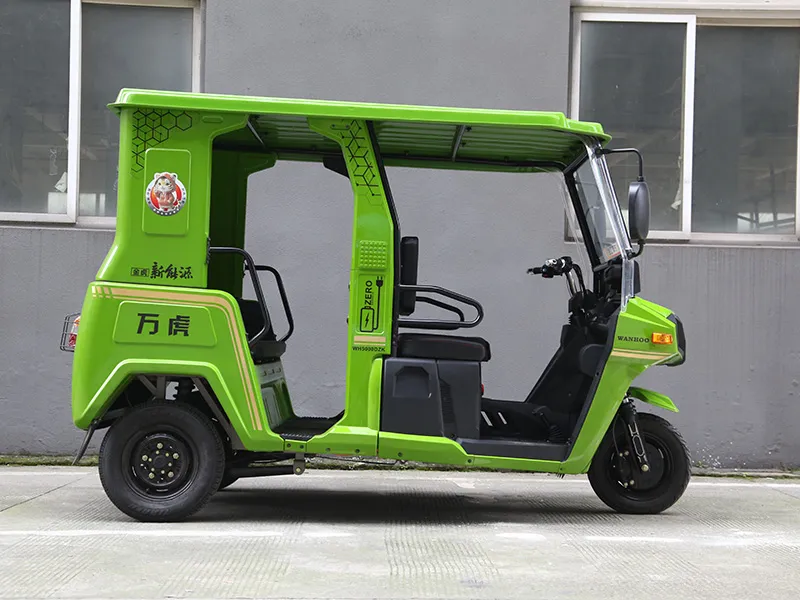
Capacity changes the revenue side of that same per-kilometre cost. For higher-volume routes, Wanhoo's King-Tiger-Electric seats 9 passengers on its heavy-duty platform, runs a 72V 120AH LFP battery, and climbs a gradeability of at least 12 degrees fully loaded, from $1,560 FOB without battery. Wanhoo's heavy-duty electric platform spreads the same low running cost across more fare-paying seats, improving the earnings per kilometre rather than the cost of it.
The honest caveat is that these are indicative figures, not a quote. Your real per-kilometre cost depends on the local electricity tariff, daily mileage, and how you finance the battery, all of which shift the totals. What does not shift is the shape: a small energy line, a smaller battery line, and a maintenance line a fraction of a combustion engine's, which is why the electric running cost lands so far below gasoline.
Want the numbers set against a petrol unit? Read the full electric tuk-tuk vs gasoline cost breakdown, or dig into why the pack lasts in the LFP vs lead-acid and NMC battery comparison. To price the running cost for your own route, go to the YAHOO-II-Electric passenger tricycle page and request a battery-included quote with a per-kilometre TCO for your electricity tariff.
Frequently Asked Questions
**What is the operating cost of an electric tuk tuk per km?**
The electric tuk tuk operating cost is roughly $0.03 per km all-in: about $0.01 to $0.02 in electricity, near $0.006 for the amortised LFP battery, and a small maintenance line. The electricity portion is simply your local power tariff times about 0.1 kWh, so it moves with the grid price.
How much electricity does an electric three wheeler use?
An electric three wheeler uses roughly 10 kWh to cover 100 km. At $0.20 per kWh that is about $2.00 a day for a full 100 km, or near $0.02 per km. The YAHOO-II-Electric charges in about 7.5 hours on a 25A charger or 3.5 hours on 50A, so fleets usually fill overnight on the cheapest tariff.
How long does the LFP battery last, and what does replacement cost per km?
Wanhoo's LFP battery is rated at 2,000-plus charge cycles, and published comparisons show LFP reaching 3,000 to 5,000 cycles and 5 to 7-plus years. Spread across 150,000-plus km, a $1,000 to $1,300 pack works out near $0.006 per km, a fraction of the electricity line.
Is maintenance really cheaper on an electric tuk tuk?
Yes. A battery drivetrain has no oil, spark plugs, fuel filters, clutch, or exhaust, so the recurring engine service a gasoline unit needs disappears. Operators commonly report up to 70% lower annual maintenance versus combustion autos, with only brakes, tyres, and electrical checks left to service.
Does the FOB price include the battery?
No. The YAHOO-II-Electric is $1,670 FOB Chongqing without battery, and the King-Tiger-Electric is $1,560 FOB, also without battery. The battery is quoted separately because pack size and shipping rules vary by market, so ask for a battery-included price when you request a quote.
Why is the electric operating cost about 70% lower than gasoline?
The gap comes from three lines together. Electricity for 100 km costs about $2.00 against roughly $6.00 in gasoline, the LFP battery adds only a fraction of a cent per km because it lasts, and maintenance drops sharply with no engine to service. Combined, they produce the up-to-roughly-70% lower operating cost Wanhoo cites for the YAHOO-II-Electric.