A three wheeler lifespan typically spans 5 to 10 years, with engine quality, corrosion protection, load discipline, and maintenance deciding where each unit ends up.
Two cargo tricycles leave the same quarry road after five years of work. One is scrap metal with a cracked frame and a tired engine. The other still hauls a full load every morning. The gap was decided long before either machine was sold.
For a fleet owner or dealer, that gap is money. Around 70% of imported three-wheelers develop serious problems within two years, and every breakdown day costs $50 to $200 in lost income. Knowing what drives three wheeler durability is how buyers stop paying for the same vehicle twice.
How Long Does a Three-Wheeler Last on Average?
There is no single number, because a three wheeler lifespan depends on how it is built and how it is run. Budget units assembled from the cheapest bought-in parts often fade in 3 to 5 years. A well-built, well-maintained machine can work 8 to 12 years or more before major overhaul.
Three wheeler service life is the number of years a tricycle stays in productive work before repair costs exceed its value. For internal-combustion cargo and passenger models, that window typically runs 5 to 10 years, though disciplined maintenance and quality components can push a durable unit well past a decade.
The spread between cheap and quality is measured in years, not months. A vehicle assembled from five suppliers’ lowest bids saves perhaps $200 at purchase, then loses far more to downtime, at $50 to $200 per day, once the engine overheats or the frame cracks. Buying durability up front is almost always the lower total cost.
The honest answer to how long does a tricycle last is a range, not a promise. Two identical-looking machines can differ by years once climate, road quality, load habits, and service reach them. Climate, road quality, load habits, and service quality are the levers that move a unit from the bottom of that range to the top.
Why Does the Engine Decide So Much of a Three Wheeler’s Service Life?
The engine is the single most expensive component to replace, so its wear rate sets the whole machine’s clock. Under sustained heavy load, heat is the enemy. Air-cooled engines struggle to shed that heat, while water-cooled units hold a steadier temperature and wear more slowly across the years.
Yamaha Motor explains that air-cooled motorcycle engines depend on airflow over cooling fins, while liquid-cooled systems reduce the effect of outside-temperature changes and provide more stable, consistent engine performance. For a loaded tricycle climbing a grade in 40°C heat, that thermal difference compounds every day.
According to Wikipedia’s engine cooling overview, any imbalance between the heat an engine produces and the heat its cooling dissipates may result in increased wear, partly from thermal expansion differences between parts. Stable operating temperature is therefore a direct lever on engine longevity.
Sustained load is the real test. A motorcycle engine bolted into a tricycle spins at revs it was never tuned for, so it runs hot and wears fast under a full cargo box. An engine designed from the start for low-speed torque holds together where a repurposed block gives up early.
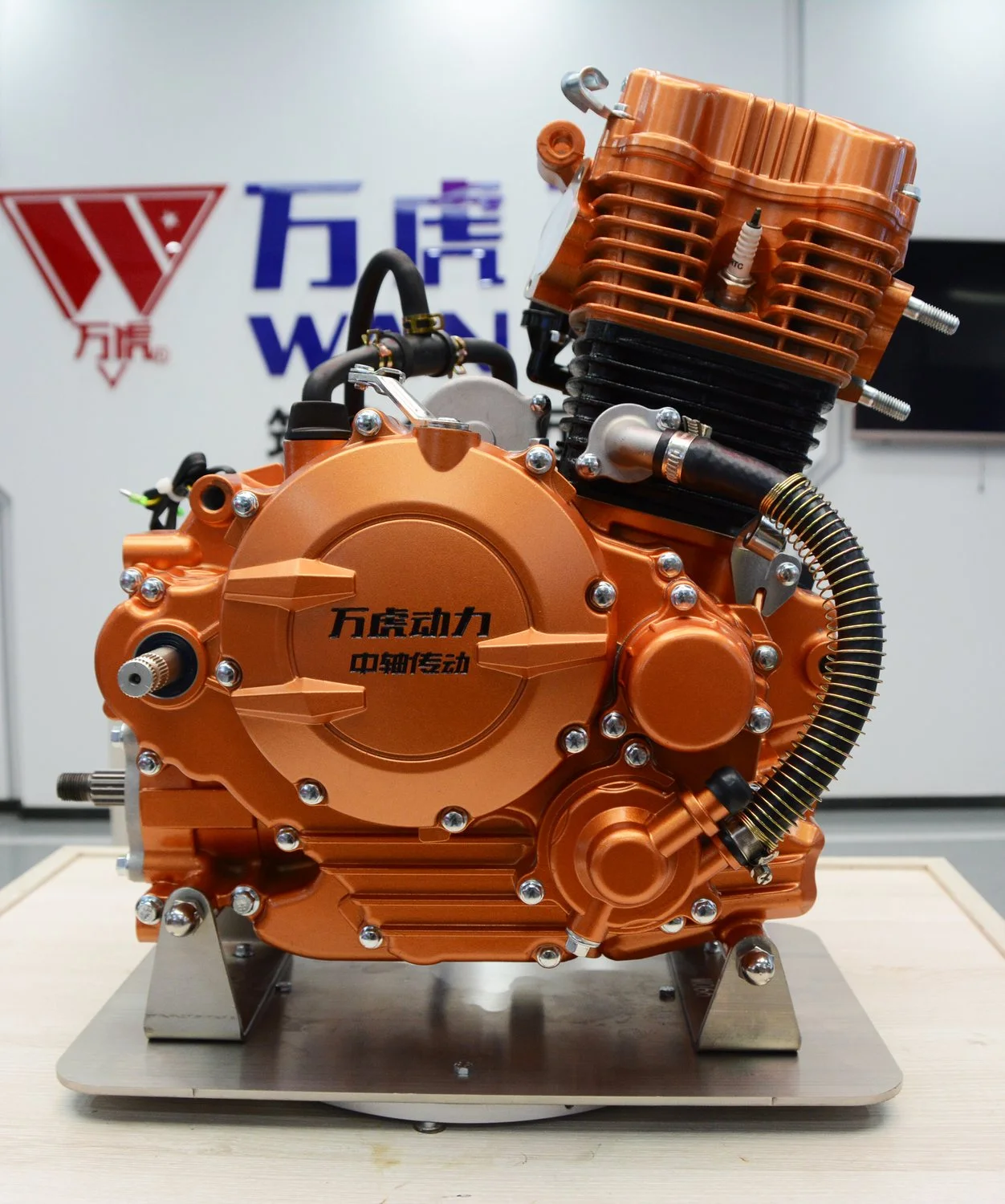
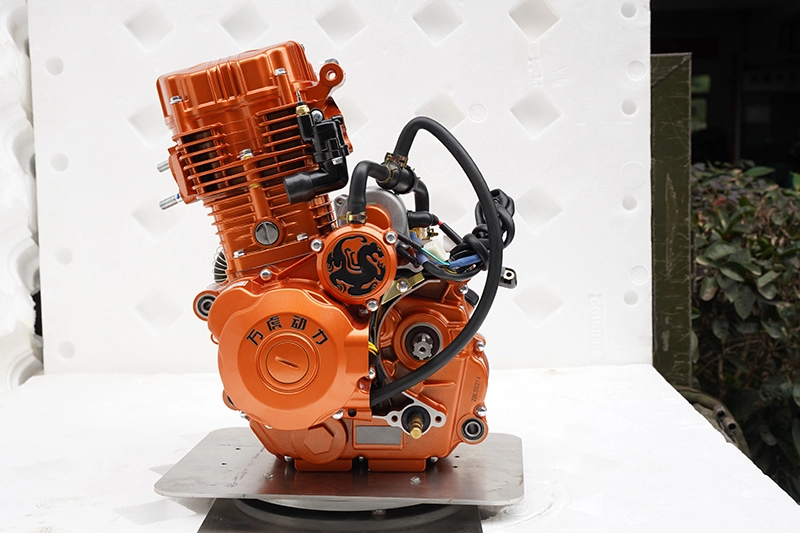
Wanhoo designs and builds its own water-cooled engines, such as the 250cc unit in the KINGTIGER, rather than repurposing motorcycle blocks. Self-developed engines are engineered for three-wheeler torque and sustained load, which most exporters who assemble the cheapest bought-in parts cannot match. Vertical integration also keeps spare parts compatible and available for years.
The cooling choice is not academic. A deeper breakdown of the trade-off lives in our guide on GY6 versus water-cooled three-wheeler engines, but the lifespan takeaway is simple: for heavy, hot, uphill duty, water-cooling buys years of extra engine life.
How Do Frame Strength and Corrosion Protection Extend Structural Life?
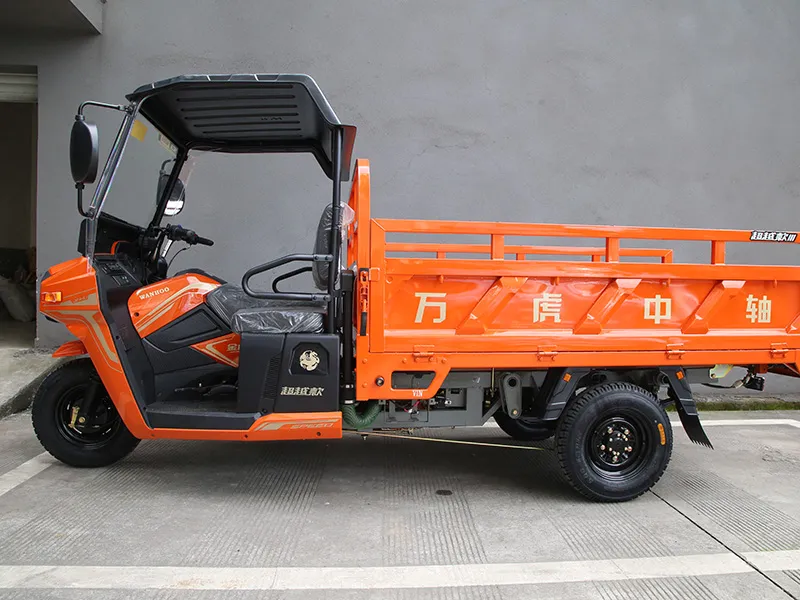
When the engine outlives the frame, the whole vehicle still dies. A cracked chassis or a snapped rear axle ends a tricycle’s working life as surely as a seized motor. Frame geometry, steel section, weld quality, and rust protection decide how many loaded miles the structure survives before it fails.
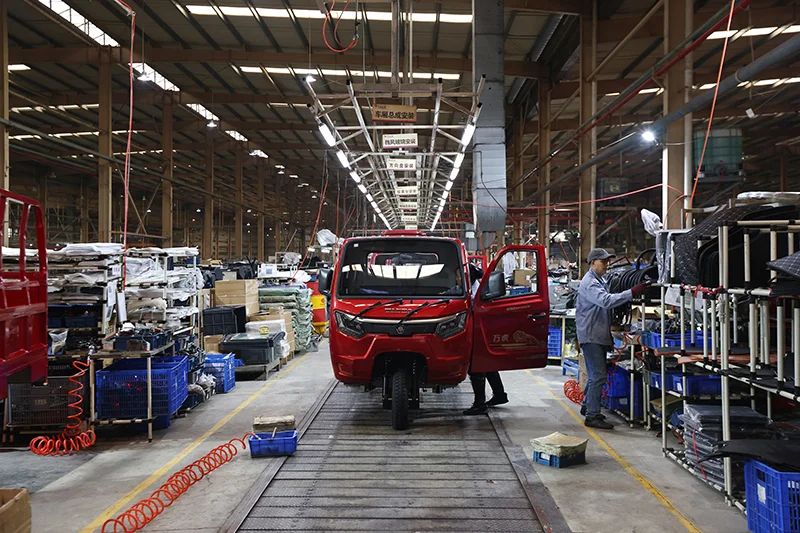
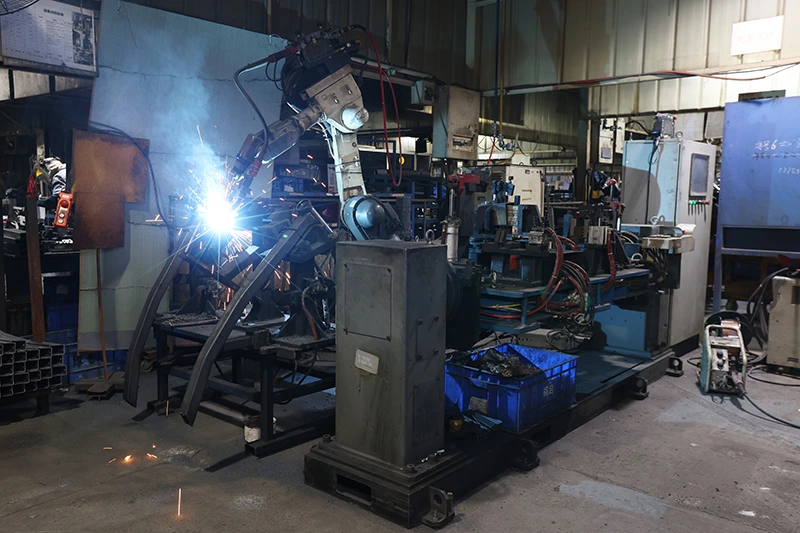
Wanhoo reinforces its chassis with FEA-optimized dual main beams measuring 40 x 80 mm, then joins them with robotic welding for consistent, repeatable seams. That structural margin is why the frame resists cracking at the high-stress points where cheaper welded-tube frames fail first under repeated heavy loads.
Corrosion is the quiet killer of cargo tricycle durability in wet, coastal, and dusty regions. Rust eats frames, fasteners, and load beds from the inside, dropping resale value long before the vehicle stops running. The defense is how the metal is coated, not just what steel sits underneath the paint.
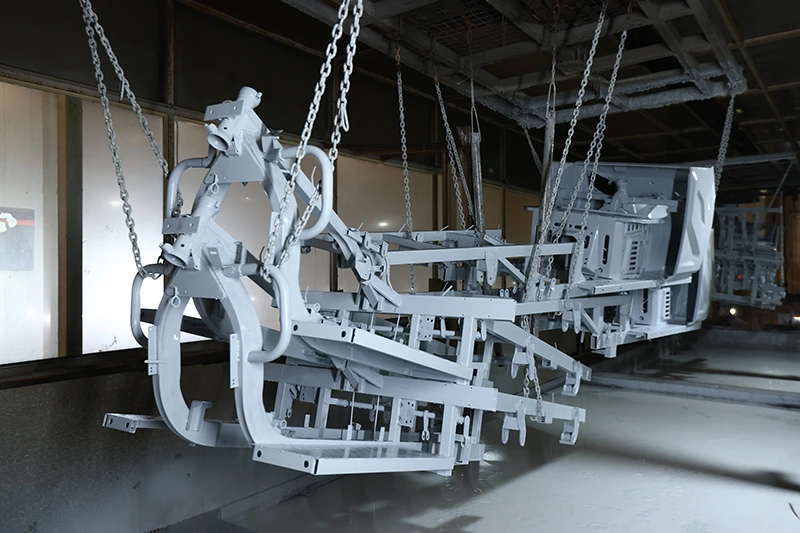
Electrophoretic deposition (ED) coating is a process that fully immerses the frame in paint and uses an electric charge to bond an even, sealed layer across every surface, including inside cavities. Wanhoo rates its full-immersion ED coating at 500 hours of salt spray, a corrosion defense far beyond the spray-painted frames typical of budget imports.
According to Cotec Labs, the ASTM B117 salt spray test exposes samples to a 5% sodium chloride solution at 35°C to measure relative corrosion resistance. A 500-hour rating means the coating withstood weeks of continuous salt fog before meaningful corrosion appeared on the metal.
In coastal West Africa or monsoon South Asia, salt-laden air and standing water attack unprotected steel within a single wet season. A frame sealed by full-immersion ED coating holds its structural integrity for years longer, which is often the difference between a tricycle that lasts eight years and one that rusts through in three.
Load capacity and structure work together. Our look at the 1,800 kg heavy-duty cargo tricycle shows how frame, axle, and suspension are sized as a system, so the whole platform ages evenly instead of failing at one weak link first.
Does Overloading Really Shorten a Three Wheeler’s Lifespan?
Yes, and it is the fastest way to destroy an otherwise good machine. Running past rated payload forces the engine, transmission, springs, axle, and tires to work outside their design envelope every single trip. The damage is cumulative, and it rarely shows up until something breaks on the road.
According to CameraMatics, overloading puts extra stress on the frame, axles, suspension, and steering, driving faster wear and a much shorter vehicle lifespan. An overloaded vehicle also burns more fuel and takes longer to stop, so the cost shows up in both repairs and running expenses.
According to Bauer Built, overloaded tires build up heat that makes sidewalls flex and deform, and in severe cases the rubber degrades and the internal steel belts separate. Tires are often the first component an overloaded three-wheeler loses, and a blowout under load can damage far more than the tire.
Load discipline means running a three-wheeler at or below its rated payload, with margin for rough roads. A machine rated for heavy work and driven within that rating lasts far longer than a lighter unit pushed past its limit daily. Matching the vehicle’s capacity to the real job is a lifespan decision, not just a purchase spec.
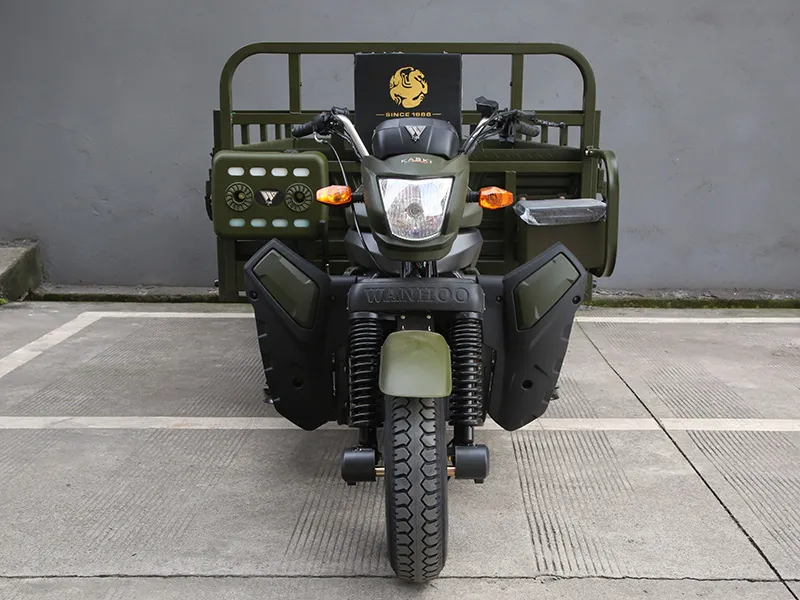
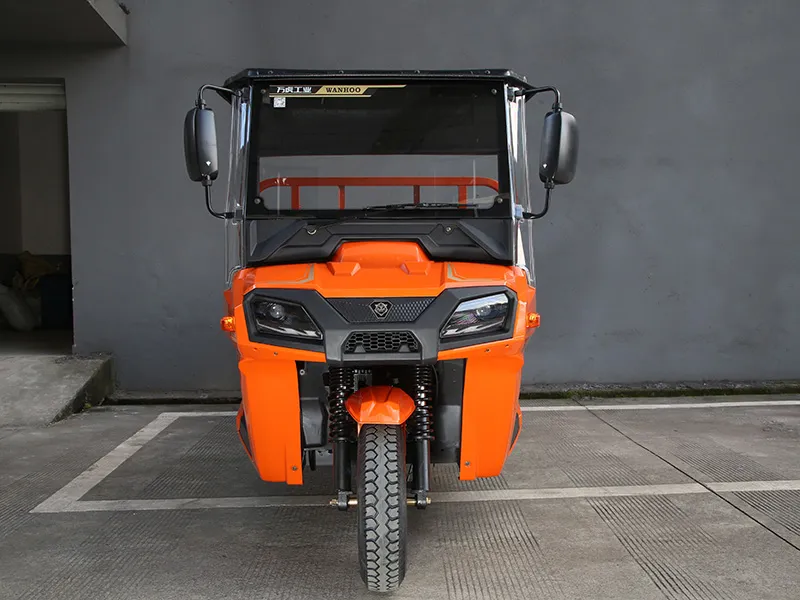
This is where buying capacity pays back. Wanhoo built the KINGTIGER to carry up to 1,800 kg, so operators hauling 800 to 1,000 kg run with real headroom instead of maxing out a smaller machine. Working under rated load, not at its edge, is what turns a rugged spec into a long service life.
How Do Maintenance and Climate Change How Long a Tricycle Lasts?
Even the best-built tricycle fails early if service is neglected. Oil, filters, brakes, tire pressure, and coolant are small costs that prevent large ones. A water-cooled engine, for example, only keeps its heat advantage if the coolant is changed and the radiator kept clean on schedule.
Maintenance discipline is the habit of servicing a three-wheeler on schedule rather than only after a failure. Regular oil and filter changes, brake checks, correct tire pressure, and coolant service can add years to three wheeler service life, because most catastrophic failures begin as small, ignored problems that were cheap to fix early.
A full service routine is its own topic. Our three-wheeler maintenance guide lays out the intervals and checks that keep a unit at the top of its lifespan range, and it pairs directly with the durability factors covered on this page.
Serviceability itself extends life in emerging markets. Wanhoo’s standard models use carburetors rather than fuel injection, so a roadside mechanic without EFI diagnostic tools can keep the engine running. A vehicle that can be fixed locally, quickly, and cheaply simply stays in service longer than one that waits weeks for a specialist.
Climate sets the difficulty level. Constant high heat accelerates engine and lubricant wear, coastal salt attacks steel, and dust grinds through filters and moving parts faster. A machine specified for the local climate, with the right cooling, coating, and filtration, ages far more slowly than a generic import dropped into harsh conditions.
What Can You Do to Maximize Three Wheeler Durability?
Extending three wheeler lifespan comes down to controlling a handful of variables from the day you buy. The table below maps each major factor to its impact on service life and the practical action that protects it. Specify well at purchase, then run the machine with discipline, and the years follow.
| Lifespan factor | Impact on service life | What to do |
|---|---|---|
| Engine type | Heat wear under load sets engine longevity | Choose water-cooled for heavy, hot, uphill duty |
| Frame and welds | Cracks and axle failure end the vehicle | Choose reinforced, FEA-optimized, robotically welded frames |
| Corrosion protection | Rust destroys value in wet or coastal regions | Insist on full-immersion ED coating (500hr salt spray) |
| Load discipline | Overloading multiplies wear on every system | Buy payload headroom; run at or below rating |
| Maintenance | Neglect turns small faults into failures | Service oil, coolant, brakes, and tires on schedule |
| Climate match | Heat, salt, and dust speed up wear | Spec cooling, coating, and filtration for local conditions |
A durable three-wheeler is not luck. It is the sum of a self-developed engine, a reinforced and sealed frame, honest load ratings, and a maintenance habit. Wanhoo has built for these conditions for nearly 40 years across 60-plus countries, and a factory-direct quote or a spec review is the fastest way to match the right machine to your route.
Frequently Asked Questions
**How long does a three-wheeler last on average?**
Most internal-combustion three-wheelers last 5 to 10 years in commercial service. Budget units assembled from cheap parts may fade in 3 to 5 years, while a well-built, well-maintained machine with a quality engine and corrosion protection can work well beyond a decade.
Do water-cooled three-wheelers last longer than air-cooled ones?
Under sustained heavy or uphill load in hot climates, water-cooled engines generally last longer because they hold a steadier operating temperature and wear more slowly. Air-cooled engines run simpler but struggle to shed heat under continuous load, which accelerates wear over time.
How does corrosion protection affect three wheeler durability?
Corrosion protection is decisive in wet, coastal, and dusty regions. A frame finished with full-immersion ED coating, rated at 500 hours of salt spray, resists rust for years longer than a spray-painted frame, preserving both structural integrity and resale value.
Does overloading shorten a three-wheeler’s service life?
Yes. Running past rated payload overstresses the engine, transmission, suspension, axle, and tires, causing premature and often sudden failures. Buying capacity headroom and running at or below the rated load is one of the simplest ways to extend service life.
What is the best way to maximize a tricycle’s lifespan?
Specify a water-cooled engine, a reinforced and ED-coated frame, and honest load ratings, then maintain the vehicle on schedule. Matching cooling, coating, and filtration to your local climate, and never overloading, keeps a tricycle at the top of its lifespan range.