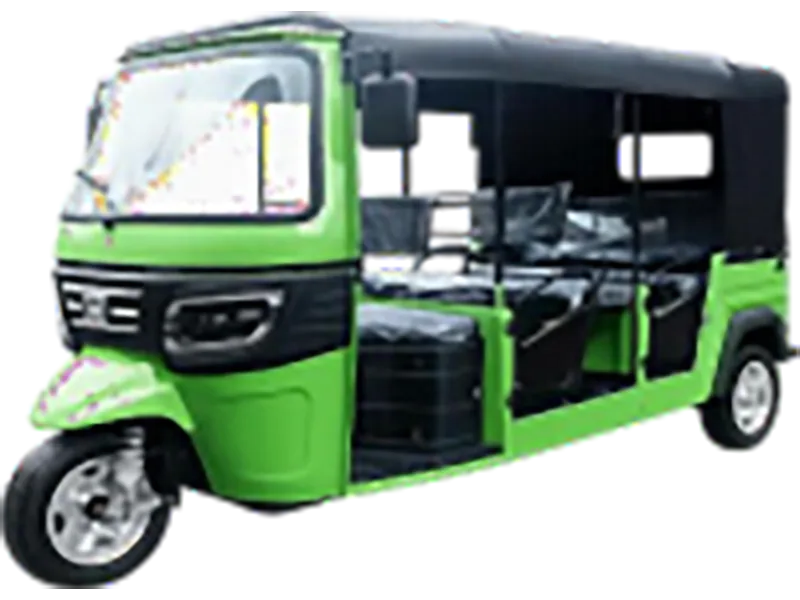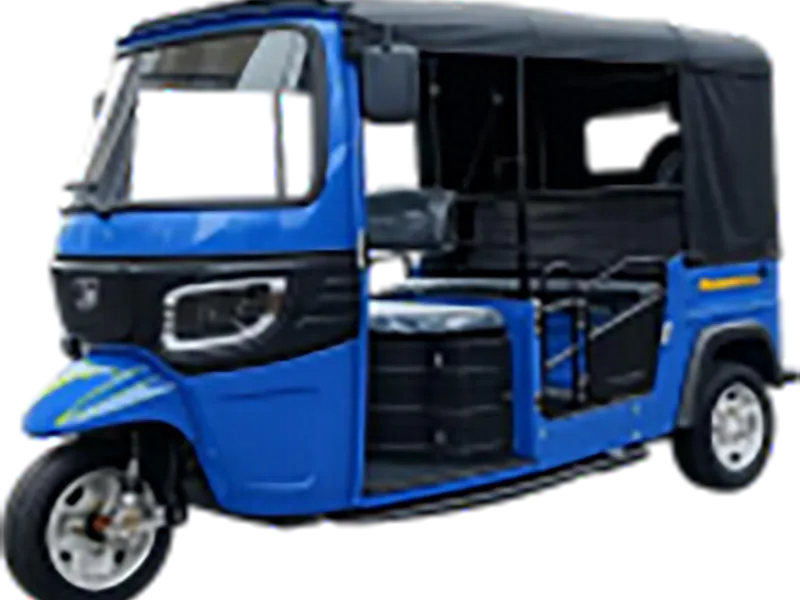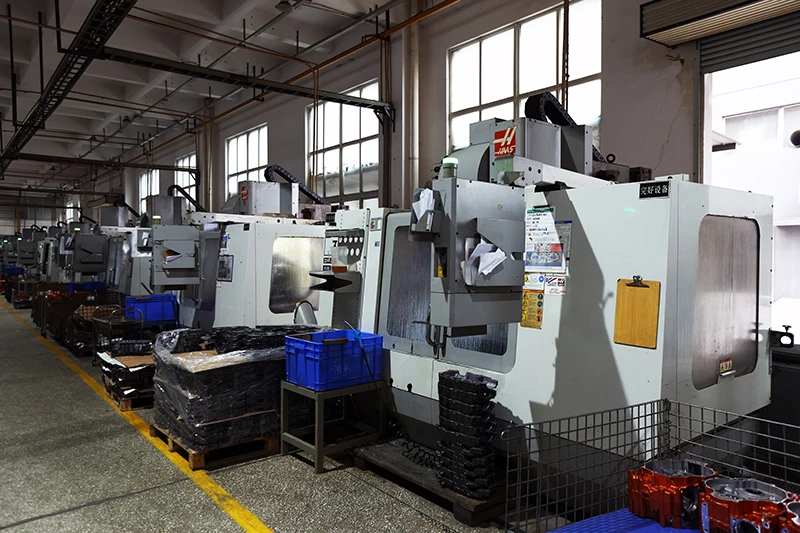
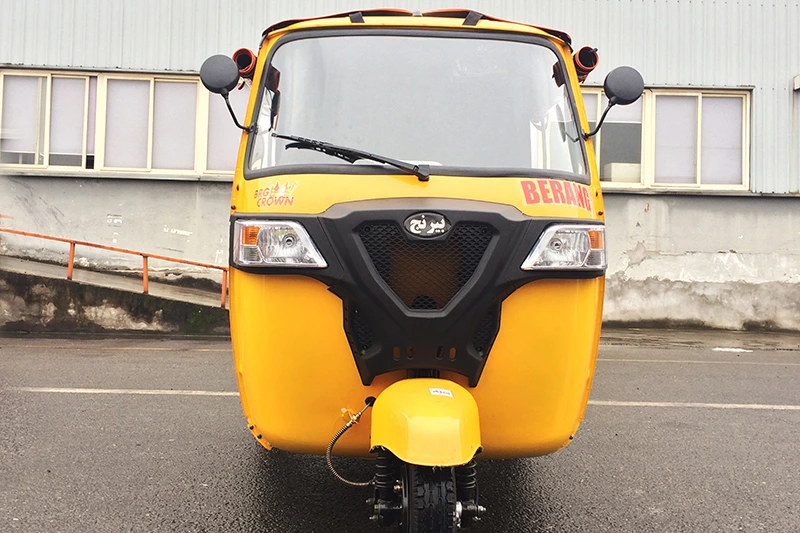
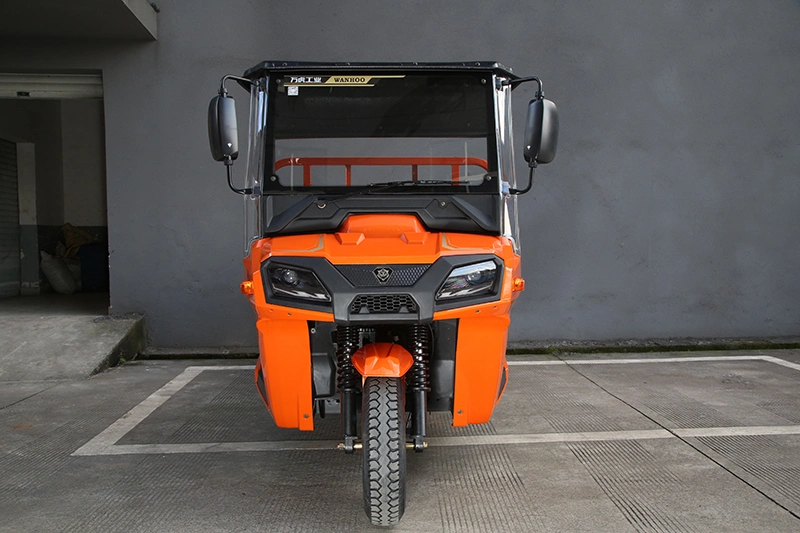
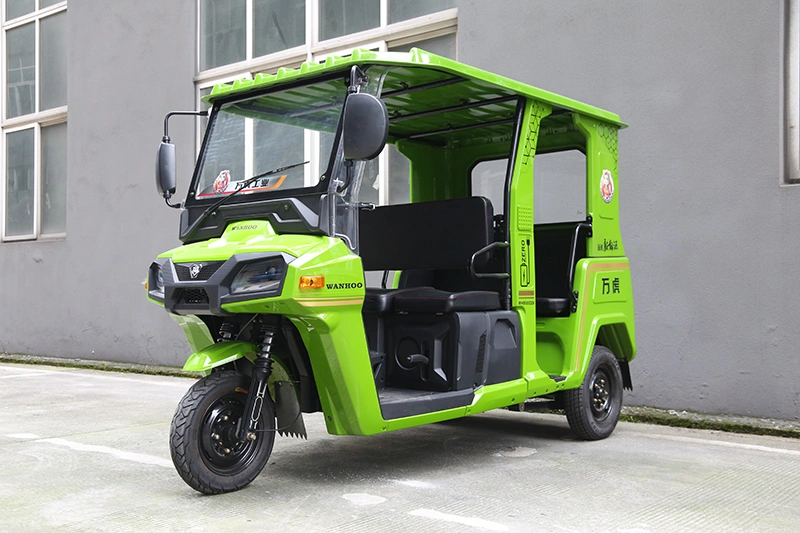
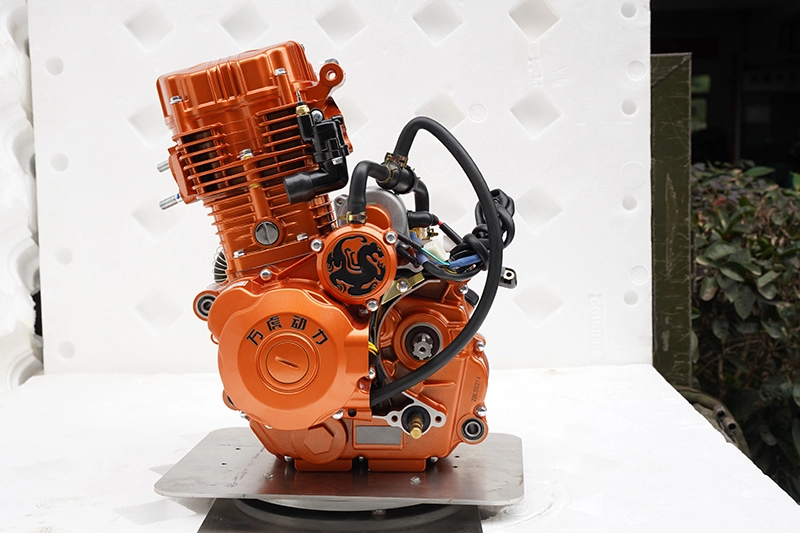
This three wheeler buying guide walks you through four questions: goods or passengers, payload with headroom, engine and cooling matched to your load and climate, and fuel type versus total cost of ownership.
Seventy percent of imported three wheelers develop serious faults within two years. For a fleet operator in Lagos or Lima, that is not a warranty footnote. It is a truck sitting idle, bleeding $50 to $200 a day while a driver waits weeks for a part that never seems to arrive. The wrong purchase decision does not just cost you the sticker price. It costs you a season of downtime, a reputation with your riders, and margin you will never recover.
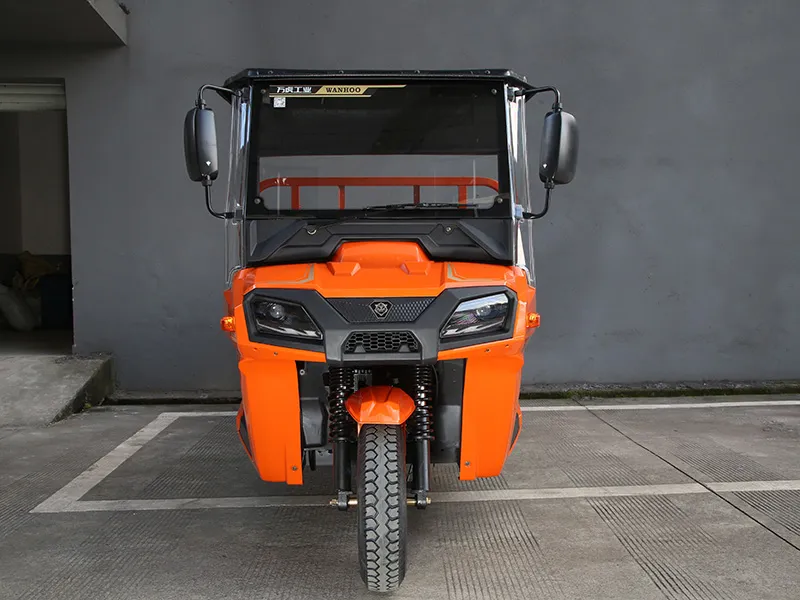
Choosing well is a business decision, not a catalog exercise. This guide gives you a four-question framework used by importers and fleet owners who buy three wheelers by the container, then maps every answer to a specific model in the Wanhoo range so you can shortlist before you ever request a quote.
What Should You Decide Before Comparing Any Three Wheeler Models?
Before comparing three wheeler models, decide what the vehicle actually does for money: moves goods, moves people, or works a farm. That single choice narrows the field faster than any spec sheet. A cargo tricycle and a passenger tuk tuk share three wheels and almost nothing else. Their frames, rear axles, box or cabin layouts, and gearing are engineered for opposite jobs.
A three wheeler is a light commercial vehicle built on three wheels, split into three families by job: cargo tricycles that haul goods, passenger tricycles (tuk tuks) that carry three to nine riders, and agricultural tricycles built for off-road load work. Each family uses a different frame and drivetrain. Buyers who skip this step end up with a passenger chassis carrying bricks, or a cargo box hauling paying riders on a hard bench.
The cargo vs passenger tricycle question also shapes your revenue model. Cargo units earn per delivery and reward payload and durability. Passenger units earn per seat and reward comfort, ride quality, and running cost per kilometer. Wanhoo builds for both, plus a dedicated agricultural line, so the framework below sorts the entire catalog into the job you are buying for.
Are You Hauling Goods or Carrying Passengers?
Start with the job, because it decides the vehicle family. If you move goods, you want a cargo tricycle with an open bed or enclosed box, a reinforced frame, and a rear axle rated for repeated overload. If you carry riders, you want a passenger tricycle with seating, a canopy, and gearing tuned for stop-and-go city runs rather than dead-weight torque.
Cargo three wheelers are designed to transport goods and are commonly used for last-mile delivery, with payload capacity typically ranging from 500 kg to 1.5 tons. Passenger three wheelers, known as tuk tuks or auto rickshaws, serve as affordable public transport for millions of daily riders across Asia, Africa, and Latin America. The two segments are large and growing on separate tracks.
According to Maximize Market Research, the global three-wheeler market was valued at USD 17.76 billion in 2025 and is projected to reach USD 35.50 billion by 2032, with passenger carriers holding the largest share as affordable public transport. That demand split matters: passenger buyers compete on ride experience and fuel economy, while cargo buyers win on payload and uptime.
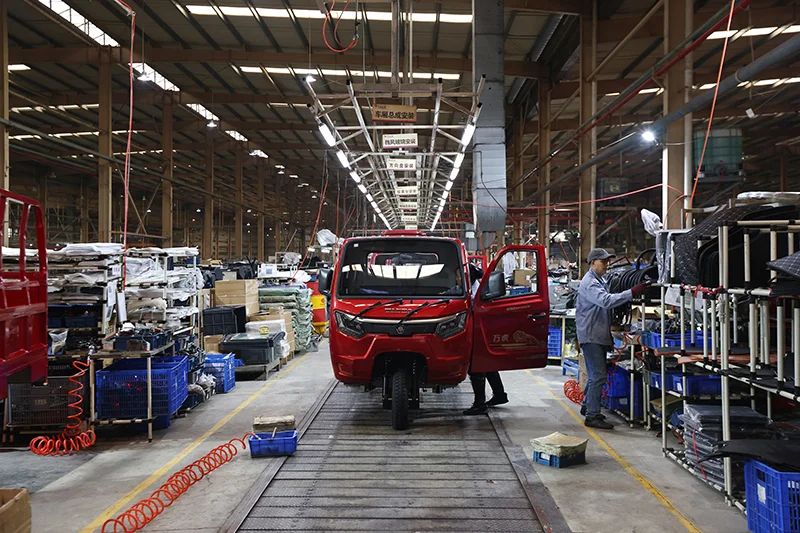
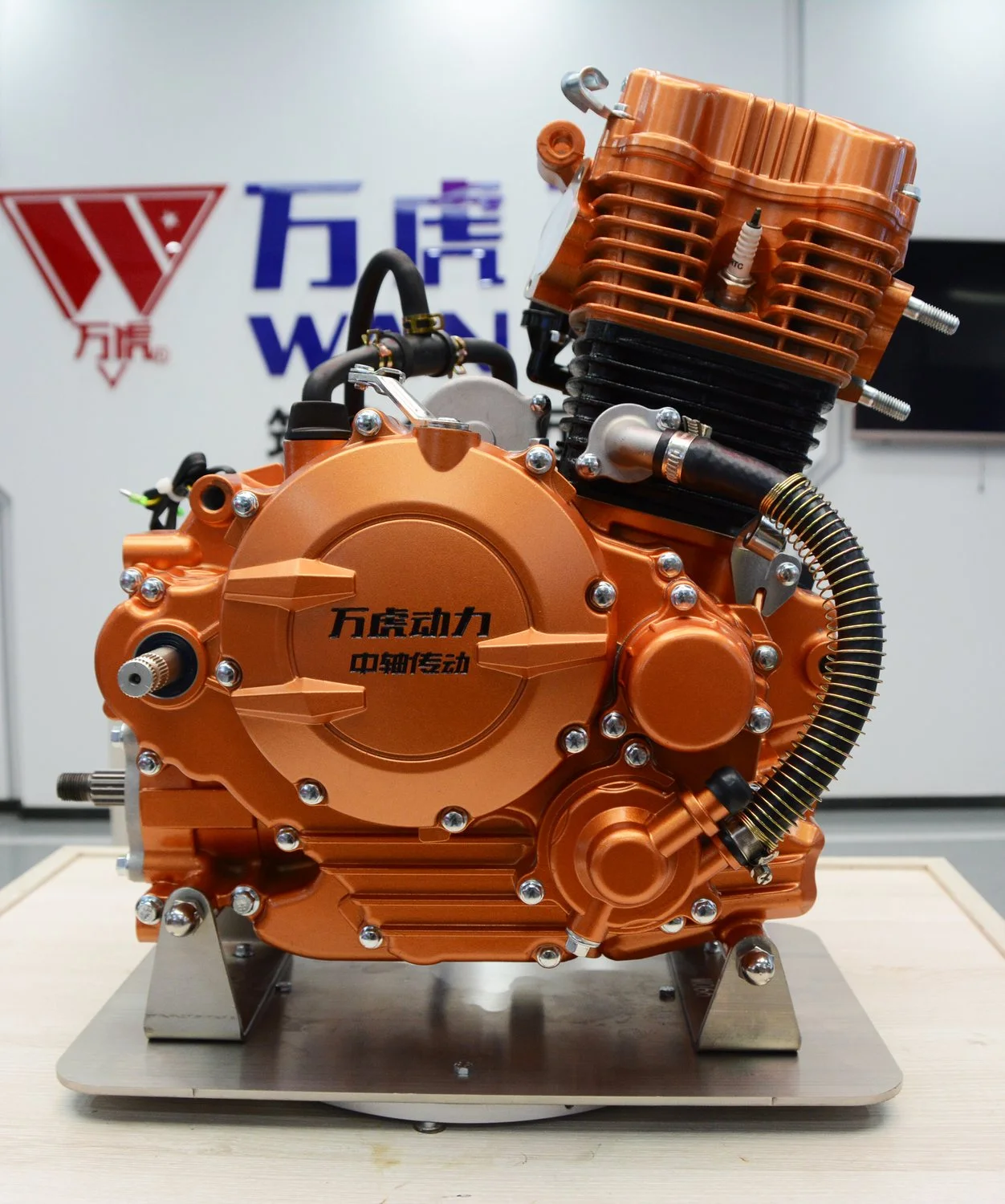
Wanhoo is a Chinese three-wheeler manufacturer that builds cargo, passenger, electric, and agricultural tricycles on separate purpose-designed platforms. Its cargo range spans 600 kg to 1,800 kg of payload, and it develops its own WH-series engines for three-wheeler torque rather than adapting motorcycle blocks, keeping parts common across the fleet.
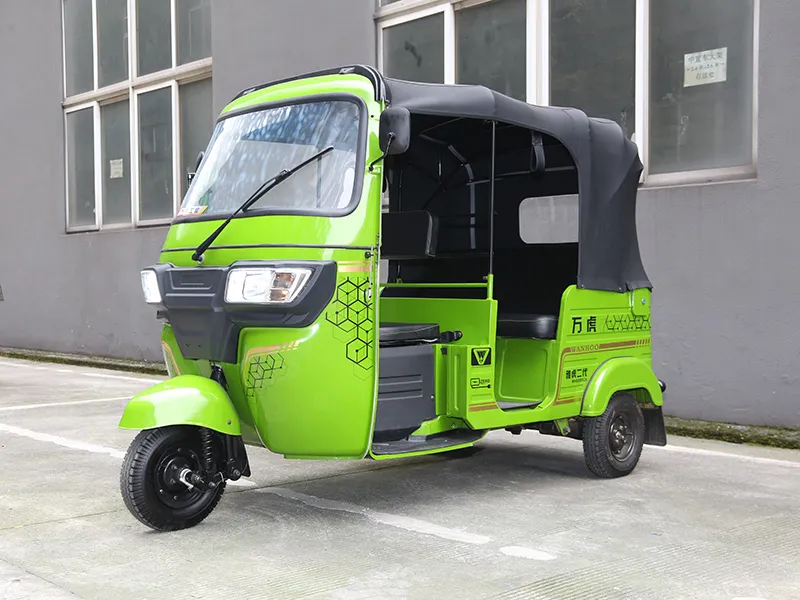
Wanhoo maps this fork directly. For goods, the cargo tricycle line runs from the entry Q1 up to the heavy KINGTIGER. For riders, the passenger tricycle line centers on the YAHOO. Wanhoo pairs each cargo model with a self-developed engine sized to its box, so the platform and the powertrain are matched instead of borrowed.
How Much Payload Do You Need, and How Much Headroom?
Size your payload to your heaviest routine load, then add headroom. A three wheeler run permanently at its ceiling wears faster, overheats on grades, and cracks frames early. Buyers who spec for the average load rather than the peak end up with a truck that trips, stalls on hills, and returns to the workshop long before its time.
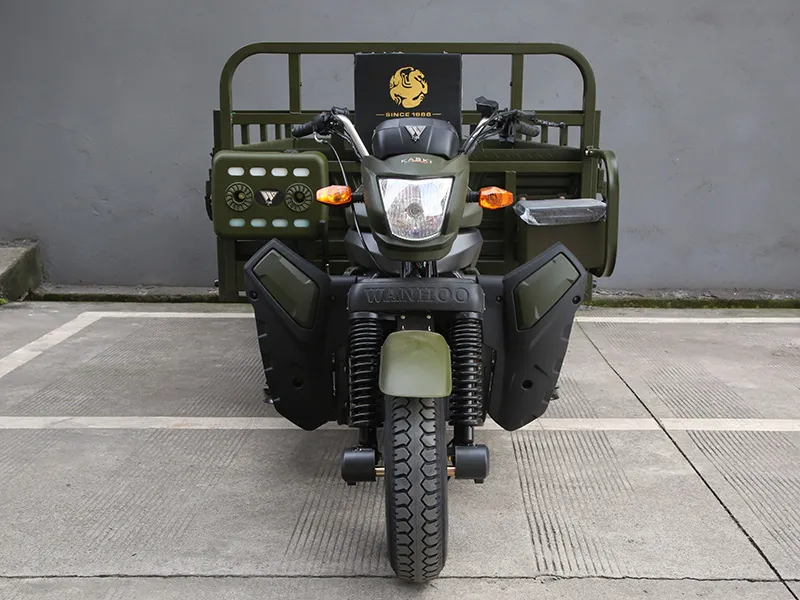
Payload headroom is the margin between a vehicle's rated maximum load and the load it carries day to day. A cargo tricycle rated at 1,000 kg but routinely carrying 900 kg has almost no headroom and will fatigue quickly. The same load on an 1,800 kg rated unit runs cool, safe, and durable. Headroom is cheap insurance against downtime.
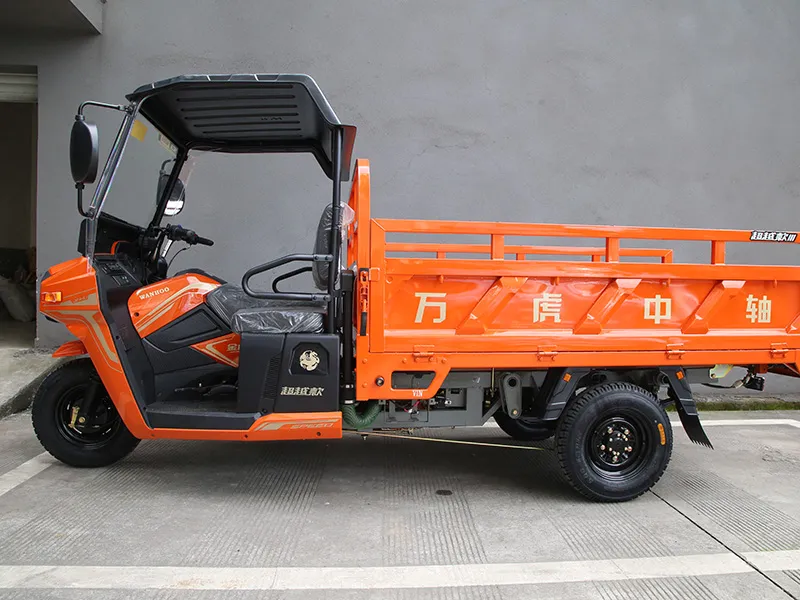
Wanhoo covers the full payload ladder so you can match rating to route. Q1 handles up to 600 kg for light urban delivery. K3 steps up to 1,000 kg with a long 2,000 mm box. HANHOO, NIMBA, and the flagship KINGTIGER each carry up to 1,800 kg for construction, mining, and heavy market runs. Wanhoo builds the KINGTIGER around a reinforced double-beam chassis for heavy loading, so peak loads that crush lighter trucks stay routine. The deep-dive cargo tricycle payload guide shows how to measure your real load and pick the right rating.
| Job / heaviest routine load | Recommended Wanhoo model | Type | Max payload | FOB from |
|---|---|---|---|---|
| Light urban delivery, tightest budget | Q1 | Cargo | 600 kg | $830 |
| Mid-size goods, long box needed | K3 | Cargo | 1,000 kg | $900 |
| All-round city and rural cargo | HANHOO | Cargo | 1,800 kg | $1,100 |
| Compact heavy hauling | NIMBA | Cargo | 1,800 kg | $1,270 |
| Heaviest loads, mining and construction | KINGTIGER | Cargo | 1,800 kg | $1,450 |
| 3 to 4 paying riders plus light goods | YAHOO | Passenger | 200cc power | $1,640 |
| Zero-emission passenger, city routes | YAHOO-II-Electric | Electric | 3 riders, 80 to 100 km | $1,670* |
| High-capacity electric passenger | King-Tiger-Electric | Electric | 9 riders | $1,560* |
| Farm, off-road, all-terrain load work | WINTIGER | Agricultural | 1,000 kg | Contact |
*Electric prices are FOB without battery. Contact for the latest quote and battery options.
Which Engine and Cooling System Fits Your Load and Climate?
Match engine displacement and cooling to your load and your weather. This is where the three wheeler types diverge most, and where cheap imports fail first. A small air-cooled engine is fine for light loads on flat ground. Put it under 1,500 kg on a tropical grade and it overheats, loses power, and strands the driver. Cooling is not a spec-sheet detail. It is the difference between a truck that climbs and one that stalls.
Air-cooled engines rely on airflow over cylinder fins and suit light loads in moderate conditions. Water-cooled engines circulate coolant to hold temperature under sustained heavy load, which is essential for cargo tricycles running near capacity in hot climates or on long grades. Displacement, measured in cc, sets available torque. Load and climate together decide the right combination.
Wanhoo tiers its powertrains to the job. The entry Q1 uses a 150cc air-cooled engine, ideal for light, cool-climate delivery. K3 moves to 150cc water-cooled for mid loads. HANHOO runs a 200cc water-cooled unit, and NIMBA and KINGTIGER both use a 250cc water-cooled engine built for sustained torque under 1,800 kg. Wanhoo develops its own WH-series engines specifically for three wheeler torque rather than adapting motorcycle blocks, so parts stay common and cooling is sized to the load. The engineering behind that choice is covered in the air-cooled vs water-cooled engine comparison and the payload deep-dive.
Should You Choose Gasoline or Electric, and What Is the Real Cost of Ownership?
Choose your fuel type on total cost of ownership, not purchase price. A gasoline three wheeler costs less up front and refuels anywhere, which suits long rural runs and areas with thin charging infrastructure. An electric three wheeler costs more to buy but far less to run, which suits high-mileage city routes where fuel bills quietly eat the driver's margin every single day.
According to Mordor Intelligence, the electric three-wheeler market is valued at USD 4.20 billion in 2026 and is projected to reach USD 8.47 billion by 2031 at a 15.08% CAGR, with the Middle East and Africa the fastest-growing region at 19.55% CAGR. Electric adoption is accelerating fastest in exactly the markets Wanhoo serves.
That growth is grounded in running economics. According to GMInsights, three-wheelers offer a lower total cost of ownership plus maneuverability in narrow urban streets, and the three-wheeler segment is expected to grow at the fastest CAGR in last-mile delivery. For fleets doing dense daily kilometers, the fuel and maintenance savings compound quickly.
Total cost of ownership adds purchase price, fuel or electricity, maintenance, parts, and downtime across a vehicle's working life. A gasoline unit can win on upfront cost yet lose over five years to fuel bills, while an electric unit reverses that math on high-mileage city routes with cheap power. Run the numbers on your own route before you decide.
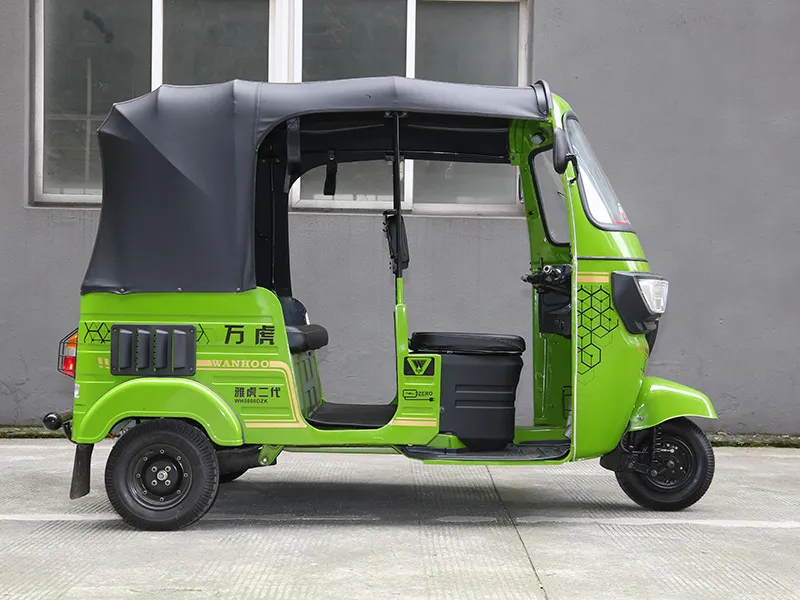
Wanhoo offers both paths. Gasoline buyers get the cargo and YAHOO passenger range. Electric buyers get the YAHOO-II-Electric for three riders and the nine-seat King-Tiger-Electric, both on 72V LFP battery platforms priced FOB without battery. Wanhoo prices its electric passenger units without the battery so importers can source cells to local voltage and warranty norms, a flexibility most exporters do not offer. Compare the full math in the cargo tricycle vs pickup truck TCO analysis and the complete guide to electric three wheelers 2026, or browse the electric three-wheeler range.
Frequently Asked Questions
### What is the difference between a cargo tricycle and a passenger tricycle?
A cargo tricycle is built to haul goods with an open bed or enclosed box, a reinforced frame, and a rear axle rated for heavy repeated loads, typically 500 kg to 1,800 kg. A passenger tricycle, or tuk tuk, carries three to nine riders on seating with a canopy and gearing tuned for city routes. Wanhoo builds both on purpose-designed platforms rather than a shared chassis.
How do I choose the right payload capacity for a cargo three wheeler?
Size the rating to your heaviest routine load, then add headroom so the vehicle is not running at its ceiling every trip. A unit permanently maxed out overheats, cracks frames, and returns to the workshop early. Wanhoo covers 600 kg (Q1), 1,000 kg (K3), and up to 1,800 kg (HANHOO, NIMBA, KINGTIGER), so you can match the rating to your real route with margin to spare.
Is a water-cooled or air-cooled engine better for a three wheeler?
Water-cooled engines hold temperature under sustained heavy load, which matters for cargo tricycles running near capacity in hot climates or on grades, so they suit loads above roughly 1,000 kg. Air-cooled engines are lighter, simpler, and fine for light loads in cooler conditions. Wanhoo uses air-cooled 150cc in the entry Q1 and water-cooled engines up to 250cc in K3, HANHOO, NIMBA, and KINGTIGER.
Are electric three wheelers worth it for my business?
Electric three wheelers cost more up front but far less to run, so they pay off on high-mileage city routes with reliable power and thin fuel budgets. Gasoline still wins for long rural runs and areas with limited charging. Wanhoo offers both, and its electric models ship FOB without battery so you can source cells to your local voltage and warranty standards.
Which Wanhoo three wheeler is best for heavy loads like construction or mining?
The KINGTIGER is Wanhoo's heavy-loading flagship, rated up to 1,800 kg on a reinforced double-beam chassis with a 250cc water-cooled engine built for sustained torque. NIMBA offers the same 1,800 kg rating in a more compact 3,450 mm body at a lower FOB. Both are field-proven in mining and construction across more than 60 countries.
Can I customize or order Wanhoo three wheelers in bulk?
Yes. Wanhoo supports customized box dimensions and type, color, and selected configurations, plus SKD shipments of 24 units per 40HQ container to reduce freight cost. Private-label options are open for discussion. Request the FOB price list with your country, target model, and estimated volume, and the export team will return a container-level quote and lead time.