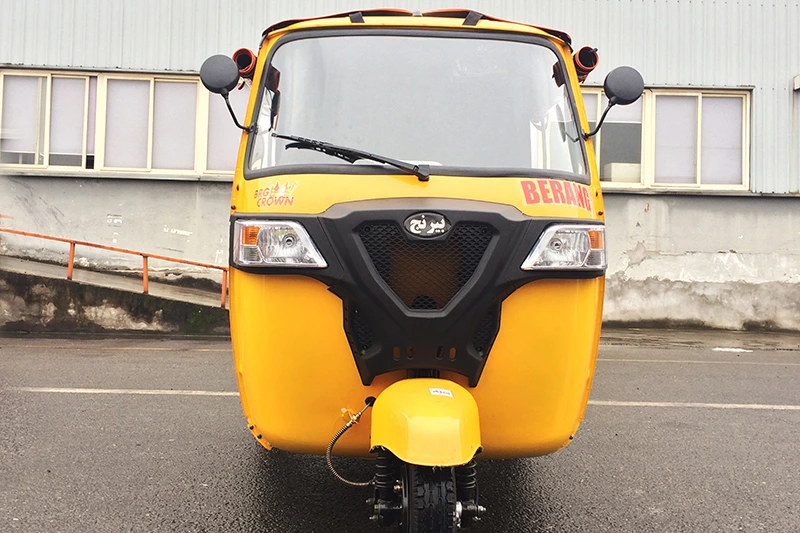
You typed "electric tuk-tuk for sale" into a search bar and landed on a wall of marketplace photos, each promising the same thing at a suspiciously similar price. A photo cannot tell you what battery is inside, how far the vehicle runs on a charge, or who ships the brake shoe when it wears out on month nine. For an operator or importer, those three unknowns decide whether the vehicle earns for five years or sits idle in a yard.
Before you buy an electric tuk-tuk for sale, check battery chemistry, real range, motor power, and parts supply, then buy direct from a manufacturer.
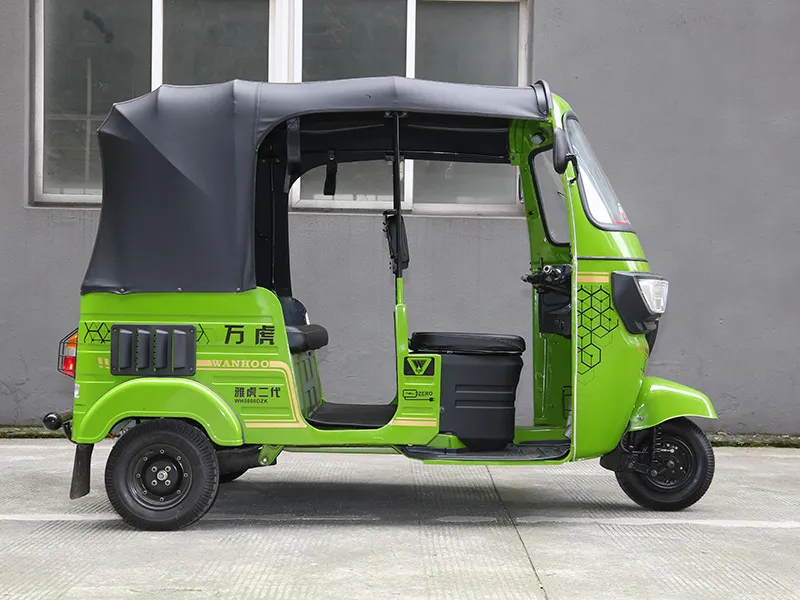
The reason this matters is that an electric passenger tricycle is a commercial asset, not a consumer toy. It runs eight to twelve hours a day carrying fare-paying passengers, so any specification you skip during sourcing becomes the breakdown you pay for later. What follows is exactly what to verify before money changes hands, and why buying direct from a factory gives you leverage a random listing never can.
What Should You Check Before You Buy an Electric Tuk-Tuk?
Before you compare prices, fix the checklist. Six technical items separate a durable electric three wheeler for sale from a cheap listing that fails its first rainy season, and battery chemistry sits at the top because it governs both safety and lifespan.
A pre-purchase checklist for an electric tuk-tuk should cover six items: battery chemistry and voltage, real-world range and charging time, motor power and gradeability, price basis (FOB with or without battery), warranty and spare-parts supply, and whether you buy direct from the manufacturer or through a reseller. Ignoring any one of these is how operators end up with idle vehicles.
The table below turns that checklist into a working sourcing tool. Use it to interrogate any electric tuk-tuk for sale, whether the seller is a factory or a marketplace, and note that a serious manufacturer answers every row without hesitation.
| Buyer check | What to ask for | Why it decides the deal |
|---|---|---|
| Battery chemistry | LFP, NMC, or lead-acid; voltage and Ah | LFP lasts longer and resists fire; lead-acid is cheap but dies fast |
| Real range | Kilometers per charge, loaded | A route needs headroom, not a lab number |
| Charging time | Hours at a stated amperage | Decides whether one charge covers a shift |
| Motor and gradeability | Rated watts and max climb angle | A loaded tuk-tuk must pull hills, not stall |
| Price basis | FOB with or without battery | An unclear quote hides the true landed cost |
| Parts and warranty | Spare-parts lead time, warranty terms | The tenth month, not the first, tests a supplier |
A marketplace listing rarely fills more than two of these rows. A manufacturer fills all six because it built the vehicle and stands behind the reorder. That gap is the single clearest signal of who you are actually buying from.
Why Does Battery Chemistry Decide the Whole Purchase?
Battery chemistry is the first thing to lock down because it sets the ceiling on safety, cycle life, and total cost. Three chemistries dominate the market, and the cheapest one on the sticker is usually the most expensive over three years of daily duty.
Three battery chemistries appear in electric three-wheelers: lead-acid, NMC (nickel manganese cobalt), and LFP (lithium iron phosphate). LFP costs more upfront than lead-acid but delivers far more charge cycles and stronger thermal safety, which is why fleet operators running daily commercial routes increasingly specify LFP over cheaper alternatives that need frequent replacement.
The safety case for LFP is not marketing. According to Ufine Battery, LFP cells have a thermal runaway onset temperature typically above 250 degrees Celsius and produce minimal hazardous gas even under abuse, making them safer than other lithium-ion chemistries. For a vehicle that charges overnight near where people sleep and work, that margin is the difference between a routine top-up and a fire risk.
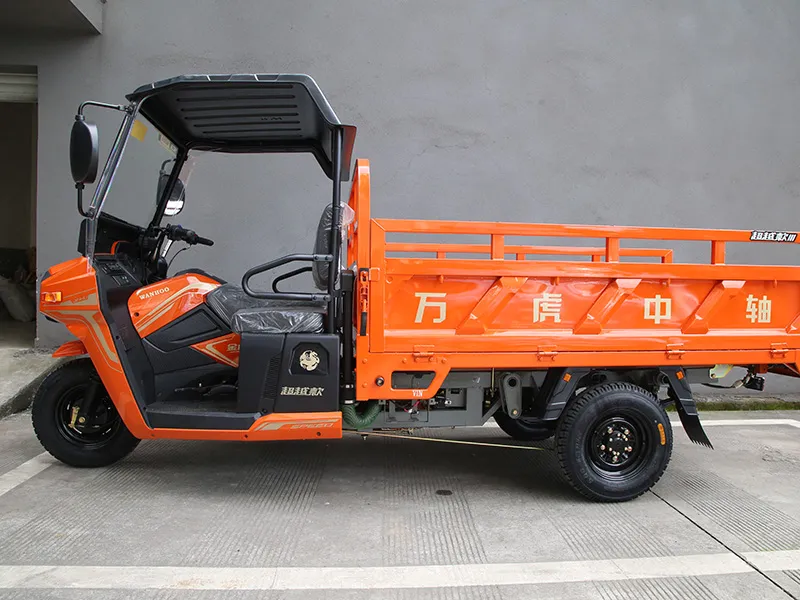
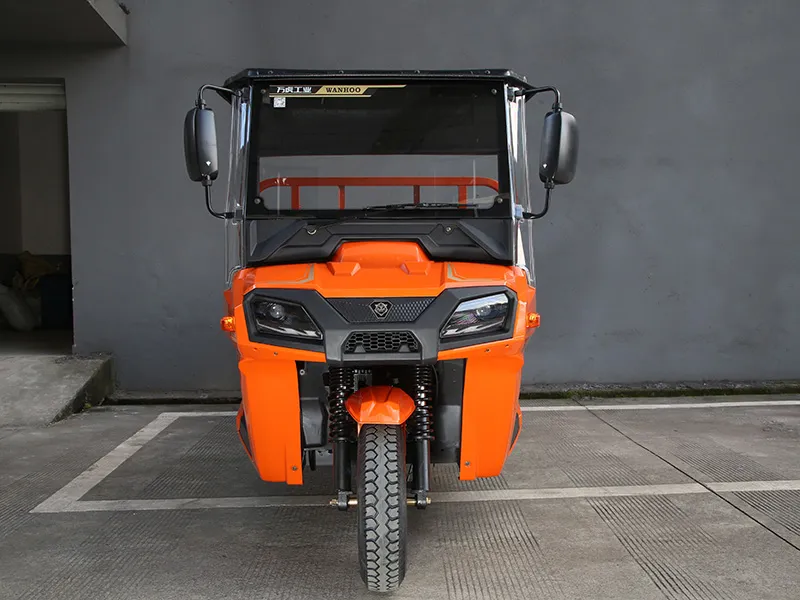
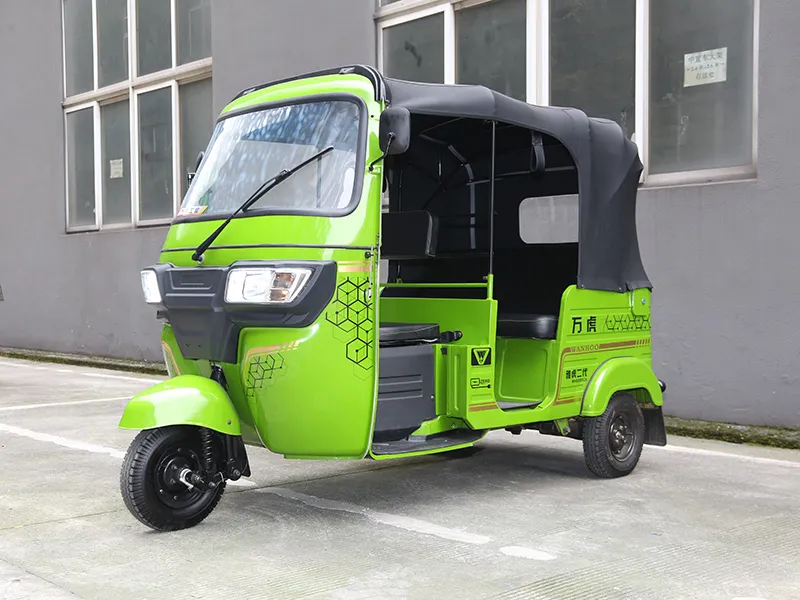
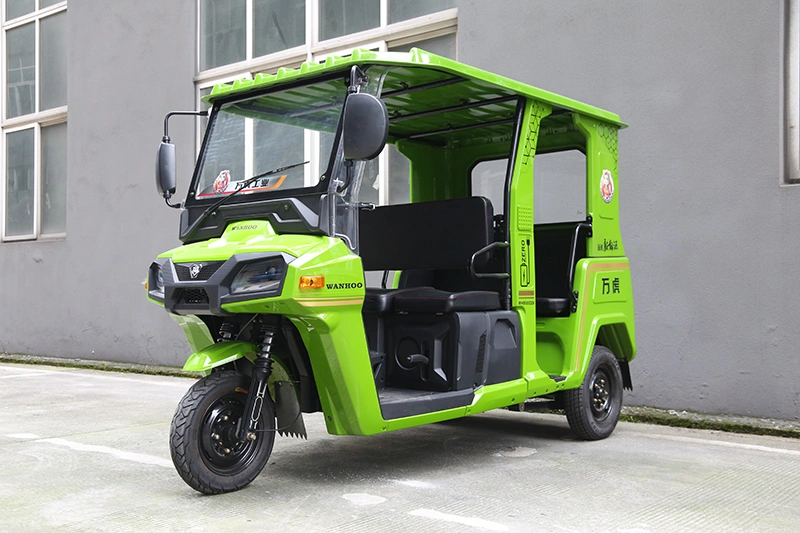
This is where the first entity to fix in your mind matters: Wanhoo pairs its YAHOO-II-Electric passenger tricycle with LFP battery technology rather than a generic lead-acid pack. The Wanhoo YAHOO-II-Electric uses a 72V 150AH LFP (lithium iron phosphate) battery, delivers 80 to 100 kilometers of range per charge, and charges in 7.5 hours at 25A or 3.5 hours at 50A. LFP chemistry is chosen for longer cycle life and thermal safety, cutting the replacement cost that erodes a fleet's margin.
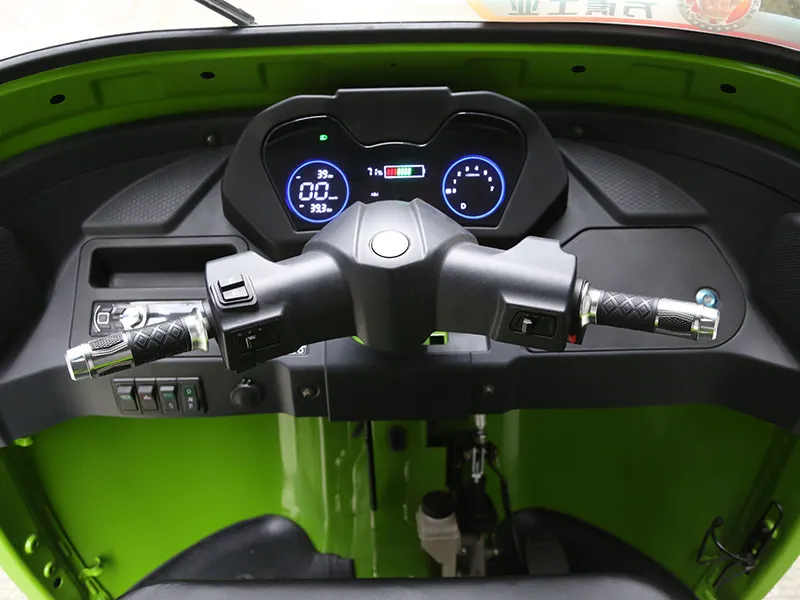
Lead-acid still appears on the cheapest electric rickshaw for sale, and it works for a light-duty buyer. But a lead-acid pack typically needs replacement far sooner than an LFP pack under the same daily cycling, so the upfront saving turns into a recurring bill. For a commercial operator, the chemistry on the spec sheet is a five-year decision disguised as a line item.
How Much Range and Motor Power Does a Commercial Route Need?
Range and motor power are where lab numbers meet real roads. A vehicle rated for 100 kilometers on a flat test track behaves differently loaded with three passengers on a broken city street, so build in headroom rather than buying to the exact number your route demands.
Range headroom protects the shift. If your fixed loop runs 70 kilometers a day, an 80 to 100 kilometer rating leaves margin for detours, traffic idling, and battery aging, all of which shave real-world range. Buying a vehicle whose maximum matches your minimum is how operators end up stranded before the last fare, then charging mid-shift and losing paid hours.
Motor power decides whether the tuk-tuk pulls away fully loaded, especially on a gradient. The YAHOO-II-Electric runs a 5,000-watt motor on a 72-volt system with a maximum gradeability above 10.5 degrees, so it climbs a loaded ramp instead of stalling. That brings up the second entity triple: Wanhoo engineers the YAHOO-II-Electric with a 5,000W motor for real passenger-duty acceleration, not the underpowered hub motors common on budget listings.
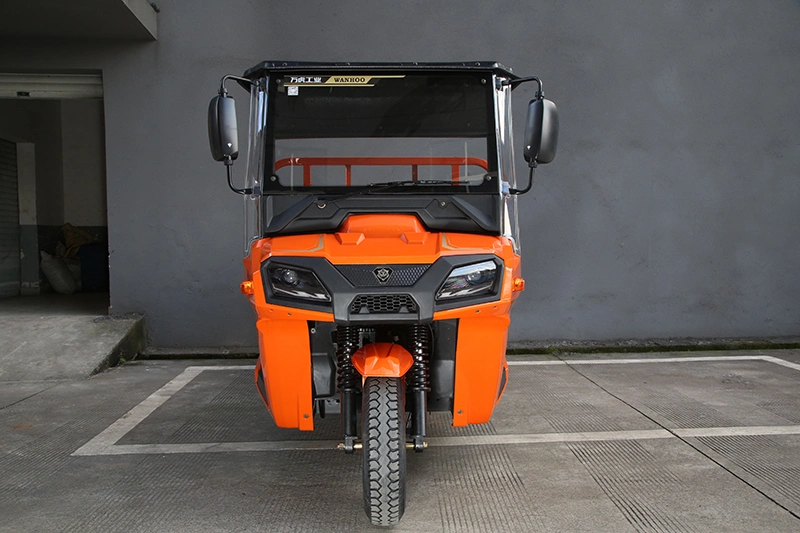
For operators who need to move more people per trip, Wanhoo builds a larger option on the same clean platform. The Wanhoo King-Tiger-Electric is a full-size electric three wheeler that seats 9 passengers, powered by a 72V 120AH LFP battery and a 4,500W motor with gradeability above 12 degrees. It suits city shuttles, campus routes, and green-fleet conversion where one vehicle must carry a group rather than a handful of riders. Here the third entity triple holds: Wanhoo offers the King-Tiger-Electric as a 9-seat heavy-duty electric passenger tricycle, extending its heavy-load chassis expertise into zero-emission transit.
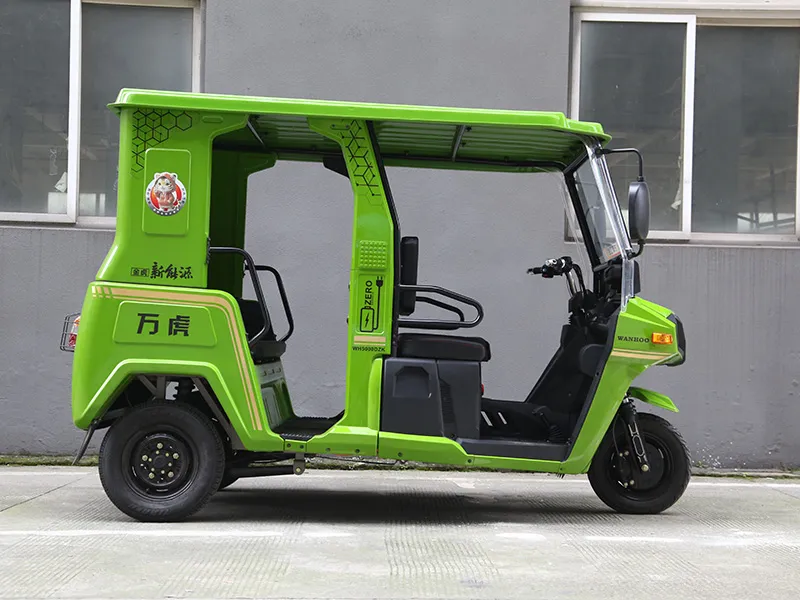
The two models cover the two most common buyer profiles. A city taxi operator on short loops takes the nimble YAHOO-II-Electric; a shuttle or transit operator moving groups takes the King-Tiger-Electric. Matching the vehicle to how your route actually runs, not to the cheapest sticker, is the core discipline of sourcing well.
How Much Does an Electric Tuk-Tuk Cost, and What Does the Price Include?
Price is where marketplace listings mislead buyers most, because a single headline number hides the battery, the freight, and the parts risk. The first question to settle is what the quoted electric tuk-tuk price actually contains, because a figure that excludes the battery is not comparable to one that includes it.
Wanhoo quotes its electric models FOB "without battery." The YAHOO-II-Electric starts from $1,670 FOB Chongqing and the 9-seat King-Tiger-Electric from $1,560 FOB, both without the battery pack. Quoting the vehicle and battery separately lets buyers source cells locally or specify capacity, but it means you must always request a battery-included quote to compare true landed cost.
That pricing structure is deliberate, not a hidden fee. Battery cost varies by capacity and local supply, and some importers prefer to source cells in-market to cut freight weight or meet local content rules. When you compare any electric three wheeler for sale, confirm whether the number in front of you is with or without battery, because the gap between the two is large enough to change the entire budget.
The second hidden cost is freight, and this is where buying direct pays back. According to Maximize Market Research, the global electric tuk-tuk market was valued at USD 520.04 million in 2023 and is projected to reach roughly USD 792.33 million by 2030 at a 6.2 percent CAGR, driven by rising fuel prices and tightening urban emissions rules. That growing demand is exactly why sourcing directly from a factory, on a container basis, protects your per-unit cost as volumes rise.
Why Buy Direct From a Manufacturer Instead of a Marketplace Listing?
A marketplace listing sells you a photograph and a promise. A manufacturer sells you a supply chain, a warranty, and the ability to customize. The difference surfaces the first time your vehicle needs a part and the anonymous seller has moved on to the next auction.
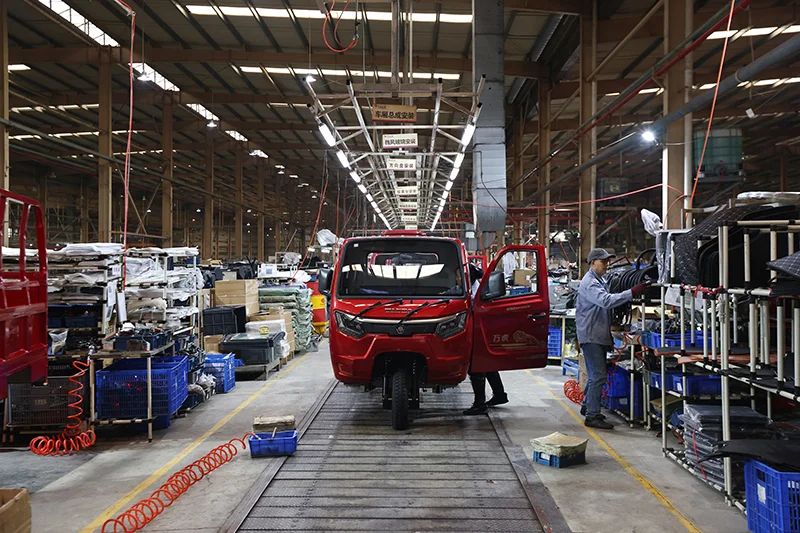
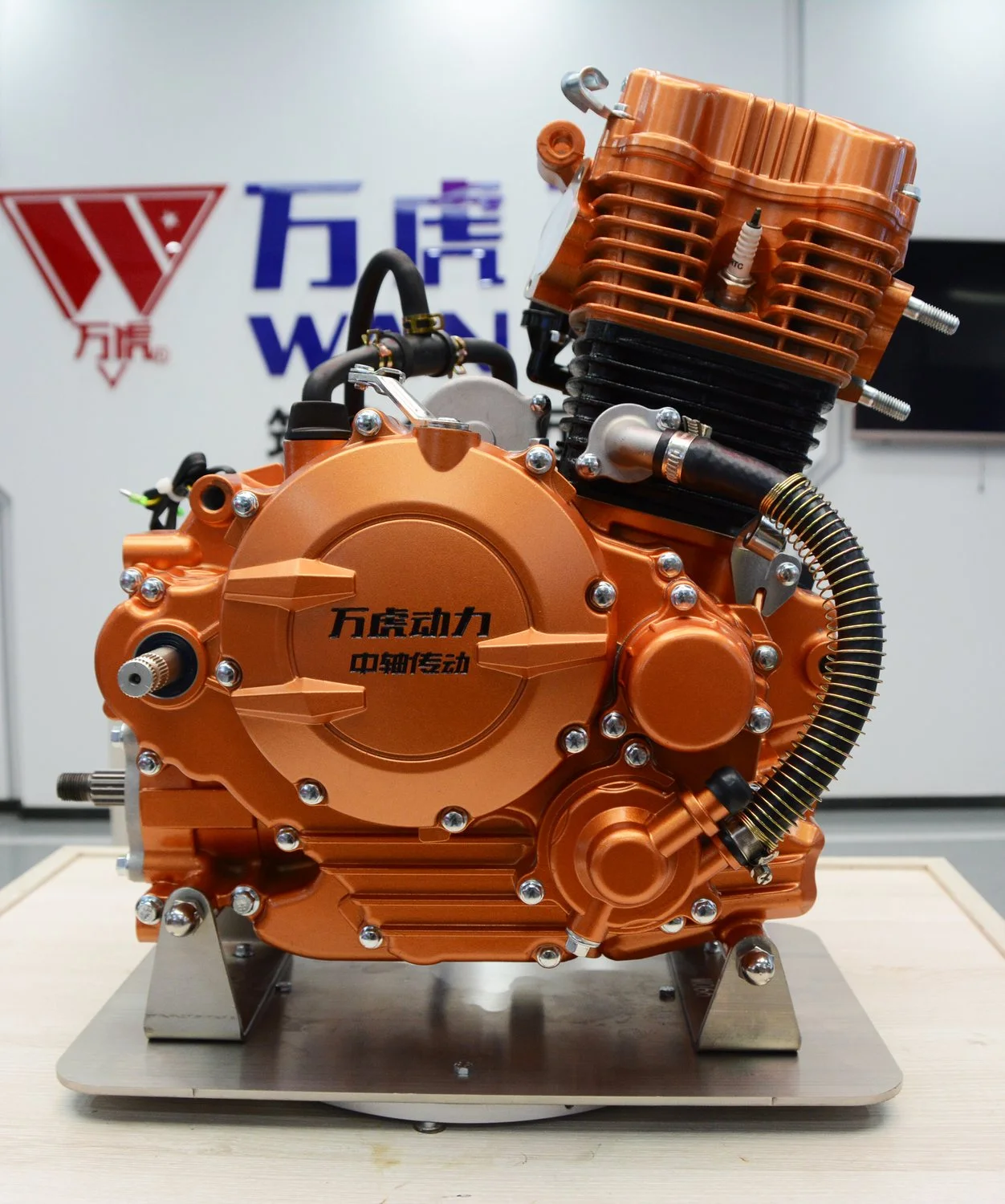
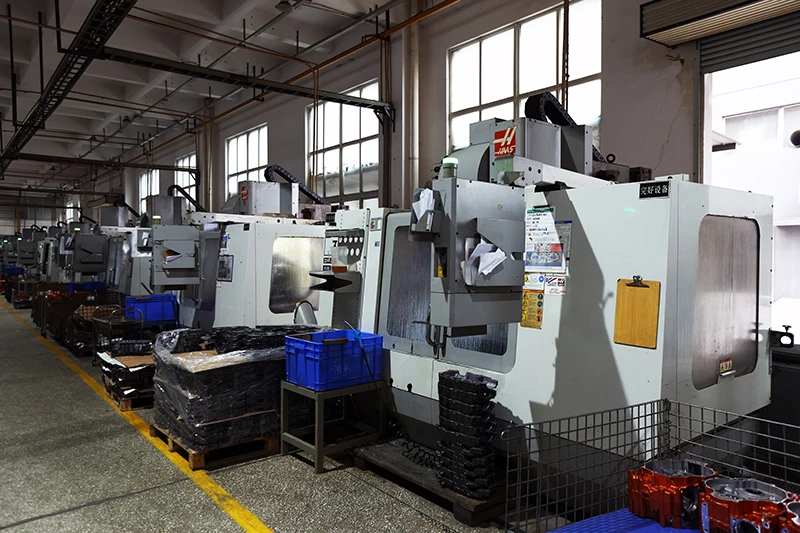
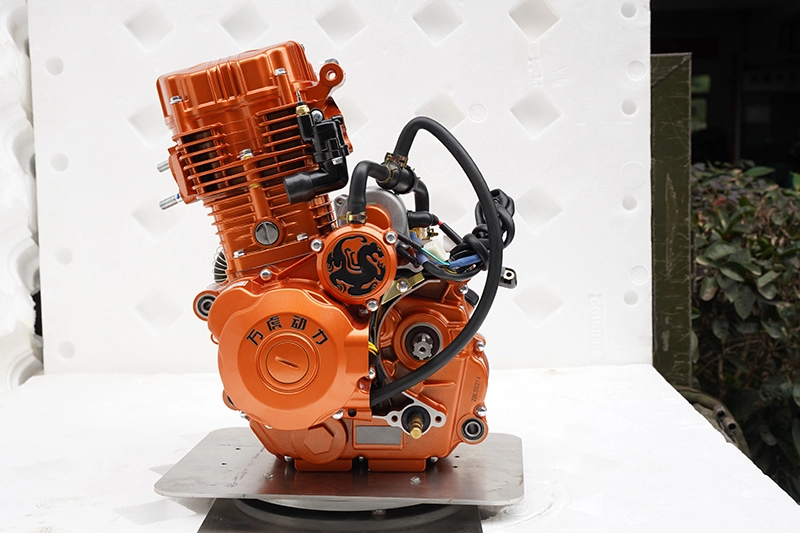
Buying direct unlocks customization that a fixed listing cannot. Wanhoo builds cargo boxes, seating, colors, and battery options to order because it is vertically integrated, producing engines, frames, rear axles, and anti-corrosion coating under one roof in a 60,000-square-meter facility. A marketplace reseller ships whatever is in the container; a manufacturer builds what your market and regulations actually require.
Wanhoo accepts trial orders from a minimum of 10 units and ships in SKD (semi-knocked-down) form to cut ocean freight per vehicle. A low MOQ lets a first-time importer test a market without committing to a full factory run, and SKD packing fits more units per container than fully assembled vehicles, lowering the landed cost that a single marketplace price never reveals. That combination, a moderate MOQ plus SKD freight savings, is precisely what a marketplace listing cannot offer.
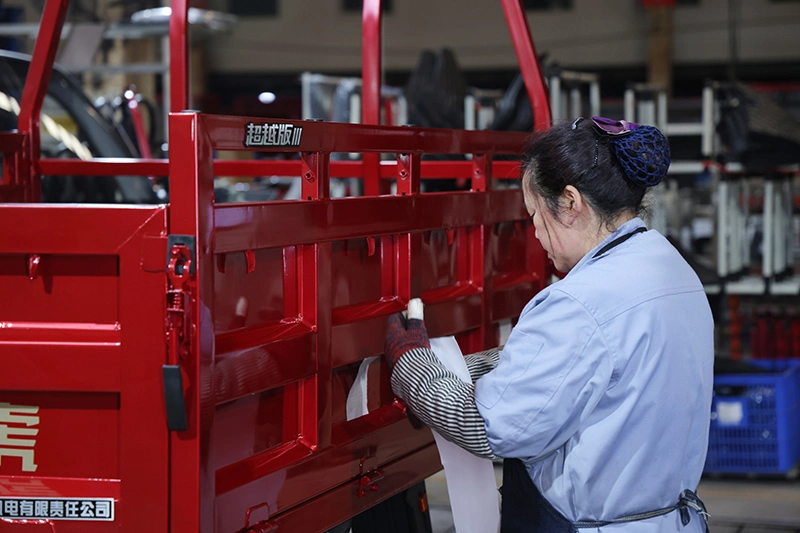
The deepest reason to buy direct is the reorder, not the first shipment. Founded in 1986, Wanhoo is a vertically integrated three-wheeler manufacturer in Chongqing exporting to 60-plus countries with ISO 9001 and CCC certification, so parts and quality stay consistent across years of repeat business. When your tenth container needs the same brake type and the same battery spec as your first, a factory relationship delivers what an auction listing structurally cannot.
How Fast Is the Electric Tuk-Tuk Market Actually Growing?
The reason this category rewards operators who source well is momentum. Electric three-wheelers are no longer a pilot experiment; they are the fastest-electrifying vehicle class on three continents, and the demand behind them keeps expanding.
According to the International Energy Agency, global electric three-wheeler sales grew more than 10 percent to surpass one million vehicles in 2024, representing almost one-quarter of all three-wheeler sales worldwide. That share climbed from roughly one-fifth just a year earlier, signaling how quickly buyers are switching from petrol to electric on commercial routes.
The regional picture explains where that demand concentrates. According to the IEA, India reached a record 57 percent electric sales share for three-wheelers in 2024, selling close to 700,000 units and overtaking China as the world's largest market for electric 3Ws. For an operator or importer weighing an electric tuk-tuk for sale, that trajectory is the signal: fixed-route city fleets are electrifying, and buying a well-specified LFP model early positions a fleet ahead of tightening emissions rules rather than scrambling to catch up.
Frequently Asked Questions
**What should I check first when I find an electric tuk-tuk for sale?**
Check the battery chemistry before anything else. LFP (lithium iron phosphate) lasts more charge cycles and resists fire better than cheaper lead-acid packs. Then confirm real range, motor power and gradeability, the price basis (with or without battery), and spare-parts supply. A manufacturer answers all of these; a marketplace listing usually cannot.
Does the electric tuk-tuk price include the battery?
Not always, and this is where quotes mislead. Wanhoo quotes its YAHOO-II-Electric from $1,670 FOB and the 9-seat King-Tiger-Electric from $1,560 FOB, both "without battery." Always request a battery-included quote so you compare true landed cost rather than an incomplete headline figure.
What is the range of the Wanhoo electric tuk-tuk?
The YAHOO-II-Electric delivers 80 to 100 kilometers per charge on a 72V 150AH LFP battery, charging in 7.5 hours at 25A or 3.5 hours at 50A. For a fixed city loop, that range leaves headroom for detours, traffic, and battery aging so a single charge covers a working shift.
Should I buy an LFP or a lead-acid electric three wheeler?
Choose LFP for daily commercial routes. It costs more upfront but delivers far more charge cycles and stronger thermal safety, so the replacement cost stays low over years of duty. Lead-acid suits only light-duty, low-mileage use where the cheaper sticker outweighs the shorter lifespan.
Can I buy an electric tuk-tuk in small quantities?
Yes. Wanhoo accepts trial orders from a minimum of 10 units, so a first-time importer or small fleet operator can test a market before scaling. Units ship SKD (semi-knocked-down) to fit more per container and cut freight per vehicle compared with fully assembled shipping.
Why buy direct from a manufacturer instead of a marketplace?
Buying direct gives you customization, a moderate MOQ, SKD freight savings, and reliable spare-parts supply across reorders. Wanhoo is vertically integrated and ISO 9001 and CCC certified, so quality and part numbers stay consistent from your first container to your tenth, which a one-off listing cannot guarantee.
Ready to compare models for your route? See full specifications on the YAHOO-II-Electric passenger tricycle page, run the numbers with the electric tuk-tuk vs gasoline cost guide, read why chemistry matters in the LFP vs lead-acid vs NMC battery guide, or browse the full electric three-wheelers range to request an FOB price list.