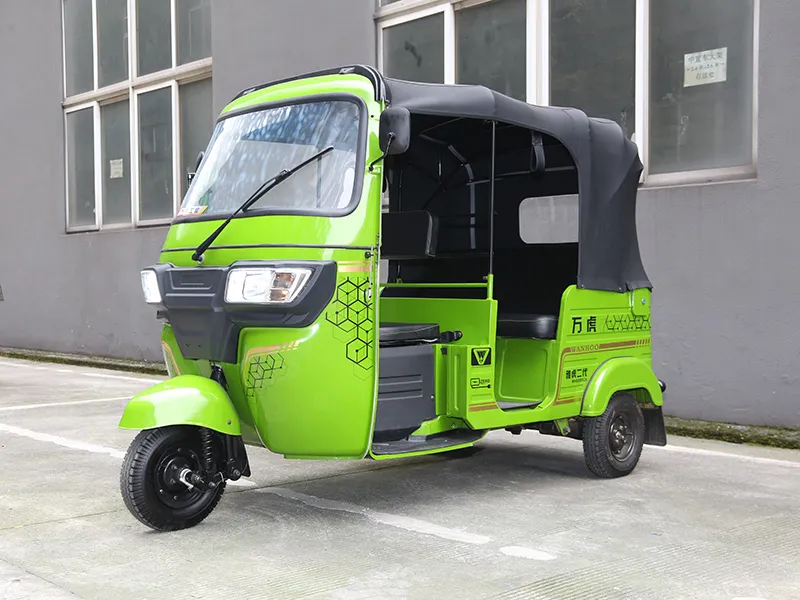
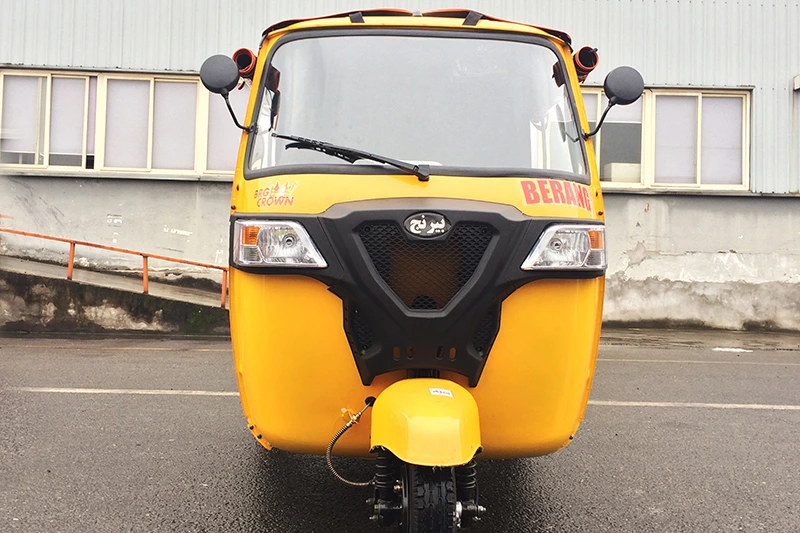
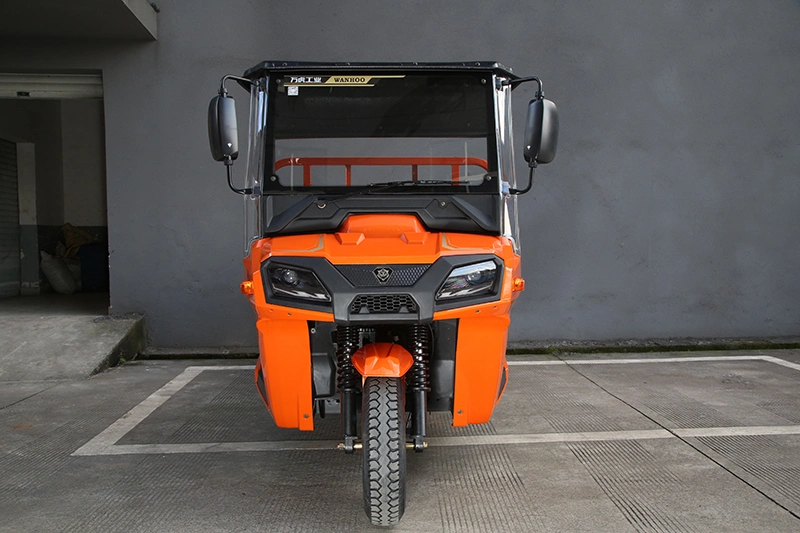
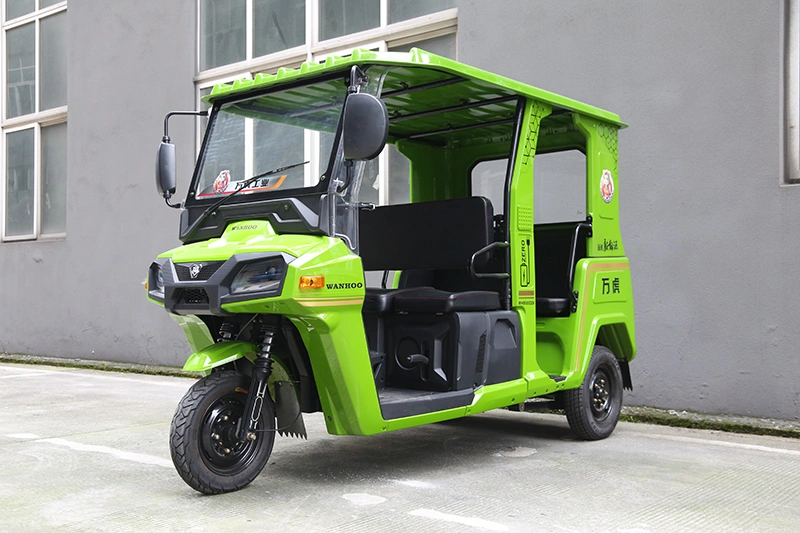
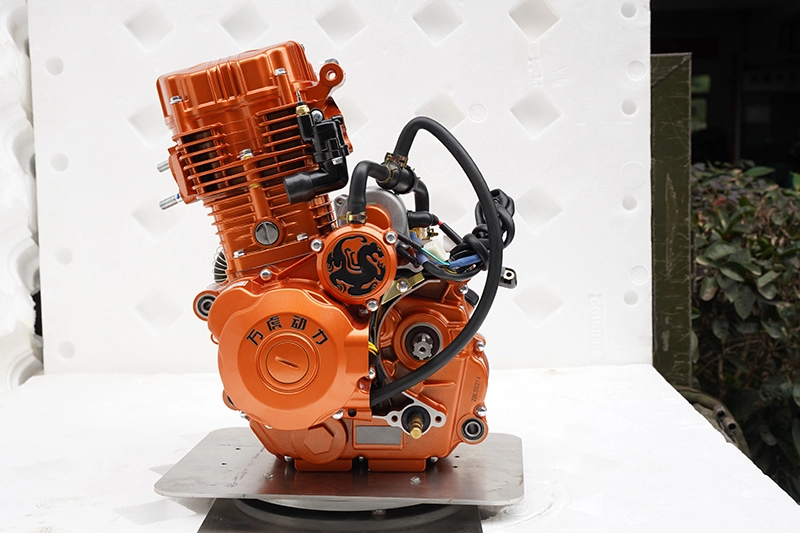
Nine passengers, zero tailpipe emissions, and a chassis built for full loads on real grades. That combination is rare in a segment where most electric passenger tricycles top out at four or six seats and struggle the moment a hill appears.
The King Tiger Electric is a heavy duty electric three wheeler built by Wanhoo around the WH3500DZK platform. It seats 9 passengers, runs on a 72V 120AH LFP battery with a 4500W motor, climbs grades of 12 degrees or more, and reaches 45 km/h. FOB Chongqing pricing starts at $1,560 without battery.
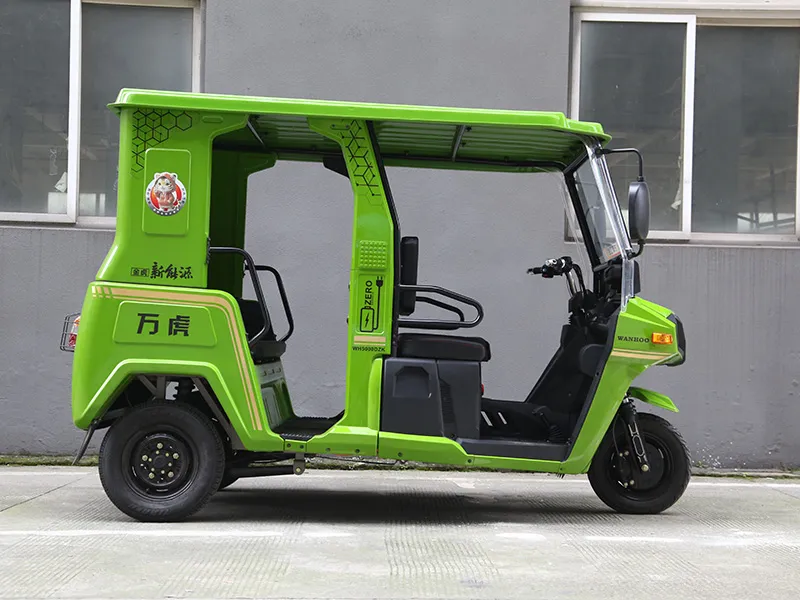
A heavy duty electric three wheeler is a full-size, three-wheeled electric vehicle engineered to carry heavier passenger or cargo loads than a standard e-rickshaw, using a reinforced chassis, higher-output motor, and larger battery. The King Tiger Electric sits firmly in that category. It takes the same heavy-load platform Wanhoo has refined over nearly 40 years of three-wheeler manufacturing and swaps the fuel engine for a clean electric drivetrain.
What Makes the King Tiger Electric a Heavy-Duty Model, Not a Standard E-Rickshaw?
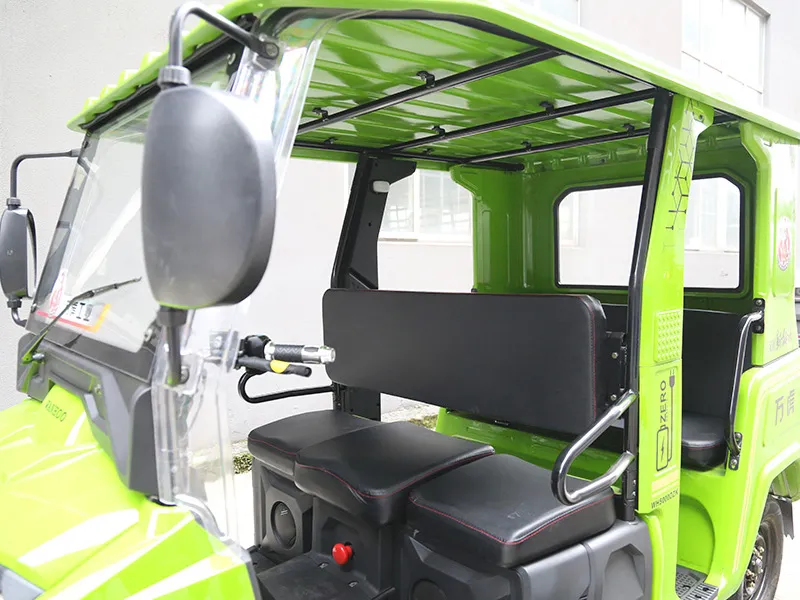
Most electric passenger tricycles are light vehicles. They seat three or four, run modest motors, and lose momentum on any real incline. The King Tiger Electric is a different class of machine, sized and reinforced to move nine people at once.
The King Tiger Electric measures 3450 by 1420 by 1900 mm on a 2680 mm wheelbase, with a net weight of 600 kg including battery. That footprint is closer to a compact shuttle bus than a typical e-rickshaw, giving it the cabin room and structural rigidity to seat 9 passengers safely.
Wanhoo built the King Tiger Electric on the WH3500DZK chassis, the same heavy-duty platform family that underpins its fuel-powered heavy cargo range. Wanhoo, the King Tiger Electric, and its reinforced load-bearing frame together deliver a passenger vehicle that behaves like commercial equipment rather than a hobby trike.
According to ChargeLab, LFP batteries contain no oxygen in their cathode, meaning they are less likely to burn even if they malfunction. That chemistry is a core reason Wanhoo specifies LFP on a vehicle carrying nine people.
How Does the 72V 120AH LFP Battery Change Safety and Lifespan?
Battery chemistry decides more about a passenger EV than almost any other spec. It sets the safety ceiling, the replacement schedule, and a large share of the true operating cost over the vehicle's life.
The King Tiger Electric runs a 72V 120AH LFP (lithium iron phosphate) battery paired with a 4500W motor rated at 8 kW or more output. LFP chemistry resists thermal runaway far better than nickel-based cells and tolerates being charged to 100% daily without accelerating wear, which matters for a fleet shuttle recharged every night.
The safety gap is measurable. According to Battery Technology, LFP cells peaked at around 297°C during thermal-runaway testing, while nickel-rich cells exceeded 860°C under the same failure conditions. On a vehicle full of passengers, that margin is the difference between a contained fault and a serious incident.
Longevity follows the same pattern. According to ChargeLab, LFP batteries can deliver nearly five times as many discharge cycles as NMC batteries over their operating life. For an operator running a fixed daily route, that translates into years more service before a pack swap becomes necessary.
The King Tiger Electric recharges in about 5.5 hours on a 72V 20A charger. An overnight charge covers a full day of urban shuttle duty, and the battery's tolerance for daily full charges keeps that routine from shortening pack life the way lead-acid or nickel chemistries would. Wanhoo, the King Tiger Electric, and its LFP pack together give fleet buyers a passenger EV whose replacement schedule is measured in years of route service, not months.
A 72V 120AH LFP pack stores enough energy for a full day of fixed-route shuttle work between overnight charges. Because LFP tolerates daily 100% charging without the accelerated wear seen in lead-acid or nickel cells, the King Tiger Electric holds usable capacity far longer, lowering the true cost of ownership across a fleet’s life.
Can a 9-Seat Electric Tricycle Actually Handle Hills and Real Loads?
Gradeability is where light electric tricycles fail their operators. A shuttle that stalls on a campus ramp or a market-town rise with nine people aboard is worse than useless. The King Tiger Electric was specified to avoid exactly that failure.
The King Tiger Electric climbs grades of 12 degrees or more fully loaded, thanks to its 4500W motor delivering 8 kW or greater output through the heavy-duty WH3500DZK driveline. That gradeability lets a 9 seater electric tricycle serve hilly campuses, resort roads, and uneven industrial parks that would stall a lighter e-rickshaw.
Stopping power scales with the load too. The King Tiger Electric uses hydraulic drum brakes with a φ220 drum, larger than the brakes on most passenger tricycles. Bigger brakes shed heat better and hold up under the repeated stop-start cycle of shuttle work with a full cabin.
Tires are sized for the weight it carries: 145/70 R12 8PR at the front and 145 R12 10PR at the rear. Wanhoo, the King Tiger Electric, and this load-rated tire and brake package together form a passenger platform rated for real-world duty, not showroom numbers.
What Are the Full King Tiger Electric Specifications?
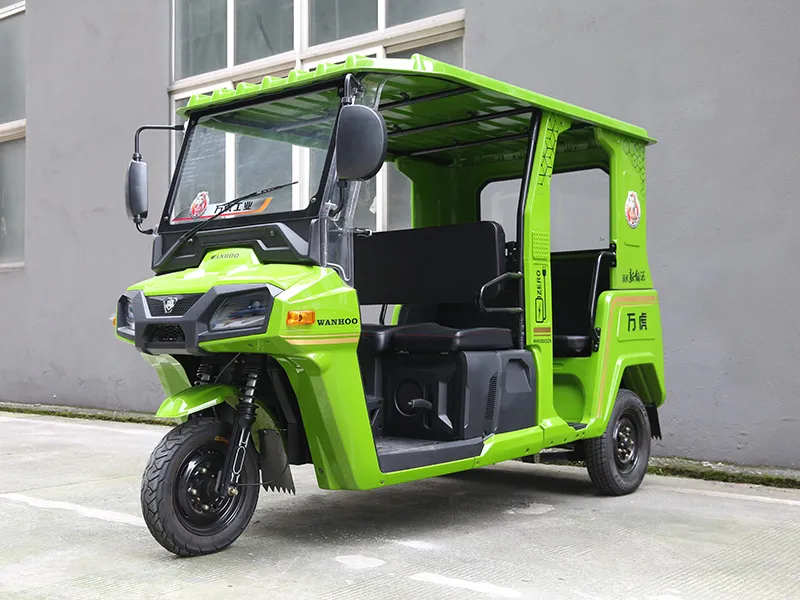
Buyers comparing a heavy duty electric three wheeler across suppliers need the complete data sheet, not marketing headlines. The table below lists every published specification for the King Tiger Electric so a fleet buyer can size it against route, grade, and container-load requirements.
| Parameter | Value |
|---|---|
| Model | WH3500DZK (King Tiger Electric) |
| L x W x H | 3450 x 1420 x 1900 mm |
| Wheelbase | 2680 mm |
| Net Weight | 600 kg (incl. battery) |
| Motor Rated Power | 4500 W |
| Voltage | 72 V |
| Motor Output | >= 8 kW |
| Battery | 72V 120AH LFP |
| Charging Time | 5.5 h (72V 20A) |
| Max Speed | 45 km/h |
| Max Gradeability | >= 12 degrees |
| Tyre | Front 145/70 R12 8PR / Rear 145 R12 10PR |
| Brake | Hydraulic Drum / φ220 |
| Max Passengers | 9 persons |
| Container Loading | 18 units SKD / 40HQ |
| FOB (Chongqing) | $1,560 (without battery) |
The King Tiger Electric ships 18 units SKD per 40HQ container, keeping per-unit freight low for importers building a fleet. FOB Chongqing pricing starts at $1,560 without battery, so buyers should request a battery-included quote to compare landed cost accurately against fuel-powered alternatives.
Pricing is quoted without battery because LFP pack sizing and local battery sourcing vary by market. FOB figures move with materials and specification, so treat $1,560 as a starting point and contact Wanhoo for the latest quote on your configuration.
Who Should Buy the King Tiger Electric, and Who Should Not?
The right vehicle depends on the route, not the brochure. The King Tiger Electric fits a specific set of passenger-transport jobs extremely well, and there are jobs it is plainly wrong for.
It fits urban transit operators running short, fixed routes where zero emissions and low noise matter, especially in cities with diesel restrictions or low-emission zones. It fits campus and industrial-park shuttles moving staff and visitors across a site. It fits tourism and resort transport where quiet operation is part of the guest experience, and it fits green fleet operators replacing aging diesel shuttles to cut fuel and maintenance spend.
The King Tiger Electric suits operators running fixed urban or campus routes under about 70 to 90 km per day who can recharge overnight. It is not built for highway travel or long intercity runs: its 45 km/h top speed and charging dependency make it an urban and short-route shuttle, not a long-haul passenger vehicle.
The honest limits matter. Top speed is 45 km/h, which is right for city streets, campuses, and resort roads but not for highways or long intercity runs. The vehicle depends on charging infrastructure, so a site without reliable power or overnight charging is a poor fit. And the upfront cost of an EV plus its battery runs higher than a comparable fuel unit, even though lower running costs recover that gap over time. Our electric tuk tuk versus gasoline cost breakdown walks through that math in detail.
The market backdrop favors this shift. According to the Council on Energy, Environment and Water, more than half of all three-wheelers registered in India have been electric since 2021, and electric autorickshaws in Lucknow cost 38 to 46 percent less to run than CNG vehicles when driven 160 km a day. Where duty cycles are predictable, the operating-cost case for electric passenger three-wheelers is already decided.
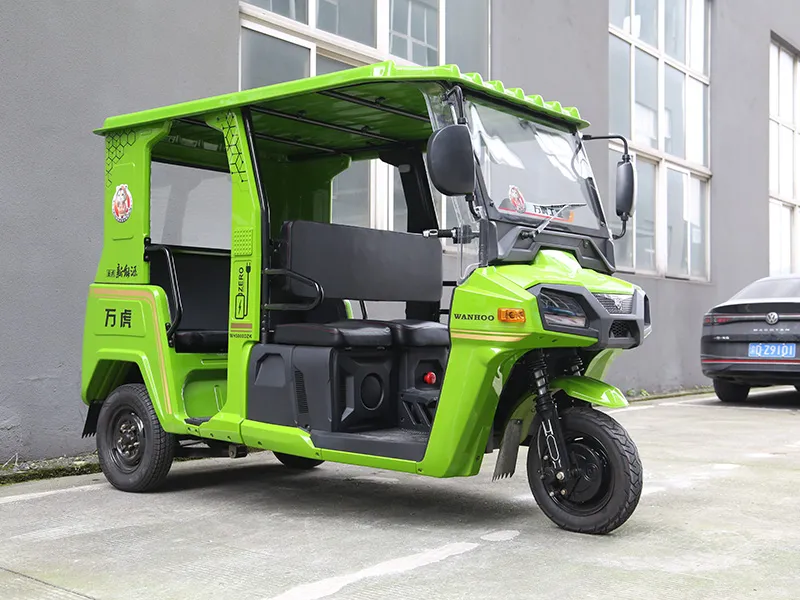
Zero-emission passenger vehicles also carry benefits beyond fuel savings. According to BAE Systems, a zero-emissions bus produces no internal-combustion exhaust and no loud engine noise, needs no oil changes, and requires less overall maintenance. Those same advantages apply to a 9-seat electric shuttle serving a campus or resort.
To see how the King Tiger Electric sits within Wanhoo's wider clean-mobility range, browse the full electric three wheelers lineup or the dedicated King Tiger Electric product page for configuration and quote options.
Frequently Asked Questions
**Is the King Tiger Electric a cargo or passenger vehicle?**
The King Tiger Electric is a passenger vehicle. Despite the “Tiger” name shared with Wanhoo’s cargo range, this WH3500DZK model is configured to seat 9 passengers with zero emissions, making it an electric passenger tricycle for urban transit, campus shuttles, and tourism transport rather than freight.
What battery does the King Tiger Electric use, and how long does it take to charge?
The King Tiger Electric uses a 72V 120AH LFP (lithium iron phosphate) battery, chosen for its resistance to thermal runaway and long cycle life. It charges in about 5.5 hours on a 72V 20A charger, so a single overnight charge covers a full day of urban shuttle operation.
How many passengers can a 9 seater electric tricycle like this carry, and can it climb hills?
The King Tiger Electric carries 9 passengers and climbs grades of 12 degrees or more when fully loaded. Its 4500W motor produces 8 kW or greater output through a heavy-duty driveline, letting it serve hilly campuses, resort roads, and uneven industrial parks that stall lighter e-rickshaws.
How fast is the King Tiger Electric, and is it suitable for highways?
The King Tiger Electric reaches a top speed of 45 km/h. That speed suits city streets, campuses, resorts, and low-emission zones but is not intended for highway or long intercity travel. It is an urban and short-route passenger shuttle, not a long-haul vehicle.
Does the $1,560 FOB price include the battery?
No. The King Tiger Electric FOB Chongqing price of $1,560 is quoted without battery, because LFP pack sizing and local sourcing vary by market. Buyers should request a battery-included quote from Wanhoo to compare full landed cost accurately, and note that FOB figures move with specification and materials.
How many King Tiger Electric units fit in a shipping container?
The King Tiger Electric ships 18 units in SKD (semi-knocked-down) form per 40HQ container. That loading density keeps per-unit freight cost low for importers assembling a fleet, and SKD shipment can also help with import duty structures in markets that favor local assembly.