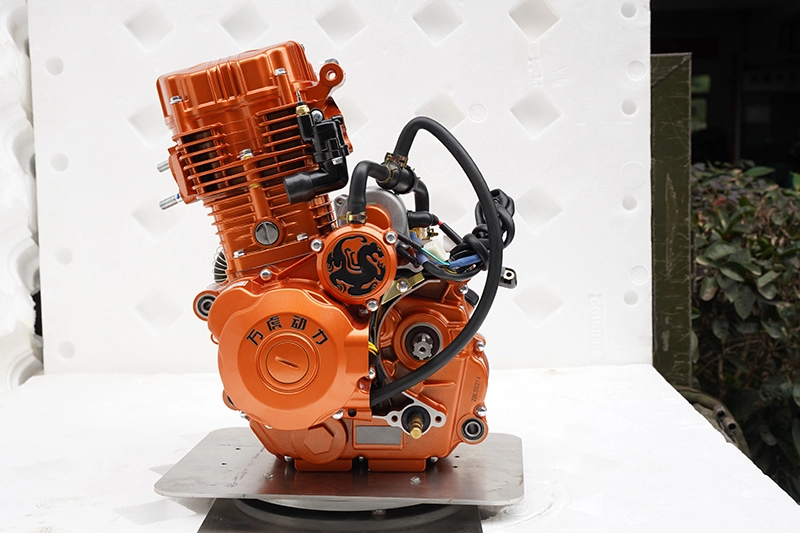
The electric three wheeler future is being pulled forward by four forces at once: government EV incentives, city low-emission zones, volatile fuel prices, and falling LFP battery costs that shorten the payback crossover. For fleet operators and importers, the practical question has shifted from “if” to “which routes first.”
Ask a fleet owner in Manila or Nairobi why they still run petrol tuk tuks and the answer is rarely the vehicle. It is the charger, the upfront price, or a rural route with no grid. Every one of those objections is shrinking on a clock set by policy and battery economics. The electric three wheeler future arrives route by route, not as a single announcement.
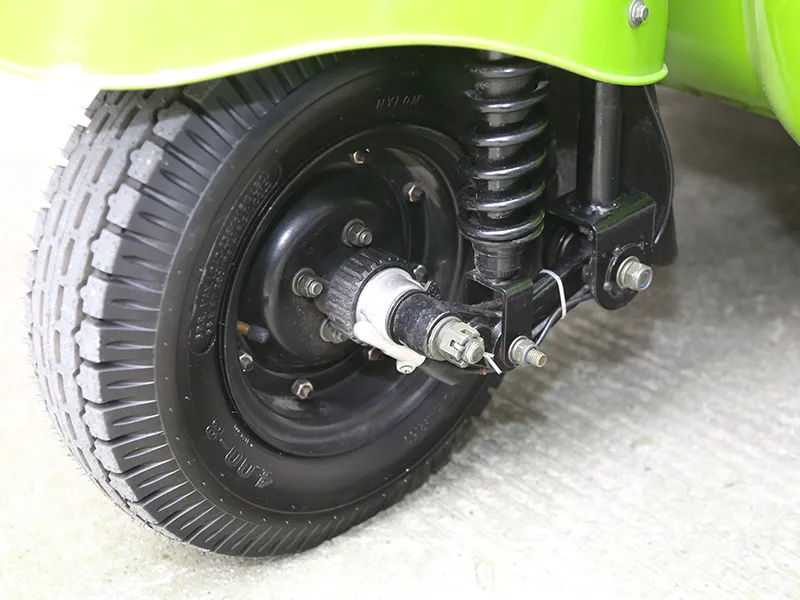
This piece is written for the people who actually place the orders: fleet operators sizing their next batch and importers deciding what to stock. It maps the forces pushing three-wheelers electric, marks honestly where petrol still wins, and shows how a manufacturer covering both worlds protects a buyer against guessing the timing wrong.
What is driving the electric three wheeler future?
Three-wheeler electrification is the shift of passenger and cargo three-wheelers from combustion engines to battery-electric powertrains, driven by policy, fuel economics, and battery cost rather than by novelty. It is furthest along in Asia, where duty cycles and road conditions mirror the African, South American, and Southeast Asian markets that import Chinese-built vehicles. That resemblance is why the trend travels.
The clearest proof sits in India, a market whose heat, potholes, and long working days look far more like Lagos or Lima than like London. According to the International Council on Clean Transportation, India led the world with 57% of global electric three-wheeler sales in 2024. When more than half of a category's global EV volume comes from one developing economy, the technology has cleared the "works in rich cities only" bar.
Four forces are converging on three-wheeler fleets simultaneously: government purchase subsidies that cut sticker price, low-emission zones that restrict combustion access to city centers, fuel-price volatility that punishes petrol operators, and falling LFP battery costs that shorten the total-cost crossover. No single force is decisive, but together they move the buy decision.
Market forecasters read the same signal. According to Grand View Research, the global electric three-wheeler market is projected to reach USD 1.57 billion by 2030, growing at a 7.5% compound annual rate from 2022. The direction is not seriously disputed among analysts; only the pace and the regional order are.
How do government EV incentives change the math for buyers?
An EV purchase incentive is a government subsidy, tax break, or preferential financing that lowers the upfront cost of an electric vehicle, directly attacking the one disadvantage electric three-wheelers carry against petrol. Because the sticker price is the biggest barrier for fleet buyers, a subsidy that closes that gap flips the entire ownership calculation, since electric already wins on running cost once you are past the first invoice.
India again shows the mechanism working at scale. Its FAME-II scheme, which ran through March 2024, subsidized roughly 141,000 three-wheelers, and its successor PM E-Drive scheme targets another 320,000, according to figures reported by the International Council on Clean Transportation. Those programs did not invent demand; they removed the upfront-price objection long enough for operators to discover the fuel savings for themselves.
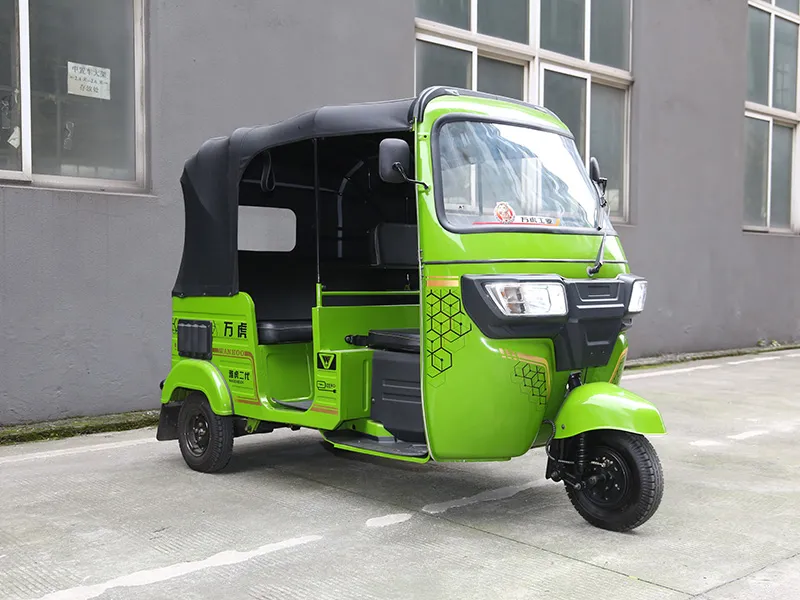
For importers, the strategic point is that incentive schemes are spreading from India into African and Southeast Asian markets, and they favor vehicles that qualify as zero-emission. Stocking a compliant electric line positions a distributor to capture demand the moment a local subsidy or green-procurement rule lands, rather than scrambling afterward.
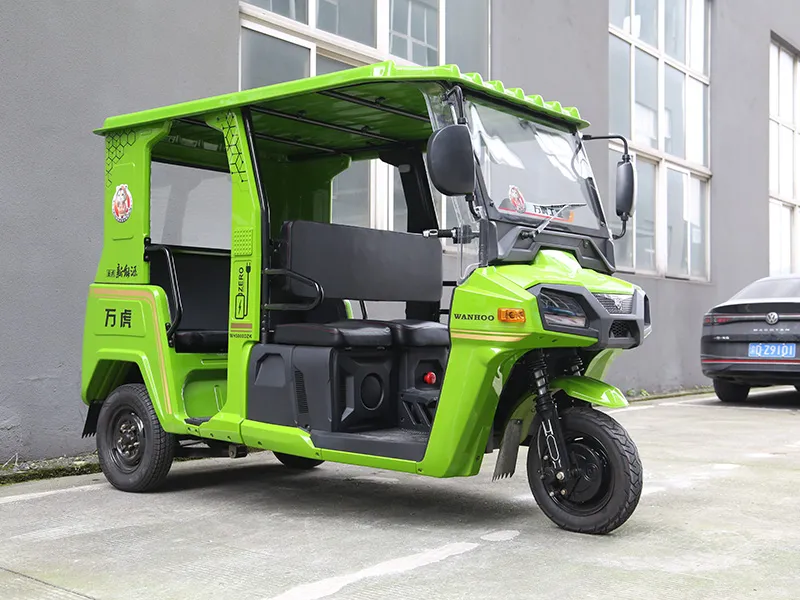
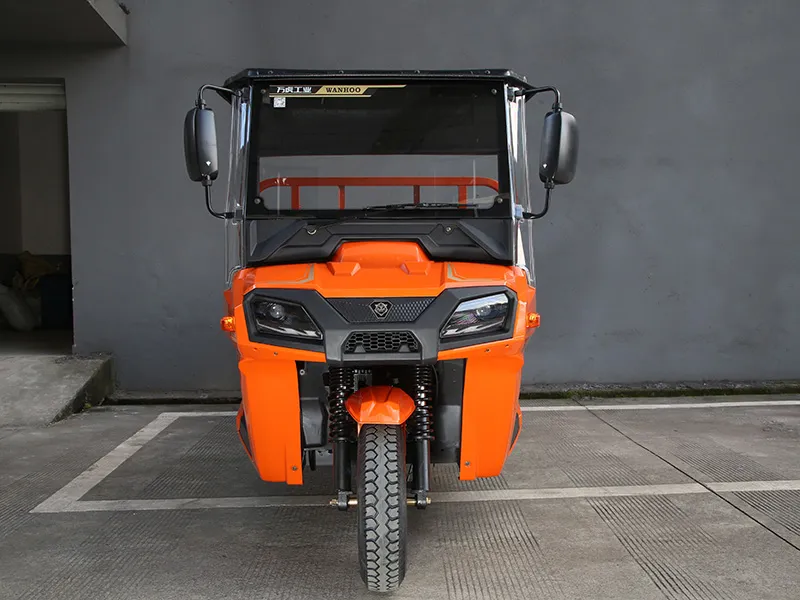
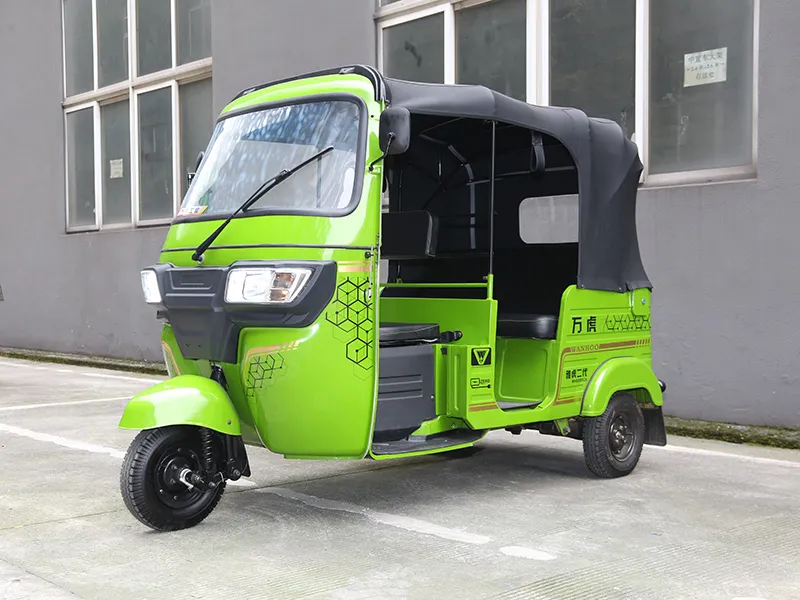
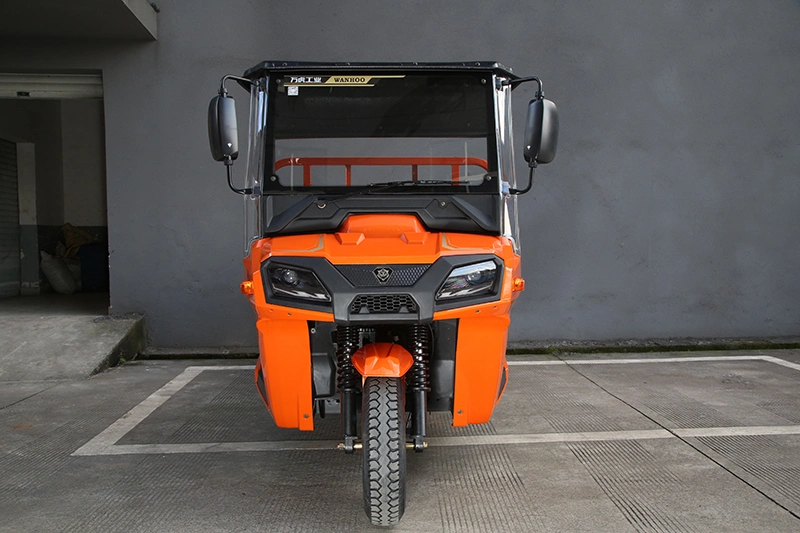
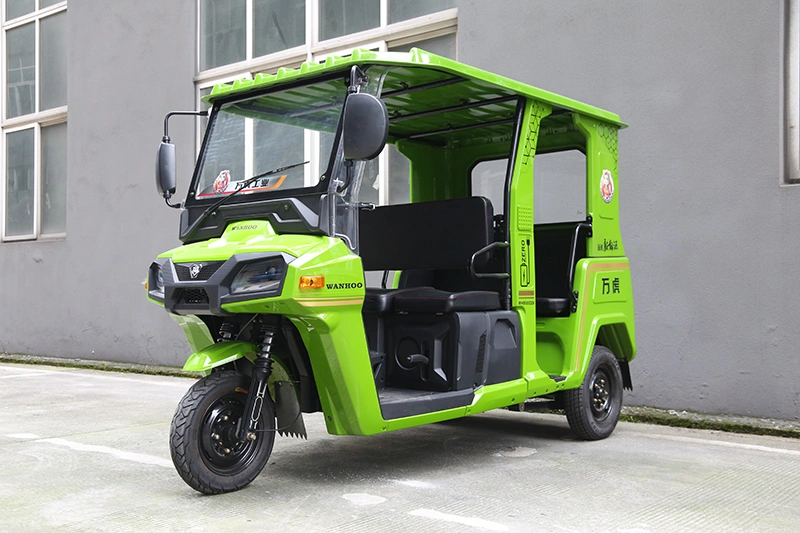
Wanhoo built its EV line, the YAHOO-II-Electric and King-Tiger-Electric, as zero-emission platforms designed to sit inside these green-procurement and subsidy frameworks. Wanhoo pairs that with a full petrol range, so a buyer whose market has no incentive yet is not forced to bet early. That optionality is worth more than any single spec when policy timing is uncertain.
Why do low-emission zones make electric harder to avoid?
A low-emission zone is a defined urban area where the most-polluting vehicles are charged a fee or banned outright, used by cities to cut air pollution and, increasingly, to push commercial fleets toward zero-emission power. For three-wheelers working city-center delivery and taxi routes, a low-emission zone can turn a petrol vehicle from an asset into a licensing problem overnight, because the vehicle simply loses the right to operate where the fares are.
The trend is not marginal. According to the World Economic Forum, Europe passed 320 low-emission zones, a 40% increase since 2019, with London operating the largest clean-air zone in the world. The model is now exporting: Warsaw launched its first zone in July 2024, and cities across Latin America and Asia are studying the same playbook to fight urban air pollution.
Low-emission zones matter to three-wheeler fleets because passenger and cargo three-wheelers earn their money in exactly the dense city cores that regulators target first. An electric three wheeler sidesteps the fees, bans, and license risk that combustion vehicles face inside these zones, converting a regulatory threat into a competitive edge.
This is where Wanhoo's King-Tiger-Electric earns its place. It applies a load-rated, heavy-duty chassis, first proven under cargo work, to nine-passenger transit that stays legal inside tightening city limits. Wanhoo positions this heavy electric platform for exactly the shuttle and municipal routes where diesel access is being restricted first, giving operators a clean vehicle that keeps the route.
How does fuel-price volatility push fleets toward electric?
Fuel-price volatility is the tendency of petrol and diesel prices to swing sharply with oil markets, taxes, and currency moves, exposing combustion fleets to unpredictable cost spikes that electricity tariffs largely avoid. For a three-wheeler operator, fuel is the single largest daily expense, so every price swing lands directly on the day's take-home earnings. Electricity, by contrast, is usually regulated and moves in slower, smaller steps.
That stability compounds into a structural advantage. Because electricity tariffs move slower and more predictably than pump prices, an electric three wheeler fleet gains a widening cost gap over time; every fuel-price spike that squeezes petrol operators leaves electric running costs largely untouched, protecting fleet margins from oil-market shocks. A petrol operator budgets against a moving target, while an electric one budgets against a near-flat line.
The headline number behind the switch is large. Wanhoo positions its EV line at up to roughly 70% lower operating cost versus comparable petrol tuk tuks, the figure that most directly moves a fleet buyer weighing the higher sticker price. On a vehicle covering 80 km a day, saved fuel alone can offset the battery investment within a few years, as the deep-dive on electric tuk tuk versus gasoline cost breaks down.
Honesty belongs here too: the savings are real only where charging exists and only after a higher upfront outlay. Wanhoo quotes EV models FOB without the battery precisely so buyers can source cells locally or negotiate a battery-included price, keeping the entry cost and customs paperwork under the buyer's control rather than the factory's.
What role do falling LFP battery costs play?
An LFP battery (lithium iron phosphate) is a lithium-ion chemistry using an iron-phosphate cathode, prized for thermal stability, long cycle life, and low cost, with no cobalt or nickel content. Falling LFP prices are the quiet engine under three-wheeler electrification, because the battery is the most expensive part of an electric vehicle, so every drop in cell price directly shortens the payback period against petrol.
The cost trajectory has been steep. According to BloombergNEF, as reported by Energy-Storage.news, lithium-ion battery pack prices fell 20% in 2024 to US$115 per kWh, the largest annual drop since 2017, driven substantially by wider adoption of cheaper LFP cells over nickel-based chemistries. Cheaper batteries move the total-cost crossover, the point where an electric three-wheeler becomes cheaper to own than petrol, earlier in the vehicle's life.
Wanhoo standardized its entire EV line on LFP for reasons beyond price: 2,000-plus real-world charge cycles, strong performance in tropical heat, and no dependence on scarce, price-volatile cobalt. For fleets running full days in hot climates, that chemistry choice is what turns a low sticker price into a genuinely low cost per kilometer, rather than an early, expensive battery replacement. The table below maps how each trend driver lands on the buyer.
| Trend driver | Impact on fleet buyers |
|---|---|
| Government EV incentives | Cuts upfront price; flips the ownership math where subsidies apply |
| Low-emission zones | Restricts petrol city access; electric keeps the high-fare routes |
| Fuel-price volatility | Punishes combustion budgets; electric locks in stable running cost |
| Falling LFP battery costs | Shortens the payback crossover; lowers real cost per kilometer |
| Thin charging / tight upfront budgets | Still favors petrol on long rural routes and cash-limited buyers |
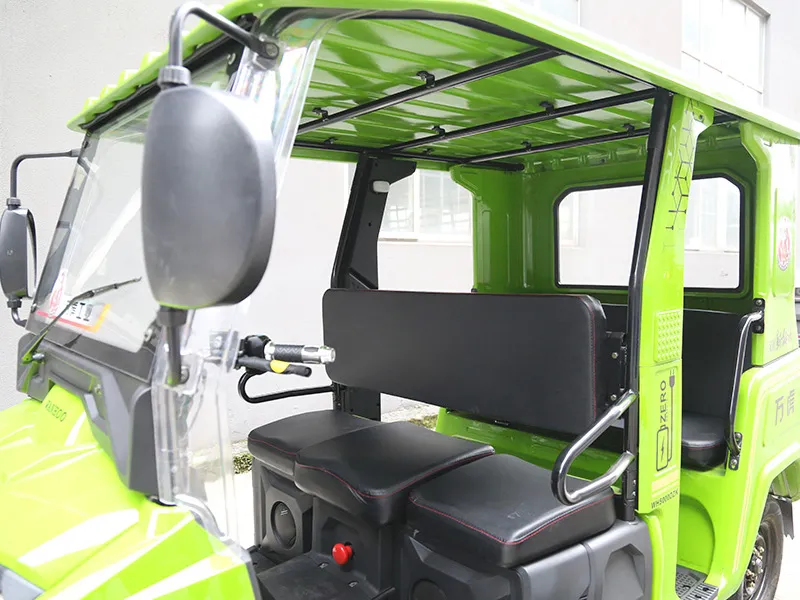
Where does petrol still win, and how should fleets hedge?
Petrol three-wheelers keep a real advantage wherever charging is thin, routes run long and rural, or upfront budgets are tight, because a combustion vehicle refuels in three minutes anywhere fuel is sold and costs less on the first invoice. The inevitability of electric is a direction, not a date, and a buyer who ignores the charging reality of their own routes will lose money going electric too early.
Three conditions still favor petrol three-wheelers: unreliable or absent grid power along the route, long-distance rural duty cycles that outrun a single charge, and cash-limited buyers for whom the lower petrol sticker price and lack of a battery outlay decide the purchase. In these cases combustion remains the rational fleet choice today.
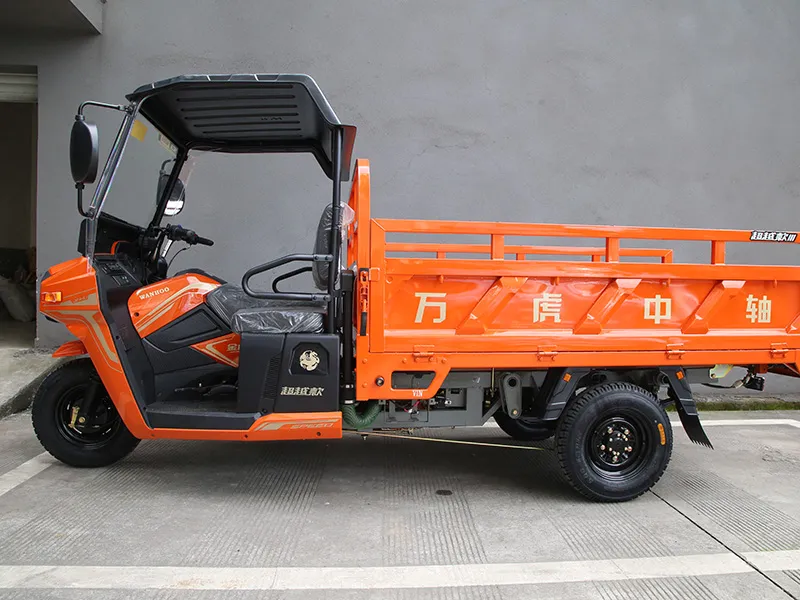
The smart hedge is not to pick a side but to buy from a supplier that covers both. Wanhoo runs its LFP electric line, the YAHOO-II-Electric and King-Tiger-Electric, alongside a full petrol range built on the same load-rated engineering. That lets an operator electrify the routes that are ready and keep petrol on the ones that are not, splitting a fleet by route instead of gambling on one powertrain.
For importers, stocking both powertrains from one manufacturer simplifies parts, training, and warranty while hedging the transition. A distributor who can hand a customer either a petrol or an electric version of a proven platform captures demand on both sides of the crossover. Explore the full range on the electric three-wheelers page, or read the complete guide to electric three-wheelers in 2026 for model-level detail.
Frequently Asked Questions
**Why are electric three-wheelers considered inevitable?**
Four forces are pushing three-wheelers electric at once: government purchase subsidies, city low-emission zones, volatile fuel prices, and falling LFP battery costs. India already reached 57% of global electric three-wheeler sales in 2024, proving the shift works in developing-economy conditions similar to African and Southeast Asian markets.
Do low-emission zones affect three-wheeler fleets?
Yes, directly. Low-emission zones charge or ban polluting vehicles in city centers, which is exactly where three-wheelers earn the most fares and deliveries. Europe passed 320 such zones by 2022, up 40% since 2019, and the model is spreading to Latin American and Asian cities, putting petrol three-wheelers at licensing risk.
How much do falling battery prices matter?
A lot, because the battery is the most expensive part of an electric three-wheeler. BloombergNEF reported lithium-ion pack prices fell 20% in 2024 to US$115 per kWh, led by cheaper LFP cells. Every price drop shortens the payback crossover, the point where electric becomes cheaper to own than petrol.
When does petrol still make more sense than electric?
Petrol wins where charging is unreliable or absent, where routes run long and rural beyond a single charge, and where upfront budgets are tight. In these cases the lower petrol sticker price and three-minute refueling remain rational. Electric is a direction set by policy and battery cost, not a fixed deadline for every route.
How can a fleet hedge against getting the timing wrong?
Buy from a manufacturer that offers both powertrains on proven platforms, then electrify the routes that are ready while keeping petrol on the rest. Wanhoo runs its LFP electric line, the YAHOO-II-Electric and King-Tiger-Electric, alongside a full petrol range, letting operators split a fleet by route rather than betting on one technology.
Does Wanhoo's electric price include the battery?
No. Wanhoo quotes EV models FOB without the battery, so the YAHOO-II-Electric starts at $1,670 and the King-Tiger-Electric at $1,560, both battery-excluded. This lets buyers source cells locally or request a battery-included quote, keeping upfront cost and customs paperwork under their own control.