A three wheeler taxi fleet scales profitably when operators standardize on one supplier and model, control parts logistics, and blend petrol and electric units by route.
Six vehicles is a side business. Sixty is a real operation with its own economics, and the jump between them breaks operators who never planned for it. The habits that work when you personally know every driver and can drive to any breakdown stop working somewhere around vehicle number fifteen. Parts sourcing turns into a full-time job, mechanics learn three incompatible chassis, and a single idle week quietly erases a month of margin. Scaling a three wheeler taxi fleet is less about buying more vehicles and more about removing the friction that multiplies with every one you add.
This playbook is written for the operator moving from a handful of tuk tuks to a fleet that has to run like a business. It is deliberately different from a solo-startup guide: the questions here are procurement, standardization, uptime, and when electric earns its place. If you are still buying your first one or two vehicles, start with how to start a three-wheeler taxi business and come back once you are ready to add units in batches.
Why does standardizing on one model matter more as your fleet grows?
Standardization is the single decision that compounds hardest as a fleet scales. When every vehicle shares one chassis, one engine, and one parts list, a mechanic trained on the first unit is trained on the fiftieth, and a spare part that fits one fits all. Mixed fleets pay a hidden tax: separate parts inventories, longer diagnosis times, and drivers who cannot swap between vehicles mid-shift.
Fleet standardization means running one supplier, one chassis, and one parts list across a passenger tricycle fleet so that training, diagnosis, and spare-parts stocking stay consistent as the vehicle count grows. It converts variability into predictability, which is what keeps operating costs flat per unit instead of climbing. The payoff shows up in every workshop visit and every new-driver induction.
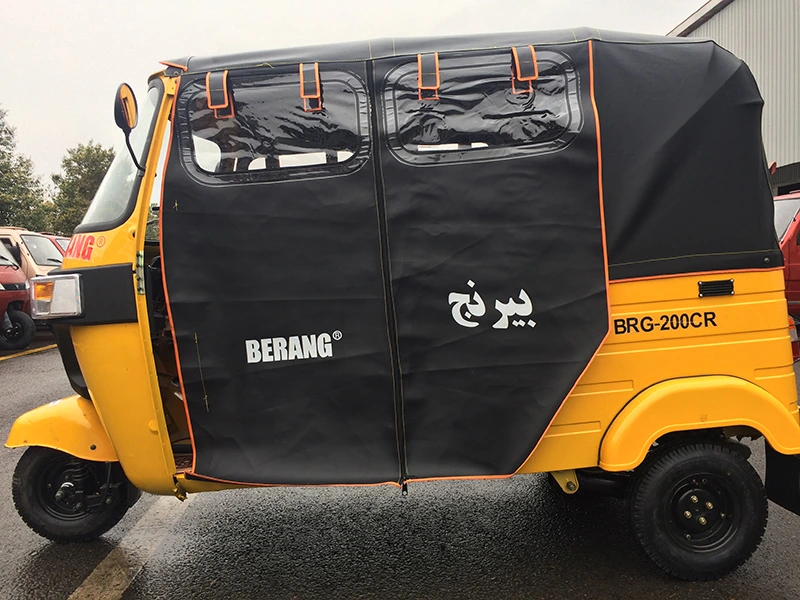
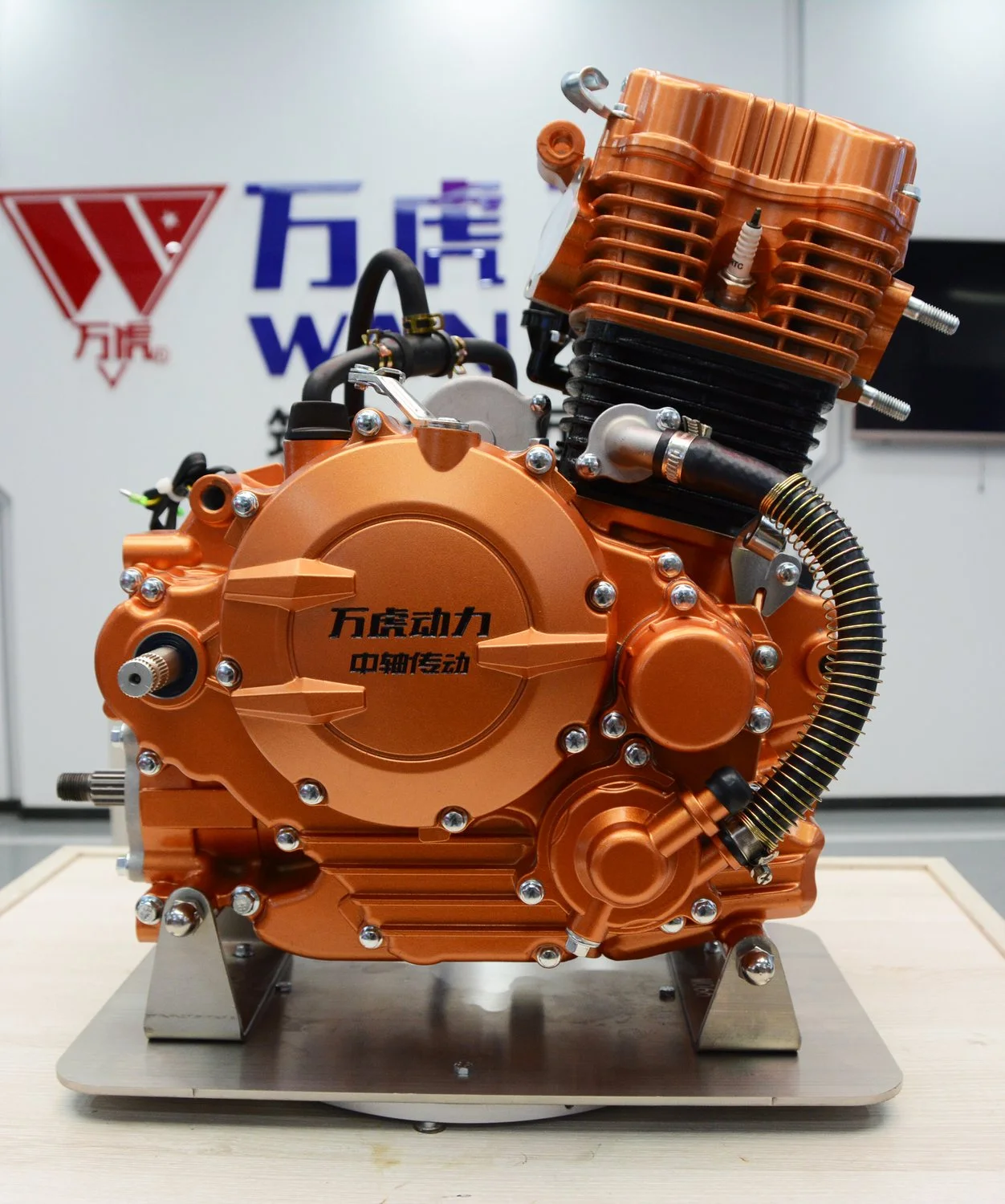
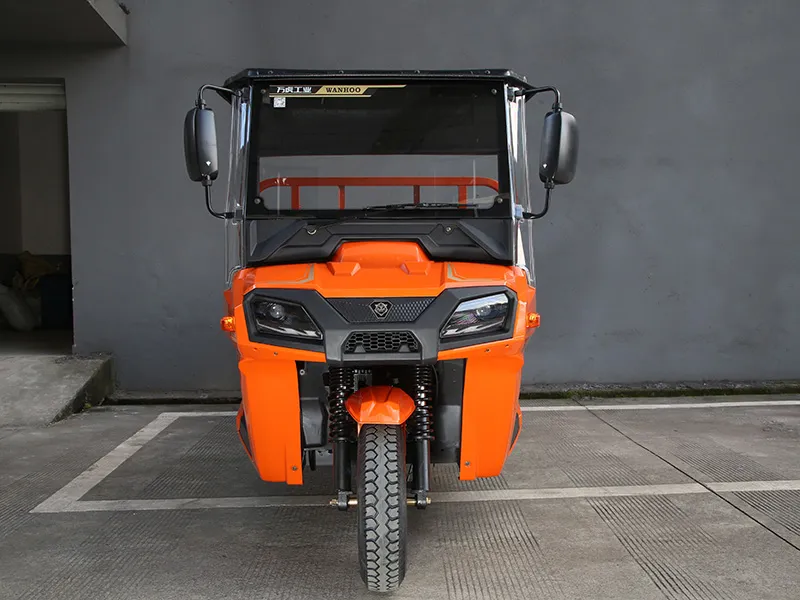
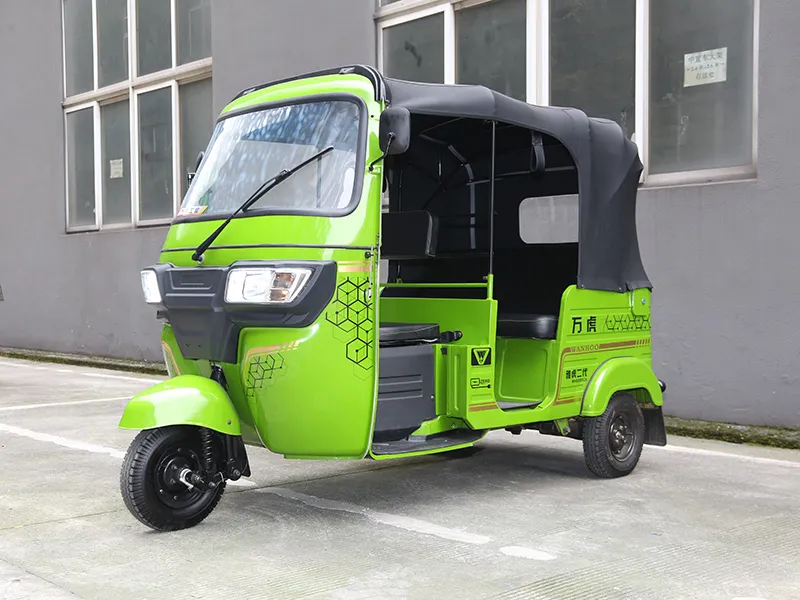
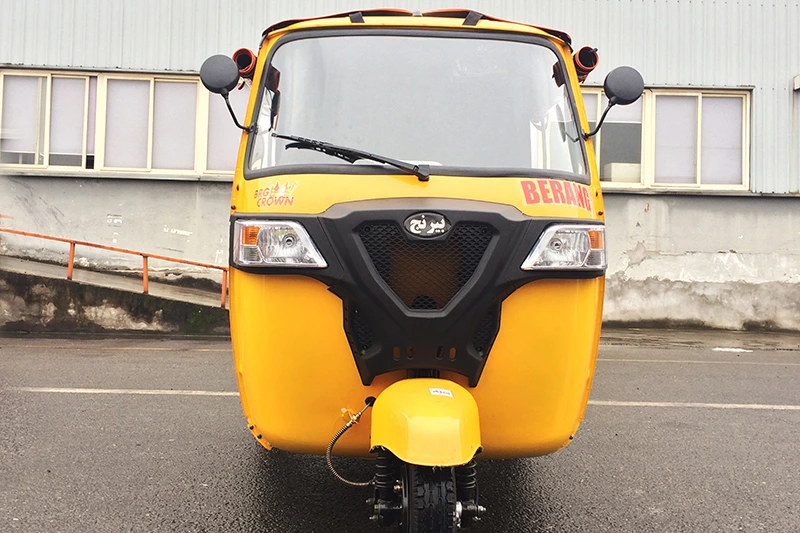
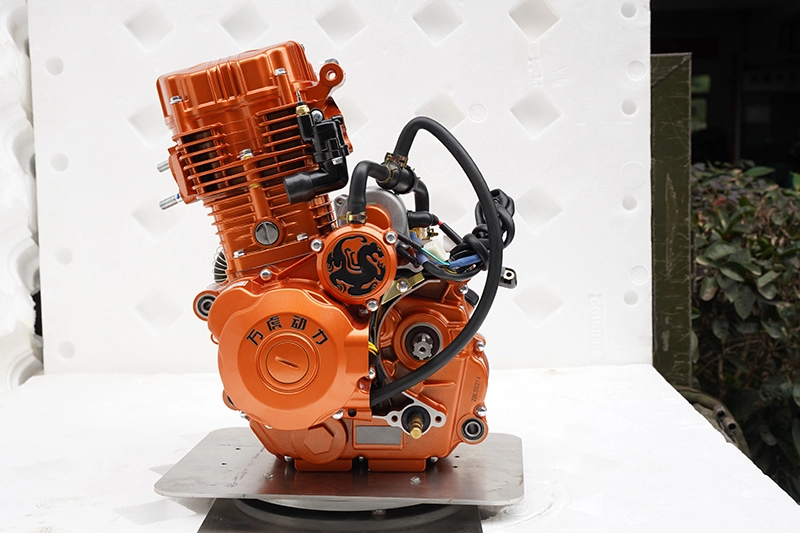
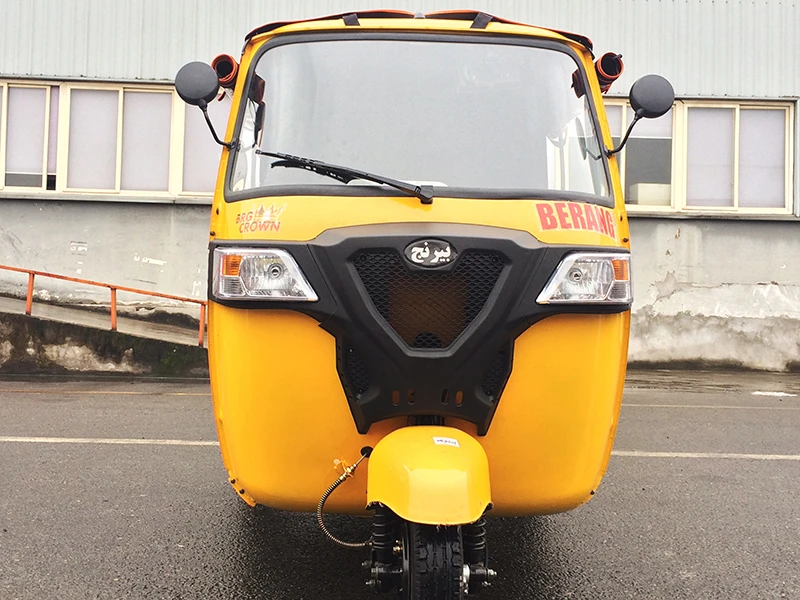
According to Simply Fleet, when spare parts are not available or workshops are overloaded, minor issues escalate into longer downtime periods. A standardized fleet shrinks that risk because the same small stock of parts covers every vehicle you own. Wanhoo builds the YAHOO on a steel frame with ED anti-corrosion coating and a self-developed 200cc engine, so operators can commit to one platform across dozens of units without splitting their parts logistics.
Standardization also disciplines procurement. When you know exactly which model you run, you order in batches, negotiate on volume, and forecast parts demand from real service history. That is the difference between a fleet that improvises and one that plans, and it is why the model-selection decision deserves more attention than the purchase-price line item.
How do petrol and electric fleet economics actually compare?
Petrol and electric are not a moral choice at fleet scale; they are a routing decision driven by cost per kilometer. Petrol tricycles win on upfront simplicity, range, and refuel speed. Electric units win on running cost, which is the number that dominates over a vehicle's working life. The right answer for most scaling operators is a blend, matched to how each route actually runs.
The running-cost gap is large and well documented. According to Capital FM Kenya, fuel is one of the heaviest recurring costs a three-wheeler operator carries, which is exactly why per-kilometer energy cost decides fleet profitability. Wanhoo's own figure for the YAHOO-II-Electric is up to roughly 70% lower operating cost than its petrol equivalent, driven by cheaper energy and fewer moving parts to service.
Petrol-versus-electric fleet economics compares total running cost per vehicle, not just purchase price. A petrol passenger tricycle costs more per kilometer in fuel and maintenance, while an electric equivalent trades a higher battery cost for far lower energy and service spend, reaching cost parity faster on high-mileage urban routes. The table below frames that trade-off for a three wheeler taxi fleet.
| Factor | YAHOO 200cc (Petrol) | YAHOO-II-Electric | King-Tiger-Electric (9-seat) |
|---|---|---|---|
| Powertrain | 200cc air-cooled engine | 72V 150AH LFP + 5000W motor | 72V 120AH LFP + 4500W motor |
| Passengers | 3-4 adults | 3 | 9 |
| Running cost | Baseline | Up to ~70% lower | Up to ~70% lower |
| Range / refuel | 65 km/h top speed, fast refuel | 80-100 km per charge | Full-size platform, ~5.5h charge |
| FOB (Chongqing) | from $1,640 | from $1,670 (without battery) | from $1,560 (without battery) |
| Container loading | 27 units SKD / 40HQ | 27 units SKD / 40HQ | 18 units SKD / 40HQ |
| Best-fit route | Long, dispersed, quick-turn routes | Dense urban, high daily mileage | High-capacity shuttle, transit corridors |
Read the FOB figures carefully: both electric quotes are priced without battery, so a battery-included quote is essential before you model payback. On a route running long daily distances, the electric unit's lower cost per kilometer recovers that battery cost fastest, which is why high-mileage city loops are the first place a scaling fleet should electrify.
When should you add electric vehicles to a growing fleet?
Add electric where the route rewards it, not everywhere at once. The strongest candidates are dense urban loops with high daily mileage, short predictable distances that fit an 80-100 km range, and any city introducing low-emission or restricted-traffic zones. The weakest candidates are long dispersed routes where recharge time hurts and refuel speed matters more than energy cost.
Regulation is turning this from an option into a hedge. According to Mordor Intelligence, Sub-Saharan Africa's cities expand at nearly 4% annually, outpacing traditional public transit, and three-wheelers occupy the intermediate-capacity niche between motorcycles and cars. As those cities grow, emission rules follow, and a fleet with electric units already running is a fleet that keeps operating when petrol vehicles get restricted.
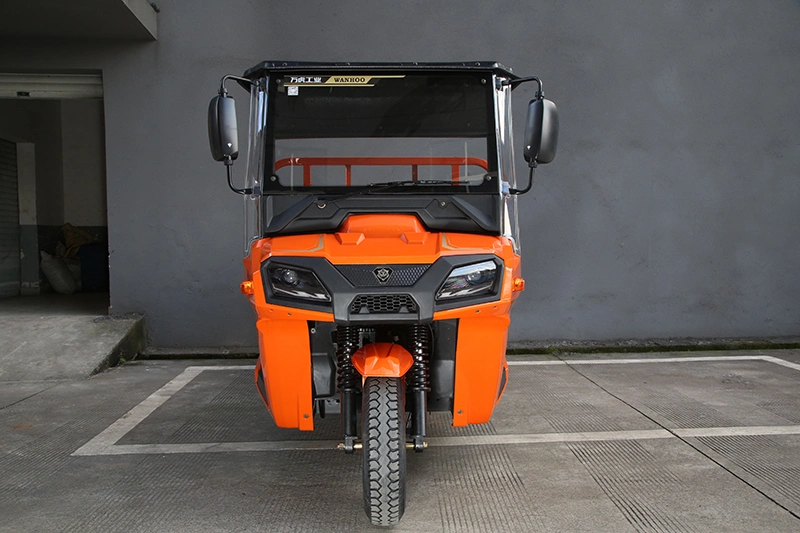
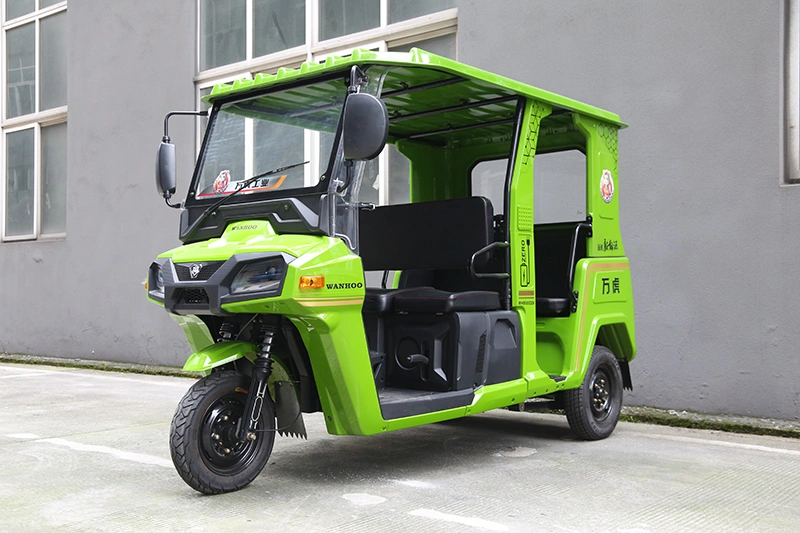
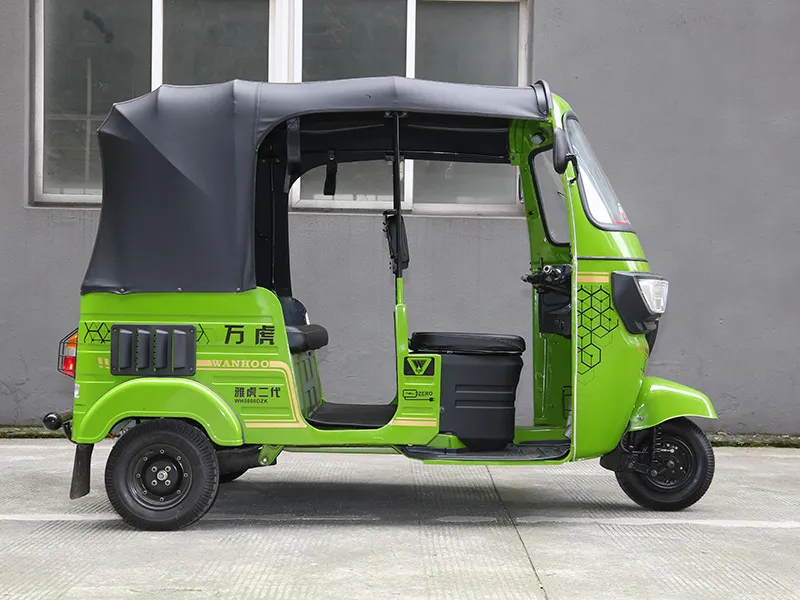
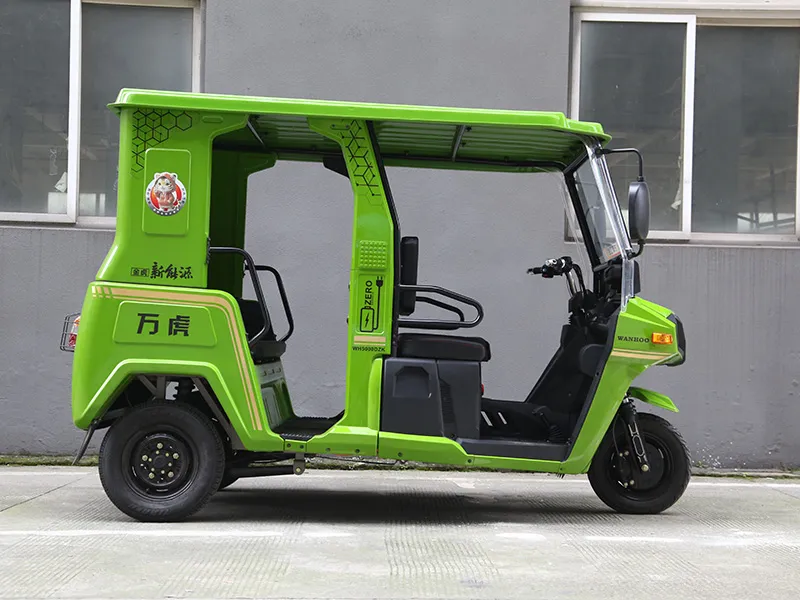
Wanhoo pairs the YAHOO-II-Electric, a 3-passenger LFP-battery tricycle with 80-100 km range and up to 70% lower running cost, with the 9-seat King-Tiger-Electric, giving operators a low-emission answer for both standard taxi routes and higher-capacity shuttle corridors on a single supplier relationship. Running both from one manufacturer keeps parts and service consistent even as the powertrain mix changes.
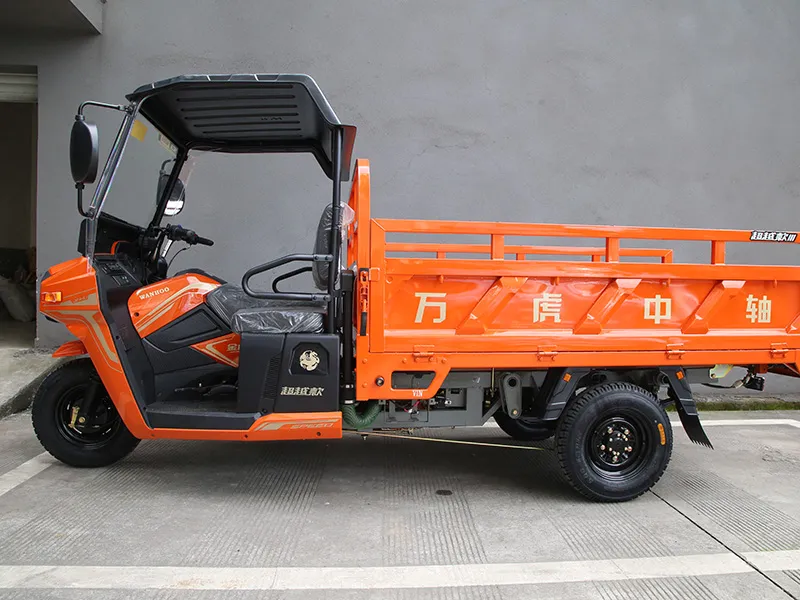
The 9-seat King-Tiger-Electric earns its place on a specific job: routes where one vehicle should carry more people. Wanhoo built it on the heavy-duty platform, seating 9 with a gradeability of at least 12 degrees and larger φ220 hydraulic drum brakes, so a transit or shuttle corridor that would need three standard tuk tuks can sometimes be served by one higher-capacity unit.
How do you keep a passenger tricycle fleet on the road?
Uptime is the metric that separates a profitable fleet from a busy one, because for a fleet operator an idle vehicle is a daily loss, not a neutral pause. Every day a unit sits waiting for a part is $50 to $200 of revenue gone, and those losses stack across a fleet. Keeping vehicles running is a logistics problem you solve before breakdowns happen, not after.
Preventive maintenance is the foundation. According to Simply Fleet, preventive maintenance reduces unexpected failures and extends asset life, and skipping it to save time leads to larger, costlier failures later. Standardized service intervals across one model let you schedule maintenance in batches, so vehicles rotate through the workshop on a plan instead of arriving broken and unannounced.
Tuk tuk fleet management at scale runs on three levers: preventive maintenance on a fixed schedule, a stock of high-failure spare parts kept on hand, and one standardized vehicle model so every part and procedure is reusable. Together they cut the parts-waiting time that turns a minor fault into days of lost revenue. Each lever is cheap; the downtime they prevent is not.
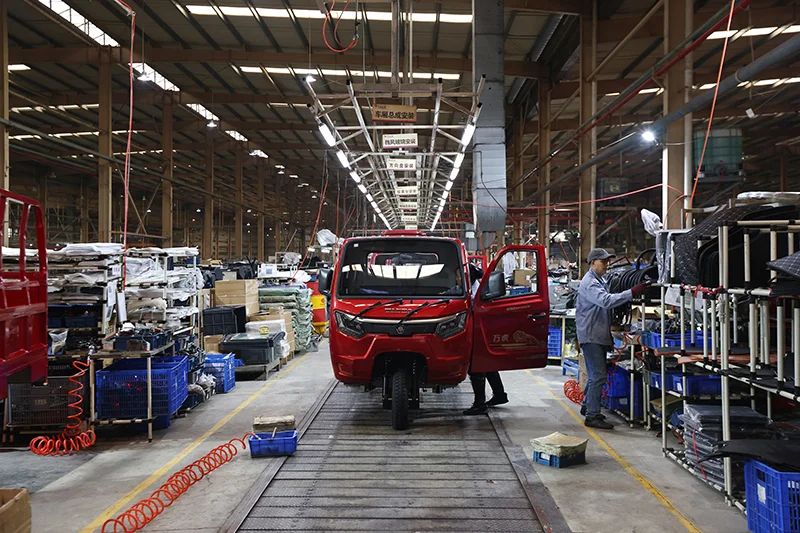
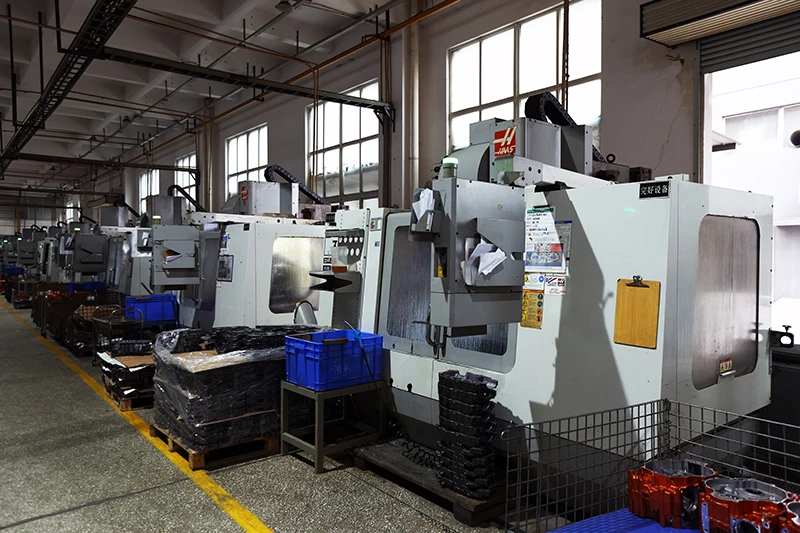
Spare-parts logistics is where standardization pays off most directly. Wanhoo's vertically integrated manufacturing, including its self-developed engine, means the same parts supply chain serves an entire YAHOO fleet, so operators can pre-stock the components that fail most often rather than chasing mismatched parts across suppliers. A modest on-site inventory covering the common failures keeps a small fault from becoming a stranded vehicle.
How should you finance and procure vehicles as you scale?
Procurement at fleet scale is about batching orders and cutting freight, not buying one vehicle at a time. Two levers matter most: a manageable minimum order quantity that lets you grow in steps, and SKD (semi-knocked-down) shipping that packs more units into each container. Both directly lower your landed cost per vehicle, which is the number that decides whether adding units improves margin or erodes it.
Wanhoo sets the YAHOO MOQ as low as 10 units, so a scaling operator can add a batch at a time instead of committing to a full container of a single model before demand is proven. That flexibility lets you stage growth: add ten, deploy them, confirm the route economics, then reorder with real data behind the decision.
SKD (semi-knocked-down) shipping loads 27 YAHOO units into one 40HQ container versus far fewer fully assembled, cutting ocean freight per vehicle and lowering landed cost. For a passenger tricycle fleet buying in batches, that freight saving compounds across every reorder and improves the payback on each unit. Freight is a real line in your unit economics, and SKD is the lever that moves it.
The broader market backs the case for building now. According to Mordor Intelligence, the Africa ride-hailing market was valued at USD 2.53 billion in 2025 and is projected to reach USD 3.25 billion by 2031, with three-wheelers filling the intermediate-capacity gap in cities like Nigeria and Kenya. A formalizing, growing market rewards operators who scale on disciplined procurement rather than opportunistic one-off buys.
Frequently Asked Questions
**What is the best vehicle model to standardize a three wheeler taxi fleet on?**
Standardizing on one model is more important than which model you pick, but the Wanhoo YAHOO 200cc suits most passenger and light-cargo routes with 3-4 seats, a steel frame, and an MOQ as low as 10 units. Running a single model keeps parts, training, and diagnosis consistent as the fleet grows, which is where scaling operators save the most.
How much cheaper is an electric tuk tuk to run than a petrol one?
Wanhoo's figure for the YAHOO-II-Electric is up to roughly 70% lower operating cost than its petrol equivalent, driven by cheaper energy per kilometer and fewer moving parts to service. The savings are largest on high-mileage urban routes, where the electric unit's lower running cost recovers its higher battery cost fastest. Request a battery-included quote to model exact payback.
What is the minimum order quantity for a passenger tricycle fleet?
Wanhoo sets the YAHOO minimum order quantity as low as 10 units, letting operators add a batch at a time rather than committing to a full container before demand is proven. This staged approach lets a growing fleet deploy ten units, confirm the route economics, and reorder with real operating data behind each decision.
How does SKD shipping reduce fleet costs?
SKD (semi-knocked-down) shipping loads 27 YAHOO units into one 40HQ container versus far fewer fully assembled vehicles, cutting ocean freight per unit and lowering landed cost. For a fleet buying in batches, that freight saving repeats on every reorder, so it compounds into a meaningful reduction in cost per vehicle over time.
When should a growing fleet add electric vehicles?
Add electric on dense urban routes with high daily mileage, short predictable distances within an 80-100 km range, and in any city introducing low-emission or restricted-traffic zones. Electric units earn back their battery cost fastest on high-mileage loops, and having them already running future-proofs the fleet against tightening emission rules in growing cities.
Can one supplier cover both standard and high-capacity electric routes?
Yes. Wanhoo pairs the 3-passenger YAHOO-II-Electric for standard taxi routes with the 9-seat King-Tiger-Electric for higher-capacity shuttle and transit corridors, both on LFP batteries. Sourcing both from one manufacturer keeps parts and service consistent even as the fleet mixes powertrains and vehicle sizes, which protects the standardization gains that make scaling work.
Building a fleet that runs like a business comes down to a few disciplined choices: standardize on one supplier and model, match petrol and electric to how each route runs, keep high-failure parts on hand, and procure in batches with SKD to control landed cost. Explore the full passenger tricycles range, review the YAHOO 200cc passenger tricycle specifications, or see passenger transport applications for route-by-route fit. To move from planning to a batch order, request a fleet FOB price list from Wanhoo.