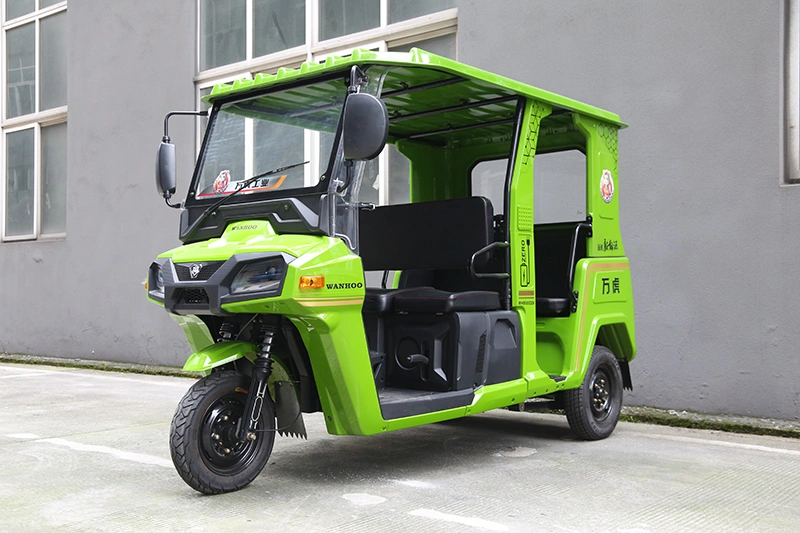
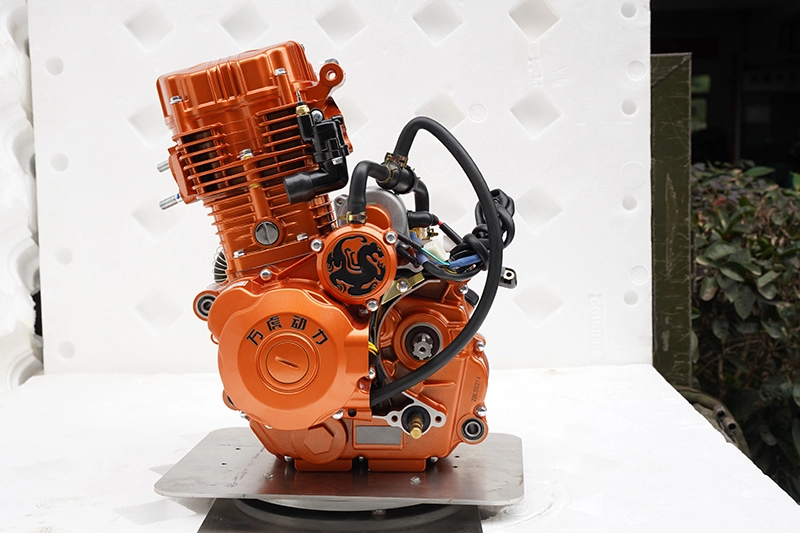
Before buying a used three-wheeler, verify the seller, registration record and identifiers first, then use an independent mechanic to inspect the frame, cold-start behaviour, brakes, tyres and driveline. Any road or loaded test must be legal, insured, owner-approved and carried out in a controlled area.
The engine is already running when you arrive. The seller says he moved it out of the yard ten minutes ago, and that may be true. It also means you cannot observe how the machine starts from cold, because warming an engine can conceal some hard-start and start-up smoke symptoms.
None of that proves bad faith. It simply leaves one useful test incomplete. Where a sale includes no meaningful warranty or return right, a document check and independent mechanical inspection become especially important.
The exact records differ by country. As a concrete example, the UK government's used-vehicle checklist tells buyers to match registration details, vehicle identification number and engine number. The US Federal Trade Commission also recommends an independent inspection, because a vehicle-history report does not replace a mechanical check. Use the equivalent registration, lien and inspection services in the country where the three-wheeler is registered.
The order below puts the deal-enders first, before you have spent an hour on the machine and begun to feel invested. What raises a vehicle's value when you sell it is a separate question.
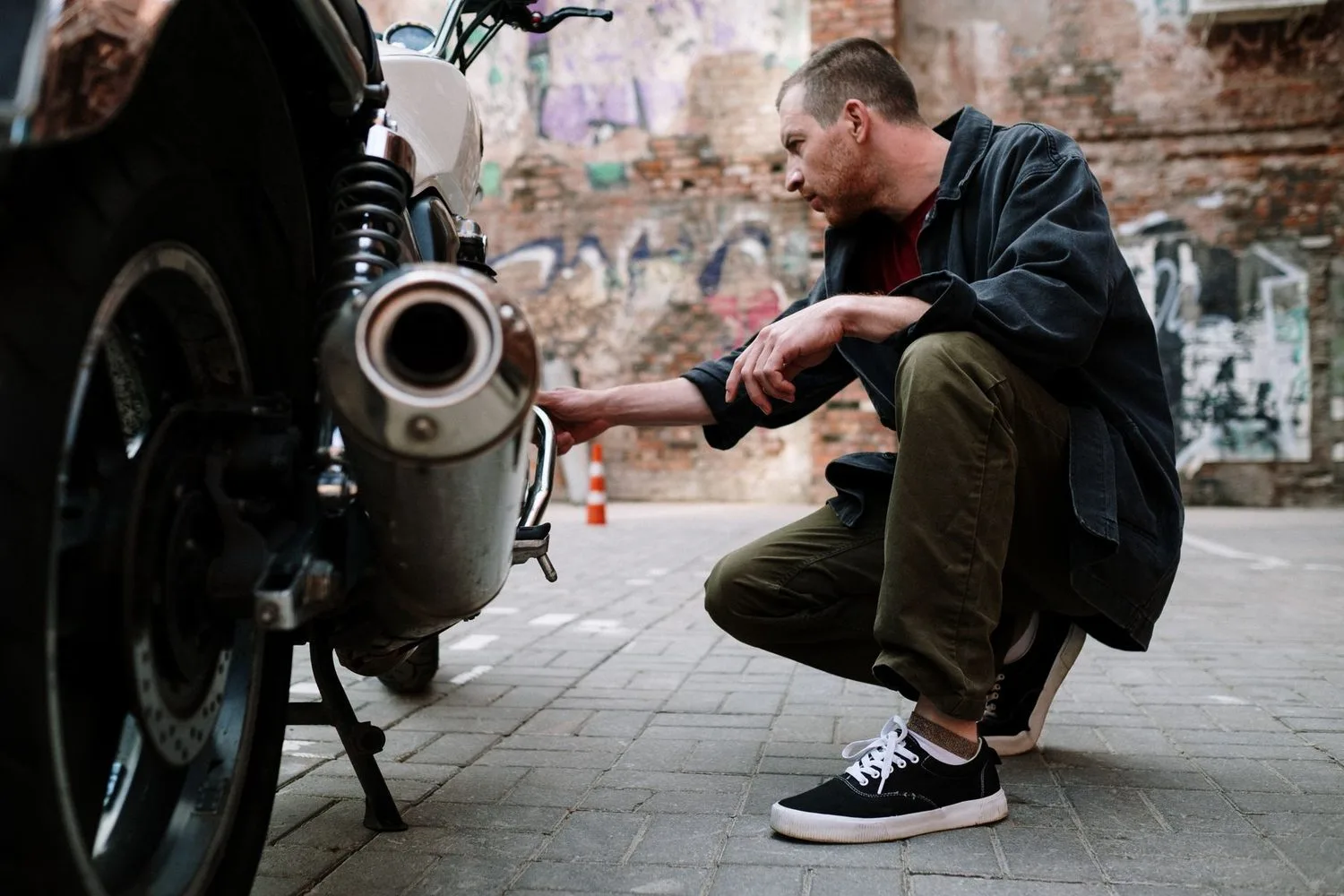
1. Identity and paper, before you touch the machine
Do not start with the engine. Read the registration or title document and identify the numbers that your local authority expects for that model. These commonly include a VIN or chassis/frame number and may include an engine number. Compare the physical markings with the document, and ask the registration authority how a legitimate replacement engine or replacement identification plate should be recorded.
Identifier formats and replacement-engine rules vary by country. Before payment, confirm that every identifier required by the registration document is present and matches, and refer any mismatch, damaged stamping or replacement plate to the issuing authority rather than trying to judge legality at the roadside.
If a required number appears filed, restamped, ground flat or welded over, stop the transaction. Do not assume why it happened or what legal liability follows; photograph it only with the owner's permission and verify it with the registration authority or police channel that handles vehicle identity in that jurisdiction.
Then the harder question, about people rather than metal: who is selling this, and can they show they own it? The name on the document and the person in front of you should match, or a documented chain should explain the gap. "I am selling it for my brother" is common and often honest, and still a reason to ask for the brother.
Ask whether the vehicle is still under hire purchase, instalment finance or another security interest. The effect on a later buyer is jurisdiction-specific, so use an official lien or finance registry where one exists and obtain written settlement evidence. Wanhoo's overview of three-wheeler financing for fleet buyers explains questions to take to a lender, but local law and the actual contract control.
2. The frame, because structural damage needs professional assessment
The frame is safety-critical. A bend, crack, altered mounting point or undocumented structural repair should pause the purchase until a qualified inspector can compare it with manufacturer specifications and assess the repair.
Sight down the main rails from the front, then from the rear, looking for straightness and left-right symmetry. From a safe position, inspect visible inner faces for weld spatter, grinding scars, new metal or local paint. These can indicate repair or corrosion treatment and need records and measurement; they are not proof by themselves.
A visual check can flag possible structural damage but cannot certify a frame. Curved rails, an off-centre steering head, cracks, distorted mounts or holes altered to make bolts fit are reasons to stop and obtain a measurement-based assessment from a qualified mechanic or frame specialist.
A different paint finish may indicate a repair, corrosion treatment or a cosmetic repaint; it is a prompt for questions, not proof of a crash. Check the engine, cab and bed mounts for cracks, distortion and improvised holes, then ask the mechanic to measure alignment rather than relying on sight alone.
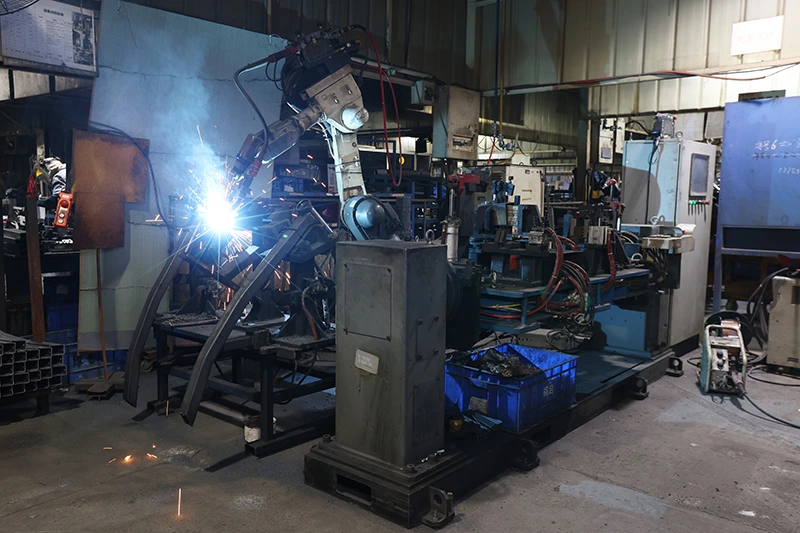
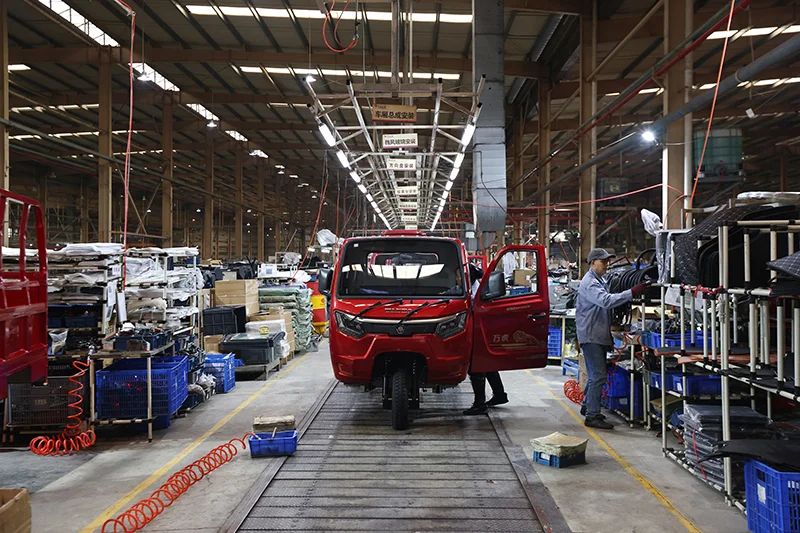
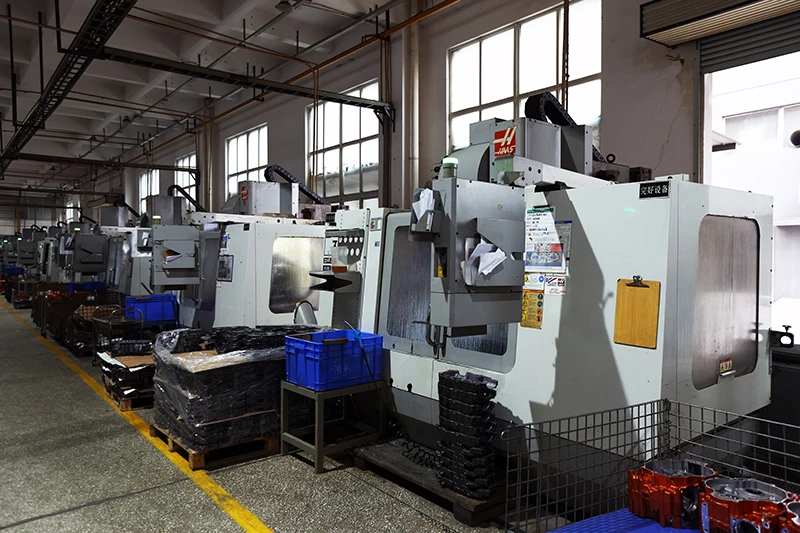
A production fixture and a roadside repair serve different purposes. Wanhoo's factory overview shows robotic frame welding in a fixed production process, but a factory image is not a diagnostic reference for a particular used vehicle. Ask for repair records and manufacturer dimensions, and have any structural work assessed by a competent specialist before the vehicle is driven.
3. Signs that can indicate heavy use or overloading
Start at the rear suspension. Flattened or re-arched leaf springs, extra leaves, cracked bed mounts and re-welded brackets can indicate heavy use, overloading, collision damage or previous repair. No single sign proves how the vehicle was used, so record the group of findings and compare them with the rated configuration.
Suspension, bed-mount, axle and tyre damage can be consistent with repeated overloading, but can also have other causes. Treat a cluster of flattened springs, cracked mounts, axle distortion and abnormal tyre wear as a reason for deeper inspection, not as a roadside diagnosis.
Ask the mechanic to check the rear axle housing and compare wheel alignment and tyre-wear patterns. A bed raised on packers or extended past the original chassis is evidence of modification, but its purpose and effect require the build record, manufacturer limits and an inspection.
Check the rated payload and cargo-box configuration before interpreting these signs. Wanhoo's cargo-tricycle payload guide explains why total load, placement and route conditions need to be considered together.
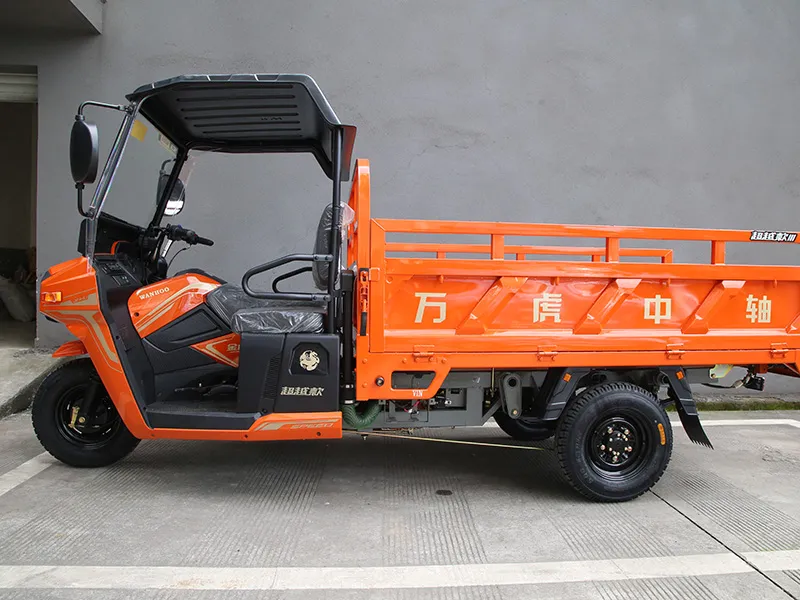
4. The engine, from cold
Arrange a cold-start observation in advance: ask that the vehicle is not run before you arrive and agree who will operate it. Keep the area ventilated and follow the owner's manual.
A cold start is one useful part of a used three-wheeler inspection because it can reveal starting and start-up smoke symptoms that are absent when warm. It is not a compression test or a substitute for an independent mechanical inspection.
Without touching hot components, ask the mechanic to check whether the engine and exhaust are already warm. If they are, arrange another cold observation or record cold-start behaviour as untested.
Watch how long it cranks, whether it needs repeated attempts, and whether it fires only with a push. Then watch the exhaust. Blue smoke suggests oil is being burned. Black suggests over-rich fuelling. White can be condensation on a cold morning, or coolant entering the combustion chamber on a water-cooled engine. None is proof by itself, so what matters is the next few minutes: smoke that clears as the engine warms tells a different story from smoke that persists.
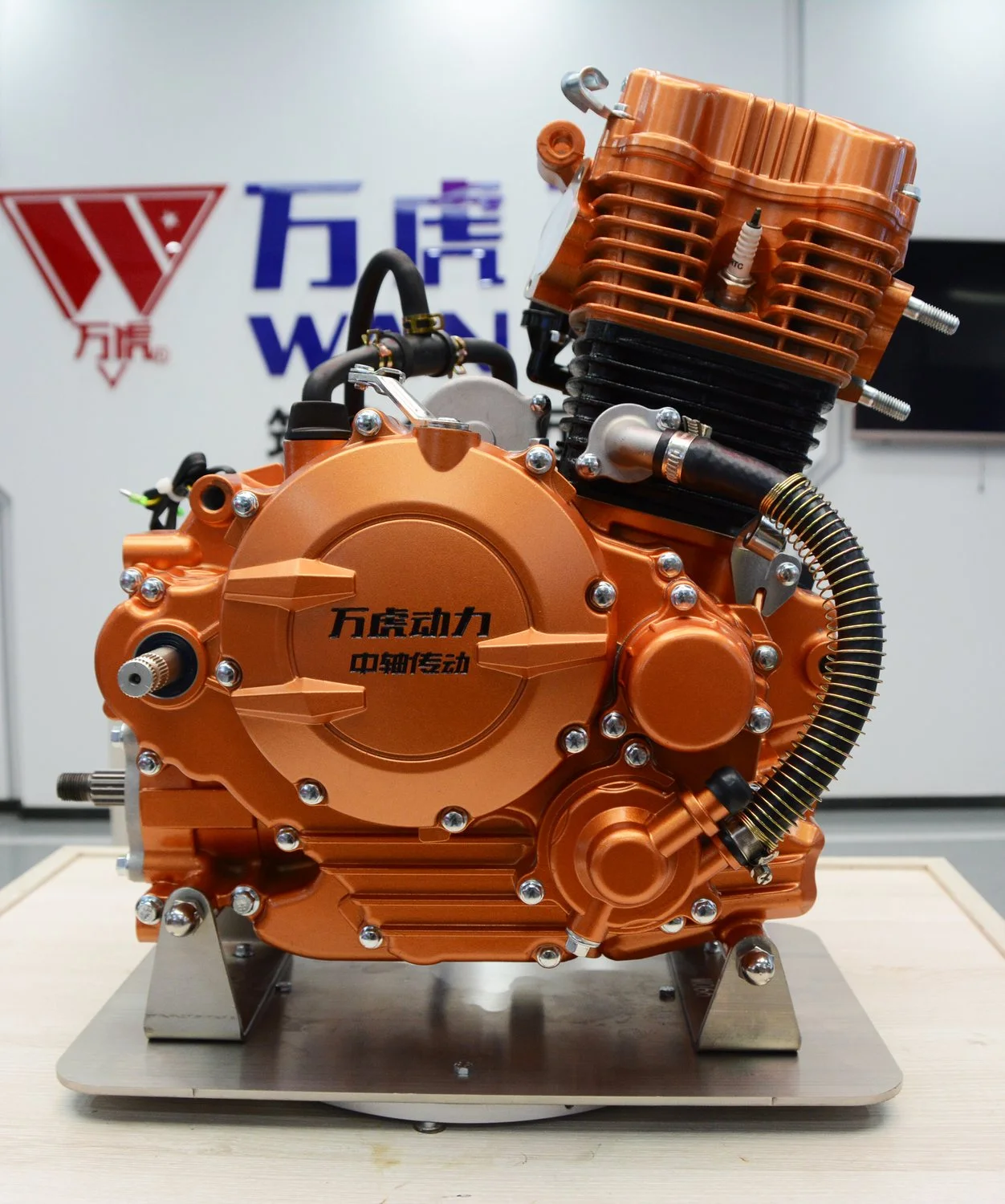
Let it settle to idle and listen. Knocking, tapping, unstable idle, smoke and leakage are symptoms for a mechanic to diagnose; none identifies a repair by itself. The site's three-wheeler maintenance guide is a useful service checklist, but the model manual and an actual inspection control the decision.
5. Running gear
Have the mechanic inspect suspension, brakes, wheels and drive components. With the vehicle secured and following the service manual, check for wheel-bearing play, brake condition, tyre damage and whether paired tyres meet the manufacturer's size and fitment requirements. Do not crawl under an unsupported vehicle or improvise a lifting point.
Brakes deserve patience for a reason that reaches beyond the transaction. According to the World Health Organization, across all road traffic globally, "More than half of all road traffic deaths are among vulnerable road users, including pedestrians, cyclists and motorcyclists." That covers every vehicle type and every road rather than three-wheelers specifically, but it is why a brake system merely adequate at walking pace in a yard is not a finding to accept.
Then the chain or shaft, the sprockets and any visible driveline joints. Slack, hooked sprocket teeth and torn boots are repairable, and all belong on the list you carry into the price talk.
6. The test run, loaded if it is at all possible
Some suspension, driveline and handling symptoms may change under load, but a loaded run is optional evidence, not a universal roadside test. Use it only under a qualified inspector's plan with legal, insured operation and correctly restrained cargo within all ratings.
Only test under load if the owner agrees, the vehicle is registered and insured for the test, the rider is licensed, the route is legal and controlled, and the representative cargo is within the rated payload and correctly restrained. A qualified inspector should choose the test and speed. Do not use unsecured material, public traffic or hard braking as an improvised diagnostic.
If a safe loaded test is unavailable, record that limitation. A static inspection, brake test equipment or a workshop road test may provide safer evidence; a seller's refusal does not itself prove a defect.
The table below condenses the whole sequence for buying a used three-wheeler into findings and the decision each one points to.
| Inspection stage | What you are looking for | What it means if you find it |
|---|---|---|
| Identity and paper | Required identifier missing, mismatched or apparently altered | Pause payment and verify with the registration authority |
| Identity and paper | Seller cannot document ownership, or finance status is unresolved | Do not pay until the authority, owner and lender records are reconciled |
| Frame | Curved rail, crack, off-centre steering head or altered mounting hole | Stop driving and obtain a structural assessment |
| Frame | Undocumented weld, grinding or local repaint | Ask for repair records and independent measurement |
| Suspension and bed | Flattened springs, re-welded mounts, raised or extended bed | Inspect for overload, collision and modification damage |
| Engine (cold) | Hard starting, abnormal smoke, knock, unstable idle or active leak | Diagnose before agreeing a price |
| Running gear | Tyre mismatch, bearing play, damaged brakes or grinding | Repair and verify before road use |
| Controlled test | Brake pull, vibration, steering wander or instability | Stop the test and identify the cause |
What you cannot check, and what to do about it
Three things stay hidden no matter how long you look, and honesty about them separates a buyer who is negotiating from one who is guessing.
A roadside check cannot establish internal engine condition, true accumulated distance or complete accident history. Available registries differ by market, so document what remains unknown and use a workshop inspection and official records before payment.
Smoke, noise and leaks are indirect evidence, and the state of the bore, rings, bearings and valve train stays hidden until something is opened. The odometer may have been disconnected for long periods, replaced with a used unit, or simply broken. And accident history cannot be reconstructed where no registry records it.
The answer is not to pretend the uncertainty away. Ask for a written inspection report and repair estimate, confirm which promises or warranties are in writing, and decide how much unresolved risk you are willing to accept. Wanhoo's cargo-motorcycle buyer's guide provides a broader new-vehicle comparison if the used machine cannot be verified.
Walking away is a legitimate outcome. A deadline or another buyer does not resolve a document mismatch, structural question or missing inspection. Pay only when the evidence is sufficient for the risk you are accepting.
Frequently Asked Questions
**What is the single strongest reason to walk away from a used three-wheeler?**
A required identifier that is missing, mismatched or appears altered is a reason to stop payment and verify the vehicle with the registration authority. Do not rely on a seller's explanation or assume the legal status from appearance alone.
Why does the engine have to be started from cold?
A warm engine can conceal some hard-start and start-up smoke symptoms. Ask the seller in advance not to run it before you arrive. If it is already warm, arrange another observation or record cold-start behaviour as untested; a cold start is not a substitute for mechanical testing.
What does smoke from the exhaust tell me?
Blue smoke suggests oil is being burned. Black suggests over-rich fuelling. White can be condensation on a cold morning, or coolant entering the combustion chamber on a water-cooled engine. None is proof on its own. Watch whether the smoke clears as the engine warms.
Can a bent three-wheeler frame be repaired?
Some structural repairs may be possible, but only manufacturer data and a competent structural assessment can establish whether a specific repair is permitted and safe. Do not price or approve a bent or rewelded frame from a roadside visual check.
How do I check for overloading if the seller says it only carried light loads?
Flattened or re-arched leaf springs, cracked or re-welded bed mounts, axle distortion, abnormal tyre wear and a raised or extended bed can be consistent with heavy use or overloading. They can have other causes, so use them to trigger deeper inspection rather than treating them as proof.
Is a loaded test run really necessary?
It can add useful evidence, but only when it is legal, insured, owner-approved and performed by a qualified person in a controlled area with secured cargo within the rated payload. If those conditions are not available, use workshop brake and driveline checks instead.