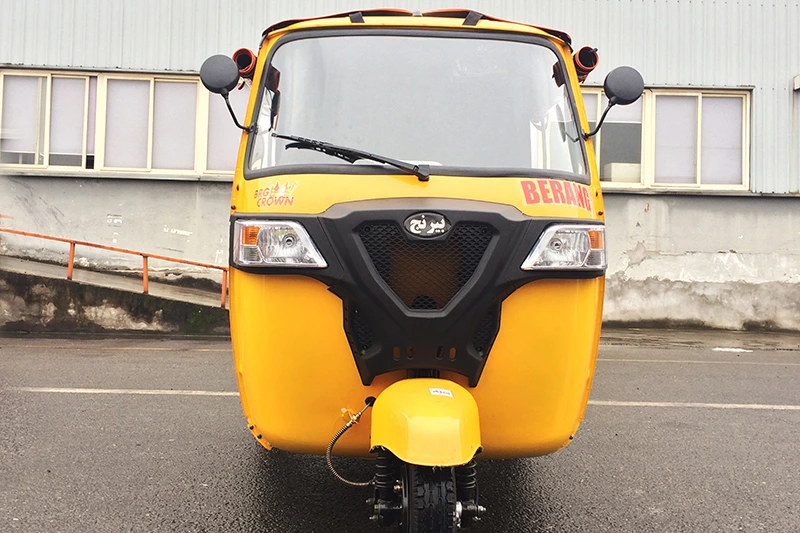
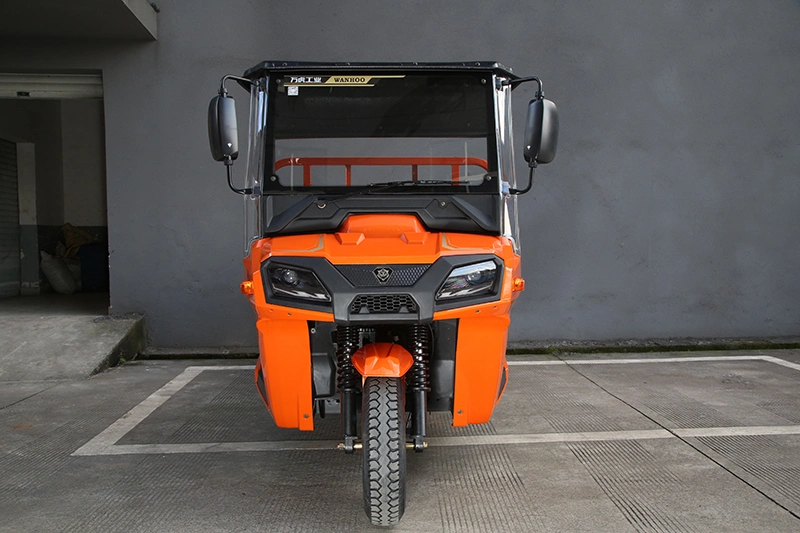
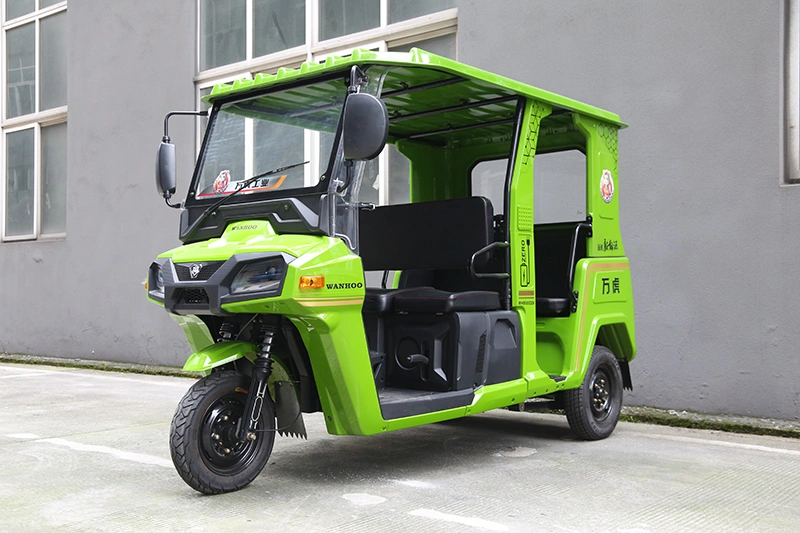
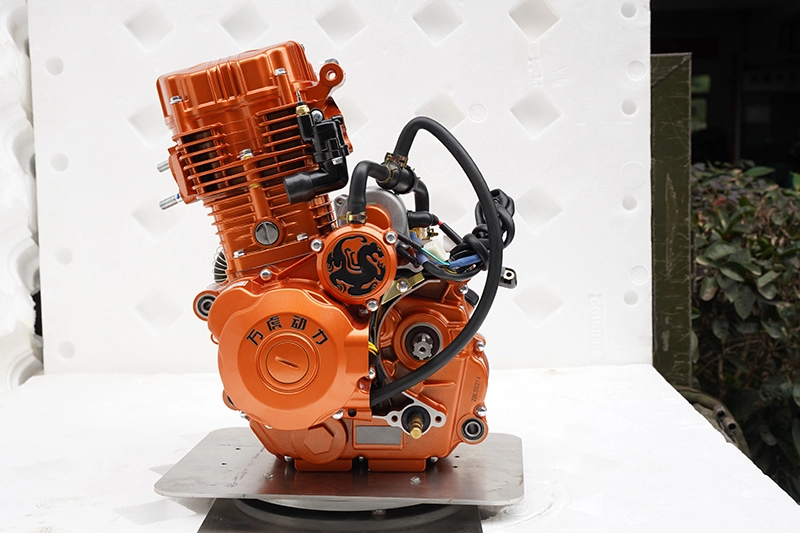
This is an illustrative composite, not a survey or a Wanhoo customer story. A cargo-tricycle workday may include a manufacturer-specified pre-use check, loading, driving, waiting, breaks, payments, and maintenance, but hours, tasks, employment status, and income vary by worker, route, market, and law.
Before sunrise, the street is still the colour of charcoal. A generator coughs awake two doors down. Somewhere behind a corrugated fence, a kettle. In this fictional scene, a driver steps outside thinking about whether the depot job is still on and whether the vehicle is ready for work.
What follows is a hypothetical planning narrative assembled to show questions an operator might ask. It is not a diary, field study, market average, claim about named cities, or evidence that any person works this way.
4:40 a.m. The ten minutes nobody sees
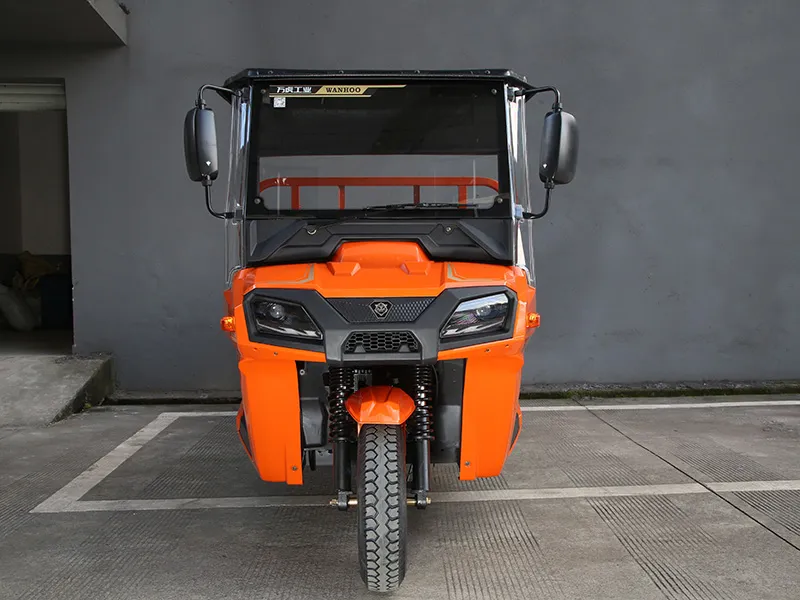
The driver performs the pre-use checks specified in the vehicle manual. Tire pressure is measured with a suitable gauge and set to the manufacturer's cold-pressure specification; a thumb press is not a pressure check. Oil, brakes, lights, controls, cargo bed, and visible damage are checked only by the procedures and limits in the applicable manual.
A pre-use inspection should follow the manufacturer checklist and local operating rules. Use proper tools, record defects, and keep the vehicle out of service when a defect exceeds the manual's limits or requires qualified inspection. The time and financial effect of a fault vary by operation.
In this narrative, the check is a risk-control step rather than a ritual. A real fleet should define the checklist, competent person, stop-work criteria, and repair escalation in writing.
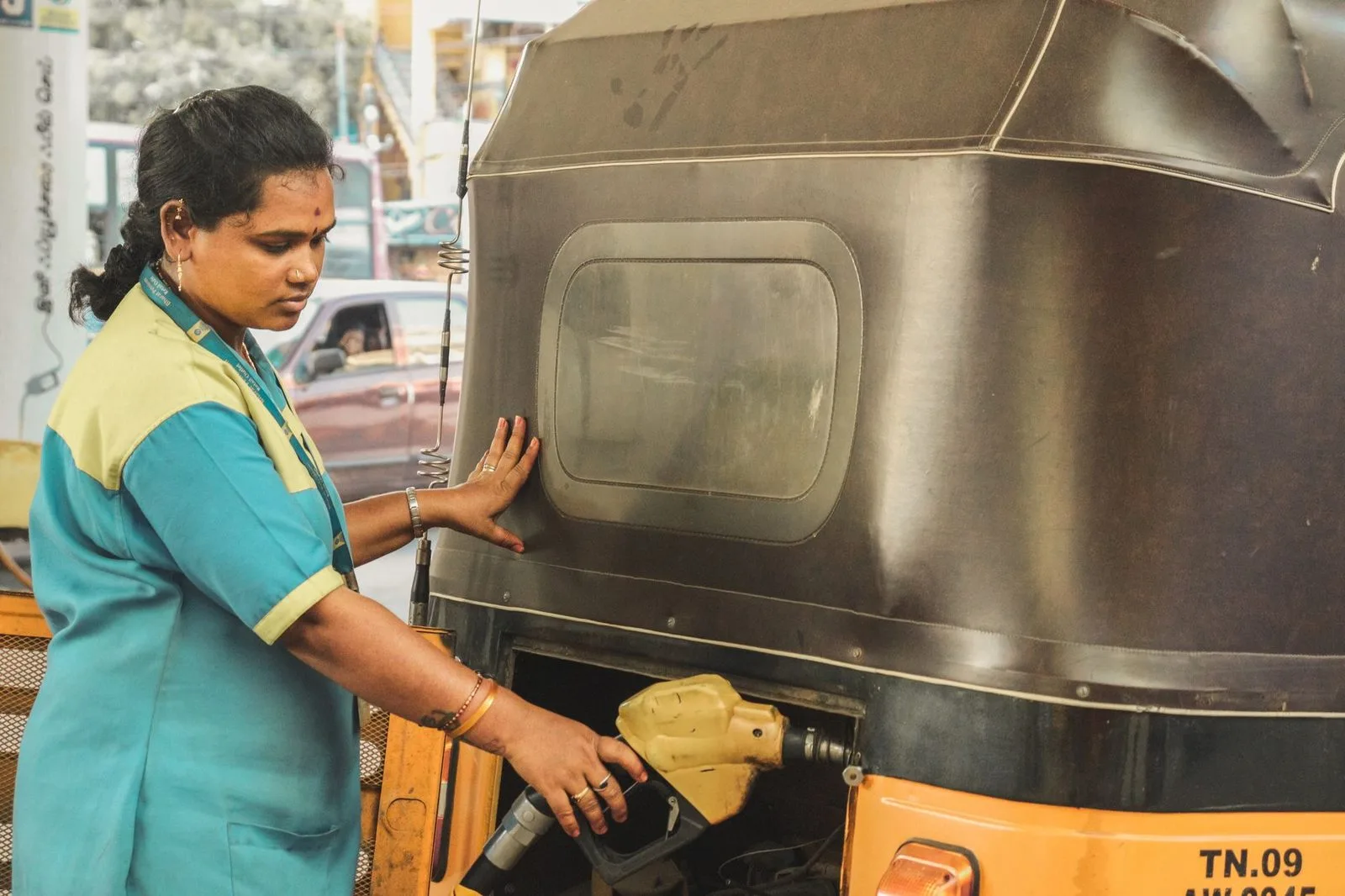
Energy purchasing and cash flow vary. Record fuel or charging cost, quantity, distance, and payment method; store and handle fuel only in approved containers and in accordance with local fire, transport, and workplace rules.
6:10 a.m. The first load, and why the first load matters most
In this fictional day, the first job was arranged in advance. Real work may be dispatched by a customer, market, platform, depot, employer, or fleet, and the cargo and legal responsibilities differ by route and product.
Loading is handled by trained people using suitable equipment and a documented load plan. Manual-handling limits, personal protective equipment, axle and payload ratings, centre of gravity, cargo compatibility, and tie-down rules must follow the manufacturer and applicable law. This article does not recommend lifting a particular weight or using an improvised knot.

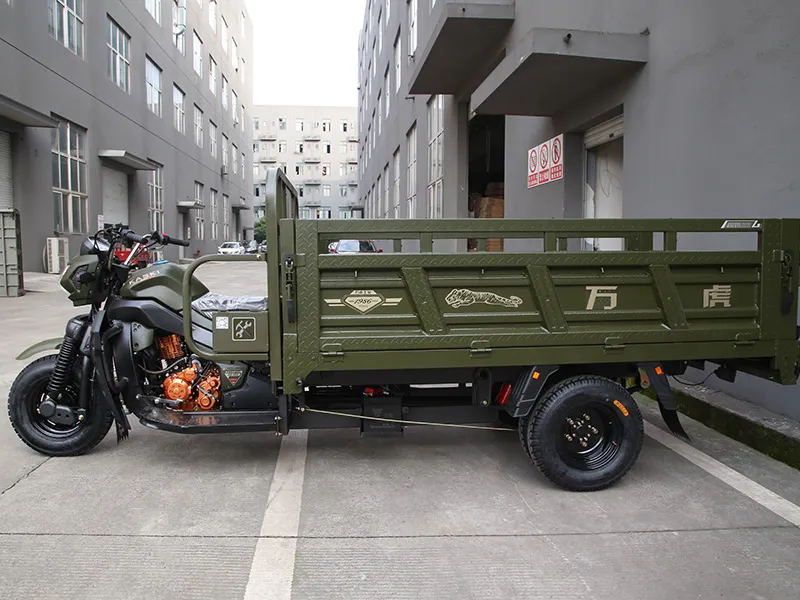
Departure time can affect congestion and access, but the effect is local. Plan with current route restrictions, lawful working hours, customer windows, safe loading time, rest, and traffic data rather than the fictional clock in this story.
Do not assume a 12- to 16-hour shift or a fixed activity mix. Measure driving, loading, waiting, empty running, breaks, administration, and maintenance for the specific operation, and comply with local working-time, rest, and occupational-safety rules.
9:00 a.m. The arithmetic of the third trip
The table below lists activity categories for a time study. It deliberately contains no hour estimates because a fictional composite cannot supply a representative shift.
| Activity to measure | Local record to collect | Planning question |
|---|---|---|
| Loading and unloading | Time, people, equipment, load, incidents | Is the task within payload and manual-handling rules? |
| Moving with a load | Time, distance, route, energy, delay | Is the route legal and the load secured? |
| Waiting | Time, location, reason, paid status | Can dispatch or customer scheduling reduce it fairly? |
| Empty running | Distance, time, energy | Can a lawful return load or routing change reduce it? |
| Breaks and personal needs | Break timing and facilities | Does the schedule meet local rest and welfare requirements? |
| Checks, cleaning, and maintenance | Time, defects, service action | Who is competent and who pays for the task? |
The completed local time study can show whether waiting, loading, comfort, noise, dispatch, or empty running deserves attention. It should never be used to pressure a driver to speed, skip breaks, overload, or bypass inspections.
The World Bank transport overview discusses broad access challenges. Those global indicators do not prove that a cargo three-wheeler is suitable for a particular street or rural route; verify road, load, safety, service, and legal conditions locally.
11:30 a.m. Heat, queues, and the fees nobody writes down
In the fictional day, the driver waits at a market for a load to be released. In a real operation, waiting time, heat exposure, shelter, drinking water, sanitation, queue rules, and whether waiting is paid are workplace questions to document.
Informal conversations may provide route or customer information, but they are not a substitute for official closures, written job terms, or verified service records.
Payment can be per trip, per day, salary, rental, commission, contract, digital, cash, or a combination. Employment status, minimum pay, overtime, benefits, tax, and records depend on the actual arrangement and local law; no single model can be inferred across markets.
Weather can disrupt routes and damage unprotected cargo, but the effect varies. Follow forecasts, closures, the vehicle manual, and local authority guidance; do not enter standing or moving floodwater. Define cargo protection, delay, cancellation, and claims responsibility before dispatch.
Applicable official permits, taxes, stand charges, association dues, and loading fees should be verified, receipted, and recorded. Do not treat unreceipted or unlawful payments as a normal operating cost.
The International Labour Organization reports that informal work is widespread globally. That broad statistic does not establish the employment status, benefits, or legal classification of cargo-tricycle workers in a particular market.
Do not assume cargo-tricycle work is informal or lacks benefits. Verify the worker's actual contract, insurance, leave, social protection, tax, association, and occupational-safety coverage under local law, and identify gaps without generalizing about workers or households.

1:00 p.m. What the load is, and why it is fragile
Cargo may include food, construction materials, water, furniture, parcels, or other goods, depending on the route. Each load requires appropriate packaging, tie-downs, hygiene, temperature control, dangerous-goods review, and legal compliance; this fictional example does not establish a dominant cargo.
The Food and Agriculture Organization explains global food-loss goals. It does not quantify loss from a particular vehicle or wait. For perishable cargo, follow the product's handling and temperature requirements and measure actual time and condition.
Reliability and communication can matter to customers, alongside price, cargo condition, insurance, and compliance. Measure repeat bookings and service levels rather than treating reputation as the whole business.
3:15 p.m. The repair that was not in the plan
In the fictional day, a fault stops the vehicle. A real driver should move to a safe location only as the vehicle manual and local road-safety rules allow, contact approved assistance, and use qualified service and correct parts. Do not assume the most common fault or push a disabled vehicle in unsafe conditions.
Downtime can affect revenue, pay, delivery commitments, and fixed costs. Calculate the effect from the actual contract and route records, and map service and parts lead time for the exact model; do not assume a fixed income loss or rank parts above every other buying criterion.
Product comparisons should include documented performance limits, service coverage, parts, warranty, route fit, and total cost. Priorities vary by buyer and market; this composite cannot speak for drivers in named cities or imply that the photographed people use Wanhoo vehicles.

The Africa Transport Policy Program (SSATP) discusses passenger paratransit in African cities. It should not be extrapolated to claim that urban freight, workshop structure, payment methods, or parts supply are organized the same way.
7:40 p.m. Counting
In the fictional narrative, a final job appears near the end of the shift. A real operator should accept it only if working-time, fatigue, route, load, weather, vehicle condition, and customer terms remain safe and lawful.
The fictional driver closes the day's records. Real categories differ, but a useful ledger can separate collected revenue, energy, official fees, compensation, maintenance reserve, finance, tax, refunds, and outstanding customer payments.
This article deliberately avoids a fictional revenue and profit example because invented values can look like a benchmark. Build the arithmetic from dated local trip logs, receipts, contracts, and service records, then test lower-demand and higher-cost cases.
Possible arrangements include ownership, employment, rental, commission, and hire-purchase, but terms and prevalence vary. Verify title, employment status, insurance, credit, tax, maintenance, and repossession rules for the actual contract and jurisdiction.
What the day is really about
A cargo three-wheeler may be a vehicle, workplace, business asset, or financed tool, depending on the arrangement. Do not assume it is a household's most valuable asset, collateral, or source of school fees.
Useful numbers include rated limits, route demand, collected revenue, energy, lawful fees, compensation, tire and service condition, finance terms, and downtime. Their values must come from the actual vehicle and operation.
The narrative ends with a ledger, but a real conclusion requires records from the route and the people involved. This composite is a planning device, not evidence of a typical worker's life.
Frequently Asked Questions
**How many hours does a cargo tricycle driver actually work in a day?**
There is no reliable cross-market figure in this article. Measure driving, loading, waiting, empty running, breaks, administration, and maintenance for the specific operation, and follow local working-time, rest, and occupational-safety rules.
Are cargo tricycle drivers paid per trip or per day?
Payment may be per trip, per day, salary, rental, commission, contract, digital, cash, or a combination. Verify the actual agreement, payment records, employment classification, minimum pay, overtime, benefits, and tax under local law.
Do drivers own their three-wheelers?
It varies. Possible arrangements include ownership, employment, rental, commission, and hire-purchase. Verify title, insurance, finance terms, maintenance, tax, payment statements, missed-payment rules, and repossession law for the specific contract.
What is the hardest part of the job?
There is no universal answer. A local risk assessment should cover manual handling, heat, fatigue, traffic, weather, route access, customer delays, vehicle condition, pay, and facilities, with workers involved in defining controls.
What causes the most lost working days?
This requires local records. Track each unavailable hour or day by cause, distinguish planned from unplanned downtime, and calculate financial effects from the actual contract. Do not assume breakdowns exceed accidents or that a delay produces the same income loss everywhere.
Is this considered formal employment?
It depends on the contract and jurisdiction. Verify employment status, business registration, insurance, leave, social protection, tax, association, and occupational-safety coverage rather than assuming the work is informal.