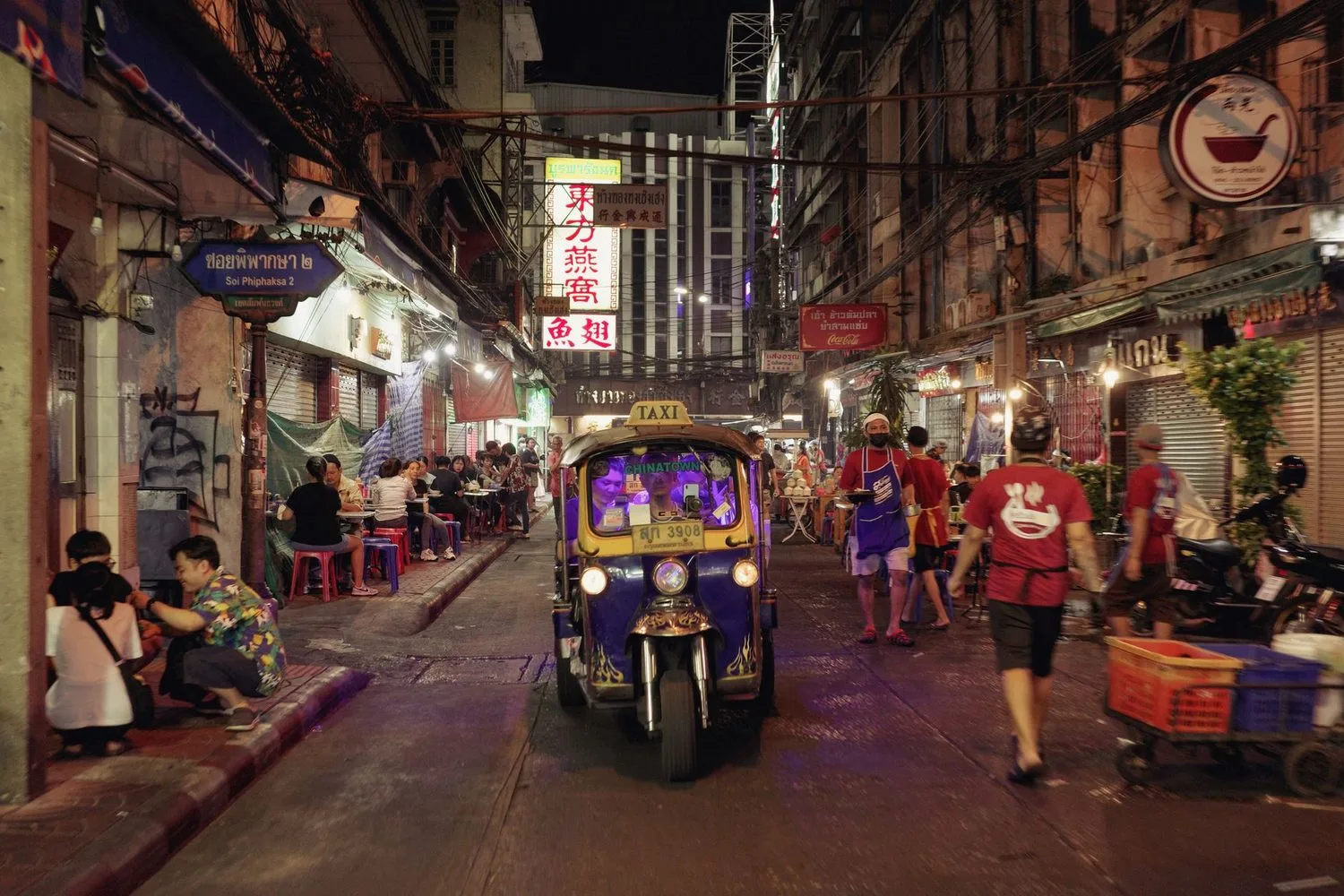
You have seen it in Bangkok traffic, ferrying passengers across Lagos, and hauling produce in rural Peru. This little three-wheeled taxi shows up on every continent, yet almost nobody agrees on what to call it.
A tuk-tuk is a three-wheeled motorized taxi used for affordable passenger and light-cargo transport, typically seating a driver plus three or four passengers.
That single sentence covers the machine, but the story behind it spans Japanese hand-carts, post-war Italian engineering, and the sound of a two-stroke engine. This guide walks through the tuk tuk meaning, where the name comes from, how the vehicle works, its main types, and the many regional names for the exact same three-wheeler.
What Does "Tuk-Tuk" Mean and Where Did It Come From?
The tuk tuk definition starts with a sound, not a spec sheet. The word is onomatopoeic, imitating the rhythmic putter of the small two-stroke engines that powered the first models. According to the South China Morning Post, the word "tuk-tuk" mimics a natural sound, that of a small engine, and it does not mean "cheap" in Thai, contrary to common belief. The Thai word for cheap is "thook," pronounced with an aspirated initial "t," a distinctly different sound. The name simply captures what the vehicle sounds like as it idles and accelerates through crowded streets.
The word "rickshaw" that often accompanies it has a much older lineage, and it points to how the vehicle itself was born. According to the South China Morning Post, the name of the three-wheeled motorized vehicle comes from the Japanese jinrikisha, combining "jin" meaning a man, "riki" meaning power, and "sha" meaning carriage, the same root shared by the man-powered and bicycle-powered rickshaw versions. The design evolved from a person pulling a cart, to a cyclist pedaling one, to a compact engine doing the work, which is why the modern version is formally called an "auto rickshaw" in much of the world.
The modern three-wheeled format owes much to Italian post-war engineering. According to Wikipedia, the Piaggio Ape was first manufactured in 1948 by the Italian company Piaggio and designed by Vespa creator Corradino D'Ascanio. This light three-wheeled commercial vehicle established the format that Indian and Asian makers later adapted into the auto rickshaws seen today. Indian manufacturers adapted the concept for local roads and budgets, and the format spread rapidly through Asia, Africa, and Latin America wherever cheap, nimble transport was needed.
Today the category is enormous. According to Wikipedia, as of 2024 Bajaj Auto of India is the world's largest auto rickshaw manufacturer, a scale that reflects just how central this vehicle has become to daily life in dozens of countries.
How Does a Tuk-Tuk Actually Work?
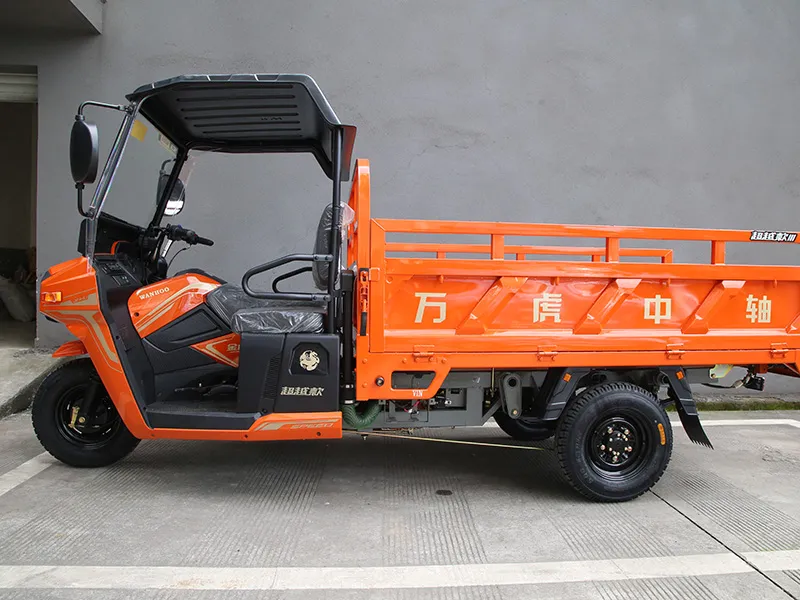
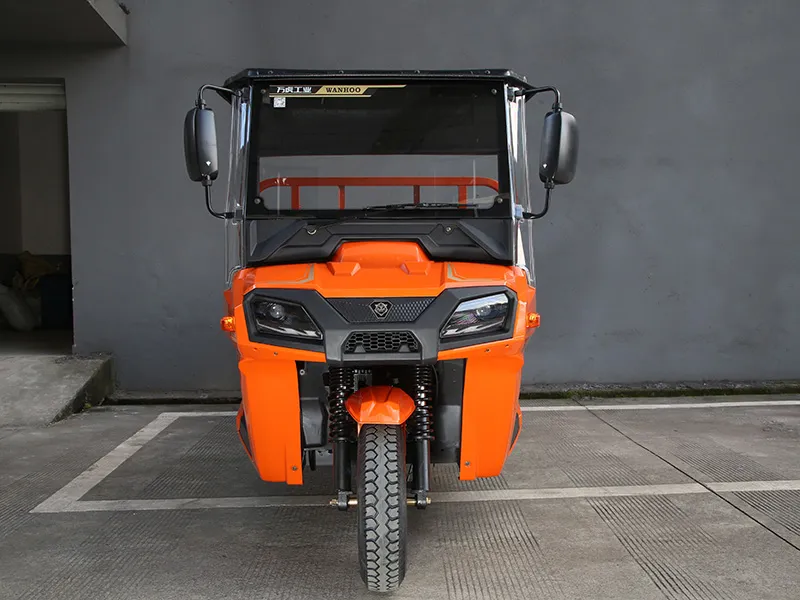
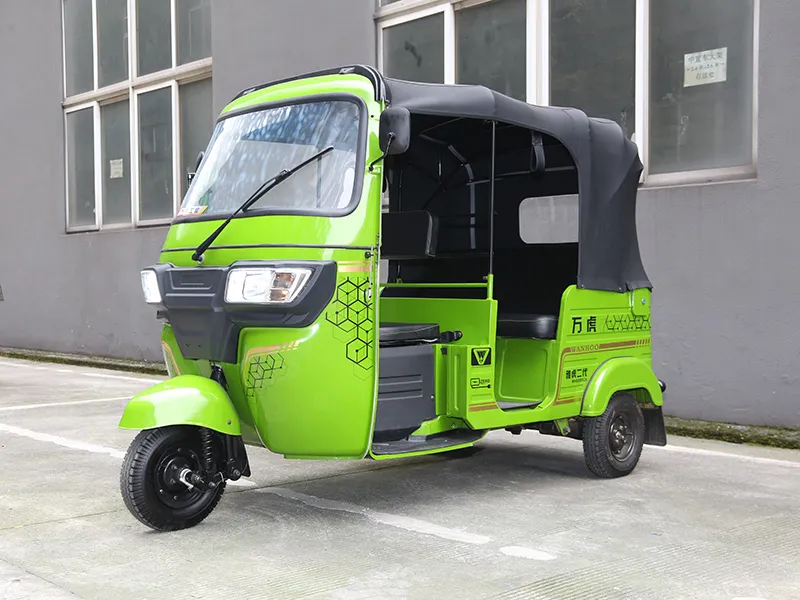
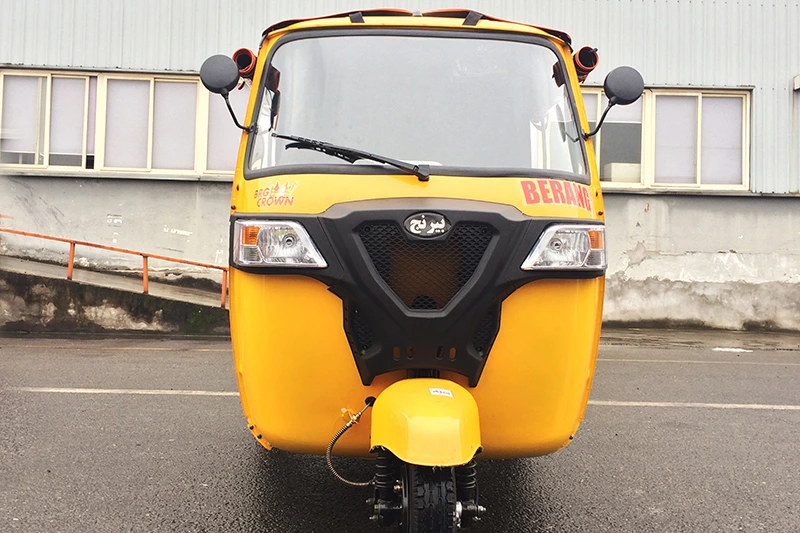
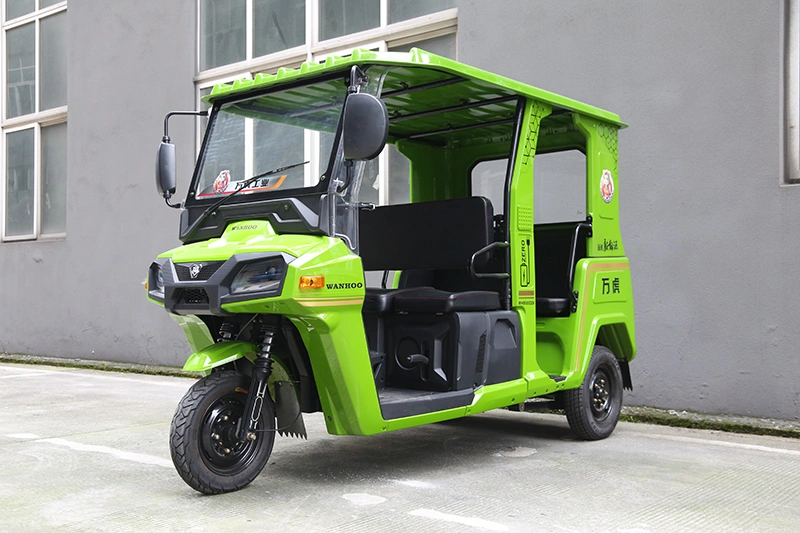
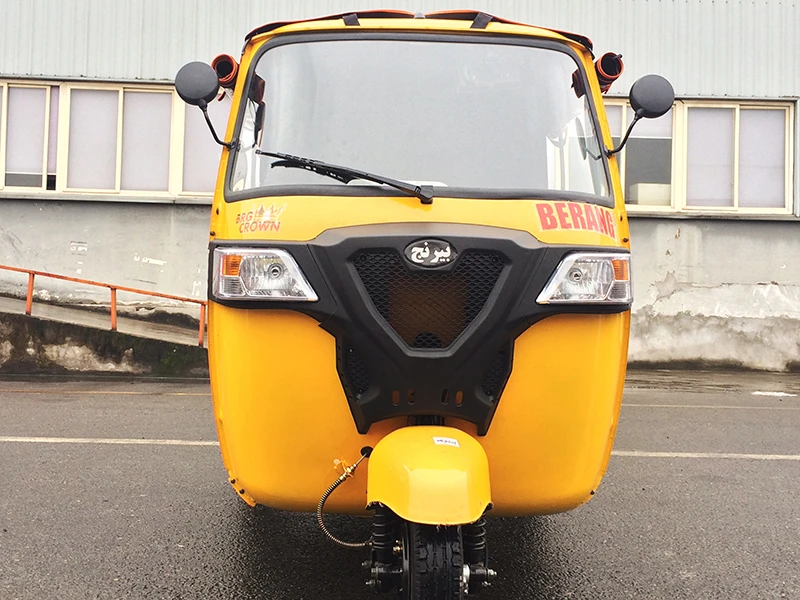
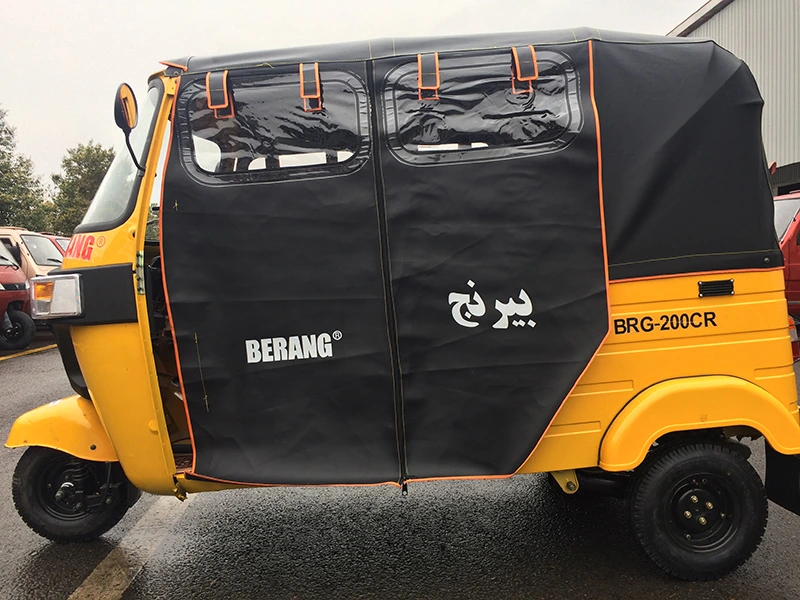
Mechanically, a tuk tuk vehicle is simple by design, and that simplicity is the point. According to Wikipedia, an auto rickshaw typically has a sheet-metal body resting on three wheels with a canvas roof and drop-down side curtains. The driver sits in a small front cabin operating handlebar controls, with space for carrying up to three passengers seated in the back. One wheel sits at the front under the handlebars, two carry the load at the rear, and the whole package stays light and easy to maneuver.
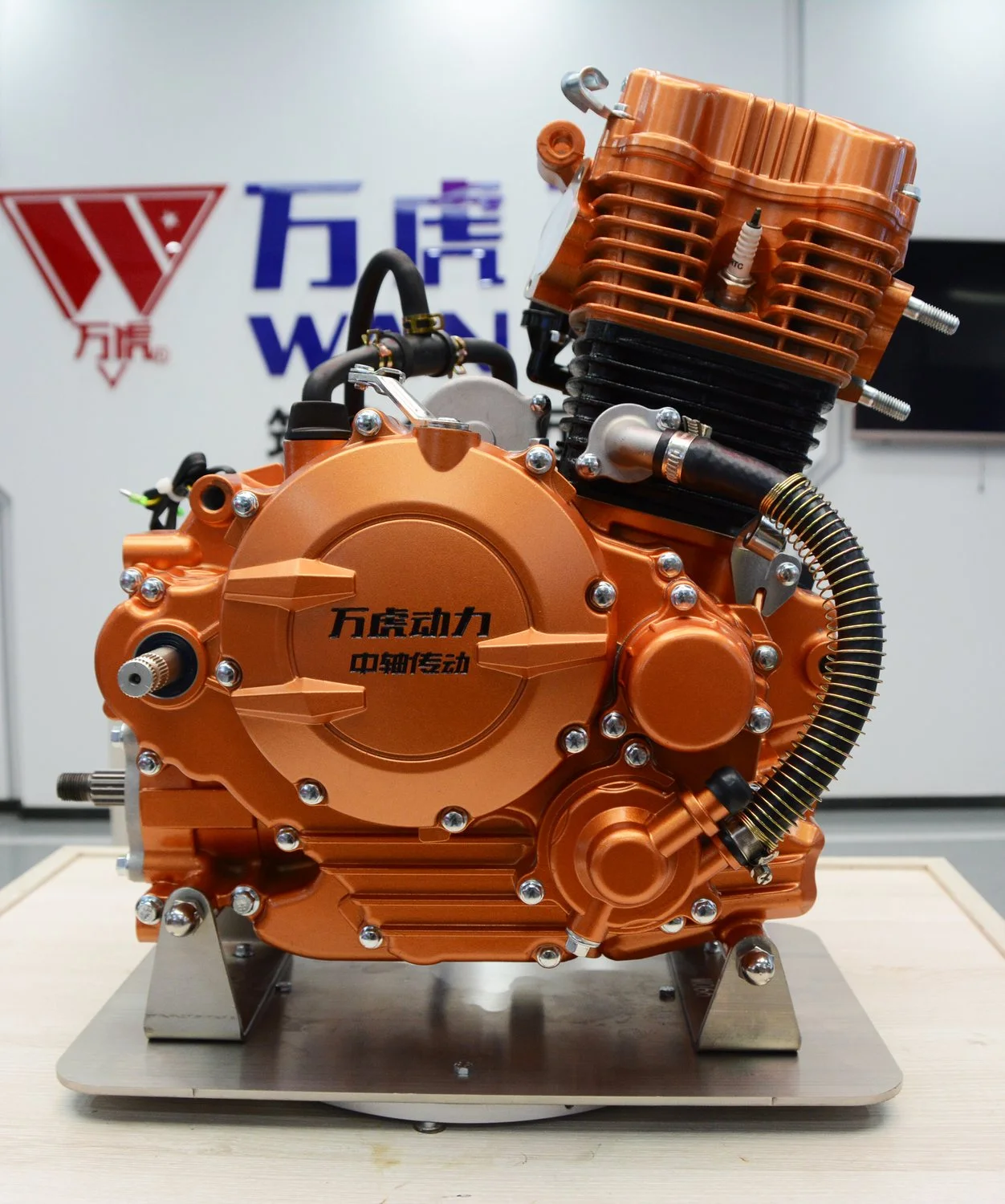
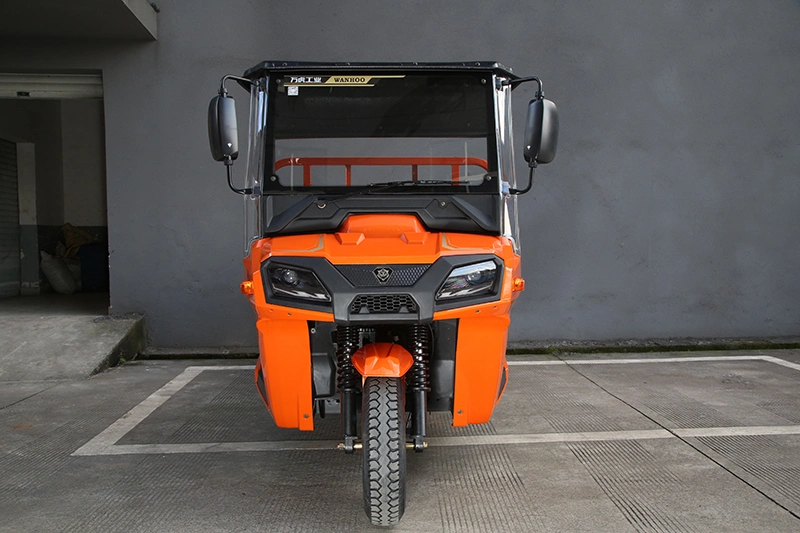
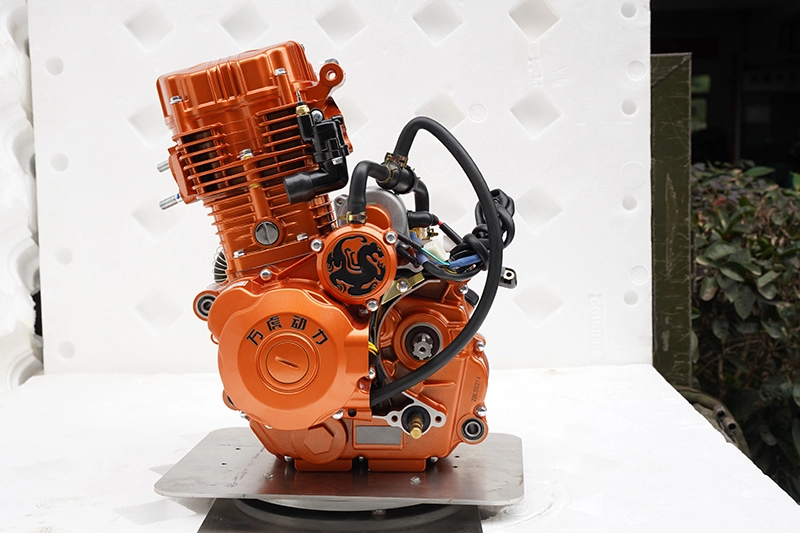
Power usually comes from a single-cylinder petrol engine in the 150cc to 250cc range, or from an electric motor on newer models. Handlebar steering keeps the controls intuitive for drivers who have never held a car steering wheel. Fuel tanks are small, running costs are low, and the tight turning radius lets the vehicle thread through gaps that would trap a sedan. A modern petrol passenger model such as the Wanhoo YAHOO runs a 200cc air-cooled four-stroke engine, reaches roughly 65 km/h, and seats three to four adults, a practical spec for city taxi routes.
What Are the Main Types of Tuk-Tuk?
Not every three-wheeler does the same job. The category splits along two main lines, and understanding both helps fleet buyers and drivers pick the right machine for their route and income model.
The first split is by purpose. Passenger tuk-tuks carry people, with a bench seat, grab rails, and a roof, and they earn money as taxis. Cargo tuk-tuks swap the rear bench for an open bed or closed box to haul goods, building materials, or farm produce. Some flexible models, including the Wanhoo YAHOO, carry passengers by day and switch to light cargo the rest of the time, giving a single owner two income streams from one vehicle.
The second split is by power source. Petrol models remain the workhorse across most emerging markets because fuel is available almost everywhere and the engines are easy to service. Electric tuk-tuks are rising fast where fuel is expensive or city emissions rules are tightening. According to Growth Market Reports, the global electric three-wheeler market stood at USD 1.94 billion in 2024 and is forecast to reach USD 7.15 billion by 2033, growing at a CAGR of 15.6% during the 2025 to 2033 period as fuel costs and emissions rules push adoption. That growth explains why manufacturers now build petrol and electric versions of the same body, such as the Wanhoo YAHOO 200cc petrol and the YAHOO-II-Electric.
The table below sorts the four common configurations by what a buyer actually cares about.
| Tuk-tuk type | Power source | Primary use | Typical buyer |
|---|---|---|---|
| Passenger petrol | 150cc to 250cc engine | Taxi, urban and semi-urban routes | Owner-operators, taxi fleets |
| Passenger electric | Battery and motor | City taxi in low-emission zones | Fleets in fuel-costly or regulated cities |
| Cargo petrol | 150cc to 250cc engine | Goods, produce, last-mile delivery | Traders, delivery businesses |
| Dual-purpose | Petrol or electric | Passengers by day, cargo by night | Individual operators maximizing income |
Why Is the Tuk-Tuk Called Different Names Around the World?
Here is where the same vehicle sows confusion. The identical three-wheeled taxi carries a different name in almost every market it serves, drawn from the local language, a popular manufacturer, or a government program. A buyer searching for "auto rickshaw" in India and a driver searching for "keke" in Nigeria are often looking at the very same machine.
The nickname usually reveals its origin. In Tanzania the vehicle is called "bajaji," borrowed straight from the Indian Bajaj brand that supplies so many of them. In Nigeria, "keke napep" comes from a government poverty-alleviation program that promoted the three-wheeler as a safer alternative to motorcycle taxis. In Thailand, the sound of the engine gave the world the name that stuck globally.
The table below maps the most common regional names for the tuk tuk vehicle so exporters and buyers can talk about the same product without crossed wires.
| Region / Country | Local name | Notes |
|---|---|---|
| Thailand | Tuk-tuk | Onomatopoeic, from the engine sound |
| India, Pakistan, Bangladesh | Auto rickshaw | The formal English term |
| Sri Lanka, UK | Tuk-tuk | Adopted the Thai term |
| Philippines | Tricycle | Often a motorcycle with sidecar |
| Indonesia | Bajay / Bajaj | Named after the Bajaj brand |
| Nigeria | Keke napep | From a government transport program |
| Tanzania, East Africa | Bajaji | Borrowed from the Bajaj brand |
| Egypt | Toktok | Local spelling of the engine sound |
| Sudan | Raksha | From "rickshaw" |
| China | San lun che | Literally "three-wheeled vehicle" |
Sources for these names include Wikipedia and Minghong Motors, which document dozens more local variations across Africa, Asia, and Latin America. For a deeper breakdown of the African and South Asian terms, see our guide to the tuk-tuk, bajaj, and keke passenger vehicle.
Why Is the Tuk-Tuk So Important in Developing Economies?
The tuk-tuk earns its place through economics, not glamour. It costs a fraction of a car to buy, sips fuel, and turns a modest investment into a daily income for millions of drivers. In cities with narrow streets, patchy public transit, and limited household budgets, the three-wheeler fills the gap between walking and owning a car.
For a driver, the machine is a small business on three wheels. A single passenger tuk-tuk can run a taxi route, cover a family's living costs, and pay for itself within a year or two of steady work. For traders, a cargo version moves goods down roads too rough or too tight for trucks. This affordability is exactly why the vehicle spread across Africa, South Asia, Southeast Asia, and Latin America rather than staying a regional curiosity.
Durability matters as much as price. On the rough roads, coastal salt air, and heavy daily loads common across these markets, buyers rank long service life and easy parts supply above the sticker price. The real question a fleet operator asks is not "how cheap is it" but "how many years and how many earning trips will it deliver."
How Do Modern Manufacturers Build Passenger Tuk-Tuks?
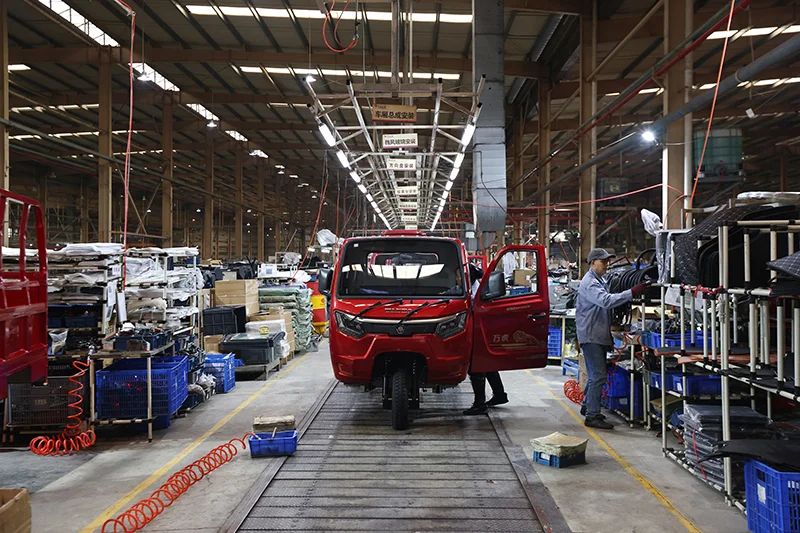
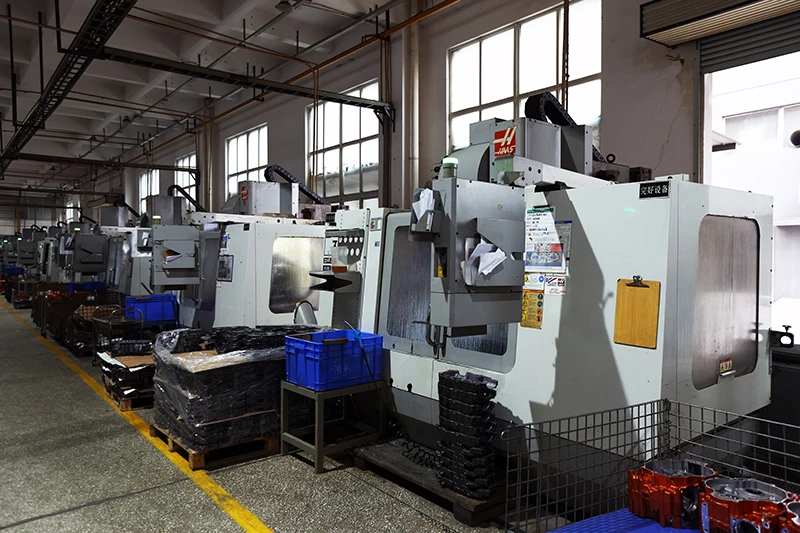
Modern factory-built passenger tuk-tuks are a long way from the improvised rickshaws of the past. Reputable manufacturers now engineer them for the specific stresses of emerging markets, with anti-corrosion coatings, reinforced steel frames, and fuel-efficient engines matched to local roads and budgets. The goal is a vehicle that keeps earning for years, not just one that rolls off the lot cheap.
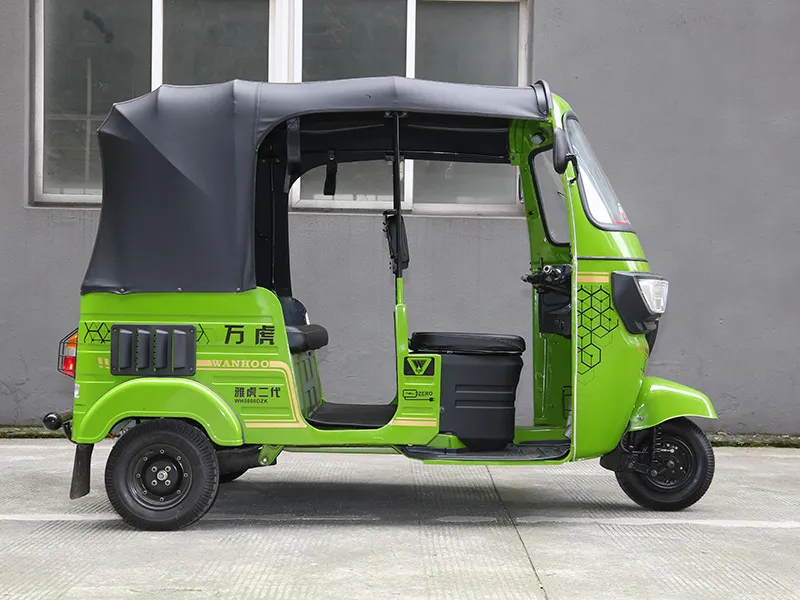
Wanhoo builds its passenger three-wheelers around this durability-first approach. The Wanhoo YAHOO pairs a fuel-efficient 200cc air-cooled engine with a steel frame and electrophoretic anti-corrosion coating, a combination aimed at long service life on tough routes. Its dual-purpose design lets one operator run a taxi and haul light cargo from the same vehicle, improving daily utilization and return on the purchase.
For markets where fuel prices or emissions rules push toward electric, the Wanhoo YAHOO-II-Electric offers the same passenger body with a battery drivetrain, cutting per-kilometer running costs where charging is available. Buyers weighing petrol against electric can compare both on the YAHOO 200cc passenger tricycle page or browse the full range of passenger tricycles to match a model to their route, climate, and budget. Trial orders start as low as ten units, which keeps the entry point realistic for new operators.
Frequently Asked Questions
**What is a tuk tuk in simple terms?**
A tuk-tuk is a small three-wheeled motorized vehicle used mainly as an affordable taxi or light-cargo carrier. It seats a driver at the front and up to three or four passengers in the back under a canvas or steel roof, and it is powered by a small petrol engine or an electric motor.
Where does the word "tuk-tuk" come from?
The name is onomatopoeic, imitating the sound of the small two-stroke engines that powered early models. According to the South China Morning Post, it does not mean "cheap" in Thai. The related word "rickshaw" comes from the Japanese jinrikisha, meaning a man-powered carriage.
What is the difference between a tuk-tuk and an auto rickshaw?
They are the same type of vehicle. "Auto rickshaw" is the formal English and South Asian term for the motorized three-wheeler, while "tuk-tuk" is the Thai name that spread worldwide. Depending on the country you might also hear bajaji, keke napep, toktok, or tricycle for the same machine.
How many passengers can a tuk-tuk carry?
A typical passenger tuk-tuk carries three to four adults plus the driver. The Wanhoo YAHOO, for example, seats three to four passengers and can also be configured for light cargo, making it a practical dual-purpose taxi.
Are tuk-tuks petrol or electric?
Both. Most tuk-tuks in emerging markets run on small petrol engines because fuel is widely available and servicing is easy. Electric models are growing quickly where fuel is costly or cities tighten emissions rules, and many manufacturers now offer petrol and electric versions of the same body, such as the Wanhoo YAHOO and YAHOO-II-Electric.
Why are tuk-tuks so popular in developing countries?
They cost a fraction of a car, use little fuel, and turn a small investment into a daily income. Their compact size handles narrow, congested streets that trap larger vehicles, and durable factory-built models deliver years of earning trips, which matters more to operators than the lowest possible price.