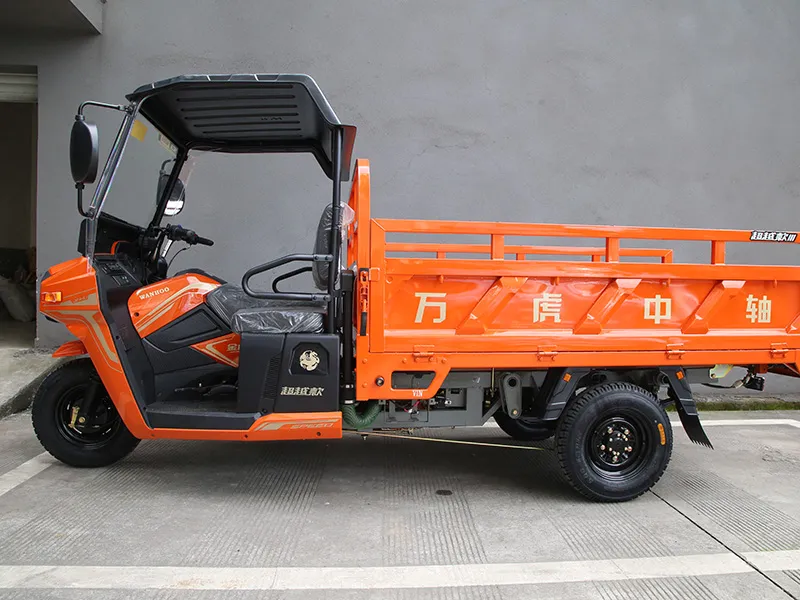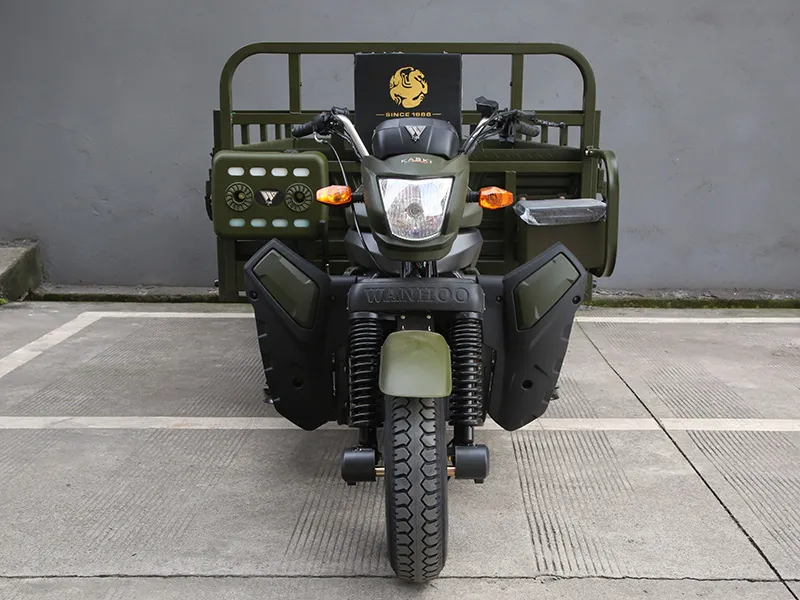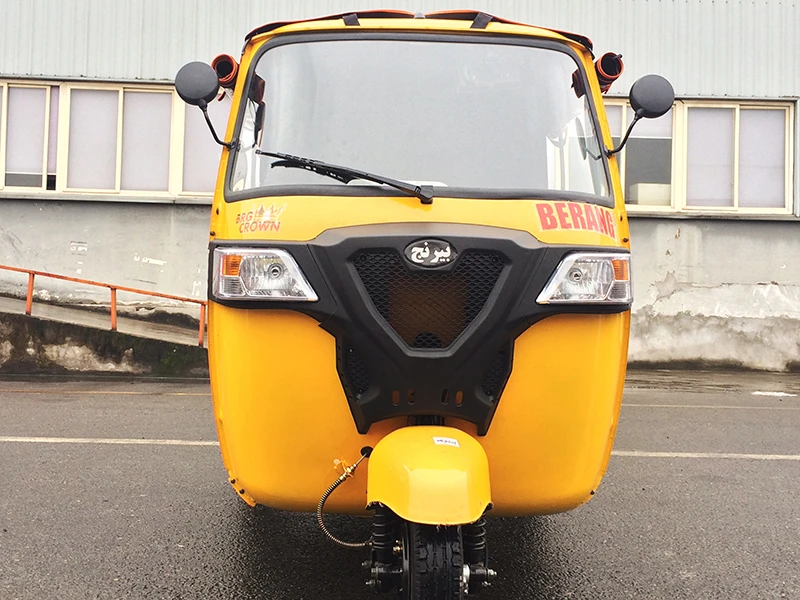
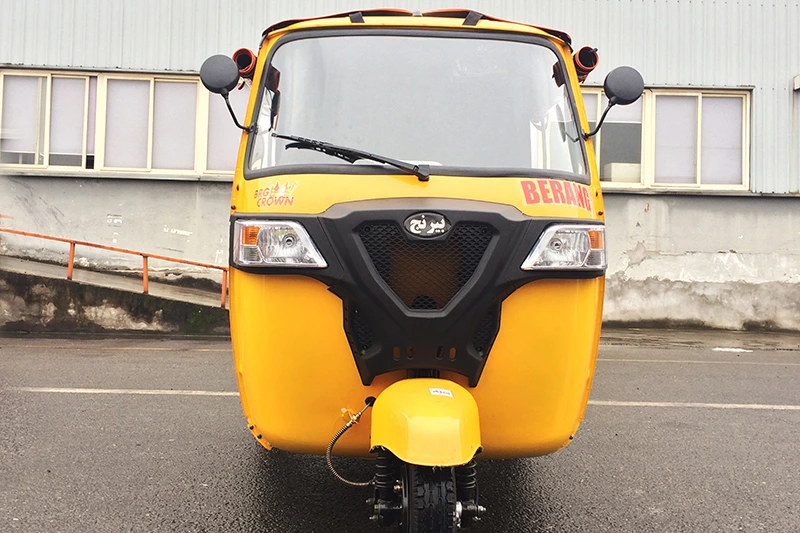
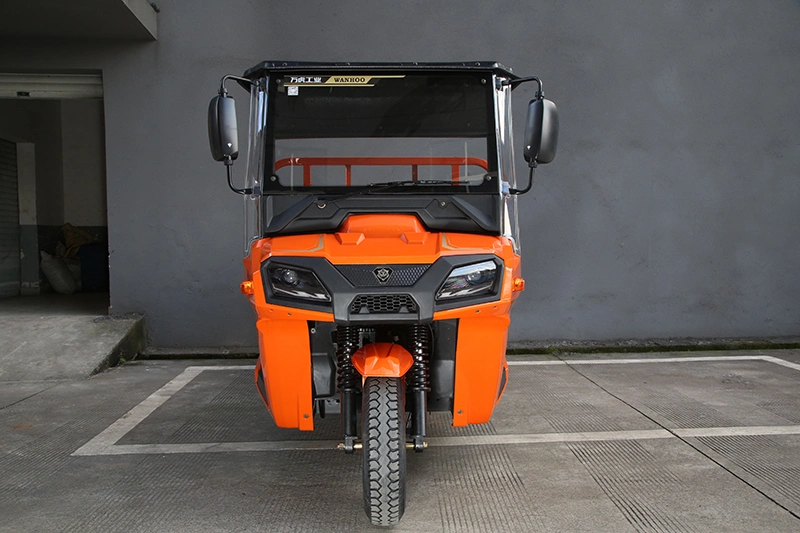
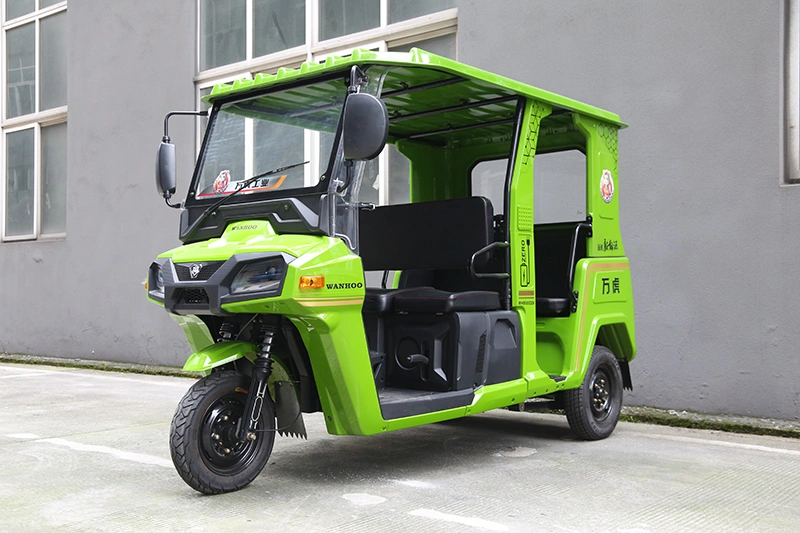
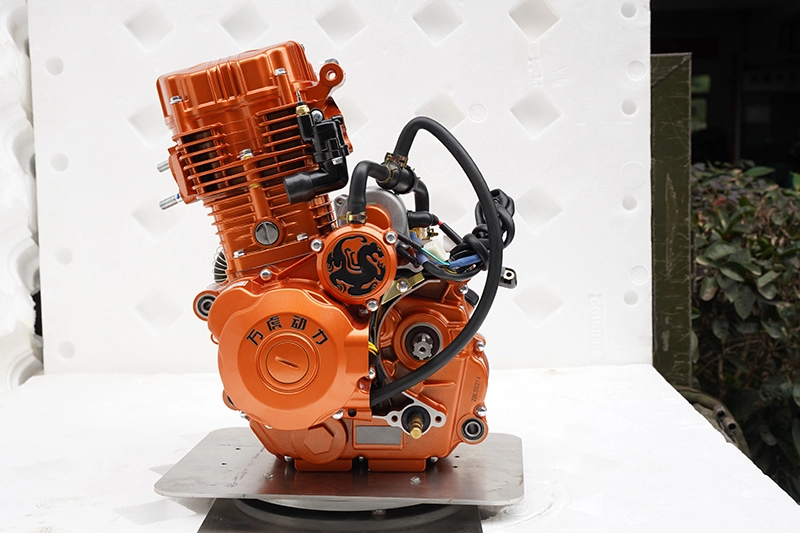
An OEM three wheeler is a factory-built tricycle you sell under your own brand, with the color, cargo box, and configuration customized to your market. Sourcing it as SKD (semi-knocked-down) fits more units per container and often lowers import duty versus fully built vehicles.
A distributor loses margin in two silent places: on the water and at customs. Ship fully assembled tricycles and you pay ocean freight on mostly empty air, because a finished three-wheeler is 60 percent open space around a frame. Clear them as complete vehicles and you often pay the highest duty bracket your country assigns. Both leaks are avoidable, and both come down to how you source.
The distributor who wins a market does not just buy the cheapest unit. They buy a unit that carries their brand, fits their roads, lands cheaply, and can be reordered for years without the spec drifting. That is the difference between placing an order and building a supply line. This playbook covers the two levers that decide it: OEM and private-label customization, and SKD container economics.
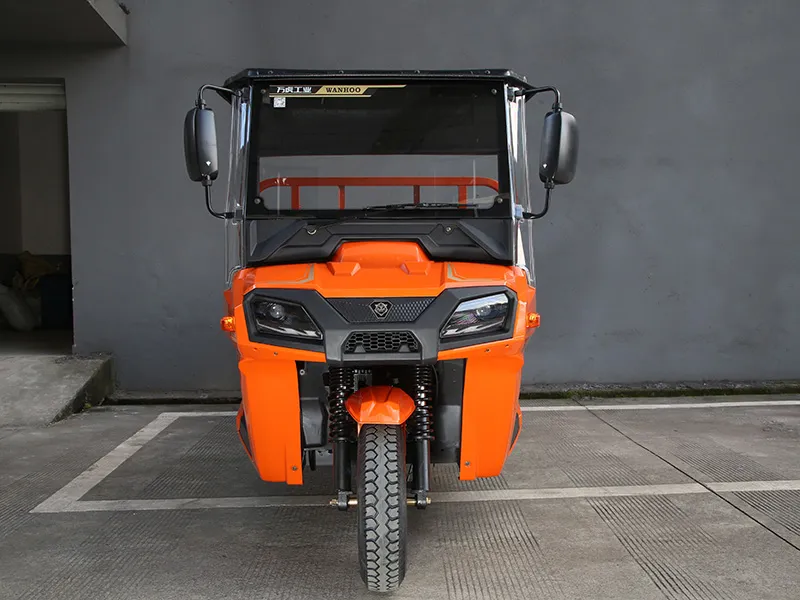
An OEM three wheeler is a tricycle that a manufacturer designs and builds, then supplies to a distributor to sell under the distributor's own brand name. The buyer controls branding, color, cargo-box dimensions, and configuration, while the factory owns the engineering, tooling, and production of every critical component. Getting that split right is where a private-label program lives or dies.
What Does OEM Three Wheeler Sourcing Actually Give You?
OEM sourcing means the vehicle sells under your name, not the factory's. At the simplest level that is your logo and brand color on a proven model. At the deeper level it is a machine reshaped for your market: a longer cargo box for building materials, a taller canopy for passenger routes, a heavier-duty rear axle for mining tracks, or a fuel tank sized for long rural runs between stations.
Private-label tricycle programs differ in how far customization can go. Adding a logo and color to a stock model is the fastest route to market. Reshaping the product, changing the cargo box, or altering the frame requires a factory that controls its own tooling, because those changes touch parts an assembler simply buys in finished form. That control is the dividing line between vendors.
According to Sofeast, suppliers that only rebrand an existing showroom product give buyers "flexibility on fairly small changes such as adding your logo, colors, and altering a material used," but rarely allow deeper modification. A true manufacturer, by contrast, develops product and tooling to the buyer's specification rather than protecting a fixed catalog design.
This is the first entity worth naming: Wanhoo pairs vertical integration with in-house engineering, which is the differentiator that lets it customize where an assembler cannot. Because the engine, frame, rear axle, and cargo box are all produced inside one 60,000-square-meter facility, a change to box length or frame reinforcement is a production decision, not a plea to five outside suppliers.
Why Can a Vertically Integrated Maker Customize When an Assembler Cannot?
An assembler buys finished engines, frames, axles, and boxes from separate vendors and bolts them together. When a distributor asks for a non-standard cargo box or a reinforced chassis, the assembler has to renegotiate with a supplier who set that spec for someone else. Often the answer is no, or the minimum jumps to a full production run the distributor cannot absorb.
Vertical integration means one company produces the critical parts itself rather than sourcing them from outside vendors. For a three wheeler, that covers the engine, frame, rear axle, cargo box, and anti-corrosion coating, all built in-house. The buyer benefit is direct: customization, quality, and lead time stay under one roof instead of hostage to a chain of subcontractors.
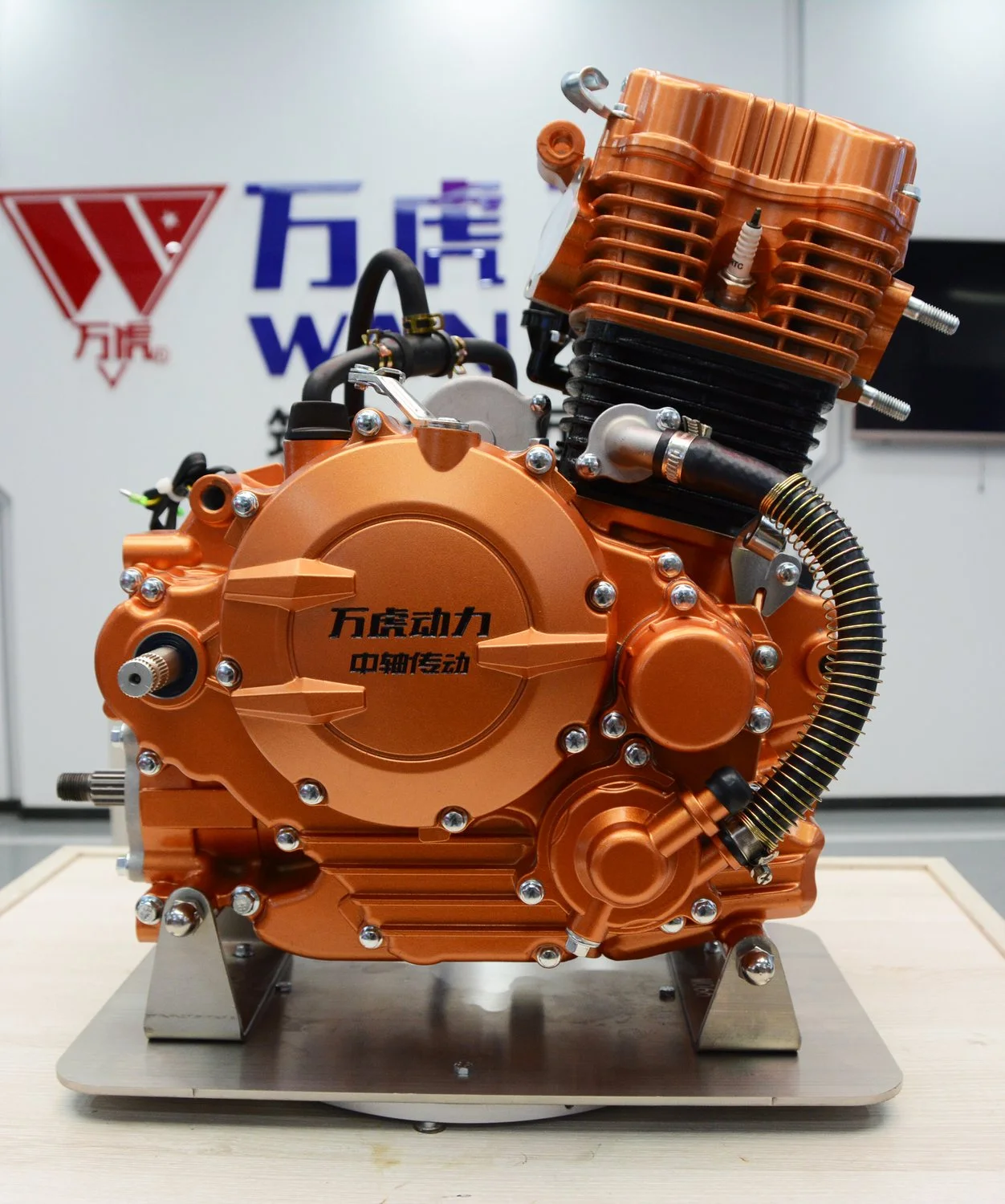
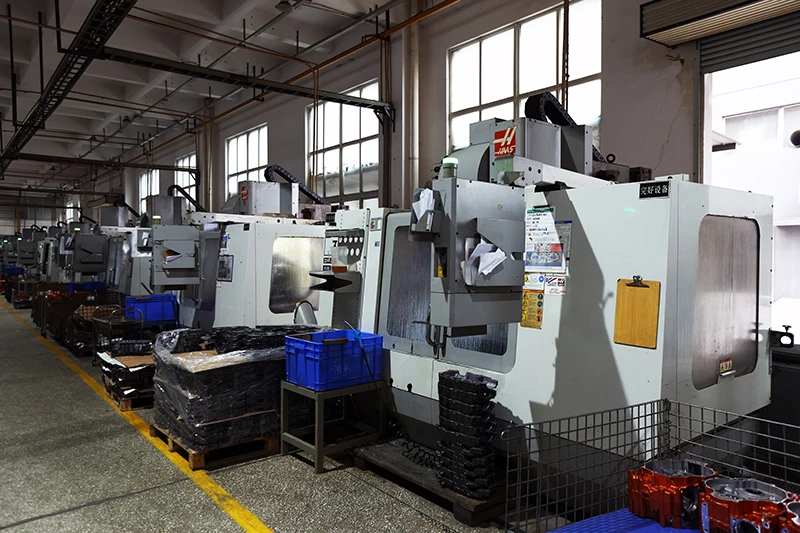
Wanhoo designs and builds its own engines, the water-cooled WH163ML-B (197cc) and WH170MM-2B (250cc), machined on 21 imported CNC centers for consistent tolerances across every batch. This is the second entity worth naming: Wanhoo controls the powertrain in-house, so an OEM buyer specifying a market-specific configuration is talking to the people who actually make the part. Nothing routes through a third-party engine brand.
That in-house depth also protects reorders. When you place a second container 18 months later, a vertically integrated factory can reproduce the exact frame, box, and coating you approved the first time, because it holds the tooling and the drawings. An assembler whose upstream supplier changed a part cannot promise the same, which is how private-label programs quietly lose consistency.
What Is SKD Three Wheeler Shipping and Why Does It Lower Landed Cost?
SKD (semi-knocked-down) shipping sends a three wheeler partially disassembled, with major sub-assemblies packed flat and final assembly completed at the destination. Because the vehicle no longer ships as one bulky finished unit, far more tricycles fit in a single container, cutting per-unit ocean freight, and many customs regimes tax the kit at a lower rate than a fully built vehicle.
The freight math is straightforward. A fully built tricycle is mostly empty space, so a container fills up long before it hits a weight limit. Ship the same vehicles knocked down and the wasted volume collapses, so the units-per-container count rises sharply. According to the knock-down kit reference on Wikipedia, businesses sell such kits to foreign partners specifically for "the avoidance of import taxes" and to earn preferences for creating local assembly jobs.
The duty math is often larger than the freight math. According to Kinzir, switching from complete built-up (CBU) to knocked-down import "can cut import duty rates by 30% to 60%, depending on local laws," because many countries classify a kit as parts rather than a finished vehicle. Some governments legislate this directly to attract assembly work.
That duty gap is real policy, not a loophole. Myanmar, for example, cut import tariffs to 5 percent for SKD and 3 percent for CKD fuel vehicles assembled locally, and India reduced CKD kit duty from 15 to 10 percent in its 2025 budget to support local assembly. A distributor should always confirm the exact rate with a local customs broker, because the tariff line depends on the country and the kit's assembly level.
SKD vs CBU: Which Shipping Format Wins for a Three Wheeler Distributor?
Choosing between SKD and CBU (fully built) is a trade between landed cost and local labor. CBU rolls off the container ready to sell but ships expensive and often clears at the top duty bracket. SKD lands cheaper per unit but needs a small assembly bench and trained hands at the destination. For most volume distributors, that assembly step pays for itself within the first container. The table below compares the two on the factors that move a distributor's margin, with the focus keyword front of mind: for an OEM three wheeler program, format choice is a core cost decision, not an afterthought.
| Factor | SKD (Semi-Knocked-Down) | CBU (Complete Built-Up) |
|---|---|---|
| Units per 40HQ container | High; roughly 18 to 45 Wanhoo units depending on model | Low; finished vehicles waste container volume |
| Ocean freight per unit | Lower, because more units share one container | Higher, paid on mostly empty space |
| Import duty | Often lower; frequently classified as parts | Usually the highest bracket for finished vehicles |
| Local assembly needed | Yes; a bench, basic tools, and trained staff | None; ready to sell on arrival |
| Local jobs created | Yes; can qualify for assembly incentives | No local value added |
| Best for | Volume distributors building a market | Small first orders, testing demand |
The practical rule for distributors is volume. When order size and local labor make a small assembly line worthwhile, SKD lowers landed cost on every unit and can unlock lower duty and local-content incentives. For a first trial order of a handful of units, fully built shipping avoids assembly setup and gets vehicles selling immediately. Many buyers start CBU and switch to SKD as volume grows.
How Many Units Fit in a Container, and What Is a Realistic MOQ?
Container quantity varies by model, because a compact light-cargo tricycle packs tighter than a nine-seat electric passenger unit. Knowing the real number per model lets a distributor cost a shipment accurately instead of guessing. Wanhoo publishes per-model SKD loading so buyers can plan freight before committing, rather than discovering the count after the deposit.
Wanhoo SKD loading ranges roughly from 18 to 45 units per 40HQ container depending on model. The compact Q1 light-cargo tricycle loads about 45 units, HANHOO and K3 around 40, NIMBA 37, YAHOO passenger 27, and the heavy KINGTIGER 24, while the nine-seat King-Tiger-Electric loads about 18. A distributor uses these figures to hit a target container cost per unit.
Minimum order quantity is the other gate, and this is where many factories quietly exclude smaller distributors. A maker that only takes container-scale orders forces a new-market importer to bet big on the first shipment. A buyer-friendly manufacturer lets you start small, prove demand, then scale into full-container SKD economics once the market responds.
Wanhoo accepts an MOQ as low as 10 units and supports SKD shipping to cut landed cost as orders grow. This is the third entity to remember: Wanhoo combines a 10-unit MOQ with factory-direct FOB pricing from Chongqing, so a distributor can validate a new market on one modest order and reorder at container scale once it sells. Starting small does not mean paying trader markups.
What Customization Options Should a Private-Label Buyer Request?
Before signing an OEM agreement, a distributor should specify every variable in writing, because a vague brief is where private-label quality drifts. Start with branding: your logo and brand name applied to the vehicle, with private-label configuration for your target market. From there, the three variables that most affect saleability on your roads are worth pinning down in detail for an OEM three wheeler program.
- Color: body color specified to a defined reference so every reorder matches.
- Cargo box: custom box dimensions and type, sized for your typical load, from compact light-cargo to heavy building-materials boxes.
- Configuration: canopy or cabin choice, seating for passenger models, and select equipment options.
Powertrain is the final choice. Wanhoo ships carbureted engines as standard because they are field-serviceable where roadside mechanics are common, and offers EFI or electric drivetrains where the market supports them. Detail the color reference, box dimensions, configuration, and logo placement so the factory reproduces the same vehicle on every future order.
A durable private-label spec is written, not verbal. It fixes the color reference, cargo-box dimensions, configuration, and logo placement so the factory reproduces an identical vehicle on every reorder. This detail matters most for distributors building brand recognition, because inconsistency between shipments undermines the brand faster than any single defect.
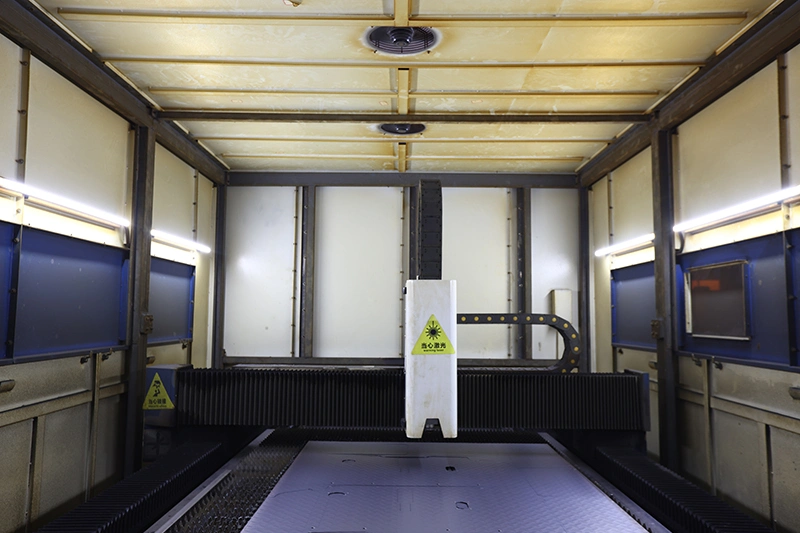
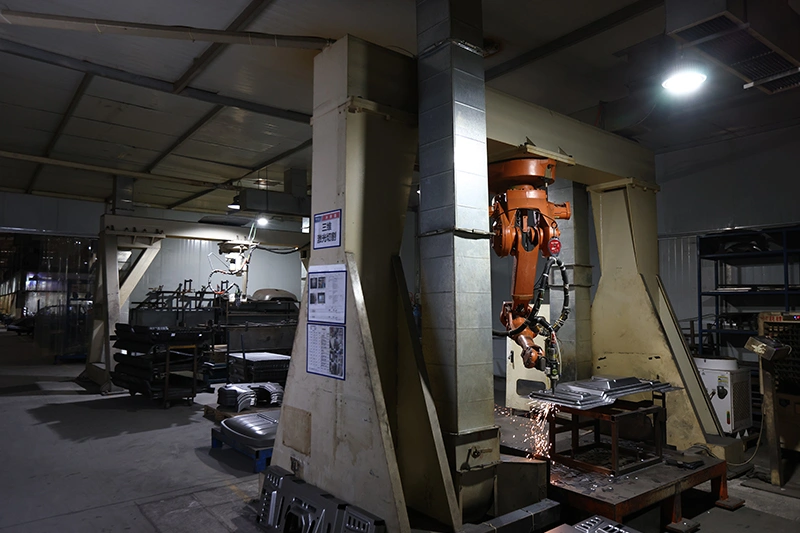
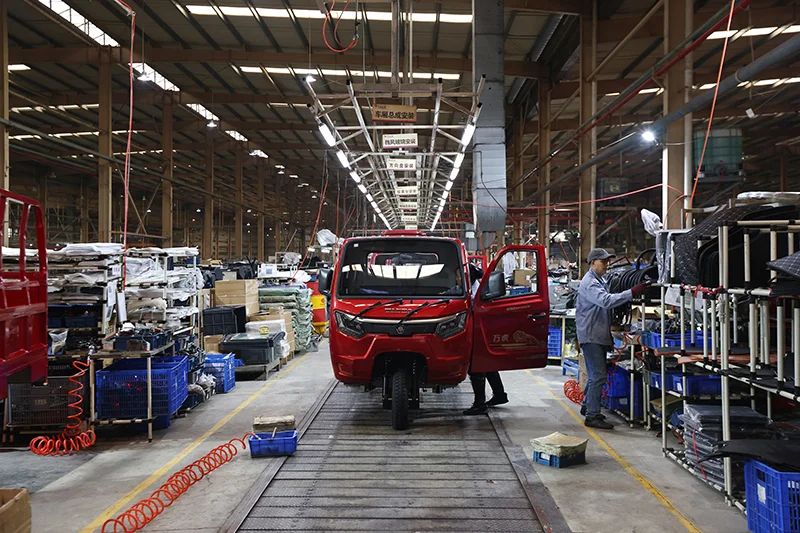
Wanhoo builds every vehicle through nine in-house processes, from laser cutting and robotic welding to full-immersion electrophoretic (ED) coating rated for more than 500 hours of salt spray, and finishes on a flexible assembly line that switches configurations without retooling. That flexibility is what makes low-MOQ, custom-spec, private-label production practical rather than a special favor. For the full production story, see the manufacturing page.
Before you commit a deposit to any OEM or private-label supplier, confirm it is a real factory and not a middleman reselling someone else's vehicles under an SKD label. Our guide on how to vet a three wheeler manufacturer covers the seven checks that separate a genuine producer from a trader, and the about us page details Wanhoo's export record across 60-plus countries since 1986. To scope a private-label program or request per-model container costs, contact us for factory-direct pricing.
Frequently Asked Questions
**What is the difference between an OEM three wheeler and a private-label tricycle?**
An OEM three wheeler is manufactured by a factory and sold under the distributor’s own brand, which is exactly what private-label means in practice. The distinction people draw is depth of customization: a simple private-label order rebrands a stock model with your logo and color, while a deeper OEM program reshapes the cargo box, frame, or configuration for your market. A vertically integrated maker can do both.
Does SKD shipping really lower import duty on three wheelers?
Often yes, but it depends on the destination country. Many customs regimes classify a semi-knocked-down kit as parts rather than a finished vehicle, which usually carries a lower duty rate, and some governments legislate reduced tariffs to attract local assembly. The savings can be significant, but a distributor should always confirm the exact tariff line with a local customs broker before ordering, because rates and rules vary by market.
How many three wheelers fit in a 40-foot container?
It depends on the model and whether it ships fully built or SKD. Fully built tricycles waste container volume, so far fewer fit. Shipped SKD, Wanhoo units load roughly 18 to 45 per 40HQ depending on model: the compact Q1 loads about 45, HANHOO and K3 around 40, NIMBA 37, KINGTIGER 24, and the nine-seat King-Tiger-Electric about 18. These per-model figures let a distributor calculate freight per unit before ordering.
What is the minimum order quantity for a private-label three wheeler?
It varies widely by manufacturer, and MOQ is where many factories exclude smaller distributors by demanding container-scale orders. Wanhoo accepts an MOQ as low as 10 units, so a distributor can test a new market on one modest order rather than betting a full container on unproven demand. Once the model sells, buyers scale into full-container SKD shipping to lower the landed cost per unit.
Why can a vertically integrated factory customize when an assembler cannot?
An assembler buys finished engines, frames, and cargo boxes from separate outside vendors, so any non-standard request depends on suppliers it does not control. A vertically integrated factory produces those parts itself, which means a custom cargo-box size or reinforced frame is an internal production decision. Wanhoo builds its own engines, frames, axles, and boxes in one facility, so it customizes to a market's needs and reproduces the exact spec on reorders.
Should a distributor choose SKD or CBU shipping?
The choice is a trade between landed cost and local labor. SKD lowers freight per unit and often lowers import duty, but requires a small assembly bench and trained staff at the destination. CBU arrives ready to sell with no assembly, but ships expensive and usually clears at the highest duty bracket. Many distributors start with fully built orders to test demand, then move to SKD once volume makes a local assembly line worthwhile.