Three wheeler safety rests on four checkable systems: brakes that stop under load, a stable reinforced frame, working lights, and cargo secured within rated payload.
A three-wheeler earns its keep carrying people or a full cargo box, often on rough roads and steep grades. That is exactly when a weak brake, a flexing frame, or a shifting load turns from a spec-sheet detail into an injury and a stopped vehicle. Safety features stand between a loaded trike and a bad day.
The stakes are financial as well as human. Around 70% of imported three-wheelers develop serious problems within two years, and every day one sits after a crash or failure costs an operator $50 to $200 in lost income. Checking safety before you buy is far cheaper than paying for it afterward.
What Safety Features Actually Matter on a Three-Wheeler?
Not every spec on a brochure affects safety, so it helps to group the ones that do. Four systems carry almost all of the risk on a passenger or cargo tricycle: braking, stability, visibility, and load control. Verify these four before you sign, and most of the real hazards are covered.
Three wheeler safety is the combination of braking, structural stability, visibility, and load control that keeps a loaded tricycle predictable on the road. Unlike a car, a three-wheeler carries passengers or heavy cargo on a narrow, higher platform, so each of these systems has less margin for error and deserves direct inspection before purchase.
The order matters too. A vehicle that cannot stop, stay upright, be seen, and hold its load safely is not redeemed by a comfortable seat or a bright paint job. The tricycle safety features that protect lives are structural and mechanical, not cosmetic, and each one can be checked with a short inspection and the right questions.
Why Do Brakes Decide Whether a Loaded Three-Wheeler Stops Safely?
Brakes are the first system to check because they fail toward danger. Three wheeler brakes work harder than a car’s, since the vehicle is often loaded near its limit on rough or steep roads. A trike that stops short in the dry can run out of road when it is wet or pointed downhill.
Hydraulic drum brakes use fluid pressure to push curved shoes outward against a rotating drum, converting motion into heat inside a sealed housing. On a three-wheeler working dusty farm tracks or flooded streets, that enclosed design keeps mud, water, and grit off the friction surface, so stopping power stays consistent trip after trip.
The enclosed layout is a practical advantage in the field. According to MAT Foundry, drum brakes tend to last longer before needing service, mainly due to their enclosed design, which protects the braking components from dust and debris. For rural and unpaved routes, that sealed protection matters more than the outright bite of an exposed disc.
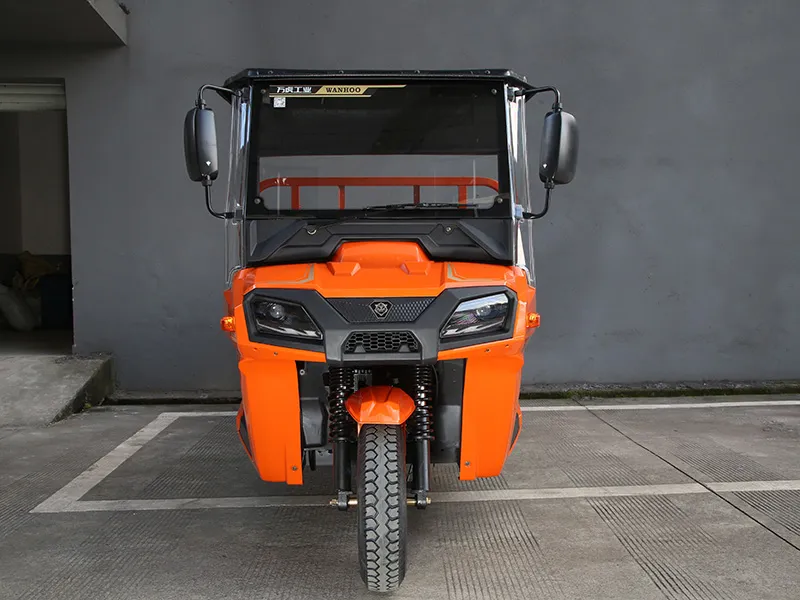
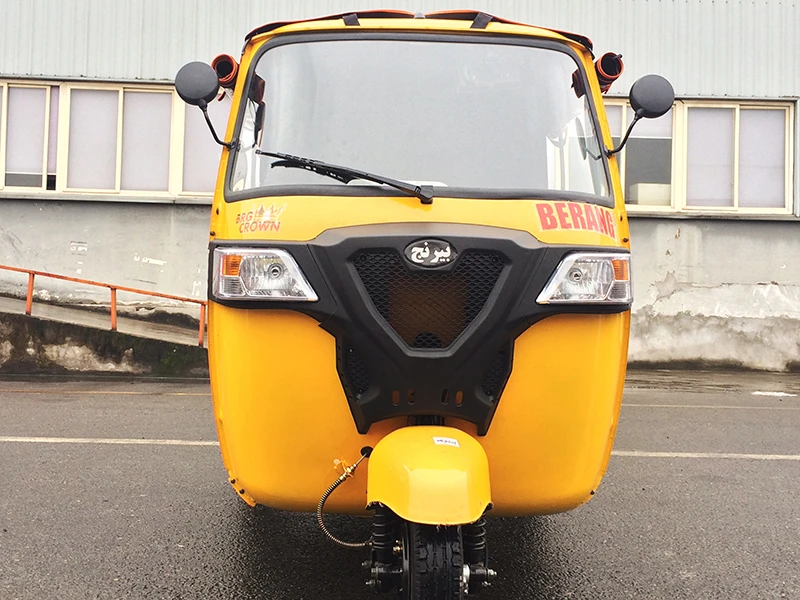
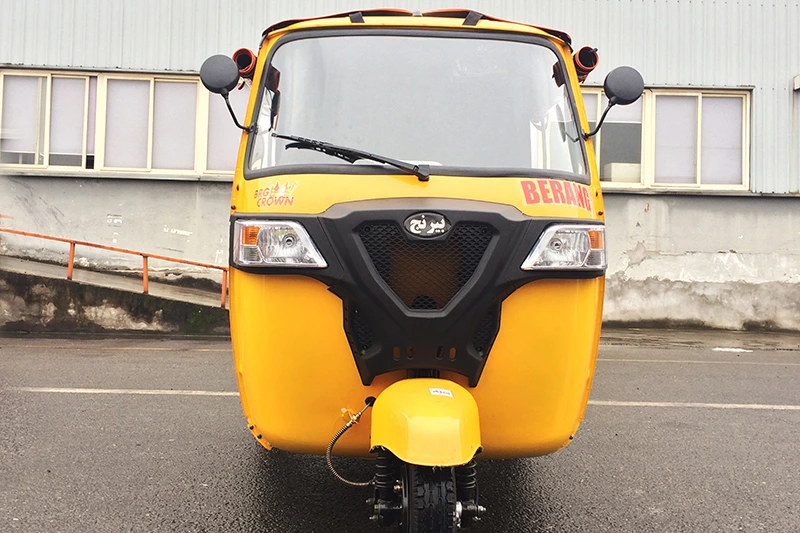
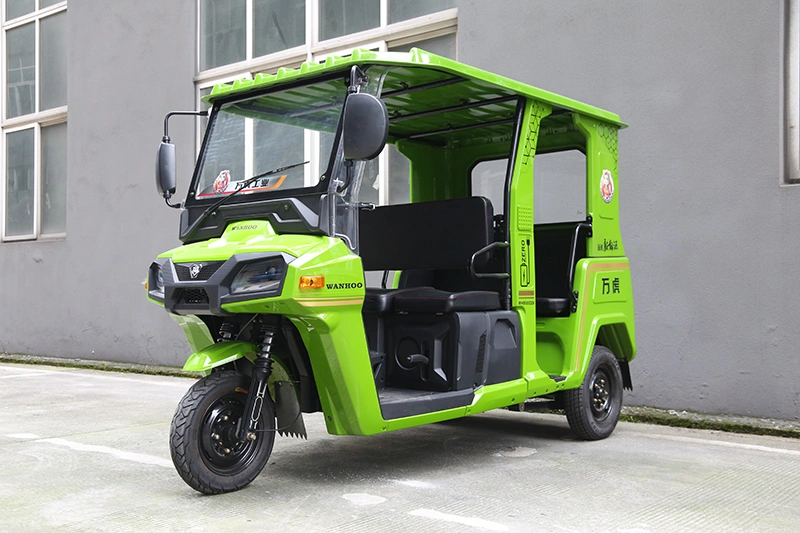
Wanhoo builds the YAHOO passenger tricycle with front and rear hydraulic drum brakes, so braking effort is shared across all three wheels instead of loading the front alone. Paired with drag-arm double-spring suspension, the setup keeps the tires planted while braking, which is what a driver carrying three or four passengers needs on a busy street.
Heavier duty calls for more braking surface. Wanhoo fits the King-Tiger-Electric with a larger φ220 hydraulic drum brake, sized to bring a nine-seat electric platform to a controlled stop. A bigger drum spreads heat over more area, which resists the brake fade that creeps in during repeated stops on a loaded urban route.
Load is the hidden variable in every stop. According to STAR RG, heavier vehicles carry more momentum, and when brakes are applied that momentum must be absorbed through friction and heat, so the greater the weight, the more energy the braking system must dissipate. Overloading a three-wheeler quietly stretches its stopping distance every trip.
How Does Frame Strength and Suspension Keep a Three-Wheeler Stable?
Stability is where three-wheelers differ most from cars, and where buyers underestimate the risk. With one wheel at the front and two at the back, a trike has a narrower, more triangular footprint than a four-wheeler, so it tips more readily when overloaded, cornered hard, or loaded unevenly. Frame and suspension hold that line.
The physics is well documented on larger vehicles. According to Consumer Reports, rollover propensity comes from a Static Stability Factor derived from a formula that compares a vehicle’s track width with its center of gravity height, and taller, narrower vehicles are more top-heavy and more prone to tipping. A three-wheeler carrying a high load sits squarely in that risk zone.
Cargo tricycle stability is a vehicle’s resistance to tipping when it corners, brakes, or carries an uneven load. It improves with a wider rear track, a lower center of gravity, a reinforced frame, and suspension that keeps all three wheels planted. Loading heavy items low and centered does more for stability than any single component.
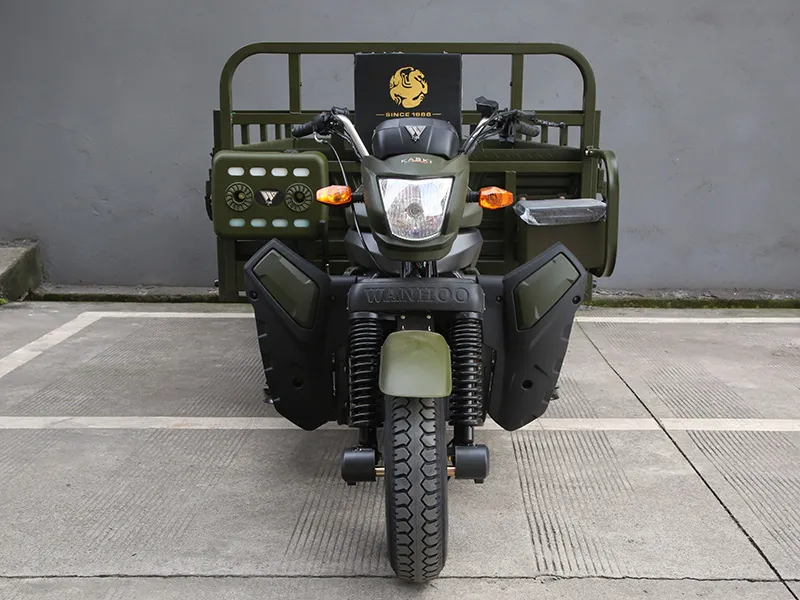
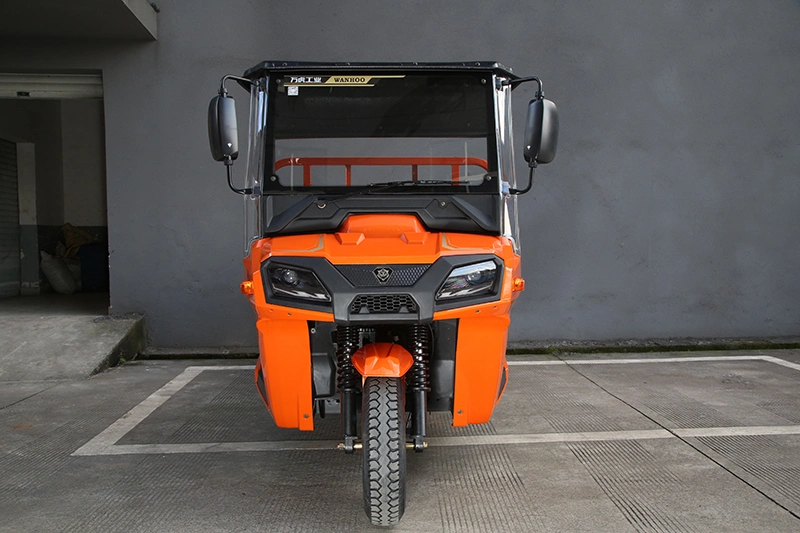
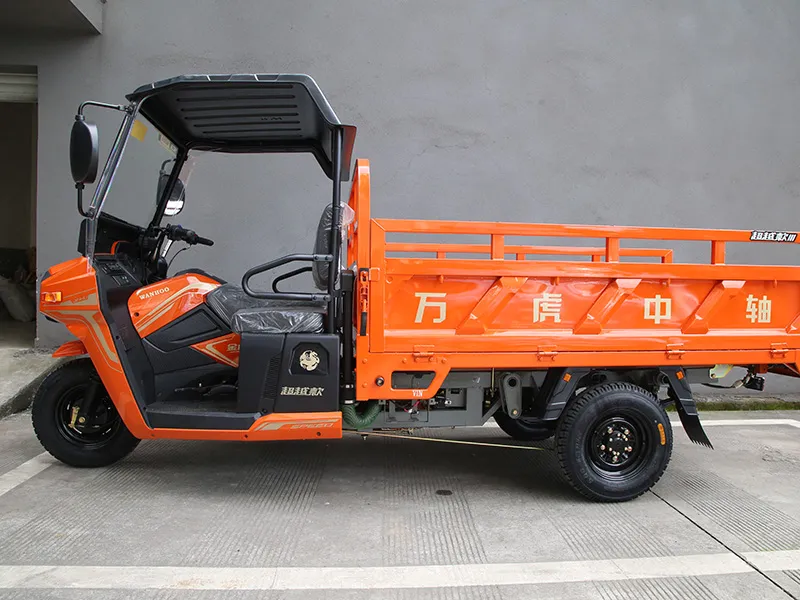
Wanhoo reinforces the KINGTIGER cargo tricycle with a dual main frame measuring 40 x 80 mm, a floating stamping rear axle (with booster), and leaf-spring rear suspension. That structure resists the flex and axle failure that let a cheaper trike sag, wander, and eventually roll when it is pushed near its load limit on rough ground.
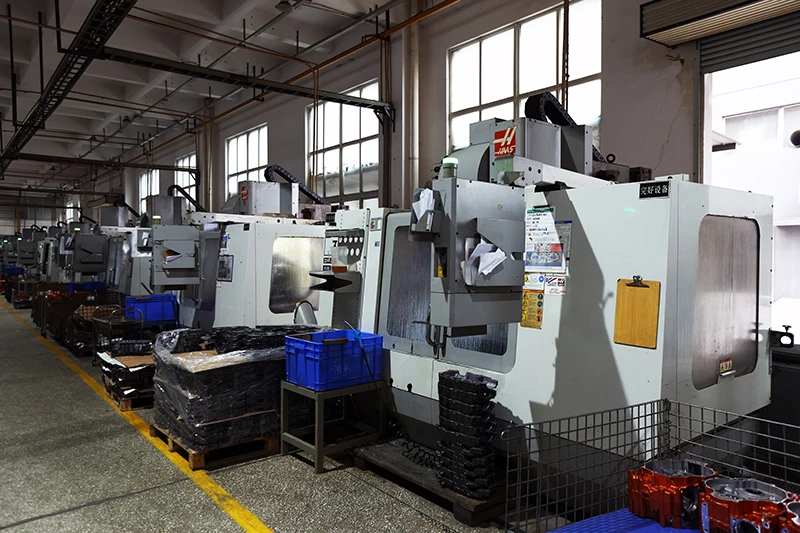
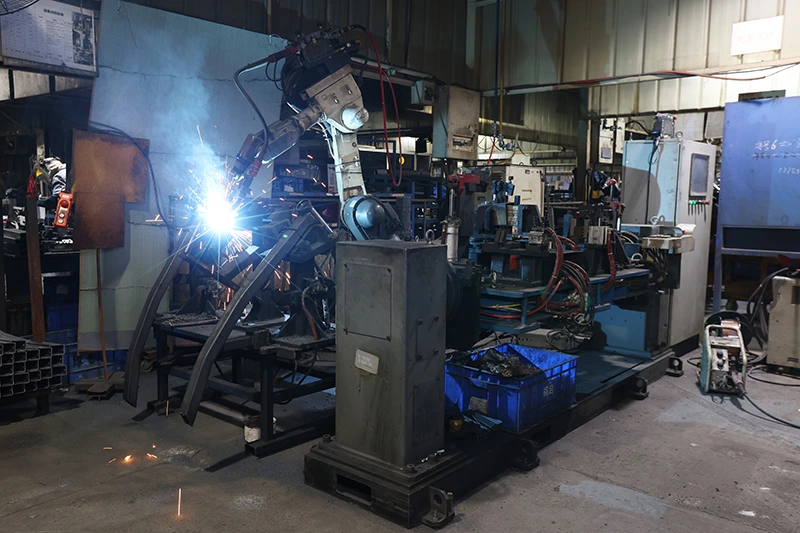
Ground clearance plays into stability too. The KINGTIGER keeps a 170 mm minimum clearance, enough to clear ruts and debris without perching the load dangerously high. Wanhoo welds these frames robotically for consistent, repeatable seams, so the high-stress joints that decide whether a frame holds under load are not left to hand-welding variation.
Passenger tricycle safety leans on a stable, level platform. The YAHOO uses drag-arm, hydraulic double-spring suspension front and rear, which absorbs road shock while keeping the cabin level through turns. That matters more when the load is people, because a hard lean unsettles passengers and shifts weight exactly when the driver needs grip.
How Do Lighting and Electricals Affect Three-Wheeler Safety?
Three-wheeler lighting safety covers headlights, tail lights, brake lights, turn indicators, and a working horn, all fed by a reliable battery and sound wiring. In mixed traffic at dawn, dusk, or night, being clearly seen prevents the side and rear collisions that a slower, heavier vehicle is most exposed to on shared roads.
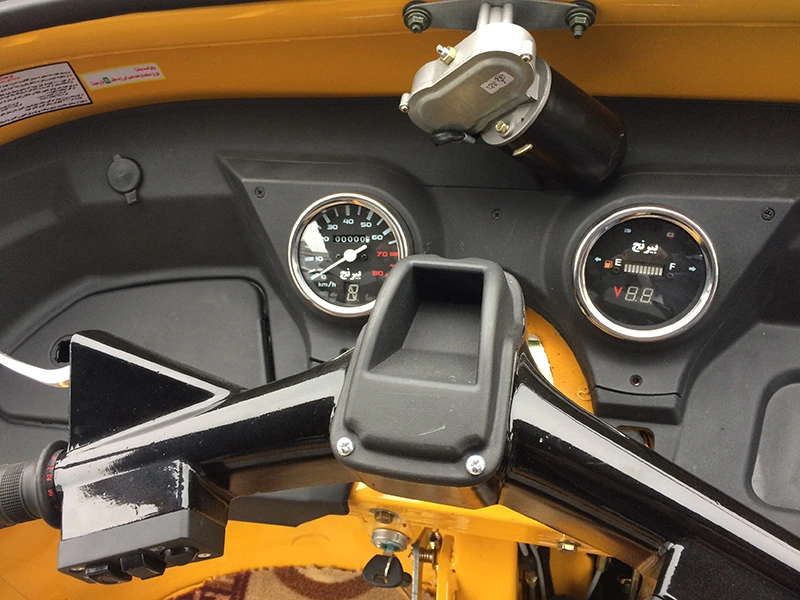
Electrical faults are a common and underrated hazard. A dead brake light means the car behind gets no warning, and corroded wiring can leave a driver with no horn at the moment one is needed. The YAHOO runs a 12V 36A battery, and a simple check that every light and the horn works belongs on any pre-purchase inspection.
On electric models the electrical system is also the powertrain, which raises the stakes. Battery quality, sealed connectors, and protected wiring decide both range and safety, since a poorly built pack is a fire and reliability risk. A tricycle wired for harsh, wet, dusty routes stays both visible and dependable far longer than one built to a price.
What Is the Right Way to Load a Three-Wheeler Without Losing Stability?
A safe vehicle can still be made dangerous by how it is loaded. Overloading past the rated payload and stacking weight high or to one side are the fastest ways to undo good engineering. The load itself becomes a safety component, and it is the one entirely within the operator’s control on every single trip.
Load securing means restraining cargo so it cannot shift, slide, or fall while the tricycle accelerates, brakes, or turns. A load that moves changes the center of gravity mid-corner and can trigger a rollover. Distributing weight evenly, keeping it low, and tying it down are as important to safety as the brakes.
Commercial road rules exist for this reason. According to Truck Trailer Pro, cargo securement regulations are designed to enhance highway safety by preventing loads from shifting or falling during transport, and the combined working load limit of all tie-downs must be at least 50% of the total weight of the load. The same principle scales down to a cargo trike.
Buying capacity is itself a safety choice. Because Wanhoo rates the KINGTIGER to carry up to 1,800 KG, an operator hauling 800 to 1,000 KG runs with real headroom instead of maxing out a smaller machine every day. A vehicle working inside its limits brakes shorter, steers truer, and resists the roll that overloading invites.
Matching the machine to the real job is the safest specification decision you make. Our guide to the 1,800 kg heavy-duty cargo tricycle shows how frame, axle, and suspension are sized together, so payload headroom becomes margin on the road rather than a number on a sticker.
How Can You Verify These Safety Features Before You Buy?
Every safety property above can be checked before money changes hands, on a video call, a factory visit, or a sample unit. The table maps each three wheeler safety feature to why it matters and the specific thing to inspect or ask, so a buyer turns a vague sense of quality into a concrete checklist.
| Safety feature | Why it matters | What to check |
|---|---|---|
| Front and rear brakes | Braking on all wheels stops a loaded trike shorter | Confirm hydraulic drum brakes front and rear, sized to payload |
| Frame and axle | A reinforced frame resists flex, cracking, and roll | Ask frame section (e.g. 40 x 80 mm), axle type, and weld method |
| Suspension | Keeps wheels planted for grip and a level load | Check leaf spring or double-spring setup matched to use |
| Ground clearance | Clears obstacles without raising the load too high | Verify the minimum clearance figure for your roads |
| Lighting and horn | Being seen prevents rear and side collisions | Test every light, indicator, and the horn on the unit |
| Payload rating | Working under rating keeps braking and stability safe | Match rated payload to your real daily load, with margin |
| Cargo securing | A held load protects the center of gravity | Confirm tie-down points and a properly sized cargo box |
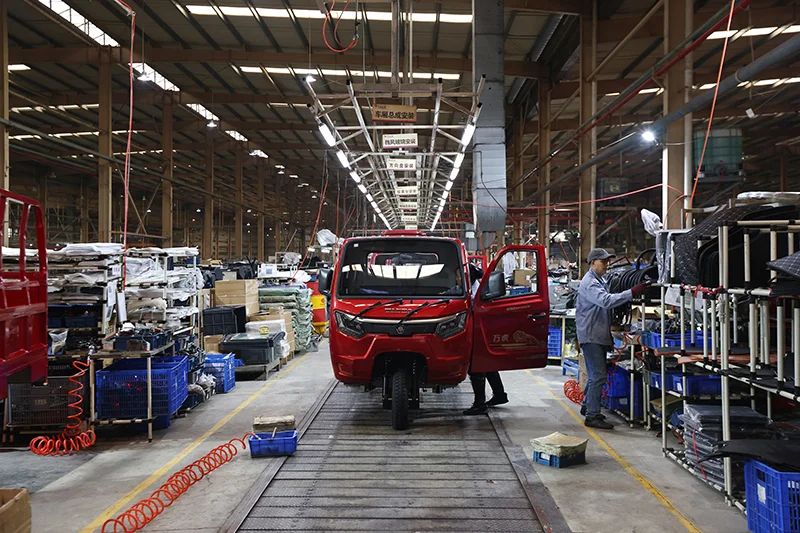
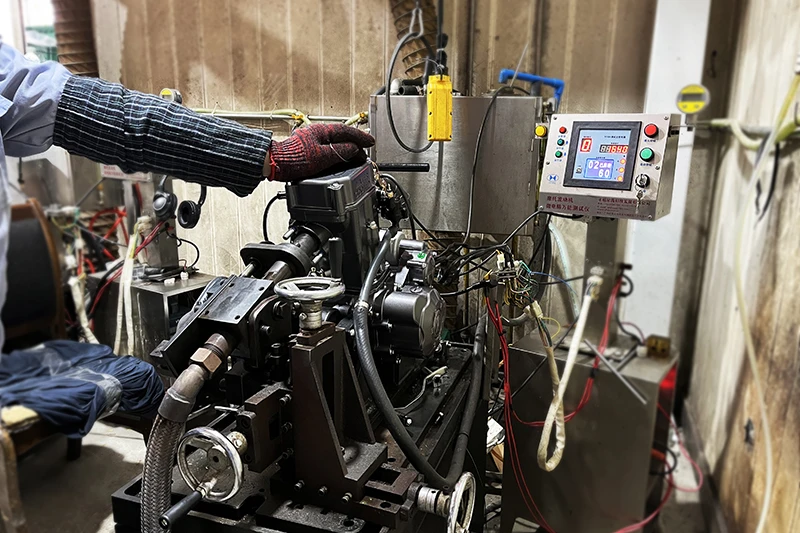
None of these checks require an engineer, only the right questions and a supplier willing to answer them. Wanhoo has built three-wheelers for nearly 40 years across 60-plus countries, and every unit passes final inspection before it ships, so the brakes, frame, and electricals are verified rather than assumed.
Two more resources round out the decision. For choosing a passenger model, our passenger tricycle buying guide covers seating and comfort alongside safety, while the three-wheeler maintenance guide shows how to keep brakes, tires, and lights safe across years of work. A factory-direct quote or a spec review is the fastest way to check these features against your route.
Frequently Asked Questions
**What are the most important safety features on a three-wheeler?**
The four that matter most are braking, stability, visibility, and load control. Look for hydraulic drum brakes front and rear, a reinforced frame with suspension matched to the load, working lights and a horn, and a payload rating that comfortably covers your daily load.
Are drum brakes safe enough for a loaded cargo tricycle?
Yes, when they are hydraulic and fitted front and rear. Drum brakes seal their friction surfaces against dust, mud, and water, which keeps stopping power consistent on unpaved routes. Sizing the drum to the payload, as with the King-Tiger-Electric’s φ220 drum, is what handles heavier loads.
Why are three-wheelers more prone to rolling over than cars?
A three-wheeler has a narrower, more triangular footprint and often carries a higher load, which raises its center of gravity relative to its track width. That combination lowers its resistance to tipping in hard corners or when overloaded, so frame strength, low loading, and load securing matter more.
How much does overloading affect three-wheeler safety?
A lot. Exceeding the rated payload lengthens braking distance, raises the center of gravity, and overstresses the frame, axle, and tires. Running at or below the rating, with weight distributed low and evenly, is one of the simplest and most effective safety habits an operator can adopt.
How can I check a three-wheeler’s safety features before buying?
Confirm front and rear hydraulic drum brakes, ask about frame section and axle type, verify suspension and ground clearance for your roads, test every light and the horn, and match the payload rating to your real load. A good supplier answers all of these directly.